• Artificial Humanity

    In Natural Law, I had touched upon the idea that we will have to make choices as a species in the context of the role of artificial intelligence in our lives, and how/if compassion towards each other would play a part in these decisions. As I watch thoughts and events unfolding around me, I am beginning to think that it will most likely not be one crucial decision later in time, but a lot of smaller choices, made at individual and regional levels now, that will shape our society in terms of acceptability, morality etc. And so, just as I wrote in a post around five years ago, that we might not be able to recognise the final step we make in our integration with AI, there might be an increasing inevitability about our choices as we move forward in time.

    What sparked this line of thought? On one hand, I read a New Yorker post titled “Better All the Time” which begins with how a focus on performance came to athletics and has now moved on to many other spheres of our life. On the other hand, I read this very scary post in The Telegraph “The Dark Side of Silicon Valley” and a bus that’s named Hotel 22 because it serves as an unofficial home for the homeless. It shows one of the first manifestations of an extreme scenario (the nation’s highest percentage of homeless and highest average household income are in the same area!) that could soon become common. The connection I made between these two posts is that increasingly, there will be one set of humans who have the will and the means to be economically viable and another much larger set that doesn’t have one, or both. This disparity is going to become even more stark as we move forward in time. I think, before we reach the golden age of abundance, (if we do) there will be a near and medium term of scarcity for the majority.

    (more…)

  • Puma Social

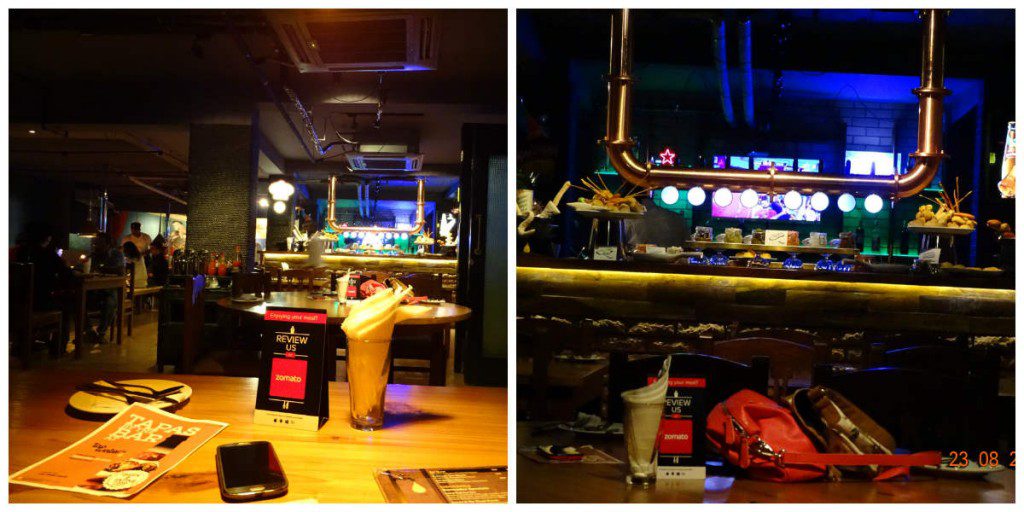
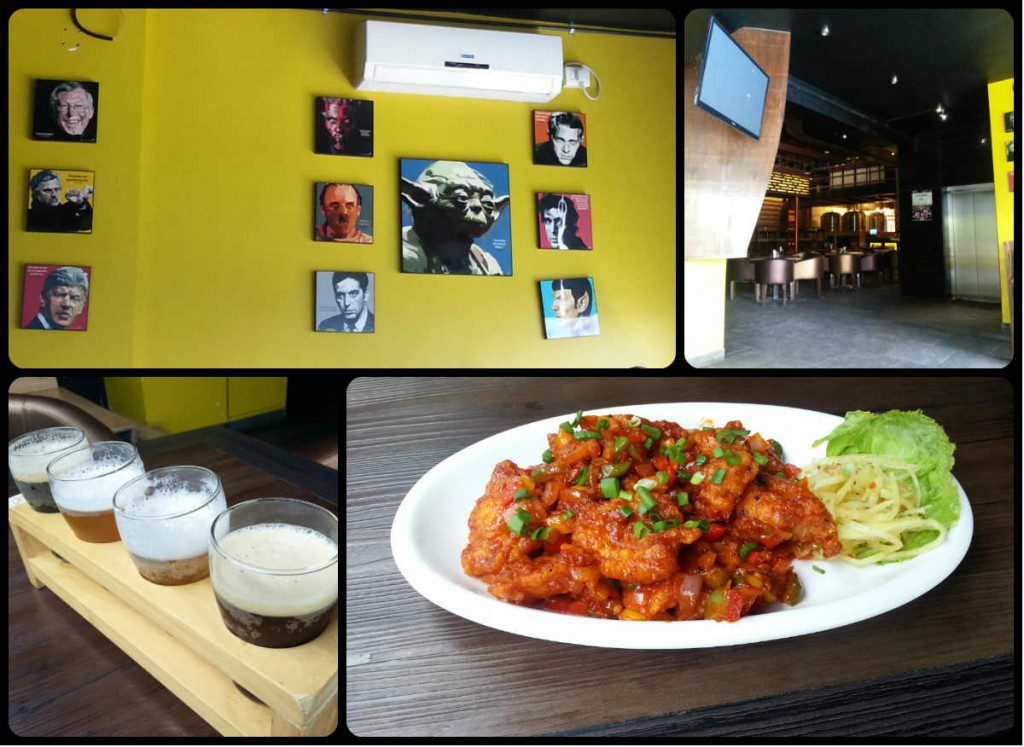
    Puma Social (map) is one of those places that people half our age flock to on Saturday nights. So we arrived there late, on a Sunday afternoon. We arrived on a social vehicle – auto-rickshaw – but I think there is valet parking. 12 PM is the official opening time as per Zomato, and we got there by 1, but they requested an additional 10 minutes to set things up! We pretty much had the place all to ourselves (except for an older couple and their kids) and after surveying two out of three floors, decided to sit on the second. The place has definitely been around for a while, and the biggest proof is probably the state of the decor and menu cards. (sauce smudges) But that doesn’t mean it isn’t a pleasant space. The bar stool seating at a few tables isn’t the safest bet after a few drinks but we weren’t planning a lot anyway, so we choose them. The place began filling up a bit after we had placed our orders. Those video cassette ashtrays, I thought, were a cool touch. 🙂

    collage1

    From the menu, we asked for a Coconut Chicken soup, the best way to begin a meal on a windy, cloudy day. It wasn’t very spicy but was thick enough with just the right amount of lemongrass, and we quite liked it. Meanwhile, I had asked for the Jack Hammer and D, for a Mai Tai. They weren’t really generous with the Jack Daniels or the honey in my drink and with the dry Martini and pepper, it made for just an average drink. D’s drink, with the almond syrup added to the standard white and dark rum, was a much better one. (more…)

  • Happiness: The End

    A while ago, in Happiness and Compassion, I had written about what Fahadh Fasil described as the biggest lesson he learnt from failure – he said it made him decide that he would only do things that made him happy. The more I read, the more I think, and the more I live, the more I start relating to what Fahadh is doing, and what Aristotle said, “Happiness is the meaning and the purpose of life, the whole aim and end of human existence.” Everything else – fame, power, money, compassion, detachment etc – is probably just the means we create.

    The thing though is, even if happiness were indeed the purpose, I can see at least a couple of challenges. In this excellent read “10 truths you will learn before you find happiness“, the first point is “It is impossible for anyone else to define YOU”. This echoed my first challenge – a difficulty in defining what happiness is to me. At the next level, I felt that the paths to happiness are confusing and have many things going against them. For instance, fame – “..other people’s heads are a wretched place to be the home of a man’s true happiness.” (Schopenhauer) Or compassion/pity (not kindness, which I regard as a more active expression, though the following might apply to it as well) – “There is a certain indelicacy and intrusiveness in pity; ‘visiting the sick’ is an orgasm of superiority in the contemplation of our neighbour’s helplessness” (Nietzsche) As you can see, it isn’t difficult to bring each down.

    (more…)

  • Mumbai Noir

    edited by Altaf Tyrewala

    14 stories, divided into 3 sections, edited by Altaf Tyrewala, that’s Mumbai Noir. A completely different version of the city from the usual grandiose, glamorous ones that most fictional works create, it definitely lives up to the title.

    For some reason, I saw more of Bombay in this than the current Mumbai – in terms of the city’s character and how the actions of various people across different stations in life helped create it. Altaf’s introduction sets up the overall tone and feel of the book pretty well, and sensitises us to the stories ahead.

    In the first section – Bomb-ay – Riaz Mulla’s take on how ordinary hard working people become pawns in the machinations of global terrorism is an excellent start. Paromita Vohra’s mix of internet and real life ‘romance’ and trust makes ‘The Romantic Customer’ a neat read. Devashish Makhija’s ‘By Two’ is quite surreal and tragic, and Abbas Tyrewala’s “Chachu at Dusk” has to be a contender for my favourite among the stories. It captures the transition from Bombay to Mumbai the best.

    (more…)

  • Changing brandscapes

    Recently, I was part of an interesting round table discussion organised by afaqs and IBM around “Technology in Marketing“. While we did stick to the subject, in my mind, I was also wondering about the impact this (topic) was  having on the idea of brand. It has been only 4 years since I had last held a brand job, (I left TOI in 2010) but I can safely say that the landscape has changed massively. A few thoughts –

    Time: The cycles of brand building have been massively reduced. This is not a 2010 phenomenon, but to give you some perspective, in that year Flipkart was just venturing beyond books and hardly the well known brand it is now. Zomato was a ‘promising startup’ according to a list made by the Smart Techie magazine and had just expanded beyond a single city. The flip side is that some of the other startups in that list no longer exist. AlooTechie, which reported this, also does not exist. I had a Nokia E series phone then, and they are pretty much a non entity now. In short, that word – change, and it’s faster than ever! It is said that brands get built over time, but do business cycles allow that liberty now?

    Geography: A cliche used frequently is “Geography is history”, but a little incident reminded me that it may not altogether be true. One of the regular conversations these days is around taxi rentals and Uber is a favourite among many of my friends. I casually asked them whether they knew of the heavy rap Uber was getting in the US for remarks allegedly made by a senior VP. (alternate perspective) They didn’t, and it isn’t as though they don’t consume news online. They missed it amidst all the ‘noise’. While a brand may be global, how much does its international stature impact regional preferences, even in this hyper connected era?

    (more…)