• Prosperity’s moral code

    A few months ago, TechCrunch had a post debating the role of capitalism in a world that includes AI, where jobs are disappearing at a rate faster than new jobs coming in.  Capitalism has always been played as a finite game, focused on profit for a set of people, largely irrespective of the costs to others or society at large. As I wrote in “A shift in the world order“, its only real foe in the recent past has been the nation state, and its executive arm – the government. A foe increasingly struggling to even defend its own relevance, I’d say. As the dominant system of the world, we will then automatically (whether rightfully, is debatable) begin questioning capitalism’s morality codes. More than what we are doing currently, because the impact will not just be higher, it will also start affecting more people.

    Earlier this year, I had written on how if it intends to survive, capitalism needs to expand its scope, and play an infinite game – whose purpose is to continue the flow of the game, and bring in new players. Something similar to what Douglas Rushkoff calls digital distributism (read) a model that aims for the circulation of money rather than the extraction of money. An evolution that capitalism needs to go through, or it runs the risk of imploding. This, of course, is not really in line with the way an earlier generation of corporations, or Silicon Valley operates.  As Maciej Cegłowski writes in “The Moral Economy of Tech“, treating the world as a software project gives us a rationale for being selfish. We pretend that by maximizing our convenience and productivity, we’re hastening the day when we finally make life better for all those other people. (more…)

  • Be Careful What you Wish For

    Jeffrey Archer

    The fourth volume of the Clifton Chronicles, and since Archer has made it a point to end each book at a very crucial juncture, the book dives straight in. One of the problems I faced was that I had to do some reading up on the web to remember the plot and the characters.

    As with the previous book, the original protagonist Harry Clifton has very little role to play. Most of the plot lines are centred around his wife Emma and son Sebastian. Both of them have to fend off various kinds of attacks from their enemy Don Pedro Martinez. Sebastian’s problems on this account seem relatively small compared to that of Emma’s, as Martinez tries every trick outside the book to bring down Barrington Shipping with the help of Major Alex Fisher and Lady Virginia Fenwick. We are also kept aware of Sir Giles’ political career even as he too becomes a target of Martinez. (more…)

  • Informed Renunciation

    Around me, I see a few people who seem to have stayed put at a certain point in time in terms of their lifestyle – the clothes they wear, the homes they live in, the gadgets and vehicles they use, the content they consume, and so on. In many cases, I have attributed it to age. Maybe they just couldn’t perceive the incremental enjoyment that the new thing offered, or maybe priorities changed – either in terms of economics or interest. But there are also relatively younger folks who eschew a lot of things I might consider a need. In both cases, I wonder whether it is a conscious choice/ trade off, or something that just slipped in unobtrusively until it became a way of life, or something that circumstances forced.

    Untitled

    (Ben Frankin, via) (more…)

  • Toast & Tonic

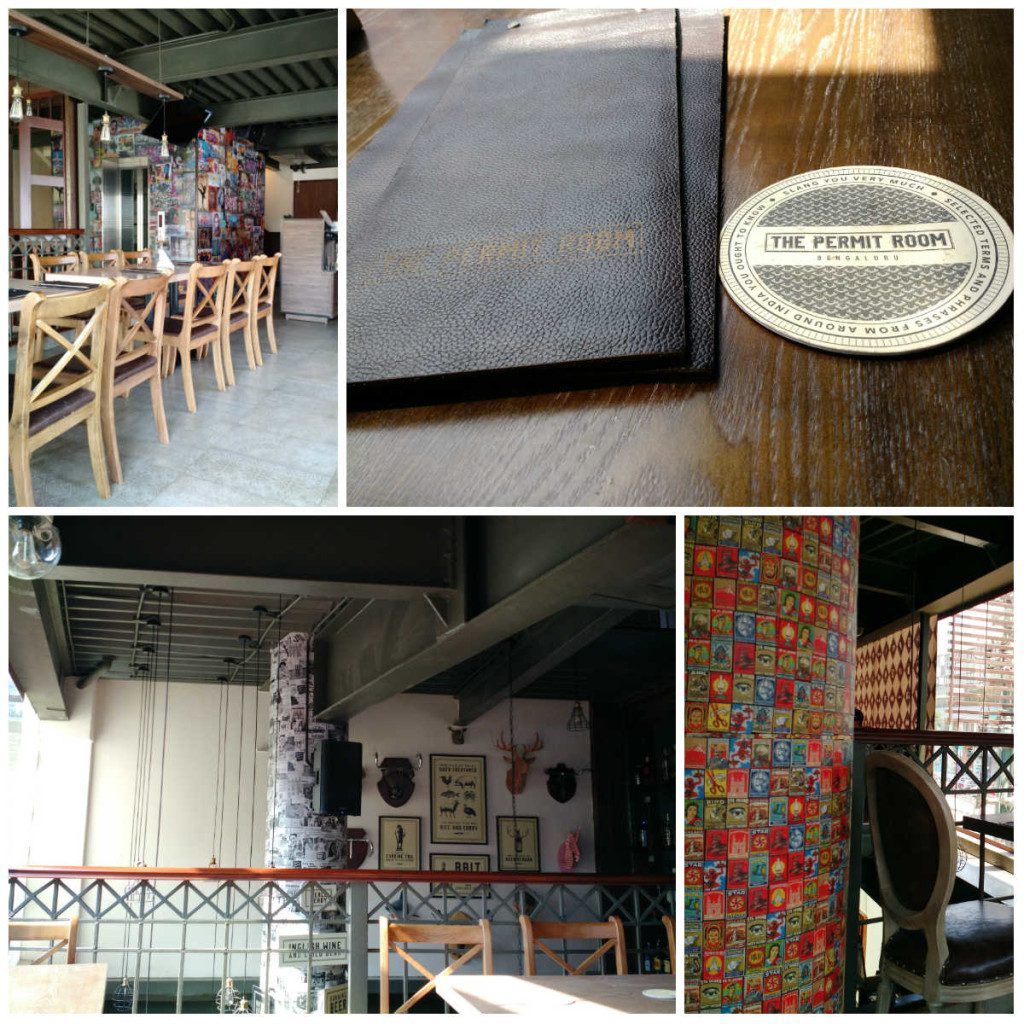
    Monkeys thankfully evolve, such is the nature of things, and one such has now done exactly that to become Toast & Tonic: East Village Style. (map) Our East Village experiences have been limited to a couple of trips around Shillong and Gangtok (no need to get technical about directions, now!) and we’ve never actually been inside a barn, so back in March, we decided to broaden our perspectives on both counts and celebrate D’s birthday there.  It was meant to be a surprise for her, and since I’d heard that it was usually packed, I reserved a table a day before. But we got delayed a bit thanks to our neighbour-friends surprising us both with a cake. While on our way, I wondered whether I should call and request them to hold the table. Before I could do that though, I received a call from them confirming our visit. They also asked whether they should arrange a cake for D because they wouldn’t allow food from outside. Very classy, and professional. Impressed even before I got there.

    From the very second visit, the front door of Monkey has given me a “TARDIS feeling”. Partly because of the door panel shape, but mostly because the space inside is much larger than what I’d have imagined from outside. T&T feels even bigger – the chipped wood ceiling seems higher, and somehow the overall place is roomier. It could partly be because only a couple of tables were occupied when we got in, but even when fully packed (which was the situation by the time we finished lunch) it doesn’t really feel congested. Everything from the bar and decor to tableware exudes a casual elegance, making it a perfect spot for a lazy Sunday lunch, which was what we were there for.

    collage1 (more…)

  • The divide and the rules

    It has been just over a year since I wrote “A responsible meritocracy“. My view was that meritocracy had indeed played a huge role in dislodging systemic inequalities (e.g. ethnicity, religion, even economic background) but not only is it not an ideal system, it is now widening the gulf between the haves and have-nots, and even creating entry barriers to prosperity. To use an adage from pop culture, it’s a hero which has lived long enough to see itself become a villain. Arguable, yes.

    Every system is bound to create two sets of people – those who benefit from it, and those who do not. I’d rate the success of a system on two counts – the ability of its beneficiaries to see the other side, and what they do about it.  The merit in a meritocracy is accrued courtesy intelligence/smartness. Intelligence is a means to creating the universally acknowledged currency – money. In that respect, I’d say that Silicon Valley has been a big beneficiary, and probably the most visible. (more…)