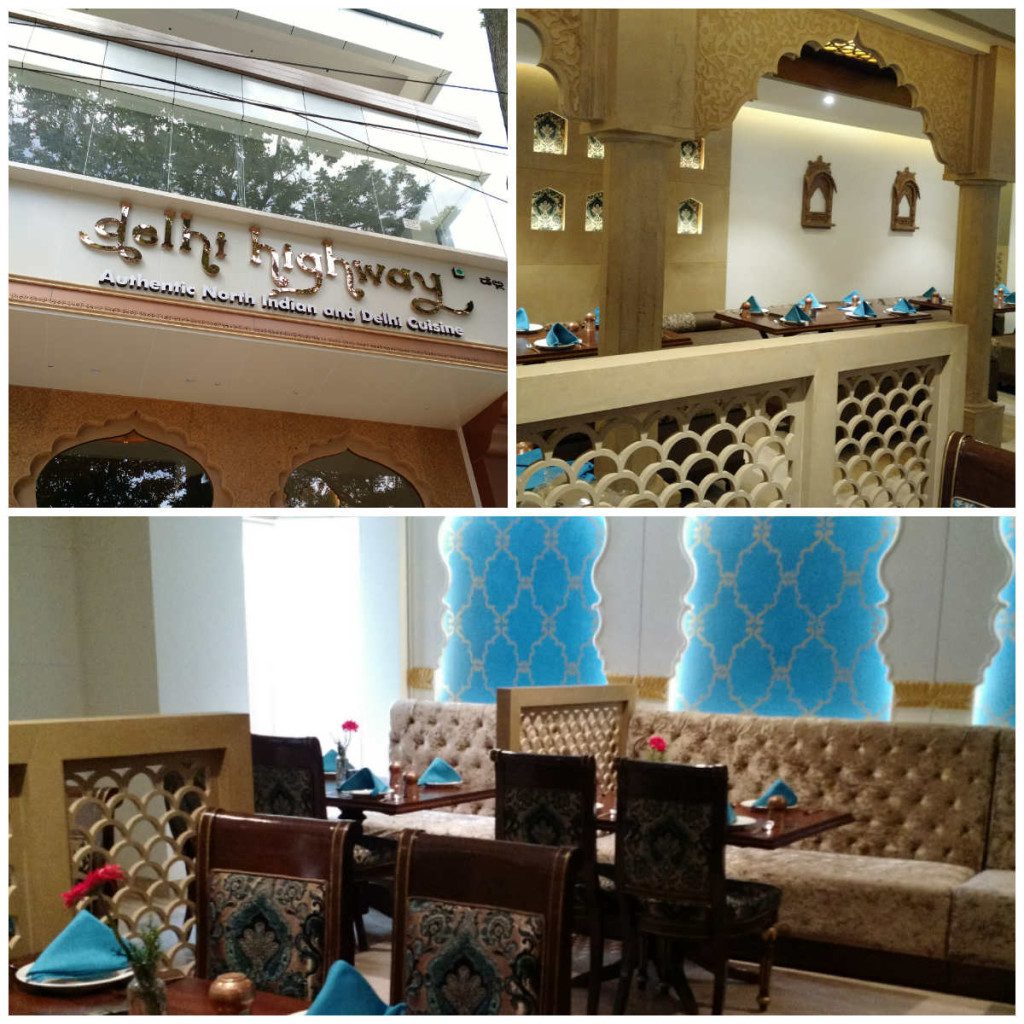
My first brush with the restaurant was more than a month ago, when I noticed its construction happening on 12th Main, Indiranagar. The style immediately made me think of Mughal architecture, and thanks to the jam I was stuck in, I had this morbid thought of a memorial for someone who had given up on life while waiting for the traffic on the road to clear! Because c’mon, there was no way another restaurant could be opening on this road! But I was wrong, a few weeks later Delhi Highway opened its doors, (map) and promptly deceived me again – the smile on my face as my mind conjured up the vision of a Butter Chicken was wiped off when I saw the green dot next to the name.
-
Prisons of happiness
I read a few articles recently debating whether the purpose of life is happiness or usefulness/leading a worthwhile life. The Aztecs as well as contemporary thinkers favour the latter. I am not convinced though. For starters, I think ‘purpose’s is something our consciousness insists on. The world will go on without us, it is for us to derive a sense of meaning for ourselves. And since it is subjective, I’d optimise for happiness/avoiding discomfort (I’m bunching it together for now) simply because my usefulness/being worthwhile to others around increases when I am happy.
This is a topic I have been circling for a while now – There is no middle path? was a take on happiness vs avoiding discomfort, for instance. A favorite line of thought from “And the Mountains Echoed” has been coming back to me in various forms from various people in the last fortnight. “..but most people have it backward. They think they live by what they want. But really what guides them is what they’re afraid of. What they don’t want.” That is essentially avoiding discomfort. (more…)
-
The Remains of the Day
Kazuo Ishiguro
I was a little biased before I started this book. It is impossible to escape the hype – it is a Booker prize winner! But two points – the ‘slimness’ of the book, (!) and the overall premise – a butler’s reminisces – made me wonder about how good it would be. Silly me, I realised long before the book was finished.
The premise is indeed that – Stevens, the butler of Darlington Hall sets out on a ‘motoring’ tour at the suggestion of his new employer Mr.Farraday. In addition to some leisure time before he implements a new (and much reduced) staff plan, Stevens also looks forward to meeting and recruiting the mansion’s former housekeeper Miss Kenton, who had left the service to get married. He is hopeful of achieving this end thanks to a letter he has received from her which hints at some dissatisfaction in her life and a desire to be back at Darlington Hall.
The year is 1956, and this is as close to a roadtrip I have read of in that era. 🙂 The narrative, in the first person, is as revealing of the perfect butler qualities of Stevens as the actual stories he shares. This is actually the triumph of the author – the masterly control over every said and unsaid word of the protagonist. The book takes us through the events of the trip itself as well as anecdotes from the past – when Stevens was still serving Lord Darlington. These tales bring to light the political intrigues at Darlington Hall as well as Stevens’ relationships with those around him – primarily his employer, and Miss Kenton. Hindsight gives Stevens (and the reader) a much different perspective of events from the time they actually occurred. We are able to see things much more clearly, something Stevens failed to do then. (more…)
-
Interfaces : body and beyond
About a year and a half ago, in An Ambient Future, I had written on how our interactions with the internet will move from switching it on (on specific devices) to an always on ambient version powered by objects beyond mobile devices (IoT) and inputs beyond touch. In the last few months, I have seen more indications of this movement.
Shipments of mobile phones are trending downwards (via) Has the potential of paradigm shifting upgradations on the mobile device peaked? It does seem so. The value, as Neil Perkin says, is shifting towards service, powered largely by AI. A word on wearables – nah! (at least not in its current form) I think it will most definitely have excellent application in sports/health/fitness, but I find it difficult to see it as a mainstream UI successor to the mobile device in terms of scale. On the other hand, Google Home and Amazon Echo (and Dash) are significant advances on alternate interfaces.
(more…) -
Biergarten
First published in Bangalore Mirror
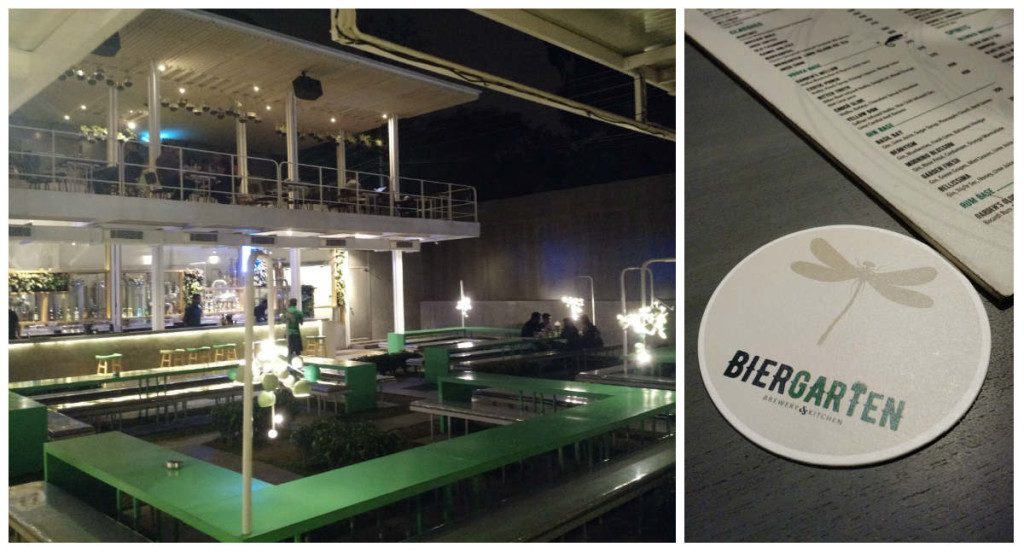
Whitefield might have its share of infrastructural woes, but in the meanwhile, the number of microbreweries opening up in the neighbourhood means that someone is at least raising hops! The beer would be available only in early September, we were told when we visited Biergarten, (map) but we are used to waiting in, and for things, in Whitefield, so we weren’t surprised. Sooner or later, things will hopefully get bitter. The place covers a fairly large area – at the centre is an alfresco section, with long tables that are perfect for the shared table concept of a conventional biergarten. Surrounding this, but a level above, is a mix of seating options – bar stools, plush sofas for lounging, and functional seating. The bright lights and the green glow give a lively feel to the place, the music is upbeat and the overall ambiance is quite relaxing. The courteous and accommodating service also helps.