• Néih hóu Hong Kong! (Day 2)

    Contd from Day 1

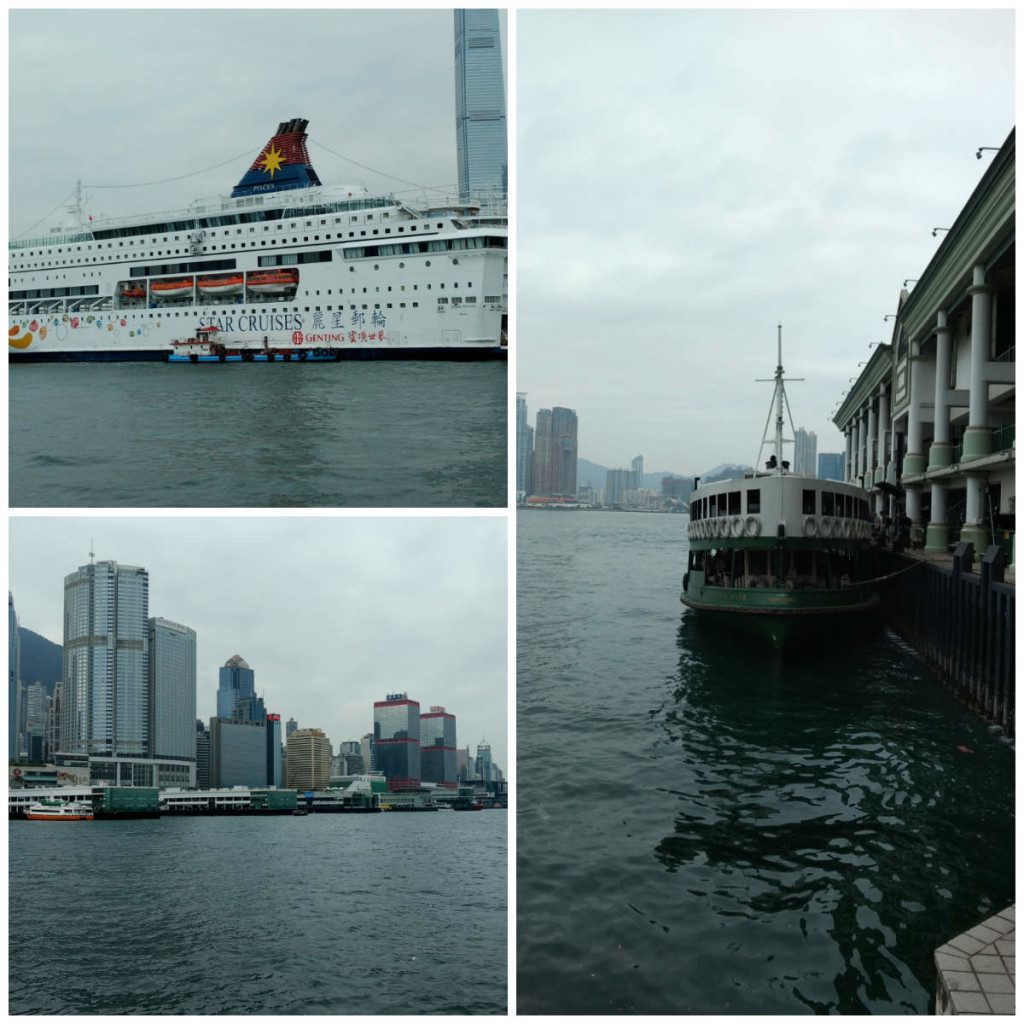
    We got up at around 7.30 with an aim to leave the hotel in an hour and a half. The standard Continental breakfast at Xi was absolutely good enough to begin the day. Mandy at the reception promised to help us follow up on the lost baggage. Ngong Ping was the plan for most of the day. The journey including MTR transfers and the walk took less than an hour. Might have been lesser if we’d known about the passage directly from the Tung Chung MTR to the cable car. We’d bought tickets for a guided tour via Klook and could therefore bypass the queue. If you reach early, you could probably wait in the queue a bit and buy. The instructions were clear and after a short wait, we boarded the crystal cabin- this one has a glass bottom – a real one which is cleaned after each trip. D remained poker faced and refused to comment on her previous experience with such things. The views from the cable car were spectacular – we could catch the giant bridge to Kowloon that was under construction, the airport, and as we neared the Ngong Ping end (20 mins) the Tian Tan Buddha (aka the Big Buddha).

    collage5 (more…)

  • Néih hóu Hong Kong! (Day 1)

    My introduction to Hong Kong beyond just a name was thanks to James Clavell and Noble House. But that was more than a decade and a half back. As we were making the arrangements for the trip, I finished reading Flood of Fire, the final book in Amitav Ghosh’s Ibis Trilogy. It makes references to many real life characters, one of whom is William Jardine, of Jardine Matheson & Co., most eminent among Hong Kong business conglomerates from the time of the First Opium War to this day. The final pages of the book deal with the auction of land lots in Hong Kong, and the origin of what is now one of the most important nerve centres of the system of the world. Reminded me of the Amitav Ghosh book connection during our Penang trip in 2014, and set up the trip very well.

    We ditched Meru for Uber this time and it did turn out cheaper. Surprisingly Malaysian Airlines had worked out better than Air Asia in terms of time and cost, and given the chances of adventure with the former(!), we took the midnight flight to Kuala Lumpur, which was delayed. We just about made the second flight and finally reached Hong Kong almost an hour later than scheduled. The good news was that we weren’t lost in transit, the bad news was that one of our bags was – the one with the clothes for the first couple of days! The delay also meant that our special lunch plan was sabotaged. We made peace with that, and after getting the currency exchanged, proceeded to make the first and most important transaction – the Airport Express Octopus Card. The Octopus is a payment card with tentacles everywhere – restaurants, transport, shopping and so on. We chose this particular card because our plans included a lot of MTR (mass transit rail, not South Indian dishes!) but you could buy a card of lesser value and use buses, trams etc too.

    collage2 (more…)

  • Pulimunchi

    First published in Bangalore Mirror

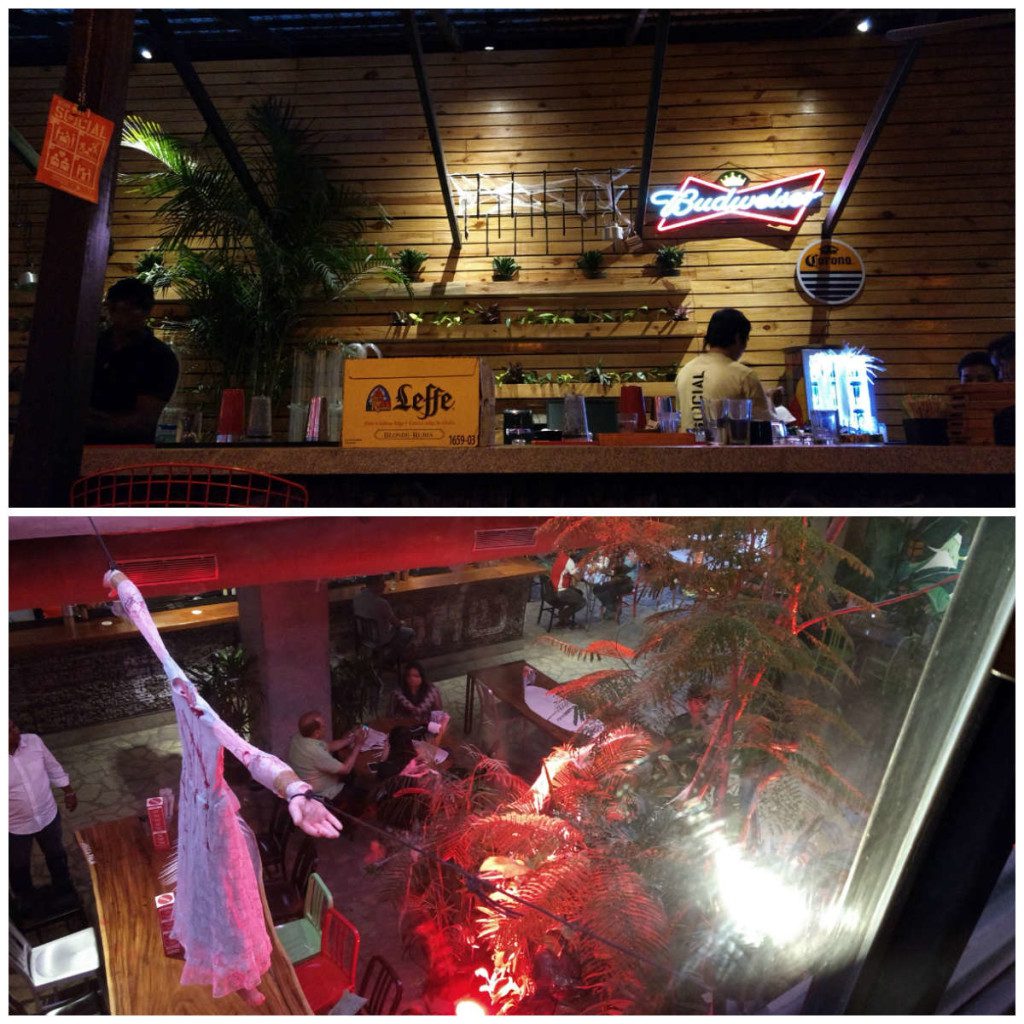
    Given the dearth of seafood options in Indiranagar, it shouldn’t be difficult for a restaurant serving coastal cuisine to mussel its way in. That’s perhaps what prompted a Sadashiv Nagar original to seek new shores. (map, this is above Beer Cafe) The fabulous décor does a fantastic job of reeling you in as soon as you enter the place. The elegant and comfortable chairs and benches, the photos in distressed frames, the wall art, the tastefully selected floor tiles and lighting, and my favourite, the tiled roof that recreates the charm of an old world home, are all elements that provide the perfect ambiance for the cuisine being served. Given that we had a lot of ground, and water to cover, we began in right earnest.

    collage1 (more…)

  • The Shadow Lines

    Amitav Ghosh

    “People assume that time is a strict progression of cause to effect, but *actually* from a non-linear, non-subjective viewpoint – it’s more like a big ball of wibbly wobbly… time-y wimey… stuff.” ~ Steven Moffat. This probably best describes the narrative structure of the book – it moves forward and backward in time, sometimes seeking parallels, and sometimes closure, it would seem.

    Many books in one, that’s a way to describe this work. It is Tridib’s life and relationships, seen through the eyes of the narrator. It is the narrator’s own story – in Calcutta where he grew up, in Delhi where he studied and then in London. It is his view of the world he lives in, the people who inhabit it and his changing relationships with them. It is also the relationships within the Datta Chaudhari family and with their friends – the Prices. But across these, I could see at least a couple of common threads. One, the aspect that gives the book its title (I assume). Places, events and people have lines connecting, and sometimes disconnecting them, but these lines exist only in some perspectives. Hence, shadow lines. In this book, I felt the focus is largely on places – the boundaries between nations are lines, and the connection between Calcutta and Khulna seems much stronger than between Kolkata and Srinagar though the latter pair exist in the same country. The second aspect that offers a connection is the end of the story, it is something that brings closure of sorts to all the three narratives I mentioned earlier. (more…)

  • Cult of impersonality

    Koramangala rarely disappoints. This time, it was the Uber ride, and the thoughts it sparked. From Whitefield to Koramangala, I repeatedly watched the driver refusing to learn from his mistakes. e.g. sticking to the right lane and getting stuck behind cars waiting to take a U turn, when we had to go straight. Advice was futile. This (the behaviour, not the driving!) took me in a couple of directions.

    First, our species’ (generalising, of course) refusal to rethink belief systems even when new data presents other possibilities. In the last few weeks, I have seen two levels of this. One is at a (public) personality level – from Modi to Tata. While I have little reason to doubt the Prime Minister’s intent in the entire demonetisation exercise, I see the absolute lack of empathy (no, crying and listing one’s sacrifices doesn’t count) and the failure to course correct as arrogant and cruel. When multiple sources indicate that Ratan Tata’s governance wasn’t really spotless, shouldn’t he be attempting a better route than allowing the spat to be drawn into something as silly as Twitter hashtag wars, especially when the claim is that the organisation’s legacy (and not his own) is paramount for him. In both cases, ego could be the barrier. (more…)