Category: Self

  • Emotion as a Service

    More than a year back, I had written about institutional realignment and had briefly mentioned the institutions of marriage and parenting. ‘The currency of relationships‘ made me think of this, and family – immediate and extended – as a societal construct/contract/ institution, and probably even as a tradition. Where we are born, and whom we are born to, are apparently out of control, but we do have an illusion of control courtesy the choices we make as we go along. Thanks to these choices, our lifestyle and our perspectives may follow a trajectory that is totally different from the circumstances and people we grew up with/in. This is not just about the people from our childhood/youth, but is a continuous process through life. Each of us find our own ways to deal with the constant flow of people through our lives. These are again choices, and like most choices involves some amount of sacrifice and bring with them their own set of consequences.
    Clipboard02

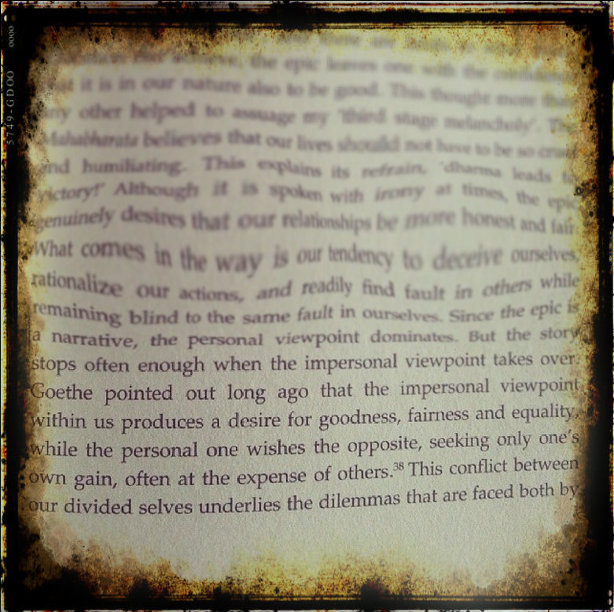
    I loved that Goethe paraphrase, because I think it sums up our relationships very well. At the risk of sounding cynical, (or receiving a ‘speak for yourself’ comment) I’d say that we’re increasingly becoming selfish as a species. I have always had the notion that most relationships are contextual, and it would be difficult to scale our emotions/feelings for others for an indefinite time frame. Yes, I do acknowledge there are exceptions, but that’s what they are – exceptions. Do a quick test and find out how many people across your life you’re still in touch with – bouts of nostalgia not included?

    It is with all this as the backdrop that I read Scott Adams’ “The Future of Marriage“. It articulates very well a thought that had crossed my mind earlier. (Of course, he obviously explores it way better than I could have) He deconstructs the institution of marriage and argues that marriage made sense “when the world was inefficient. You married a person nearby who could provide most of your important needs while hoping your lesser needs could also somehow be met.” Now, he says, the internet has allowed us to have a barter economy of relationships. In other words, a virtual spouse comprised of a dozen separate relationships. He tempers everything by saying that in the future, marriage may be one of the many options available. By sheer coincidence, and in a different context, I came across this quote attributed to Steve Macone “A tradition is a habit whose logic has faded“.

    I thought about this in the context of the expectations I had mentioned in the ‘currency of relationships’ post. If the institution of marriage can have a barter economy, why not other relationships? After all, isn’t every relationship a barter at its core? It’s just that we are rarely comfortable with voicing our expectations in the case of an emotional ‘transaction’, quantitatively or qualitatively. (generalising) Parents expect their children to look after them when they are old, in return for bringing you up; relatives expect you to return the favours they once did for you, and so on.

    So who knows, maybe our pace of life and our need to be (seen as) fair in all our relationships will conspire to form a barter ecosystem that offers emotion as a service. It is possible that an alternate path to prosperity might take us in a different direction, but in the era of the quantified self and the augmented human, when we slowly transition our selves into the cloud, maybe ‘Emotion as a Service’ (like)  is not an impossibility. What do you think?

    until next time, a qualified self
  • The currency of relationships

    Clipboard02

    Some people know me way too well! 🙂

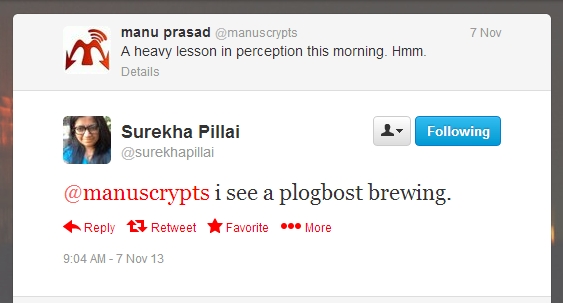
    A few days ago, I received a message that gave a jolt to my perception of how I deal with other people and what they make of it. I had written this post sometime back on taking friends for granted, and while that was in the specific context of friendship, this is an approach I extend to all relationships, be it transactional or emotional. I like to think that I’m fair in my approach and try to give back more than I get. But apparently, at least according to one person, I am not, and am “Mr.Use and Throw”. It hurt because I have always acknowledged the help that I’d received, to that person and others. I have not had an opportunity to repay it in kind, but whenever I have felt that my presence would bring happiness, I have made it a point to be there. I did reply with my perspective on the accusation, but it led me to think of the subject and how our actions are perceived by others.

    In this case, for instance, there were possibly expectations from me that I had not known of – not of a monetary kind, I think, but some other kind of help or acknowledgement. (Generalising) We live in an increasingly transactional world, where we are able to quantify all sorts of things and are also able to throw money at issues/problems/situations to resolve them. In scenarios where that is not applicable, we use our judgment to repay a gesture of kindness/affection/love. Over a period of time, I have dealt with the latter by acknowledgment and thanks in word and deed, and by paying it forward. But there is no standard currency in relationships, and my lesson from this experience is to not to take for granted that my approach is the one that works for people at the receiving end. I should spend some time first in understanding expectations, and then meeting them. When the price and currency are not agreed upon at the outset, you will need to keep paying until both parties have agreed that there are no dues.

    20131117_163614

    until next time, emotional monthly installments

    P.S. and a happy Thanksgiving 😉

  • Live Empty

    old tree and new tree stories

    (via)

    Such is the pace of life now that I can easily identify with the opening paragraph here. As I read on, I completely loved the part about the graveyard being the most valuable land in the world, “because with all of those people are buried unfulfilled dreams, unwritten novels, masterpieces not created, businesses not started, relationships not reconciled.” The rest of the article is about dying empty – to complete every task, thought, action, to leave nothing unspoken, uncreated, unwritten. 

    Later, I read on Brain Picking, “Henry Miller on Creative Death“, in which Henry Miller, defining art, says, “Strange as it may seem today to say, the aim of life is to live, and to live means to be aware joyously, drunkenly, serenely, divinely aware. In this state of god-like awareness one sings; in this realm the world exists as poem. No why or wherefore, no direction, no goal, no striving, no evolving…. This is the sublime, the a-moral state of the artist, he who lives only in the moment, the visionary moment of utter, far-seeing lucidity…. in the sense that any moment, every moment, may be the all; for the artist there is nothing but the present, the eternal here and now, the expanding infinite moment which is flame and song.” And later in the article “On the contrary, his zest for life is so powerful, so voracious that it forces him to kill himself over and over. He dies many times in order to live innumerable lives.

    I read a pattern in these. Of dying every day and being reborn the next day. A new life. I faintly understand and relate to this, but within me is another side that plans, that likes stability, and saves for a rainy day. I am unsure of how these two can co-exist. And I can’t help but be drawn to the lines at the beginning of the Miller post ““One aspect of our nature cannot be exalted above another, except and the expense of one or the other.” 

    If so, I already know the winner, and as the first post points out, that would create an angst, or a perpetual state of discontent. It would seem as though the opposite of ‘die empty’ can only be ‘live empty’. There can be no middle path, and that’s scary and sad.

    until next time, empty vessels and a lot of noise

  • Food for the soul

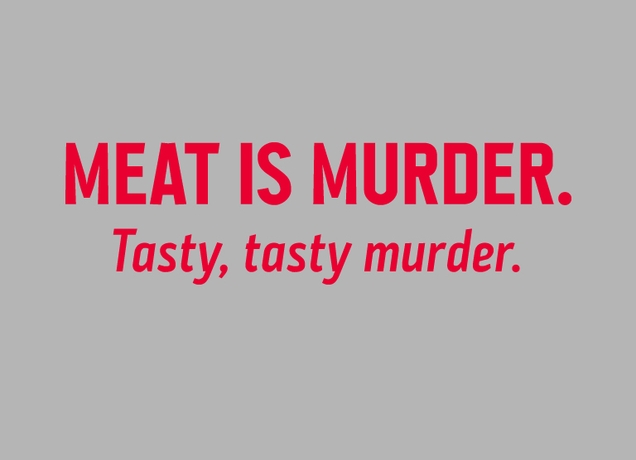
    Thanks to Zomato, I got to spend some bak bak time with Mayur back in February. Along with Rocky, this guy gets to do the two things I’d rather do always – eat and travel. While it was a fun meet up, it was impossible to agree on the subject of meat. Most of the others around were fanatical carnivores – like myself (and I was wearing a tee with the message above) – so we traded insults with him for the first few minutes before the man silenced us with “food is like religion, and you should not piss on other people’s temples”.

    After that the conversation quickly moved to life philosophy. I (along with at least one other person) was curious to know how he kept himself interested in the food + travel routine. Wouldn’t it get monotonous? We talked of retaining child-like levels of curiosity and wonder, an openness to experiences, of starting the day asking what newness can be done today and realised that as we grow older, we look for reasons not to do things, as opposed to the reverse.

    After taking my trip with a food quote, (and underlining his instant wit) he went off to talk to other folks, and the rest of discussed how this also translates to how we interact with other people. Earlier, we used to trust others until they gave us a reason not to, and these days, it’s exactly the reverse. I wondered if this is probably related to the ‘openness to experiences’ we had talked of earlier.  (more…)

  • I, the responsible

    …and the poor poor girl died earlier in the day I wrote this. Given the delay between my writing posts, and them getting published here, we should have collectively moved on from the issue by now, at least in terms of mind space and media space- mainstream as well as trending topics.

    Much, much has been written about the issue – the male/female/Indian/ NRI/feminist/opportunist/armchair activist/ weekend activist/ ‘I was there to protest’ perspective, and these were only some examples – slice and dice any way you like and you’d find a voice that spoke on behalf of the piece you carved. Like this.

    Much as I abhor what happened, I see it (rape) only as one symptom of the disease we all have – our own malformed sense of justice. Probably one of the worst symptoms, but not the only one. Injustice is injustice, and it varies by degrees only on the basis of our own perspectives of right and wrong. It happens everyday – talking on the mobile phone while driving/riding, fudging tax forms, making the maid plead for a salary raise, bribing a cop, drinking and driving because you have assured yourself that you are still in control… ask your conscience, you’ll come up with many more. No, I’m not really confusing it with breaking the law – here’s an example. Five hundred times you speak on the phone while driving and nothing happens, but nothing stops the five hundred and first time being the instance that maims someone for life, and leaving him/her bereft of limbs, and perhaps dignity. Ask that person which is a larger crime – what happened to him or a gang rape – the answer should not be surprising. Every action/inaction that affects the dignity of another person, that shows another person that one can get away with breaking the law, that walks the grey area between absolute right and wrong in however minute a way, is injustice in some form.  And in this daily, casual, personal #theekhai attitude to justice lie the seeds of every horrible act of injustice. Any kid watching this today and seeing the perpetrator walk away scot free will imagine he can get away with a bigger crime. And so it grows, and morphs into multi-thousand crore scams and gang rapes further down the chain. A bit like the broken windows theory.

    Granted that an elected government has among its duties the responsibility of ensuring the protection of its citizens. Should we protest if they do not? Of course, but that does not absolve me of my obligation, nor does it free me of the nagging thought that as a race, our notion of justice is based on convenience. Sometimes I wonder if the birth of laws in society was a response to the slow death of justice within human beings.

    So yes, I am the privileged who can update my Facebook status, and move on with my life. I am responsible and there’s nothing I can do about it. Before I casually judge others, I have to wonder if I have the moral authority to do so. After all, I only vary by degrees.

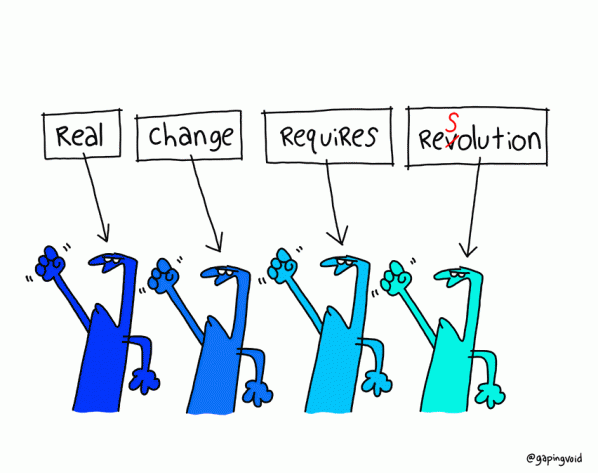
    (image via gaping void)

    until next time, </justice>