
Category: Religion

  • Aftermath…..

    ‘Intrigued’ might seem an insensitive word, but as the nation observed the first anniversary of 26/11 last week, I was intrigued by the reactions of different segments towards it. Bloggers, microbloggers, all forms of media, brands, everyone had a take on it, and their own ideas. Yes, nobody forgot, but this is year 1. Doesn’t count.

    I got few mails asking me for my opinions on everything from government apathy to the twitterverse on 26/11 – the POV of a blogger. I hardly had any, and whatever I had, I usually share here, like this. (my views haven’t changed) But I had been thinking about my feelings on the day, and what, to others, and perhaps even a part of me, might seem to be apathy, until I read this well written post. (thanks to Balu) And that set me thinking on standards and ‘Who decides?’, and then on to a tangent.

    Who decides what is to be done and how?

    A nation is formed. Its popular leaders, elected by the people, decide the way the country should be run. From sectors that should be open to private investment to tax slabs and from infrastructure to relationships with neighbouring countries, a few individuals, representative, some would argue, steer the fate of the country. In a few years, the policies and processes set up to aid the smooth functioning of the conduit – between the representatives and the represented- starts to work against this desired objective, because the balance of power between the objective and the processes have shifted. In a few more years, even the objectives which should have perhaps been reviewed, have been taken a step further, and promptly forgotten.

    Humans get together and aggregate, communities are formed, communities agglomerate, society is formed (in the original usage, not the housing kind :|) The society builds in conformation. Even with the non conforming kind, there is an understanding. Belief systems evolve, religions are formed, and rules are made. Do’s and don’t s are established in societies and sub societies. Popular culture is created and social ethos are formed. In a few years, the reasons for why things are done, and in the way they are, get forgotten, a mindless following ensues. Non conformists emerge, but then, we’ve been there before. Trading one system for another.

    A few people get together and form an organisation, knowing that they can create a better product/service than the places they have been working in. The founders have a vision for their work place, they set up systems and processes to achieve this, they hire more people, who can implement these. In a few years, a conglomerate is formed, the founders are at the top of the heap, there is a new breed that manages daily affairs, the process diktats are in place…. you know where I am going with this  🙂

    In all these cases, there would probably be a disruption at the end, and the start of a new cycle. It is what seems to be expected. In general, nations will sit up and take collective notice only when they are themselves under attack. The travails of another city, much less country are viewed only through the prism of how it would affect us. Society will take up cudgels when they feel a threat to the status quo. Those in power will want to retain it. Organisations collapse when they are unable to see macro changes and lack the foresight to adapt. When they begin to get affected, and they react, in many cases, its too little too late.

    The common factor is the LCD, no, not the screen kind, the kind you learned in primary school – lowest common denominator – the human. Recently, when taking some personal decisions, I tried watching my own mind work, drilling down from the seemingly obvious reasons to the unstated ones, and from there, down to the foundations of why i thought the way I did, and therefore did the things I did. Belief systems, created and maintained by experiences, peer metrics etc, and thought structures, the changes to which were only superficial with time (contrary to expectations), they were all there, with the reasons buried under multiple layers built over time. My experiences, my perspectives, so I decide, on hindsight, objectivity was perhaps impossible.  Autopilot. This is perhaps what gets reflected in everything that I am part of – organisations, society, nation.

    The realisation was pretty simple. Standards and decisions are on auto pilot, though they seem otherwise. Humans. Us. Living in bubbles, deciding objectives and setting up structures to get there, and then forgetting why.  Even when I think I am deciding, what is deciding for me is the baggage of the past.

    I thought of the poor souls in Leopold, Taj, Nariman House on that fateful day….who till then had built a structure and process to their life. Is that what it takes to get one out of autopilot? A cataclysmic moment – the moment when beliefs and structures scarily slip away, and the illusion of control becomes exactly that – an illusion. In the aftermath, calculated scenarios mostly don’t count.

    until next time, deciding the questions
  • Juley

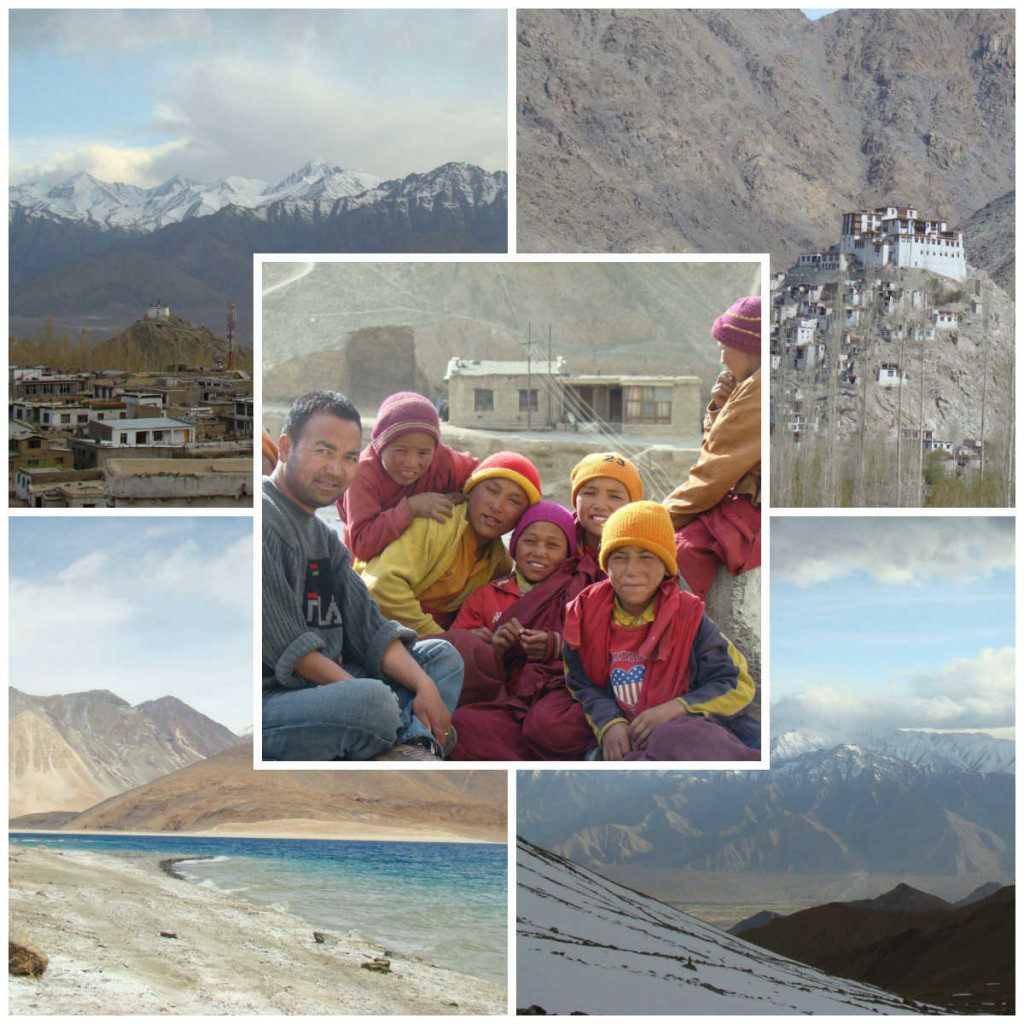
    In my mind, I can still hear that Ladakhi greeting, though its been a few days since our return from Leh. There are stories of mountains and mountains of stories I could tell you. Of the trip that almost didn’t start because the taxi service got the day and month right, and booked us a cab for 2010!! Of the Delhi weather which over delivered on the warm welcome premise at 40 deg C.

    Of the jovial captain of the Leh flight, who said that one third of our trip cost would be ‘made up’ by the first view of Leh. Of him being proven right by a sight so magical that one could hear a collective gasp as the lofty snowy peaks were seen for the first time through the windows. Of the mountains that for one moment looked the magnificent phenomena they were, and in another looked like clay models that kids made for school exhibitions.  Of another statement the captain delivered on – a free camel ride, he called it – the landing at the Kushok Bakula Rimpoche Airport.

    Of being on a high already and wondering whether one would be hit by the much written about high altitude sickness. Of being phlegmatic while popping pills and drinking bitter cough syrup at the first sign of phlegm. Of wandering through streets where tiny wrinkled old people chanted with prayer wheels in hand, and the next generation listened to heavy metal and peddled rock bands’ skull tees. Of wandering up mazes to see the ruins of the old palace and then lazing in the relatively palatial comforts of the hotel. Of waking up at dawn and setting out on journeys in which every view was click worthy, of getting tired of clicking and relying on the video mode far too much, even as the mind captured images. Of the visit to the gurudwara, where one was caught between the twin pleasures of the awesome sweet tea and the warmth from the cup.

    Of gazing at the mighty river that spawned a civilisation, and wondering how much has changed for the nomadic tribes that live in tents and roam about with their Dzo (a hybrid of yak and cow). Of the noisy rush of air as one climbed up mountains to gompas (monasteries) that awed you with their silence. Of glass cases that carefully and lovingly stored centuries old manuscripts and a realisation of the tiny timeframe of six years of blogging. Of the excitement of staying in a tent, quickly followed by the realisation of how exactly one could feeze to death, and then feeling an intense thankfulness for one’s supple and warm bed companion, despite the rubbery exterior -the hot water bag.

    Of boarding passes that got you to 35000 ft in no time, and mountain passes at half the height that made you crawl for almost three hours to get to them. Of being driven up narrow mountain roads, slipping on snow every now and then, and wondering if your final destination was going to be up or down. Of pitying the military guys who lived in the severe cold, and then muttering at them for making decisions that cost us an entire day. Of creating yellow snow after getting tired of holes in the ground and portable loos that cleared up the blocked sinuses in no time!! Of seeing a lake at 13500 ft- Pangong, shared by two countries, that competed with the sky for the shades of blue that could be displayed. Of a heavy snow fall that forced one to get out of the comforts of the push back seats in the vehicle and attempt to push the vehicle, which pushed back!! Of the disappointment of knowing that nature took only a few minutes to shatter one’s well laid plans. Of begging and pleading and cajoling cops to let us through after the official closing time.

    But most importantly, of the wonderful wonderful person who took it upon himself to make sure that we got to see all the sights we wanted to – Tsewang. He, who confessed after much questioning, that he was having his first meal of the day at 3 pm after driving 9 straight hours through horrible conditions at altitudes above 14000 ft.  And then proceeded to drive up to Khardung La, the world’s highest motorable road at 18380 ft-  all in a day’s work, he said. Nothing I said or did could assuage my guilt.

    The long journeys through the mountainscape pushed random thoughts into my head- of heaven, and whether living at such high altitudes meant that one was closer to God. 🙂 Of whether the milieu that nature offered in these places instilled the compassion and concern for fellow humans, that I saw in many around, and if that was the secret behind the peaceful and happy faces, despite the hard conditions and lack of even common facilities in several places. The great heights and its citizens gave me perspectives and a sense of harmony that I still seem to be carrying with me, hoping that the daily grind won’t take it away.

    As I looked at Leh before I stepped into the airplane, I realised that this might be the only time I’d visit this place. I also realised that perhaps my memories would fade, and I might forget the images I could now easily recollect in my mind. But I like to think that there’s one picture that will never go away – the lofty peaks of the mighty Himalayas, glistening with snow, and a light breeze that causes the flags at the monastery to flutter silently, all of this can only make up the background for the innocent, peaceful joy on Tsewang’s face as he plays with the Lama kids, and as he sees me approaching, he  asks me with his customary smile, if I’m ready to continue the journey.

    until next time, a daily lama

    PS. You can catch a few photos here.

    collage1

  • Siddhartha

    Herman Hesse

    Somewhere in Pankaj Mishra’s ‘The Romantics’, there’s a conversation about ‘Siddhartha’ and it being a reason for a Westerner’s interest in Buddhism and India. A conversation, not my view 🙂 That, and the fact that it also finds mention in Mishra’s other book ‘An End to suffering’ is primarily what led me to the book.
    The book is best described as the story of an alternate version of the Buddha, and the Buddha features in the story too, including a conversation.
    The message is perhaps like a quote I read somewhere, which amounts to “There are many ways to the top of the mountain, but once there, the view is the same”
    The arguments are compelling, and makes you think, not just about the end, but also about the ways in which you get there. I especially liked the thoughts on the concept of time, the ‘goal vision’ obscuring everything else, and ‘the opposite of every truth is also true’.
    Forget Buddhism, it is an excellent read on life, what we strive for, and my favourite paradox – the meaningfulness and the meaninglessness of our existence.

  • Religiously following….

    I’ve always maintained that even religion should have a shelf life. This comes from a belief that religions were created at different times, basis the prevalent culture, accommodating the scenarios- natural and human created, and lifestyles in those times. The teachings were aimed at a more meaningful existence for fellow human beings, considering their existence then. Religion is a function of time and times.

    However, we seem to have held on to the words, more than the spirit, and thus perhaps failed to internalise the messages that are built into the texts. That could be the reason for the strife around us.

    Does a new time warrant a new religion? I don’t think so. In times when the mass shrinks and the individual and customisation rises, perhaps the opium of the masses needs to be re-looked at too.  I think spirituality and the connection to a higher force is a deeply personal thing, and should not be subject to the constraints of a religion. It should come from within rather than without, and I think such an understanding might lead to better lessons with a much longer shelf life. These lessons would make us better human beings, with a deeper understanding and compassion for everything around us, and therefore make the world a better place.

    Religion is not the path to salvation. A life lived with a better understanding of the spirit of the messages in it, could be. What say you?

    until next time, keep the faith

  • No more holy days…

    Last week had a very holiday theme to it. Technically, there was only a day off, but the particular day was different for different places..and work places. I had the day off on Wednesday and D had an off on Thursday. Well, a far cry from the good old days, when the Puja holidays was an eagerly awaited annual event.

    Its appeal lay in the fact that school books could be ‘legally’ laid aside for a few days. I still remember treating the occasion with all the seriousness it demanded, and even including comics in the book-ban. As i grew older, non-school books were gently eased out of the process. So were many accessory rituals like the early morning bath and going to the temple.

    Zoom to now, when the single day off is just another holiday to me. D does try her best to retain the last vestiges of an occasion that now exists only in the memory archives. But the link to the original event is all but severed.

    There are two losses that i mourn for. The first is of character – the character that differentiated and defined each of these holidays. The character that made sure each of these holidays created specific memory associations (our memory, i think, used folksonomy long before web 2.0) that would last decades after the holiday was last celebrated in the way it was meant to be. The memories now created are just another multiplex movie and a few ‘upto 50%’ off deals. I think we are celebrating more, only we have forgotten what we’re really celebrating. (pardon the generalisation) The second is of the innocence – individual more than collective. From the child who had oodles of faith and belief in the sanctity of the rituals he undertook, and derived great pleasure from it, to the cynical adult who battles hard to regain his faith, albeit in the form of spirituality.

    until next time, keep the faith