Category: Internet

  • Algorithms of wealth

    Some strange quirk in the cosmic order of things led to Landmark shipping me Piketty’s ‘Capital in the Twenty-First century’ instead of Rana Dasgupta’s Capital! I kept the book (yet to read it though) because economic disparity has been an interest area for a while now, I had touched upon it in the context of AI and job loss in Artificial Humanity. Reading The Black Swan has only accelerated this interest.

    Taleb divides the world  into Mediocristan and Extremistan to point out the extent of predictability in the context. Mediocristan can safely use Gaussian distribution, (bell curve)  but in Extemistan, that’s dangerous. From what I understand, given that there’s no real limit upper limit of scale, individual wealth will increasingly behave in a more Extremistan way. To quote his own example, “You randomly sample two persons from the US population. You are told that they earn jointly a million dollars per annum. What is the most likely breakdown of their income? In Mediocristan, the most likely combination is half a million each. In Extremistan, it would be $50,000 and $950,000.” He states that almost all social matters are from Extremistan. (more…)

  • Memories & Consciousness

    I was looking at the bookshelf a few days ago, and realised that though their relative position indicates they are among my favourites, I couldn’t recall some specific plot points and in some cases, even the ending, of some of the books! I was more than a little dismayed, but thankfully, found some solace in this post “How You Know“, specifically “Reading and experience train your model of the world. And even if you forget the experience or what you read, its effect on your model of the world persists.” It immediately set me thinking on the idea of consciousness and what technology can do to it, and it was a wonderful coincidence that the author too touched upon it towards the end of that post. But we’ll get to that in a bit.

    Two nieces have ‘happened’ to me in the recent past, 🙂 and I have clocked a few hours with them. The older one is just over a year old and is in general, a happy child. In my erm, ‘conversations’ with her during her stay with us, I have wondered what she perceives of the world around her. This was probably influenced by the fact that I had just finished reading Michio Kaku’s “The Future of the Mind” (must read!) and the four levels (starts at zero – plants) of consciousness. The final level, where humans are, are distinguished because of self awareness, and our understanding of time – specifically the enormous amount of feedback loops. This allows us to simulate, in our mind, possible future situations, and go beyond instinct and even emotions.

    (more…)

  • We, the storytellers

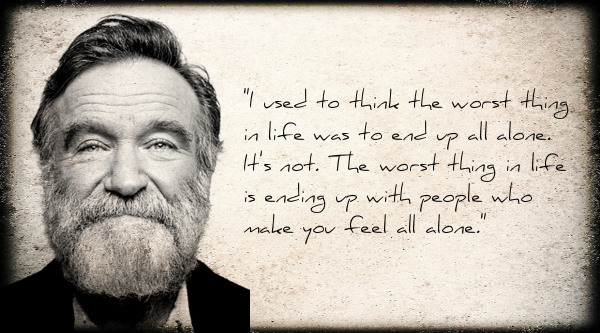
    The day after Robin Williams died, I had posted this on Facebook

    https://www.facebook.com/manu.prasad/posts/10152632582841798

    This was a man whom (I thought) no one could have any ill feeling towards. He made so many people forget their worries, for at least a while, through his roles. When you saw him, you couldn’t but smile. How could such a man have any troubles? But somewhere inside him, a story was being told, one that would end his life. In a tangential way, I had related it to “Everyone you meet is fighting a battle you know nothing about. Be kind” from the ‘One off a kind rating‘ post in which I had written of self perception, and compassion vs kindness.

    Once upon a time, I used to be very judgmental of people who chose suicide, but I realised over time that people are different. Some have the strength to deal with things, others don’t. But I still wonder about one facet of this decision. Barring the ones who end their life simply because they feel they have nothing/no one left worth living for, do people take this decision because they can’t live with something they have done/not done, or they are afraid of how people would judge them for this? In both cases, the common factor is the perception people have about themselves, and how it would change.

    That makes me think – how much of this self perception is built based on cues from others? I think this is very relevant in the era of social platforms, because these cues could come from a variety of people. Arguably, Facebook is already affecting our thinking and behaviour, in a warped version of the Hawthorne Effect. (a phenomenon whereby workers improve or modify an aspect of their behavior in response to the fact of change in their environment, rather than in response to the nature of the change itself. ) That’s probably why we largely see only happy stories on Facebook – because people know they’re being watched, and judged. How soon before this becomes the guiding principle in lives, their only cue for creating self perception? It can be argued that this was happening even before social platforms, but I think there is a difference in scale. If entire generations are spending more time on social platforms, their behaviour offline would probably soon start reflecting that. To stretch it, their sense of identity would be built online before being taken offline.

    When you connect this to the fact that the internet is also home to the kind of taunting and trolling that can radically alter one’s perception of the self, and one’s feeling of self worth, I see a problem. In the aftermath of Robin Williams’ death, the collective trolling power of the internet forced his daughter off several social platforms, at least for a while. Paul Carr wrote about a generation – born before the 90s – that should count itself lucky to remember a time before such acts became the norm. I think the power each one of us has to influence the stories others tell themselves is massively magnified now, if only we could use that to be less judgmental and more compassionate. Maybe that will also affect the stories we tell ourselves.

    Clipboard1


  • Linking learning & labour

    I’m a huge Asimov fan, and am constantly amazed at how he was able to have a perspective of the future on multiple fronts. I was reminded of two of those recently thanks to their application (of sorts) in contemporary scenarios.

    First, Hari Seldon‘s (pretty much the foundation of Asimov’s Foundation series) psychohistory, which was able to make general predictions on the future behaviour of large populations using history, sociology and statistics. The easy contemporary connection is big data and predictive analytics.

    Second, a short story written by him called ‘Profession‘, (do read) in which every person’s profession is based on an analysis of his/her brain, and no choice is given to the person in this matter! In India, we seem to be already there even without the analysis!

    Collectively, these two made me think of employment, and on a related note, education. The thought was that with so much of data available on education and employment, we should be able to create ‘tests’ to compute the interest and aptitude of individuals at a very early age. What this would aim to do is to eliminate the herd education that currently exists. Instead, children would learn things that help them in a profession for which they have the intent and interest, using say, a combination of traditional classrooms and MOOCs. Also, this would no longer be one part of a life cycle, but a continuous process – helping the individual thrive in a dynamic environment.

    If you remember, LinkedIn was my representative for ‘L’ in the ‘change imperative‘ deck. That was because I felt that it had the data and the vision to be the catalyst for this kind of a change. I was very happy when it underscored this faith with the fantastic ‘future self‘ experiment, in which they identified the future professional self (5 year time frame) of LinkedIn user Kurt Wagner – another user Mussarat Bata – using various data points!

    LinkedIn hasn’t really built this as a public tool, but just imagine the possibilities! A platform that shows people the possibilities which take them closer to their ‘purpose’. (remember ‘The Evolution of Work and the Workplace‘?) I sincerely hope to see this in my lifetime. 🙂

    until next time, live and learn

    Clipboard01

  • Notion states

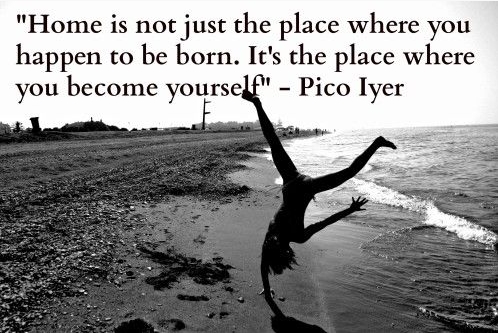
    My last post on the subject of home was in the context of the multicultural world we are creating, how in our pursuit of convenience and familiarity we might end up creating a homogeneous world, and whether the idea of home would change with time, as we begin to choose places that connect to our soul over the soil we were born in. (soul vs soil courtesy Pico Iyer)

    One of my main punching bags in the institutional realignment line of thinking is the concept of the nation state, more specifically its relevance in a massively connected world. A simplistic view is that economics, trade and many other things might be better off without them, given how much of an enabler technology is turning out to be, and geo politics will anyway be a lesser phenomenon if there aren’t any nation states. Arguable, yes.

    However, I had very little idea on the replacement concept. Geography (land) would exist and would have to be organised in some way. What way? In a wonderful display of appropriateness, Wired gave a possible answer – in the form of a post titled “Software Is Reorganizing the World“. I loved the concept of ‘geodesic distance’, and the mapping of not nation states but states of mind. (soul) The idea of (what is now) cloud communities taking physical shape is fantastic! While it might sound far fetched, it really isn’t – the post gives historical precedence and emerging patterns to back up the idea. As does Tony Hsieh’s The Downtown Project in the present day to transform the decaying and blighted part of the old Vegas Strip into the most community-focused large city in the world.

    Around the same time, I came across this Facebook (official) note titled “Coordinated Migration“, (thanks MJ) which shows how Facebook is using ‘hometown’ and ‘current city’ descriptions to track migratory patterns across the world. Probably, in a few years, this would be a mapping everyone would take a keen interest in, to find kindred souls, and to be what they are destined to be.

    pico2

    (via)

    until next time, a state of bliss