
Category: Choices

  • Schooled for life

    One of the things I spend a lot of time reflecting on is my own OS or wiring, and its updates. In a recent conversation with D, courtesy a college reunion (25 years!) I realised that I have very, very few friends from school and college whom I stay in touch with. Why was that, I wondered.

    I don’t have many memories of my first school – Std 1 and 2. I remember the uniform vividly, and the prizes I won. I have forgotten what they were for though. I have a flood of memories about my second school – Std 3 to 7. Probably because I think they were my best days. I was almost always ranked first in class, I sang, recited poetry, was part of the quiz team, and even played hockey! What I remember most was how accommodating the teachers were when I had to miss classes for practice and competitions. Many of them actively encouraged me to pursue the things I showed some interest and talent in.

    And it went beyond that. There was something in the people I knew then. I remember how once, there was some competition in a different school, and G, my classmate and biggest competitor for the first rank in class, hadn’t advanced to the final round and yet stayed back so she could drop me at home. I shifted schools after 7th because we were moving to a different part of town. Immediately after my exams, I also had a minor surgery. R, my Hindi teacher, visited me in the hospital with her husband. What I remember most, thus, is the kindness.

    I have to admit that I don’t think I repaid it much. After I had shifted schools, I participated in some competition, now representing my new school. My old teachers were there too, and being the uber shy idiot I am, I didn’t even acknowledge them. How bad they must have felt!

    I didn’t like my new school at all. Somehow I just didn’t fit in. They prioritised academics at the cost of everything else, and there was very little space for the other things I enjoyed. While I made a few friends, the camaraderie I had in my other school just wasn’t there. On hindsight, maybe mom’s illness was also playing on my mind.

    I think it also had to do with the kind of neighbourhoods I lived in. Before we shifted, we lived in a university campus. Largely egalitarian – people working in the same place, living in similar quarters, earning within the same range, enjoying the same facilities and so on. When we moved to the city, the house itself was one of the smallest in the street, though I don’t think I paid it that much attention. The inequalities in general were bigger, something that reflected in the kids at school too. The in-groups were stronger, and I feel it to this day in WhatsApp groups.

    It wasn’t that there weren’t kind people there – I remember how M consoled me for hours after mom passed away. I went to ridiculous movies with R,A and S. I had a good friend V, who had a terrible accident and was in pain for months. I used to visit him in the hospital and his relatives used to make me sing. Yes, facepalm. I used to guiltily look at V even as I sang. At reunions (which I mostly avoid) and in the WhatsApp group, I see a totally different person. Someone I cannot relate to at all. Maybe his wiring changed after that accident, and the mental and physical anguish it caused. The change in me after 10th was quite drastic. Mom’s death pretty much unleashed a wicked sense of humour, which was my armour until recently.

    I think, after her death, and later, when my grandmother moved to my uncle’s place during my engineering days, my subconscious probably decided that relationships had a shelf life. That friends were that, only in a certain context. When it came down to it, I was the only person I could depend on. It took D and most of my life to get over that.

    Then again, as the joke goes
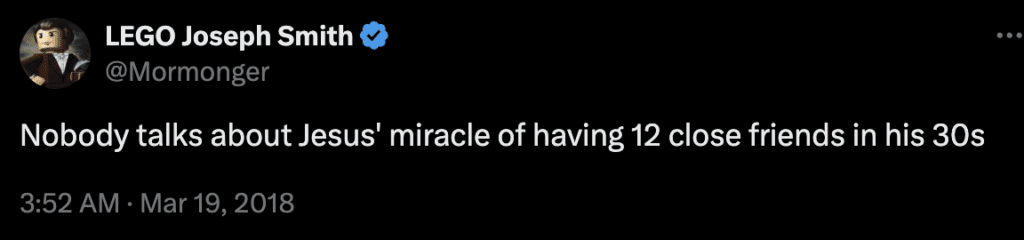
    Jesus miracle friends
  • Living a life of intentionality

    Context Setting

    Man can do what he wills but he cannot will what he wills.

    Arthur Schopenhauer

    Intelligent people know how to get what they want. Wise people know what’s worth wanting.

    Shane Parrish

    My typical simplistic approach to problem solving is why, what, and how. So here we go:

    (more…)
  • The philosophy of Jubal Harshaw

    Robert A. Heinlein wrote Stranger in a Strange Land in 1961, and that’s where I met Jubal Harshaw, though he has apparently featured in other books by the author. He is described thus – “Jubal E. Harshaw, LL.B., M.D., Sc.D., bon vivant, gourmet, sybarite, popular author extraordinary, neo-pessimist philosopher, devout agnostic, professional clown, amateur subversive, and parasite by choice.

    Also, “Dr.Jubal Harshaw, professional clown, amateur subversive and parasite by choice, had an almost Martian attitude towards “hurry”. Being aware that he had but a short time to live and having neither Martian nor Kansan faith in immortality, he purposed to live each golden moment as eternity – without fear, without hope, with sybaritic gusto. To this end he required something larger than Diogenes’ tub but smaller than Kubla’s pleasure dome; his was a simple place, a few acres kept private with electrified fence, a house of fourteen rooms or so, with running secretaries and other modern conveniences. To support his austere nest and rabble staff he put forth minimum effort for maximum return because it was easier to be rich than poor – Harshaw wished to live in lazy luxury, doing what amused Harshaw.”

    Some reviewers consider him to be the author’s mouthpiece. Whatever that might be, and from the little I know of him, I have been impressed by Harshaw’s philosophy. My favourites below.

    1. “…most neuroses can be traced to the unhealthy habit of wallowing in the troubles of five billion strangers.”
    2. “I believe in everyone’s working out his own damnation but that is no excuse to give a dynamite cap to a baby”
    3. “Do-gooding is like treating haemophilia – the real cure is to let haemophiliacs bleed to death… before they breed more haemophiliacs.”
    4. “You go into a man’s house, you accept his household rules. That’s a universal rule of civilised behaviour.”
    5. “Love is that condition in which the happiness of another person is essential to your own.”

    It’s really heartening to see how a worldview can resonate after decades. From there flows the idea of focusing on things that do not change.

  • Opinion poles

    A few months ago, D and I were talking about something at work making me angry. Since Yoda has said that it is fear that leads to anger, and is the path to the dark side, I needed to figure out the root of that anger, and then understand the fear. I knew it wasn’t job loss (I had already quit), but was stuck.

    I would learn later we tend to focus on negatives, because in the savannah, avoiding the things that might kill you was more important than seeking the things that will give you pleasure. Pleasure and pain are just feedback mechanisms, not an end. Whether it’s the pain caused by your body failing you, or mental agony. Psychological pain is an indication that our subjective map of the world needs a revision. (Cognitive Fitness, Anil Rajput) And that indeed turned out to be the case.

    D insightfully pointed out that my faith in my value system, which I mistakenly assumed others at the workplace also subscribed to, might have been broken by the incident. And that would make me afraid because that is the only one I am comfortable with, and any changes in it would be a compromise I couldn’t abide by.

    I would also learn later that there is a term for something like this, borrowed from physics. Hysteresis – the lingering values of a previous age continuing to guide our judgments.

    The last couple of months have been a great learning experience. About myself, the world at large, and the relationship. One of the important lessons has been that I am free to hold on to my values, and continue to negotiate with others, but as Marcus Aurelius rightly said, “the universe is transformation, life is opinion.

  • Karma meets an iceberg

    A recent event reminded me of a post about karma I had written half a dozen years ago. The idea of the post was thanks to Umair Haque, who had a definition of karma that was different from the garden variety ‘consequences of your actions’.

    Karma isn’t what you “have” or something you “do”. It’s what you are….. Karma is all the concepts and notions you hold in that tiny little head. All those concepts are stitched together by the idea of “you”, right? So karma is all those concepts, together, which determine your intentions, actions, behavior, all of it.

    Umair Haque
    (more…)