Category: Life Ordinary

  • Watermark

    Sometime back, while trying recollect the name of a Chinese restaurant in Koramangala which existed circa 2003, I got stuck. Despite different mashups of the various terms used typically for Chinese restaurant names, nothing sounded right. It was a small mom-and-pop joint and since the net didn’t then feature all the resources it has now, I was well and truly stumped. It was quite disappointing since we’d had many a meal there. It didn’t help that I have this ‘thing’ about remembering such places, events and people. I feel as though I have betrayed them in some way. Yes, weird, thank you. :p  The book, for once, couldn’t help either. I finally got the answer by checking with a friend who’d been in Koramangala long enough. Once I got the name, I even managed to get an image on the net – Szechuan Garden. 🙂

    A few days later, I watched Pakal Nakshatrangal, a movie about a script writer – director played by Mohanlal. The narrative is from the perspective of his son, an author, who writes his father’s biography, and in the process tries to solve the mystery of his death. The movie begins with the demolition of ‘Daffodils’, the cultural hub of the previous era’s intellectuals and the scene of Mohanlal’s many exploits. There is a sequence in which a television newsreader reports this and we can see different people viewing it from different places reminiscing about their experiences there. A group of people connected by a place.

    A place or an event in that place – that means something to a set of people – something only they share. And when they cease to exist, the memory disappears. Its as though whatever they shared never existed. A bit like the Garden State quote that I often end up using “Maybe that’s all family really is. A group of people who miss the same imaginary place.”

    It reminded me of another Malayalam movie I’d seen a while back. Kerala Cafe, an anthology of ten short movies, with the place – Kerala Cafe, a coffee shop in a railway station, serving as the connection. But more than that entire movie, I remembered my favourite – Island Express, written and directed by Shankar Ramakrishnan. (Part 1, 2, seems unedited, and has incomplete subtitle help!!) [Spoiler] The story is about several people who were in some way affected by the Perumon tragedy in 1988, and their meeting at the fateful place a couple of decades later. Its narrated by Leon, who  lost a lot himself, but makes a photo-book of it after seven years of efforts. I realise that Leon’s phrase, that remained with me long after the movie, is what this thought is all about.

    As time passes, and life moves on, some of us are left holding the memories of these places, sometimes by choice, sometimes because we have no other choice, and sometimes by chance. But there’s no doubt about the transience of it all. Its after all, a matter of time. Perhaps the entire idea of a lifestream – the things I share here, and everywhere else is all about the phrase that Leon uses – ‘a memory with a watermark’.

    until next time, memories without shelf-lives

  • Only time will tell…

    My reading list during the Sikkim trip consisted of “The Immortals of Meluha” and “Chasing the Monk’s shadow”, fiction and non fiction respectively. Sometime during the trip, I completed the former, the latter was completed long after the trip.

    The first book is a work of fiction that treats Shiva, the Hindu god, as a real person and tries to look at mythology through a historical perspective. The second is a journal of a person who retraces (almost) the epic journey of Xuanzang (the latest spelling of the person we learned about as Hiuen Tsang in school). One myth, one history. One is a possibility, the other ‘factual’.

    The first, about a Tibetan tribal chieftain who is looked upon by a civilisation as the messiah promised in their legends. The second, a monk with an insatiable thirst for India.  In this age of rapid advances in communication, it was quite an experience to be transported to a time when people got news years or even decades after it happened. A monk who starts a journey based on a certain information, only to realise that while he was traveling towards his destination, things had changed – kings deposed, lifestyles changed, faith forgotten….

    The passage of time gives us a bird’s eye view of what happened then, allowing us to dwell on the possibilities of how/if Gods were created, to interpret snippets of information gleaned from remnants of a life, what it must’ve been like. From our vantage point, we see patterns, lifelines almost crossing each other, tantalisingly close, with the possibility of drastically changing the flow of events that transpired later. All this, after patiently sifting through the layers that have been added over the years.

    I wonder if, thanks to the way we consume and share information, later archaeologists will have a reverse problem, of having to go through mounds of information- multiple perspectives to separate facts from opinions. Or maybe, it has always been like that, and the sands of time have a way of burying it randomly. It is quite humbling to think of the possibility of Iceland’s volcano being a footnote in history, because it so happened that what survived was a casual, unaffected post which treated it as a minor news, as opposed to the anguished post of someone whose plans went awry, all thanks to it.

    Another reminder that history and beyond is just a perspective we get from what survived.

    until next time, time consumes too 🙂

  • Coincide

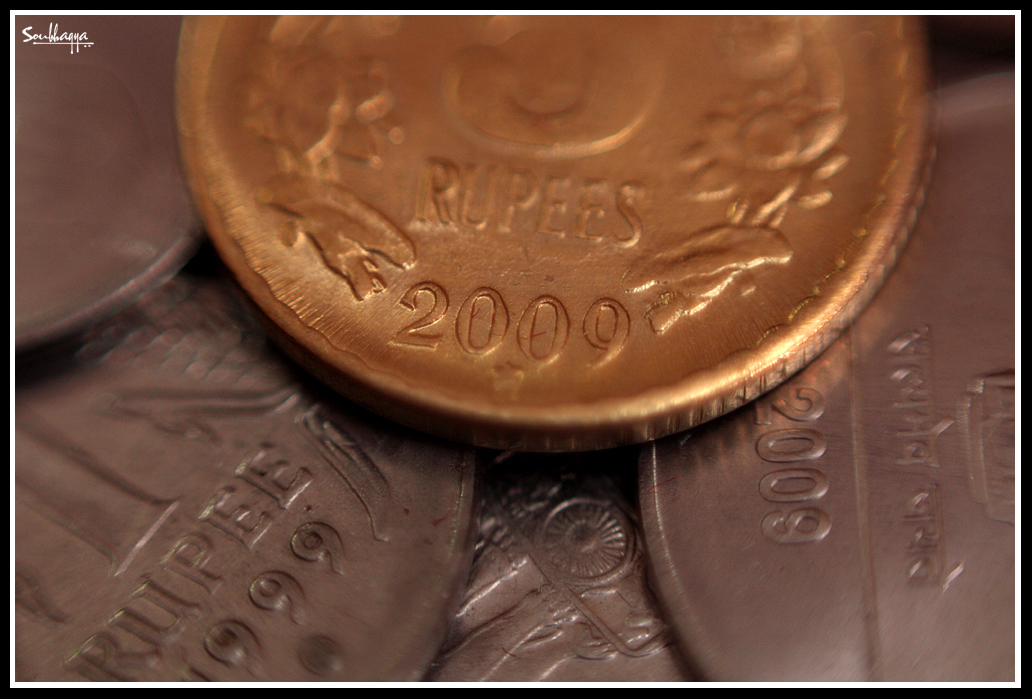
    A friend of mine, Soubhagya, is an avid photographer, who, despite my best efforts, still shies away from running his own photoblog. So when he asked me to take part in a writing experiment, I thought it would be a relatively painless way of introducing him to blogging, and hopefully, he’ll like it enough to do it on his own. The idea’s pretty simple – he’s given me a couple of pictures he has shot recently, and wants me to write a few words on each. Here goes

    the face of money‘The face of money’ is what Soubhagya calls it.

    What’s my value? To a politician, I’m a vote that will help him in his quest for power. To my employer, I am a worker who gets paid for the job I do. To the places I eat out in, to the shops I buy things from, I am a source of revenue. To the people who care for me as an individual, these are perhaps not the parameters of calculating their value for me. It’s a different currency. So the question is complete only if I ask “What’s my value to …. ?”  Now, what if I were to pose the question to myself? Do I measure myself by my financial status, or the lack of it? Is it the ‘Likes’ on Facebook or the followers on Twitter? Or is it by the number of lives I have touched, in one way or another? Is it a combination? Is it what I deem as my potential? How much is that dependent on externalities? And doesn’t that change with time? Which brings me to..

    Burnt out ‘Burnt Out’

    Purpose. I have always been interested in the purpose of our lives. All life forms in general, and of course, specifically us, humans. Generally, at different stages in life, we get stuck with different routines, sometimes by choice, sometimes not – school, college, work and so on. There is a short term purpose to it all, so we rarely look for something beyond. By my definition, ‘purpose’ gives a meaning to what we do, something beyond the money that it brings in, something that really makes us happy just by doing it, as though we are destined to do it. One could rationalise and say that the money then becomes a tool to ‘buy’ the things that give happiness, but that’s arguable.. We prioritise according to our baggage, some are okay with trading an amazing weekend and regular holidays for mind numbing work, some wouldn’t be able to manage it at all, and there are tons of options in between. The candle reminds me of the passion that we bring into what we do, and I believe that depends on our approach to ‘purpose’. Burn brightly or be a shallow flame? In both cases, there is a finite lifetime in which it has to be done. For me, even the task of finding a purpose is a tough one. Whichever way one sees it, there is always the possibility of a burnout. Such is life. So burn you must, and light up the place as much as you can. 🙂

    until next time, wax eloquent 😉

    PS: Now split ‘coin-cide’ and you might figure out a new possibility

  • Facet

    Facebook’s policy changes a while back meant that suddenly,  the average user (as opposed to the technophile and conspiracy theorist) is raising an eyebrow, or both, depending on knowledge levels, at what it means to his privacy. This is not an indication of whether someone is below or above average, let’s not go there. Meanwhile, K and I have been discussing David Bond (Erasing David), which has to do with online privacy (though not in a Facebook context)  – how one man challenges experts from a security firm to track him down using information they can gain about him from the public domain, while he tries to outrun them.

    K noted that in the olden days, this notion of privacy didn’t exist, as everything was known to everybody. I agreed that in the new age, our connections are more, we include a lot more people in our lives, even indirectly, by just sharing our data online. Our work, lifestyle and advances in technology mean that we communicate more, meet more people, and yes, ‘friend’ them.

    It does good too, no taking away from that. Ironically, K and I know each other from work, from quite a few years back. We never interacted much then, and I was more pally with others in her team. I still remember, a couple of years back, when I met K and another colleague of hers in a shop, I chatted away with him, and rewarded K with a lousy smile. 😀  But these days, we have amazing conversations online, and I’m hardly in touch with her colleagues. Thank you Facebook 🙂

    As perhaps the first generation of Facebook users, we are in an interesting place (and time). I read “Chasing the Monk’s shadow” recently, a book in which the author retraces Xuanzang’s journey (we knew him as Hieun Tsang in our history text books) and it made me appreciate the value of the written word – especially when it resurfaces in a  different era.   It was in this context that I considered what really appears in our profiles on Facebook.

    (Generalising) We friend erm friends, but we also friend parents, siblings, relatives, acquaintances, and even random animals. We display our likes, dislikes, interests, information, and through our conversations, we add layers to this. But its amazing how, sometimes, when I ‘like’ something that someone has posted, and glance at the others who have liked it, I realise that I don’t know them. We’re connected by one common friend.

    The common friend, who I might know from college, and the other person might know from work. How much of mining would it require to unearth the nuances in the relationships between ‘friends’? Would it be possible to mine the fact that while I might make a smart alec comment on a person’s status, I might never have met him/her in real life? Would it be possible to mine the different persons we are, to different people, in different contexts. The worries, the fears, the quirks, whims and yes, likes, that we never express, the things that probably make us human – they exist in our minds. We only share a part of ourselves online. We are still strangers, sometimes even to ourselves.

    So yes, while all sorts of data from browsing history to buying habits are out there, maybe, in this hugely connected world, without the ‘real metadata’, in a way we are still disconnected from most of our ‘friends’… and the information gatherers? Since its slightly difficult to be like Schmidt (Google CEO), who infamously said “If you have something that you don’t want anyone to know, maybe you shouldn’t be doing it in the first place”,  I believe that we should be responsible about what we share (even if that’s in the form of a ‘Like’) online.

    So all I’m saying is, you can press that little ‘Like’ button below, and nothing catastrophic is going to happen… yet 🙂

    until next time, face off

  • Lost Shopping Destination

    L. I have loved Bollywood for a long long time. Though I’m more a fan of the ‘unBollywood ‘ movies (best represented by our poster child Abhay Deol)  these days, the first love retains its charm. I have written about this before, and am especially happy when I find others who share this interest – Mo, Meeta, TCP, and even Cyn, though elitist that she is, she  will never admit to watching the snake video multiple times.

    S. The interest, in my case, also extends to the fringe players in that field – remember Ramsay brothers, and that cool show called Toofan TV on Channel V, which was based on all the howlarious stuff that got made – desi Bond movies, snake movies, and yes, most importantly the sleaze genre, carefully camouflaged in horror/jungle  themes, and the resources for which were awfully scarce then. An era before computers, personal or otherwise.

    So, here I was, at our regular DVD shopping place – Temptation, on Church Street, and what do I see?

    10042010168 10042010167

    Golden oldies! Now the name made sense. Yeah, I know its all over the net now, and access is easy, but real shelf space!  And hey, mine is a generation before remote controls happened, you have no clue how difficult things were. S3x was a 3 letter word, and 4 letter words were only beginning to be formed, and we had to look away or were asked to go to another room, when some stuff did appear on screen! So you see, its easy to get emotional about such things!

    D. Refused to let me buy them. 😐 As a consolation, I got the Love,S3x,Dhoka DVD (priced at Rs. 69, kid you not) 😀  . 2 months later,  armed with a more fierce resolve, I arrived, and noticed that Temptation had given way to a computer games store.

    until next time, prnic healing 🙂

    PS. Other Temptations flourish on Church Street.