Category: Life Ordinary

  • Lankan Reams – Day 4 – Bentota

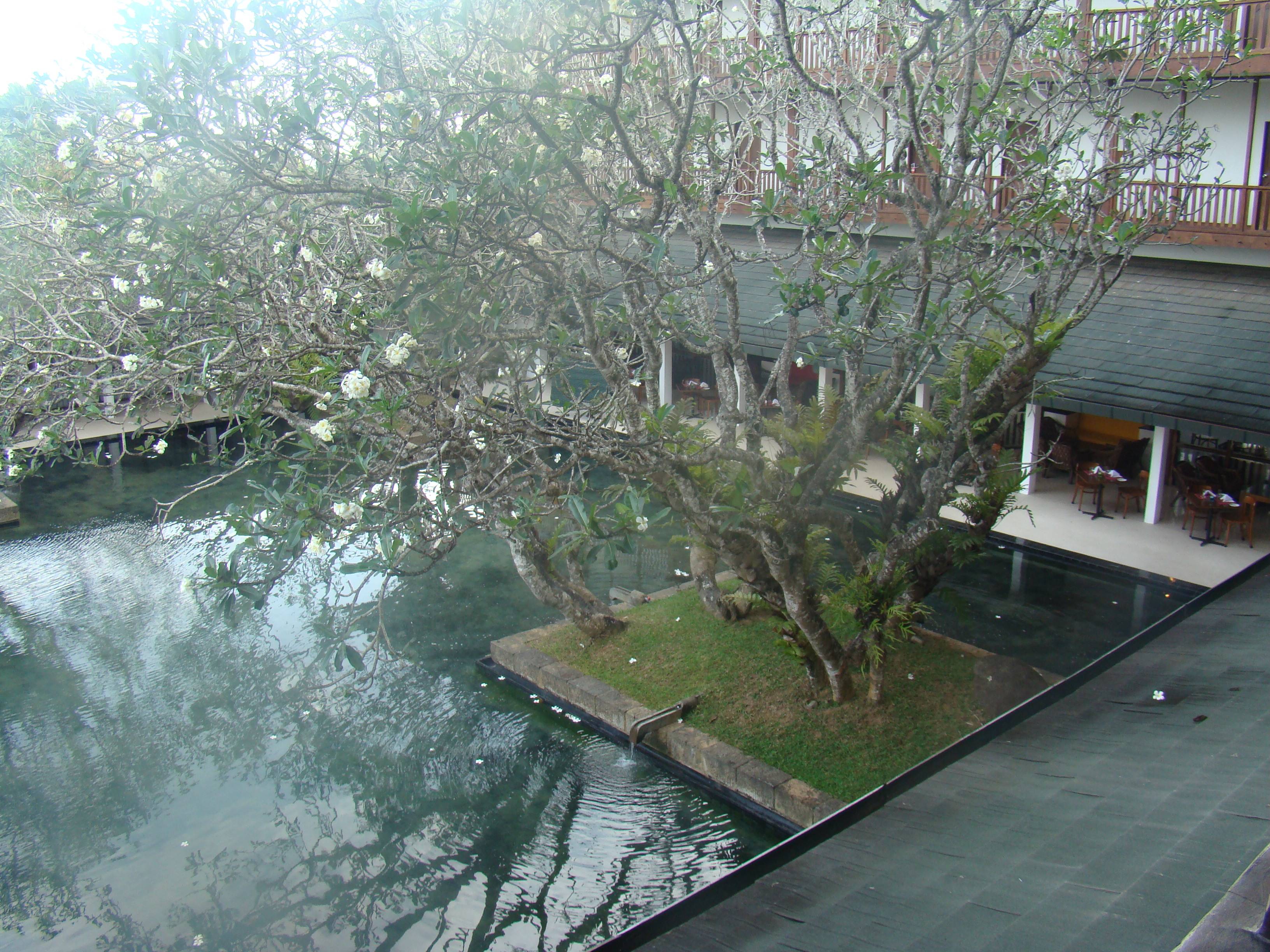
    Beachbumming. Remember? But first, the leisurely breakfast at the Hotel Suisse. A brown version of ‘pittu’ as well as ‘milk rice’, this time with fish curry! The restaurant is a ballroom and you still have the gallery upstairs. I could sense a huge colonial hangover, not because most of the guests seemed Euro and the breakfast had ham and eggs and bacon, (slurp) but because the music, architecture, room decor – everything looked as though the British were expected back at any moment. Later, I realised I could say this of the city as a whole, and even Colombo, but that’s for later.

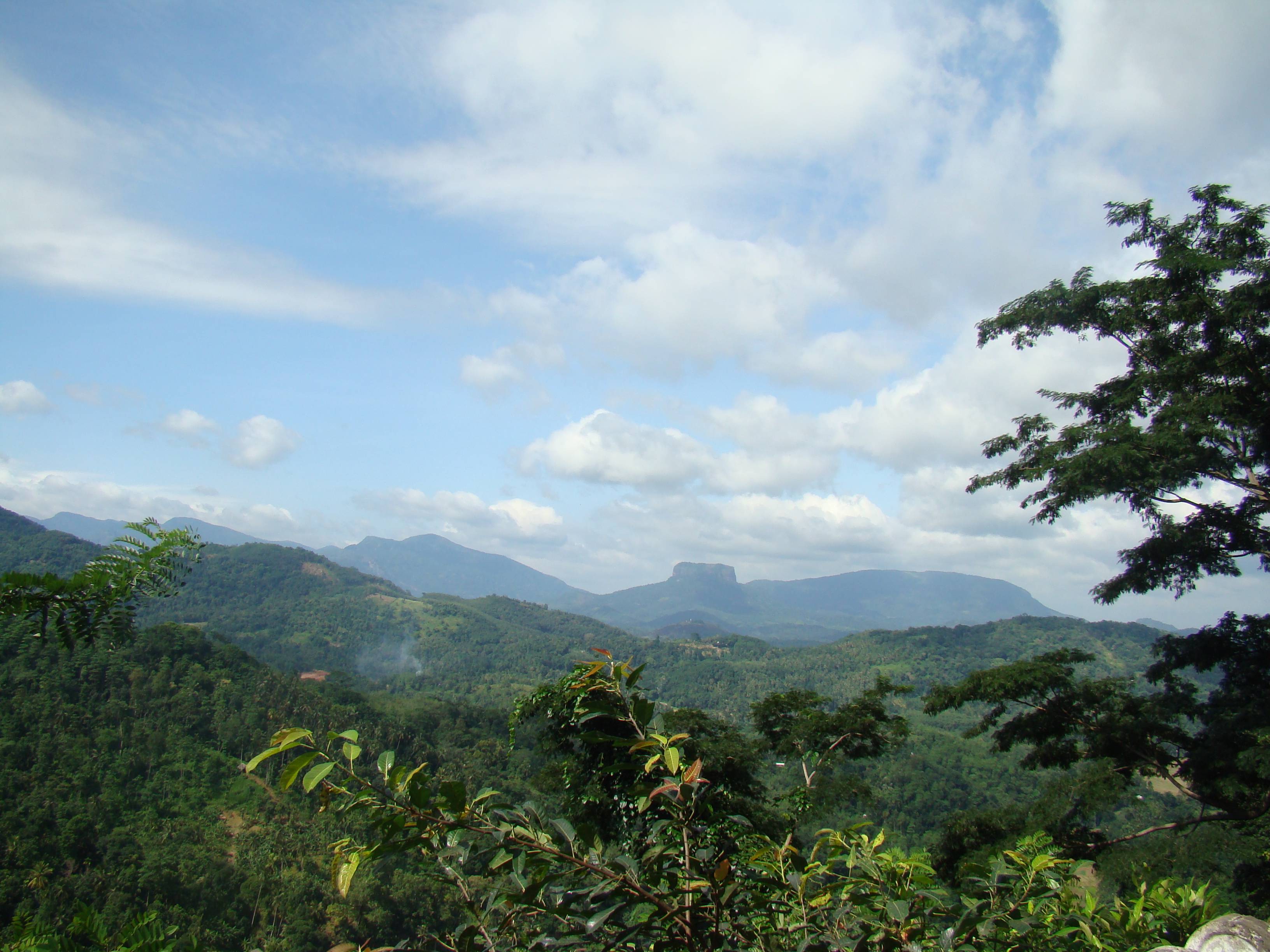
    We passed a highway museum and a bridge that dated back to 1826, and on the way, also saw what looked like a dummy of Sigiriya. This one was apparently called Bible rock, because it looked like a closed book too. Thank God they didn’t have toasters then. But hey, this is one beautiful country, and since its way smaller than India, it scores much higher on the beauty/sq km. 😀

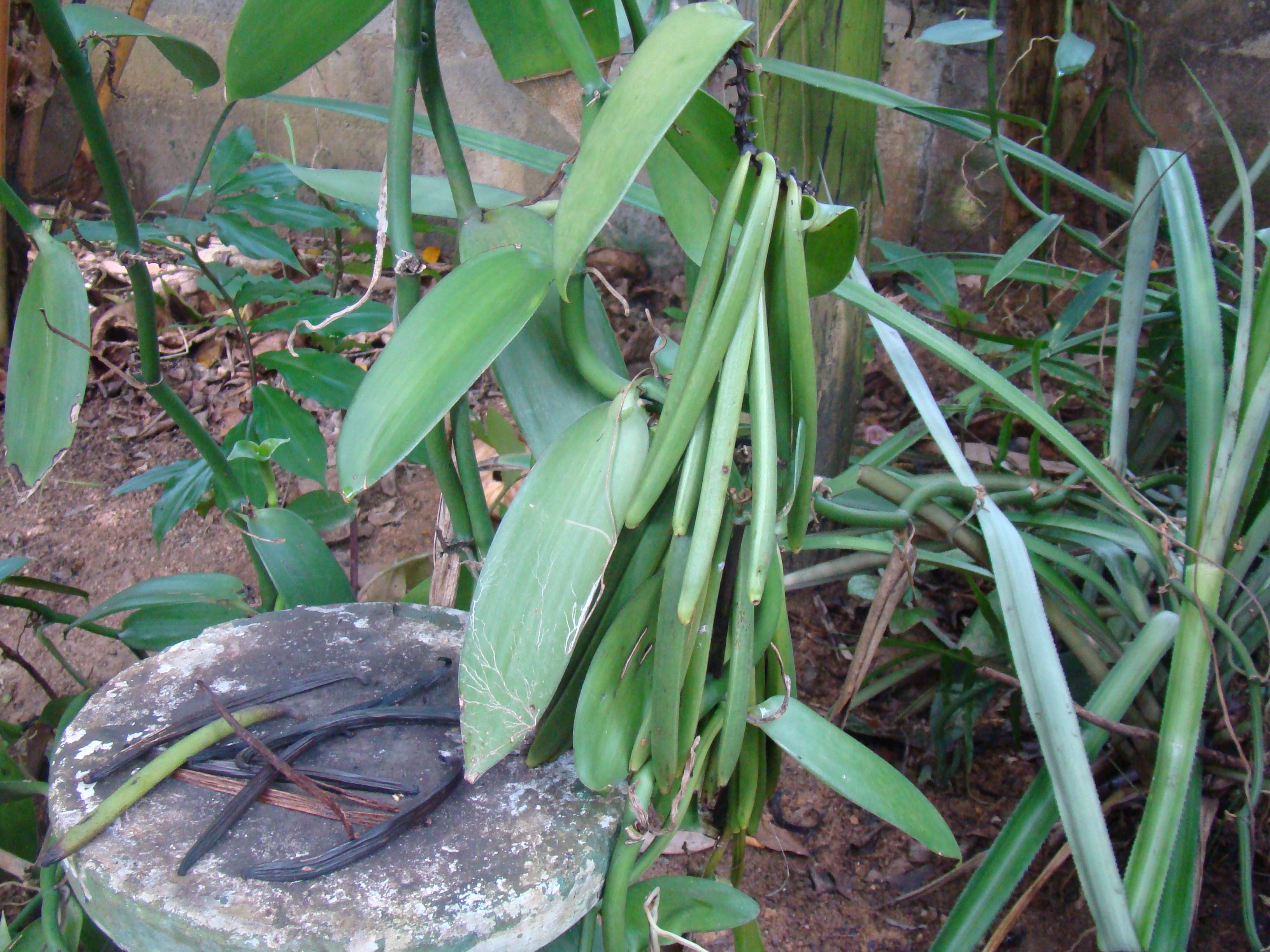
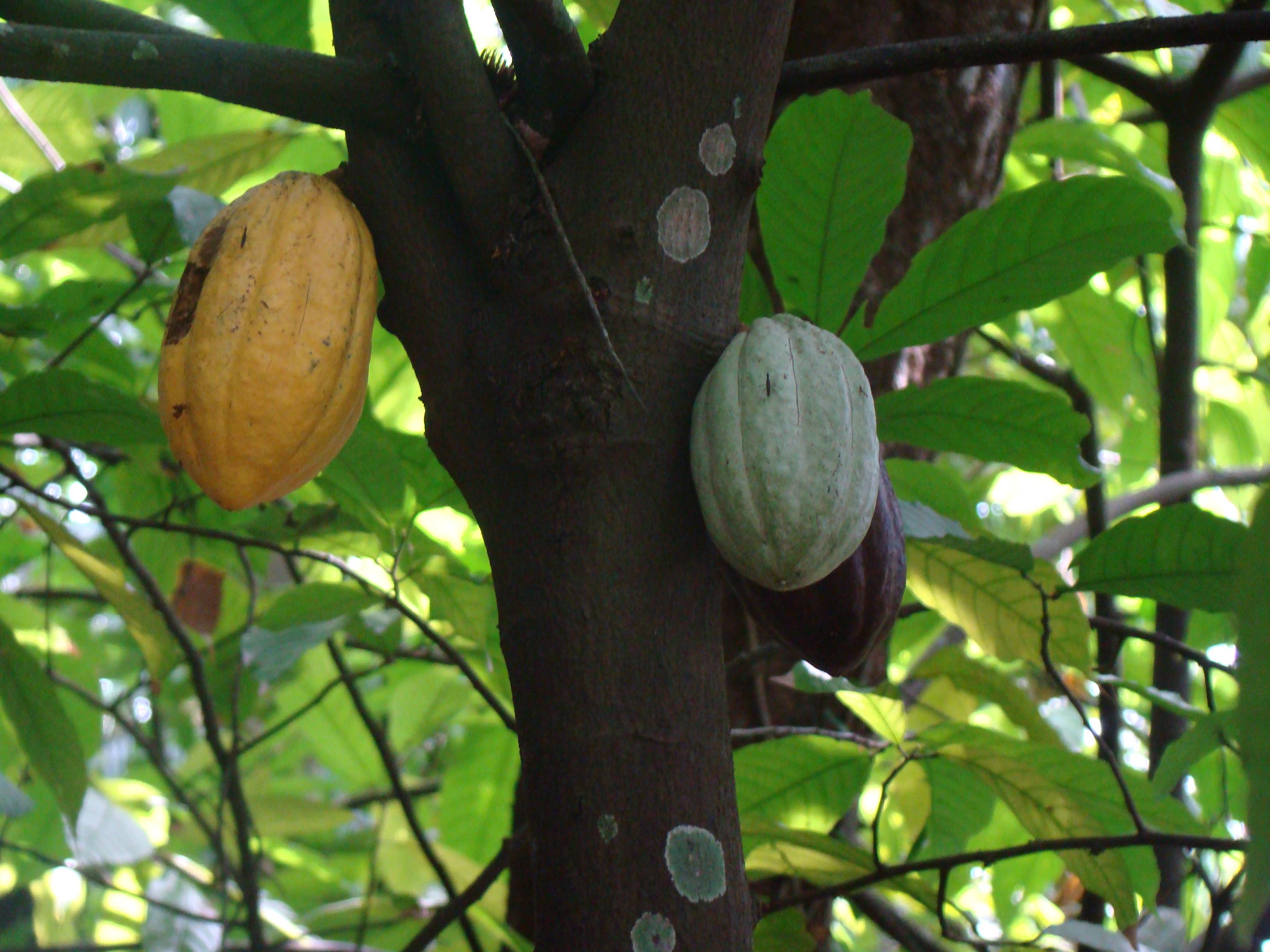
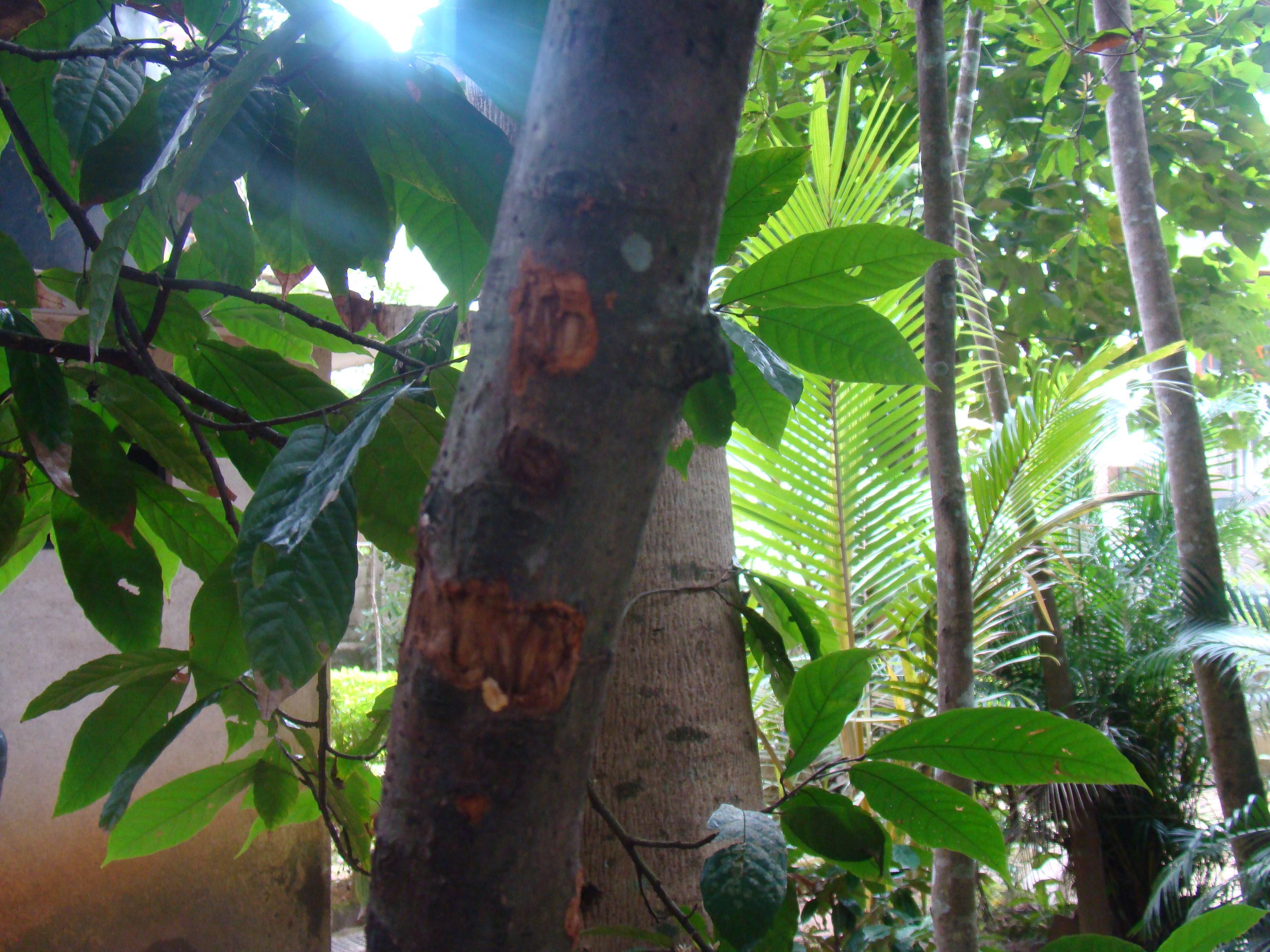
    The next stop was the Spice Grove, which grew and sold spices and herbs. We were given a tour by an enthusiastic guide who showed us the source of vanilla, cocoa, cinnamon, pepper, aloe vera, nutmeg and so on. The complimentary herbal tea was amazing. We responded to all the enthusiasm in kind,  and cash, since they sold the stuff there too. But it was a very interesting visit indeed.

    Vanilla Cocoa Pepper Cinnamon

    Further along the way, the guide also told us about a fruit called Duriyan, which when soaked in water overnight turned into gel. The Chinese consider it an aphrodisiac. The Chinese just need an excuse, I think.

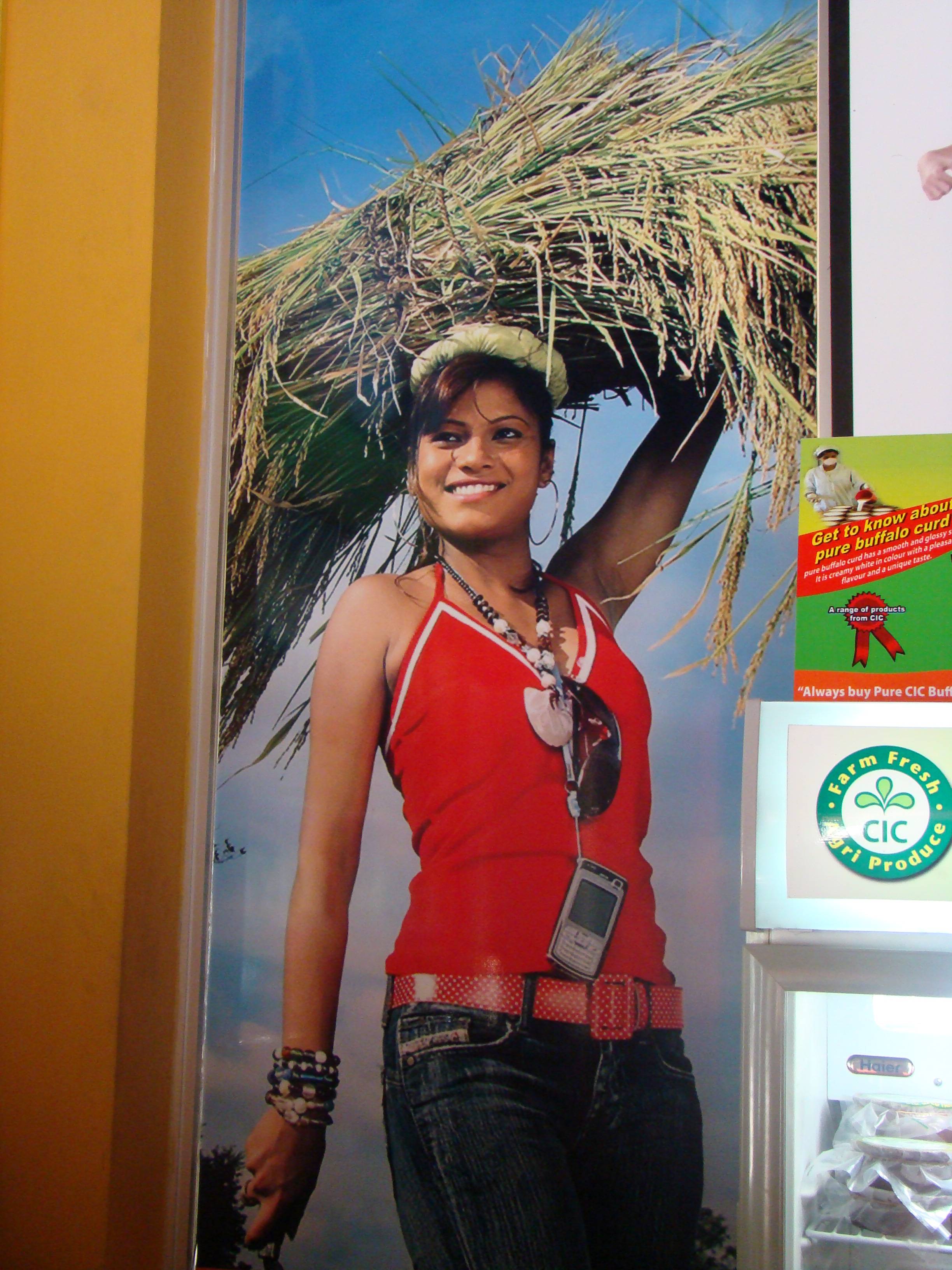
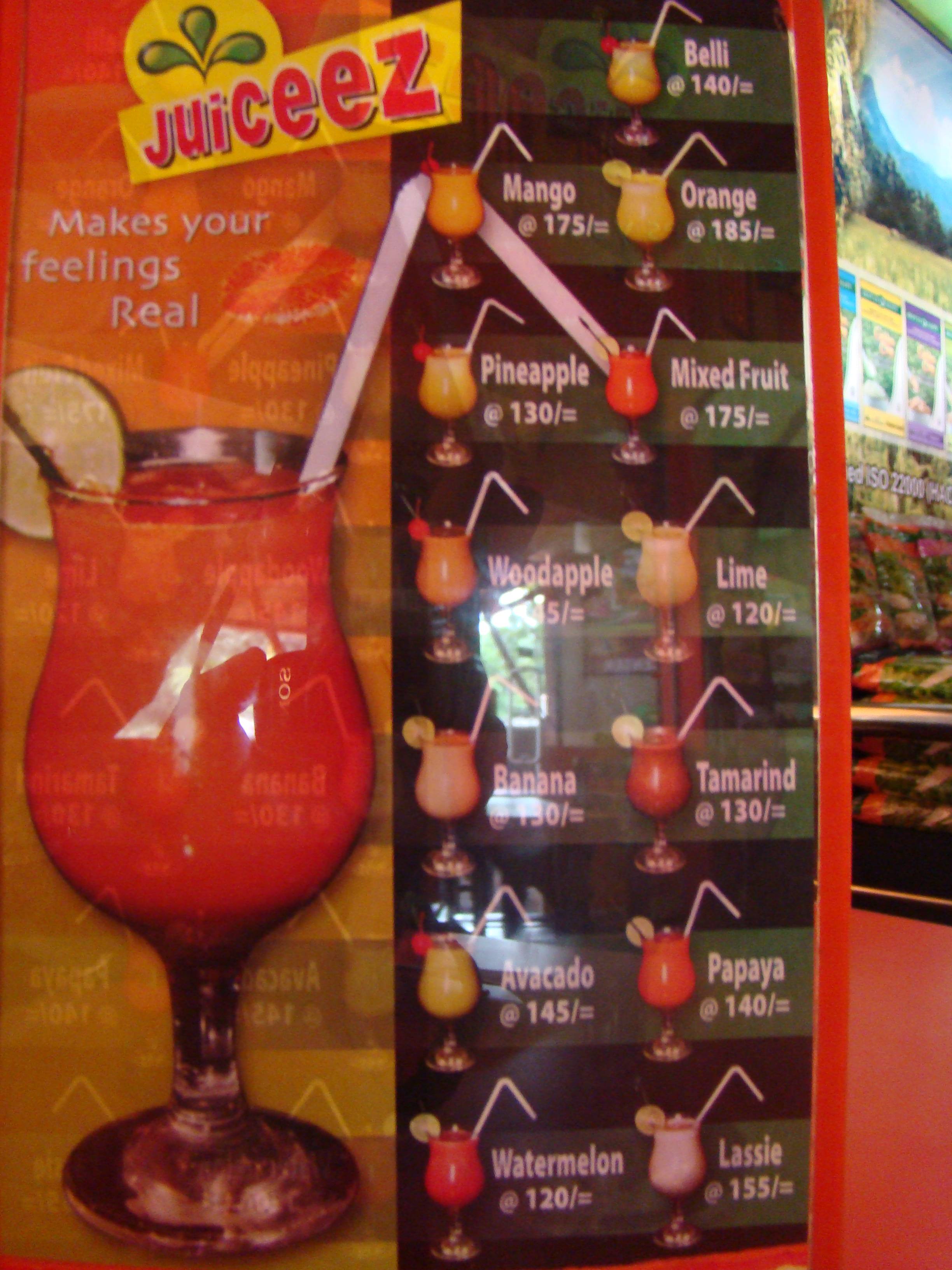
    We stopped at an outlet called Juiceez on the highway. Now is a good time to say that in lanka highways, except when construction is going on, are amazing, though cops play spoilsport by not allowing to go over 60 kmph.The mango juice craving was laid to rest. We also spotted a poster girl for Farmville. Actually Juiceez is doing a good job by having farms across Sri Lanka, encouraging people to cultivate whatever they can, and serving a neat variety of juices, though the pricing is a tad high.

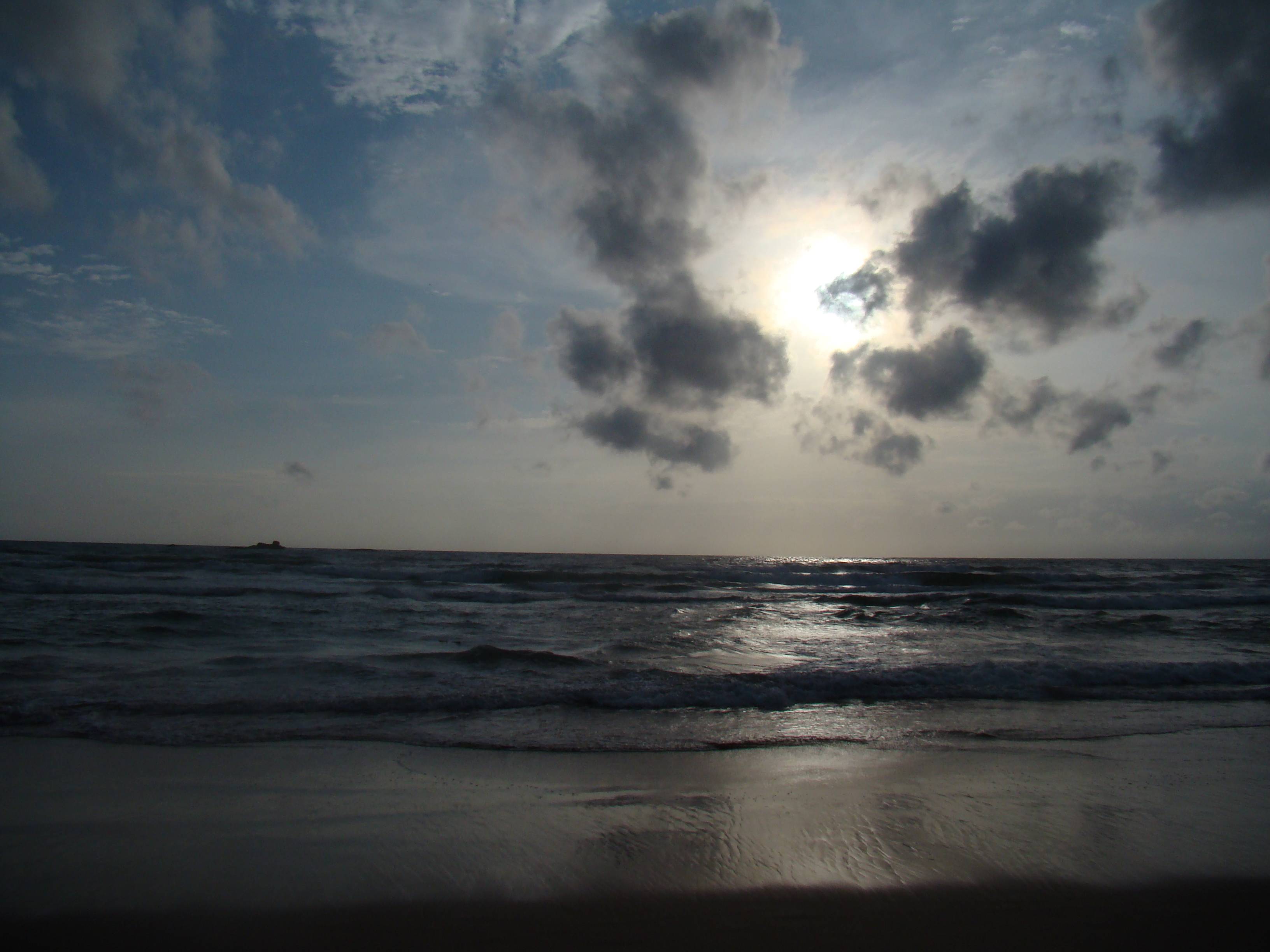
    We finally reached Bentota late in the afternoon. The Bentota Beach Resort is owned by the same group as Chaaya Village, but the latter is a few cuts above. The hotel opened into the public beach, and in the evening, we walked along the beach. The sea on this coast (side) is quite rough at these times, but we had a good time, attempting sand castles shacks and chasing crabs. When we returned, the part of the beach in front of our hotel was getting ready for some ceremony.

    At dinner, I finally managed to have that elusive dessert – Watalappan, whose prices had risen from Rs.250 to Rs.350 to Rs.400 as we traveled from Chaaya Village to Suisse to the Bentota Beach Resort. This is why buffets are loved. Pork and desserts competed for our attention, but Watalappan disappointed. For some reason, I had assumed there was chocolate in it, there wasn’t!! Choco Watalappan is being conceptualised as we speak! Hmmph.

    After dinner, D went off to see a dance show, while I lazed around watching Jonathan trying to win an immunity in the Celebrity Chef challenge. He didn’t, and D reported that the dance troupe had danced to ‘Kal Ho Na ho’. Bollywood stars are very popular here, and I wondered about the pop culture influence. Not the token premiere in the US type, but ads, music, seeping in and becoming accepted part of daily lives. Our guide’s favourite stars were SRK and the Artist Formerly Known as Kajol, (sorry, can’t recollect the link to that awesome post) and he was quite up to date on Bollywood gossip!! We are finally exporting culture! And we fell asleep with pride.

    Coming Up Day 5. Click here for Days 0, 1, 2 ,3.

  • Race Trace

    Anything is possible when you are young. Then you get older and the thing about getting older is that you don’t need everything to be possible anymore, you just need some things to be certain.

    For some reason, this line from Brick Lane (movie) stayed with me. Age might be a number, but we are alive for a finite time frame, and therefore it has its own significance. I think, more than age itself, it is to do with motivation. There does seem to be some relationship between age and motivation levels. Of course that’s quite a generic and simplistic statement, since there are many subjective factors that play important roles.

    At different stages we’ve different short term purposes. What these then also manage to give are specific motivations. From getting good grades to the bigger car to the fancy vacation and everything in between. Sometimes they serve as motivation and sometimes as means to the motivation. To reach somewhere or to remain somewhere. Sometimes we run the world’s race, sometimes we run our own.  In both cases, there is a certain amount of hard work that goes into the race. We can bring luck into this context, but I wouldn’t still like to trivialise the effect of one’s efforts. Like I wrote a while back, in the context of my friend R, it is difficult to grudge a person his success when you realise the toil that has gone into it. I read this excellent speech delivered by Yahoo co-founder Jerry Yang delivered about a year back, which dwells on efforts and doing what you love.

    But I’ve also seen that sometimes the efforts are made and the results don’t show. Maybe it has to do with the direction or the efforts themselves or maybe its to do with perseverance. What does one, them motivate the self with? I’ve also noticed, from experience,  that when one resets one’s ‘race’, and tries to figure out a purpose outside the parameters of routine and conditioning, motivation is quite a tough job.  A bit like trying to find an answer to a question you don’t clearly know. Motivation is after all, dependent on the purpose. Thankfully, there’s something else that Hugh MacLeod has captured beautifully.

    unfulfilled potential

    The mind can will itself to be free of others’ expectations, but can it hold its own against the ego, which has expectations of the self. The fear – if that goes, what motivation exists? Except for the need ‘for some things to be certain.’ And that somehow is existing, and not living?

    until next time, track shuffle?

  • Collective bargain

    “The way they speak about dinosaurs now, a few years later, that’s how they will talk about the mill workers”, says a character in City of Gold, a Hindi film by Mahesh Manjrekar, adapted from a play by Jayant Pawar. Its based on the Great Bombay Textile Strike. A decent movie, with some great performances and with its share of stark realty, though parts of the second half had a Bollywood melodrama hangover. I guess the response at the multiplexes (many of which are ironically what the mills gave way to) wasn’t really great either. But it was a story that had to be told.

    The subject has interested me earlier too. To be precise, in 2005, my last official trip to Mumbai. The office was at Peninsula Center, and when I looked out through the windows, I could see a few chimneys. I wondered enough to come back and read up a bit. I was curious because amidst the RGV underworld flicks and the contemporary images I had of Mumbai, this seemed to be a part of history that had never figured in conversations. A legacy that seemed to be buried in the collective consciousness.

    A single movie might not really be enough to cover the individual lives that were affected, though it does try to portray a microcosm. But as the line in Frost/Nixon goes “You know the first and greatest sin of the deception of television is that it simplifies; it diminishes great, complex ideas, stretches of time; whole careers become reduced to a single snapshot.”

    Though it is said in a different setting, and context, the connect I sensed was legacy. How a person is perceived by a later generation. Artists have their paintings, actors/directors/crew have their movies, politicians, sportsmen/women have their auto/biography/memoirs, authors have their books, musicians have their music, they have a better chance at being remembered by a larger number of people, long after they’re gone, a better chance than us, the commons. A  collective’s legacy would be the place and time they lived in  – the larger picture, their collective actions, the people who became popular, the events that shaped the future. What happens if a collective chooses not to remember, or chooses to remember only parts? Who does it matter to then?

    until next time, decadent chronicles

  • Oh, numb!

    While I was handling the high frequency burping that signifies the completion of the meal above, my phone rang. It was an ex-colleague, but more importantly, dear friend and a fellow mallu. I picked it up, expecting a loud ‘Happy Onam’ from the other end. She was working, and wanted a person’s number. I wished her a happy onam, and without missing a breath, got a “Oh, I forgot” response.

    That perhaps typifies this generation of living-outside-Kerala Malayalis. That’s a generalisation, of course, and a huge one at that, because thankfully, I know many of my fellow Keralites who religiously go home every Onam, come what may, and have a blast. But as every Onam passes, I can feel it slipping away.

    Ten days of holidays – a cousin reunion, the hustle and bustle of a sadya preparation, to a day taken off from college to visit a relative’s house for the sadya, to figuring out which new movies are being shown on the telly for Onam and scanning the papers for a restaurant that serves a good sadya, obviously it wasn’t just me who grew up.

    I suspect that it might not get any better, and as a statement in Malayala Manorama went,  I might even get used ‘eating a sadya in the mind’. This generation still has its (mostly office) pookkalams and the sadya. For those that come later, the sadya will perhaps just be a meal by itself.

    until then, happy onam 🙂

    PS: The legend, the Ram Gopal Varma version, and the tag.

  • leg godt

    Sapphire (toys- retail chain) opened a store in Koramangala recently, and lies on my route to practically anywhere. That means that giant Lego display and I stare at each other almost everyday now.

    Lego and I go back more than a couple of decades. As always, no age jokes, okay? 1984, to be precise. Remember, I wrote about it in ‘The Foreign Object‘? Like I’d mentioned then, the loot from dad’s US stay was rationed out over a long period of time. Perhaps the only part that was exposed completely in the beginning were Lego sets.

    The first set had arrived by a special package even before my Dad or the suitcase reached Indian shores. This was a trailer set, literally, and included a motorcycle too. But the real treasure was the lengthy catalog that came along with it. I quickly set about marking the ones that I wanted and sent it back to Dad.

    Now, I suspect that my Dad, from whom I have inherited my skills, being the kind of shopper for whom a ‘milk and bread’ trip to the local grocery store is a mammoth effort, because of the number of choices that present itself, must’ve extrapolated my interest, seen a huge range of Lego sets, and decided that nothing served as gifts to my cousin set (both sides of the family) better, though the age bracket was anywhere from 2 months to a decade. That meant that when he returned, the suitcase had a disproportionate range of Lego sets, and I wangled, via sulks/sobs/means of affection, the right of first choice, and a cancellation of the original, carefully made, catalog choices .

    In later days, I began to wonder whether it was a choice I might’ve been happy without, because each set had something I really wanted, and despite my arsenal of negotiating tactics, I wasn’t allowed to open the boxes and ‘exchange’ pieces. After various levels of filtering, I finally kept a digger-tipper combo, a medieval catapult, and a medieval castle set. My medieval set soldiers only had swords, shields and spears, and I hated missing out on the one with bows and arrows, but it was all about box sizes and number of pieces.

    Though I was a stickler for not mixing up the pieces in storage, they were allowed to be social and mingle during playtime, and the four sets often gave rise to space crafts which were launched with catapults. (#2 kind of behaviour here) The magnum opus, thanks to a Star Trek/ Space Station Sigma overdose, was a space station, with motorbikes, driven by medieval soldiers, and defended with swords and shields. The tiny spears were also taken to school regularly as part of a superhero costume – they fitted between fingers nicely and could be pushed out using the palm for super-punches. Of course once the punch landed, the spear was pushed back and the palm hurt, so it was discontinued.

    Much later, the Lego sets were passed on to cousins who were more than a decade younger. The stories remained, pushed back, as a life was built. And these days, when I see the Lego display, I am tempted to go in and check out the sets, maybe they have those Star Wars sets here now. Wonder how much they cost now, never had to wonder about that, back in 1984.  The price of growing up.

    until next time, toys are us 🙂

    PS: Lego owes its name’s origin to leg godt, Danish for play well