Category: Life Ordinary

  • All I have to do is dream…

    Yes. Quite liked the movie – Inception. Mostly because I found the concept  (dream incubation, lucid dreaming) interesting and because it forced me to pay attention. Sometimes, movies like that can be refreshing. Of course, it helped that the visuals were very watchable too, and the last shot added to the charm.

    For those who haven’t seen the movie, not to worry, the post only refers to it in terms of concept. At a very basic level, its about planting an idea (Inception) inside a person’s head. Only, he shouldn’t know it was planted by someone else, he should think it’s his idea.  In a world where a lot of people anyway falsely claim an idea as their own, you might wonder why this is interesting, but  ignore that for now. 🙂 Meanwhile, since the person needs to think its his idea, a basic version of the idea is planted in a dream state, in the subconscious.

    Like the movie maker has said about the end, its whatever you want it to be, so here goes. The other reason I liked the movie was because of the ‘life subtext” – the part that makes comparisons to The Matrix inevitable. I thought many acts of ‘Inception’ happen to us too, over a period of time – sometimes done by others, sometimes by ourselves – conditioning. And since we don’t really contemplate why we choose to do a certain thing/in a certain way, we end up thinking that what we’re doing is what we really want.

    Half my life
    Is in books’ written pages
    Lived and learned from fools and
    From sages
    You know it’s true
    All the things come back to you

    And just like how in the movie, the ‘projections’ (things and people used by a dream-architect to populate the dream world) turn hostile when the person detects an external presence in their sub conscious, in life, the problem starts when we suddenly realise the existence of the conditioning, and realise that perhaps, much time has been spent on chasing an ‘inception’.

    Every time that I look in the mirror
    All these lines on my face getting clearer
    The past is gone
    It went by, like dusk to dawn

    And yet, some would say that their lives have been made better by pursuing that one idea. So how do we really know? In the movie, the people who carry out ‘inception’ and the lower forms of the art (extraction) have a totem that helps them distinguish dreams from reality. I wonder if we have something comparable, but then, I wonder, if life would be as interesting as it is if I did have a spinning top or a rolling dice to give me a better grip on reality. 🙂

    until next time, deception 🙂

    Lyrics: Dream On, Aerosmith.
  • Mirror Images

    I came across this passage while reading Kiran Desai’s “The Inheritance of Loss”. The context is of a young girl, who, because of a new found romance suddenly becomes conscious of herself.

    “But how did she appear? She searched in the stainless-steel pots, in the polished gompa butter lamps, in the merchants’ vessels in the bazaar, in the images proffered by the spoons and knives on the dining table, in the green surface of the pond. Round and fat she was in the spoons, long and thin in the knives, pocked by insects and tiddlers in the pond; golden in one light, ashen in another; back then to the mirror; but the mirror, fickle as ever, showed one thing, then another and left her, as usual, without an answer.”

    I found that I could also identify with it in the context of our encounters with the social platforms around – Orkut, Twitter, Facebook, LinkedIn.. and how slowly the ‘Like’ and RTs seem to be defining the interactions and affecting even perceptions and understanding of the self. Its not as though people and comments never existed before, but the sheer mass of people we come into contact with, thanks to the social platforms is unprecedented. Through the conversations and responses, we see a bit of ourselves, a self colored by the other person’s perceptions. As the voices around us continue to increase, at some point, is there a danger of losing touch with what we really are? Yes, you could ignore or be selective, but then we’d just get back to an objectivity argument.

    “The biggest danger, that of losing oneself, can pass off as quietly as if it were nothing; every other loss, an arm, a leg, five dollars, a wife, etc. is bound to be noticed.”

    I read that, thanks to @aanteadda‘s share on Twitter – an excellent take on the Ramayana,(do read it) and in a completely different context – that of dharma, it happened to arrive around the same place. Rama, having lived his entire life by what he considered his dharma, is distressed by what he must do with Sita after the end of the war with Ravana, irrespective of what he personally wants. The author thinks that this is Rama’s tragedy, and that of every person who lives by ‘impartial and abstract principles’, which don’t take into account ‘individuals as persons,’ and can’t see the difference between a situation and a personal situation’, and it can only lead to the destruction of the self.

    And so I wondered, whether its people, or a moral code that one follows, whatever dictates what we do, is there really a difference – between the reflections from others and ourselves? Is there one right answer for what should define us and the way we live. I think not.

    We must prioritise, I guess, based on what we think will give us happiness, and just like this neat article on addiction (the internet in particular) ends, “we will increasingly be defined by what we say no to”, all thanks to an abundance of choices, from within and without.

    until next time, you always have a choice, but do you always want a choice?

  • Recycling Gods

    Sometime back, I’d written a post about super powered individuals who later came to be known as Gods, and how technology is perhaps taking us closer and closer to these versions of gods. And sometime back, Vimoh too wrote a very thought provoking post on the evolution of Hindu gods, and how, over a period of time, important Vedic gods like Indra, Varuna, Agni etc have lost their importance to a newer set who rose to prominence according to the stage of our civilisation – Ganesha, Saraswati, whose ‘hidden’ characteristics were brought to light. An evolution from gods “that govern the elements of nature to gods that govern abstract concepts of the mind”. He also hypothesises that  in the future, the list will be further transformed when man realises that the universe is more of a network than a hierarchy and when he finds himself at par with the highest of gods and the lowest of forms, he will realise his divinity.

    I’ve always wondered whether the original set of gods was a small number and as needs arose, historical characters were pushed into divinity, their stories exaggerated, and for later generations they served as gods. The original triumvirate – Brahma, Vishnu and Shiva have remained more or less a constant in their importance, though Brahma lost out in terms of places of worship.  But the evolution of gods is something I completely agree with.  As our needs changed and the things we could control changed, it was perhaps inevitable that the things we attributed to them would change. More importantly, they also changed with out interpretations of good and evil. Since our gods have always been close to us, their character and behaviour also reflected this change in ethos.  Huffington Post says they’re now pop culture, through Bollywood movies, for example. But yes, they were always more human, and ‘approachable’ anyway.

    It does bring up a point though. I wonder how our current depiction of Hindu Gods would affect how later generations perceive them. The modern retelling, which sometimes adds layers hitherto absent. Imagine a future generation treating Ramanand Sagar’s Ramayana the way we treat the vedas now simply because earlier sources may not stand the test of time. If they saw Sippy’s Mahabharat and also saw Jha’s Rajneeti, would they be able to grasp the parallel? Or would they miss it because they haven’t ‘lived’ with the gods like we have? ‘Sita’ in the television series was ‘Deepika’, the actress, who has also played other roles in serials and movies. So, without a context, it might be just another role she did. There is a reason I’m thinking this way. Any of the gods could be just a role play – incarnations/manifestations – different roles in different contexts at different times. We rely on certain images and certain texts which are possibly incomplete in their current form. And thus rises the question that invariably gets asked in such discussions – who created who?

    Each age fills up the void of its unknown with its own versions of God or his opposite number. Like Vimoh states at the end of his post, the future explorer will be an amalgamation – with knowledge from many disciplines. For now, we pursue the mystery from among the tools we choose based on our interest, bias, and faith – science, religion, philosophy, and so on. The question is, will we ever reach a point when everything is known, and the God shaped hole would be finally filled with our knowledge. Maybe that’s the point when the current Brahma gets irritated and presses the ‘Delete All’ button, and the Brahman starts with the next Brahma. 🙂

    until next time, divine grapevines 🙂

  • Lankan Reams – Day 4 – Bentota

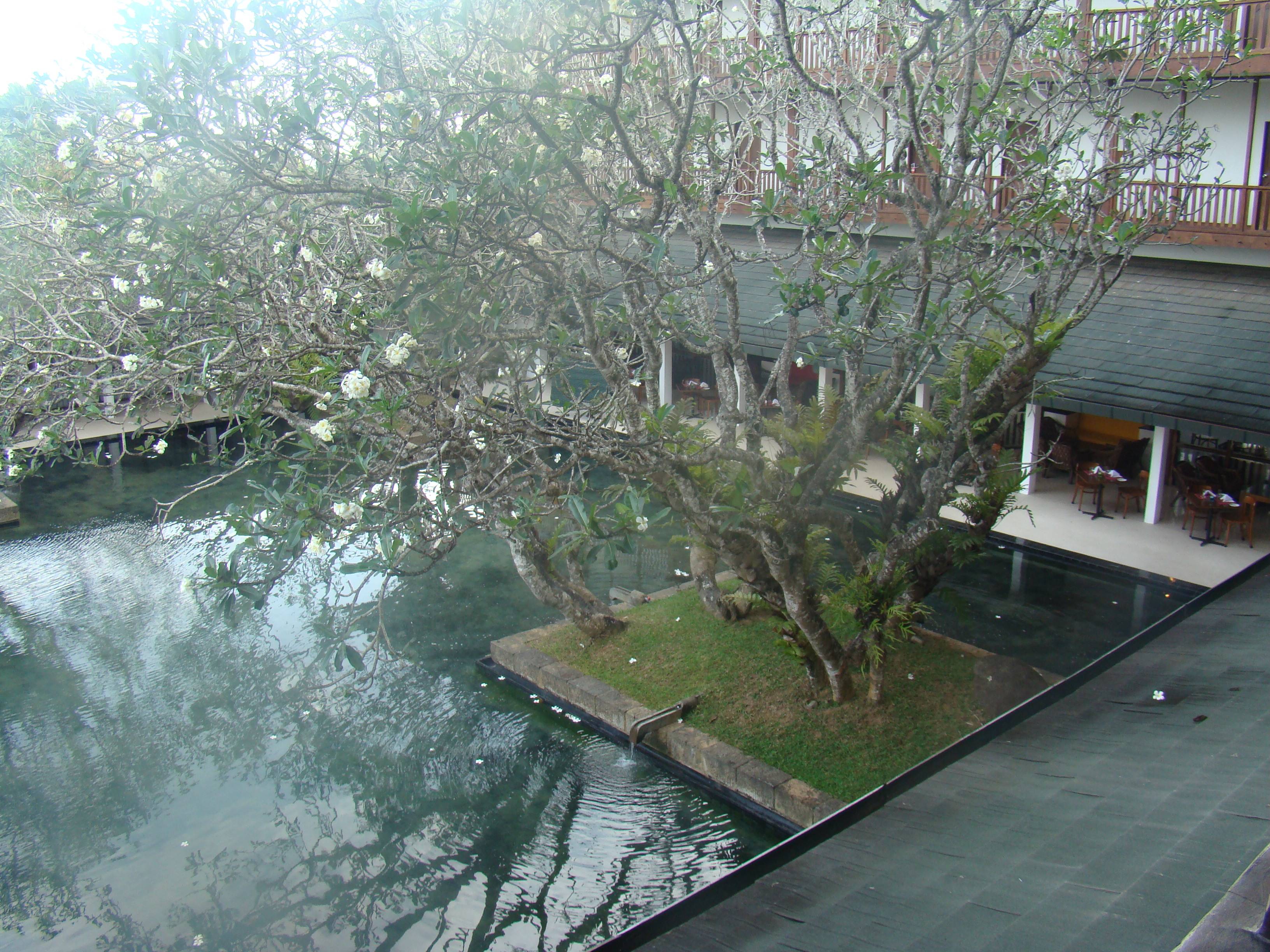
    Beachbumming. Remember? But first, the leisurely breakfast at the Hotel Suisse. A brown version of ‘pittu’ as well as ‘milk rice’, this time with fish curry! The restaurant is a ballroom and you still have the gallery upstairs. I could sense a huge colonial hangover, not because most of the guests seemed Euro and the breakfast had ham and eggs and bacon, (slurp) but because the music, architecture, room decor – everything looked as though the British were expected back at any moment. Later, I realised I could say this of the city as a whole, and even Colombo, but that’s for later.

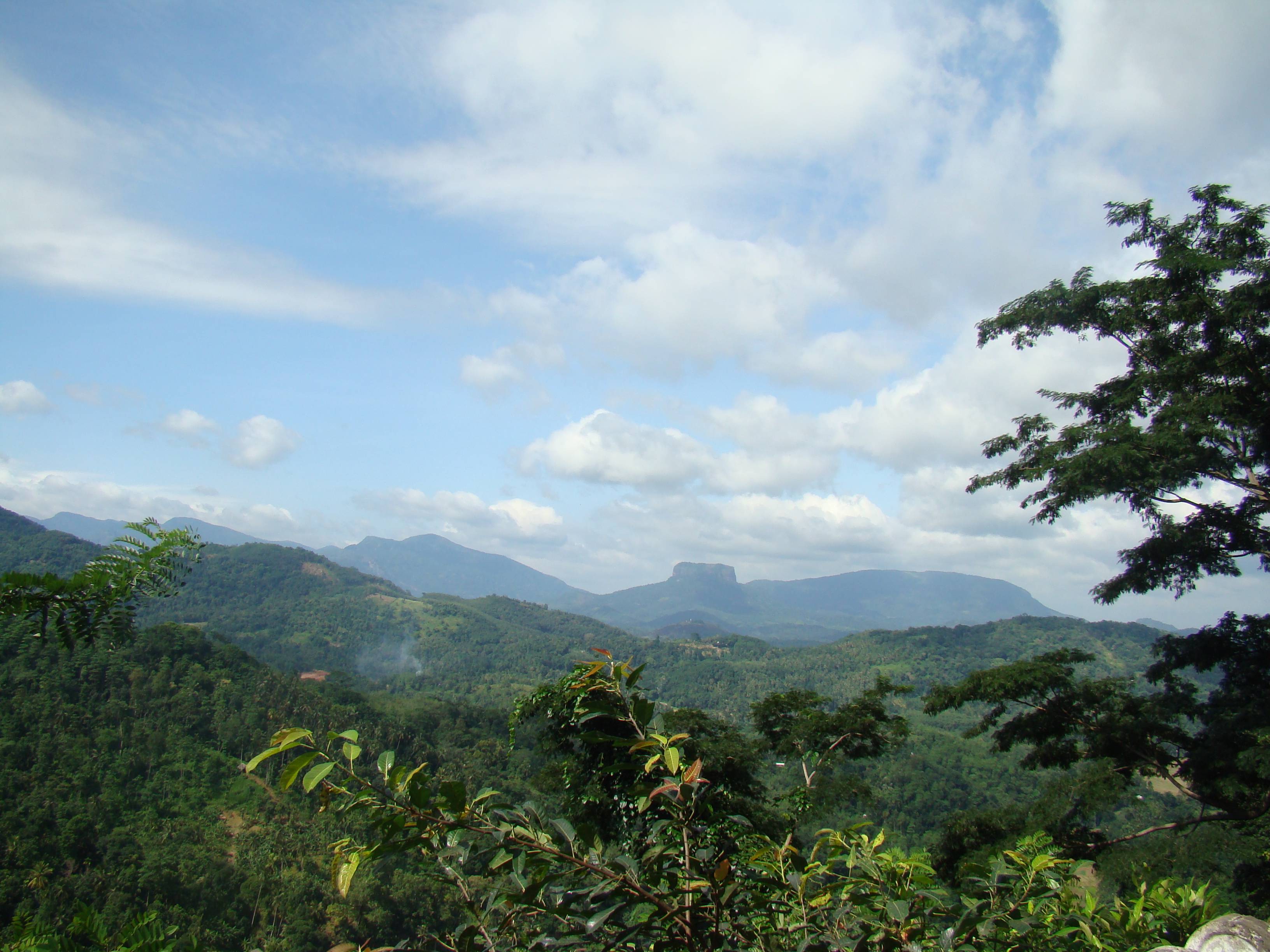
    We passed a highway museum and a bridge that dated back to 1826, and on the way, also saw what looked like a dummy of Sigiriya. This one was apparently called Bible rock, because it looked like a closed book too. Thank God they didn’t have toasters then. But hey, this is one beautiful country, and since its way smaller than India, it scores much higher on the beauty/sq km. 😀

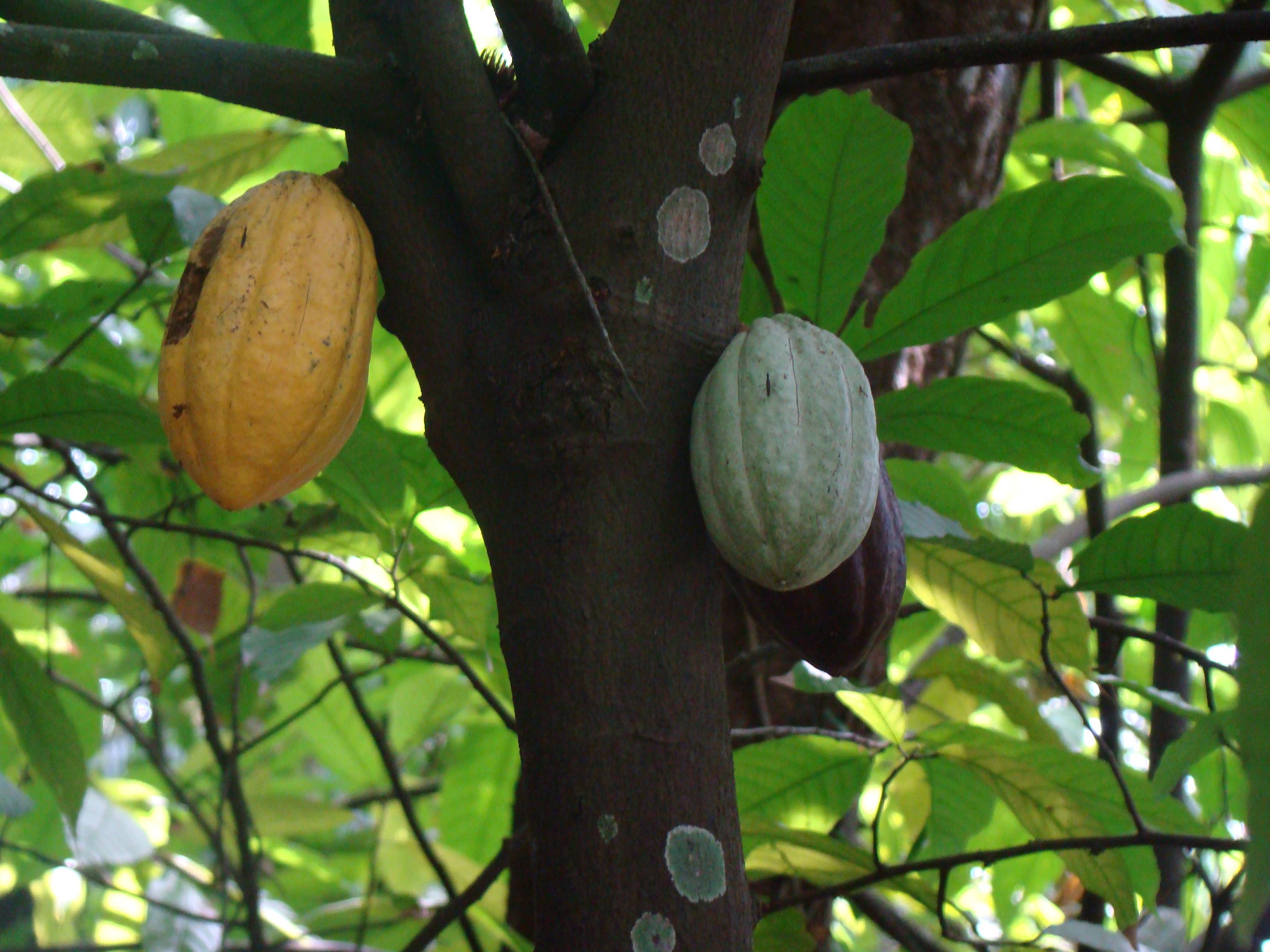
    The next stop was the Spice Grove, which grew and sold spices and herbs. We were given a tour by an enthusiastic guide who showed us the source of vanilla, cocoa, cinnamon, pepper, aloe vera, nutmeg and so on. The complimentary herbal tea was amazing. We responded to all the enthusiasm in kind,  and cash, since they sold the stuff there too. But it was a very interesting visit indeed.

    Vanilla Cocoa Pepper Cinnamon

    Further along the way, the guide also told us about a fruit called Duriyan, which when soaked in water overnight turned into gel. The Chinese consider it an aphrodisiac. The Chinese just need an excuse, I think.

    We stopped at an outlet called Juiceez on the highway. Now is a good time to say that in lanka highways, except when construction is going on, are amazing, though cops play spoilsport by not allowing to go over 60 kmph.The mango juice craving was laid to rest. We also spotted a poster girl for Farmville. Actually Juiceez is doing a good job by having farms across Sri Lanka, encouraging people to cultivate whatever they can, and serving a neat variety of juices, though the pricing is a tad high.

    We finally reached Bentota late in the afternoon. The Bentota Beach Resort is owned by the same group as Chaaya Village, but the latter is a few cuts above. The hotel opened into the public beach, and in the evening, we walked along the beach. The sea on this coast (side) is quite rough at these times, but we had a good time, attempting sand castles shacks and chasing crabs. When we returned, the part of the beach in front of our hotel was getting ready for some ceremony.

    At dinner, I finally managed to have that elusive dessert – Watalappan, whose prices had risen from Rs.250 to Rs.350 to Rs.400 as we traveled from Chaaya Village to Suisse to the Bentota Beach Resort. This is why buffets are loved. Pork and desserts competed for our attention, but Watalappan disappointed. For some reason, I had assumed there was chocolate in it, there wasn’t!! Choco Watalappan is being conceptualised as we speak! Hmmph.

    After dinner, D went off to see a dance show, while I lazed around watching Jonathan trying to win an immunity in the Celebrity Chef challenge. He didn’t, and D reported that the dance troupe had danced to ‘Kal Ho Na ho’. Bollywood stars are very popular here, and I wondered about the pop culture influence. Not the token premiere in the US type, but ads, music, seeping in and becoming accepted part of daily lives. Our guide’s favourite stars were SRK and the Artist Formerly Known as Kajol, (sorry, can’t recollect the link to that awesome post) and he was quite up to date on Bollywood gossip!! We are finally exporting culture! And we fell asleep with pride.

    Coming Up Day 5. Click here for Days 0, 1, 2 ,3.

  • Race Trace

    Anything is possible when you are young. Then you get older and the thing about getting older is that you don’t need everything to be possible anymore, you just need some things to be certain.

    For some reason, this line from Brick Lane (movie) stayed with me. Age might be a number, but we are alive for a finite time frame, and therefore it has its own significance. I think, more than age itself, it is to do with motivation. There does seem to be some relationship between age and motivation levels. Of course that’s quite a generic and simplistic statement, since there are many subjective factors that play important roles.

    At different stages we’ve different short term purposes. What these then also manage to give are specific motivations. From getting good grades to the bigger car to the fancy vacation and everything in between. Sometimes they serve as motivation and sometimes as means to the motivation. To reach somewhere or to remain somewhere. Sometimes we run the world’s race, sometimes we run our own.  In both cases, there is a certain amount of hard work that goes into the race. We can bring luck into this context, but I wouldn’t still like to trivialise the effect of one’s efforts. Like I wrote a while back, in the context of my friend R, it is difficult to grudge a person his success when you realise the toil that has gone into it. I read this excellent speech delivered by Yahoo co-founder Jerry Yang delivered about a year back, which dwells on efforts and doing what you love.

    But I’ve also seen that sometimes the efforts are made and the results don’t show. Maybe it has to do with the direction or the efforts themselves or maybe its to do with perseverance. What does one, them motivate the self with? I’ve also noticed, from experience,  that when one resets one’s ‘race’, and tries to figure out a purpose outside the parameters of routine and conditioning, motivation is quite a tough job.  A bit like trying to find an answer to a question you don’t clearly know. Motivation is after all, dependent on the purpose. Thankfully, there’s something else that Hugh MacLeod has captured beautifully.

    unfulfilled potential

    The mind can will itself to be free of others’ expectations, but can it hold its own against the ego, which has expectations of the self. The fear – if that goes, what motivation exists? Except for the need ‘for some things to be certain.’ And that somehow is existing, and not living?

    until next time, track shuffle?