Category: Technology

  • The Art of Live In

    I borrowed the title from a post I wrote nine years ago on live in relationships. We have come quite a way since then, but I am also seeing an evolution in this narrative. I call it the same narrative because fundamentally it challenges the institution of marriage as we know it. The way I see it, marriage was an evolutionary necessity – as a relatively structured process of procreation, and thereby organising society. The words below are from a work of fiction based on the life of the Buddha, it would seem that neither is it far from truth nor have things changed much.
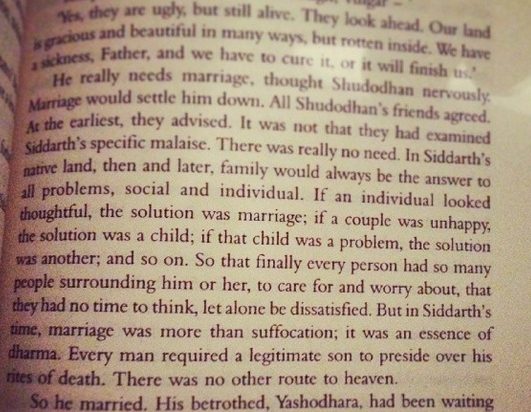
    Sid

    So why is this institution primed for ‘disruption’ now?

    Technology is one factor. The family unit made sense when younger members of the species had to be protected. As AI advances, maybe a family unit will not be necessary for safety or security. Technology also might play a hand in the physiological aspects, more on that in a bit. As I mentioned in an earlier post (Emotion As A Service) marriage is as much a transactional relationship as an emotional one. To paraphrase Scott Adams,  (fromthe internet has allowed us to have a barter economy of relationships….a virtual spouse comprised of a dozen separate relationships

    The second factor – advances in medicine and increasing lifespans. Imagine living up to 150. The ‘life partner’ that you chose when you were a carefree 20 year old may not be the one you’d want to have fireside conversations with in your middle age – 95. Interests, outlook, worldview, personality etc change with time. Maybe you’d be living in different cities at different stages. 

    Another factor I’d consider is depleting resources – these may be natural, (on a larger scale) and economic (on an individual scale) (any thing else you can think of?) These might force the species to rethink the institution, even though it seems hardwired into the brain by now. 

    I can already see several paths diverging from this point. Robots as companions for the aged is a fast developing area, it could be used for young ones in future. In a physiological context,  though we might not be there yet, s3x with robots is a distinct possibility by 2025. There’s bound to be a learning curve, but hey! 

    i130925bb

    (via)

    In a relationship context, The Atlantic had a long article on polyamory, including perspectives on how society sees them, and the challenges involved. I was actually more surprised when Bangalore Times carried an article on the subject on its front page recently. The point here is that it is getting mainstream attention, arguably the first step in societal acceptance of units that are radically different from the traditional family. Even children with DNA from three parents might soon overcome legal hurdles and become an accepted practice.  

    With all these paths, and many more, the institution of marriage might become one of the many options available. Some communities might hold on to it – as a tradition. But as time progresses, both individuals and society will undergo not just transformations on the outside, but in mindset as well.  After all, isn’t evolution just a logical response to a creature’s living environment? If it is, once the evolutionary necessity has passed, even this tradition might just fade away.  

    (The views expressed above are just the author’s attempts at intellectuality, and do not represent his actuality. He hopes he doesn’t have to sleep outside!) 

    until next time, along came poly! 

  • It’s about time

    Time

    There’s a question I’ve been asking myself for a while now – is time a man made construct or not? Days, seasons, years and cosmic events would happen even if we never tracked them, but our lives are defined by the time frame we live in – from a personal as well as socio-economic and technological standpoint. I recently got a perspective I thought I should share. I also found this overlapping with the devices we have used to track time. Hence these thoughts.

    Form: For a while, the mobile phone was the watch, but wearables (my attempt at a primer) is the new entrant. I already see a little crossroad in wearables – the smartwatch/accessories like Glass, and the activity tracker, both connected to the mobile device. The former, in addition to being a chronograph, is aiming to be a personal assistant of sorts by aping many functions that a mobile phone does – GPS, messages and notifications, and contextually relevant information. (I liked this post on Google Now and Android Wear) The activity tracker, on the other hand, focuses more on fitness and health. What connects them is the battle for the wrist. Between Android and Apple, I’m hoping they combine both the above streams quickly. I’m also hoping that both will get better at moving from data to actionable insights.

    Function: To bring the focus back to time, the form factor increasingly makes me think of time as an app. In this era, our control on time is negligible –  I can decide how I spend my day, (application of time) but I cannot really control my life span –  therefore we are bound to think of increasing its efficiency. I’d expect the device  to notify me on the best way to use my time – roughly speaking the bottom two levels (and a portion of the third) of my favourite framework – Maslow’s hierarchy of needs. But as we gain on immortality, we might have so much data on ourselves and the collective consciousness (related post) that it will offer more value in the top two levels – relevance and value to others (esteem) and self actualisation. The simple guiding thought is that isn’t time one of the only things that stops us from self actualisation, the other being economics?

    Future: From a function perspective, I think the ambiguity on time (as a construct or not) exists because we can control it only partially. As we control it more and more our need to control it becomes lesser (increasing lifespans is one reason) it will automatically become a construct/’application’. (Very roughly, think of fire – before we learned to ‘create’ it, it might have been an enigma, but the moment we did, it was more an application.) Then, the decisions we make will probably be influenced less by time. Time will have to find a new way to be contextually relevant. Therefore, from a form factor perspective, I expect to see devices which provide us contextual applications of time wherever they are located eg. say bearables (implants, micro-devices attached to skin etc) that tell you it’s time for a heart checkup through an interface that’s probably an app on a portable device. It’s only a matter of time.

    Even further on, the philosophical question to ask is that if one had an infinite supply of time, would one still measure it?

    until next time, watch this space

  • Agile @ Scale

    Prelude

    I think I used ‘dis-aggregated social network‘ on this blog for the first time in 2009, referring to Google’s basket of services that were connected relatively flimsily then. IMO, Google has always been that way, even including Google+. (read) I remembered it when I tweeted this about Facebook – around the time news of their Fan Audience Network started trickling in.

    It got me thinking (again) on ‘scale’, a recurring theme here. In a less complicated world, where the trends in the business landscape were significantly more linear, (growth, competition, consumption, economy) scale was a powerful weapon to wield. But it’s a different world now. Artificial Intelligence, 3D Printing, Internet of Things, Wearables  and a hundred other things might completely disrupt the status quo and the need an incumbent brand satisfies. These are the known ones, and then there are the conceptually invisible (at this point) ones. Surviving (let alone thriving) in this shifting scenario requires agility, and it is difficult (though not impossible) to see scale and agility together. I looked to Google and Facebook for an approach towards this because not only are they surviving, they seem to be thriving. Yes, we’ll get to Amazon in a while.

    What does it take to be agile at scale? I can think of four ingredients, the last three repurposed from the title of this post by JP Rangaswami.

    Purpose

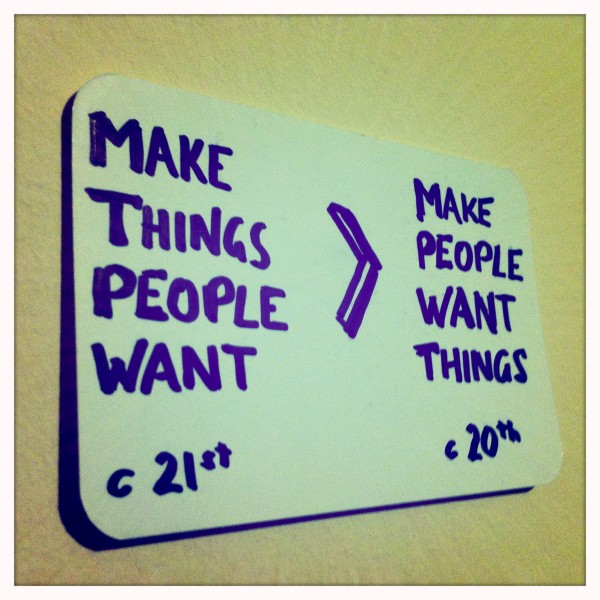
    I remember talking about re-defining of scale at the Dachis Social Business Summit. The thrust of the presentation was that brands could engage consumers at scale only if they use currencies that create value for the user in the context of a shared purpose. I have elaborated it in this post at Medianama. Recently, I saw that Hugh MacLeod has brought it out beautifully here. Simply put

    Make-Things-People-Want-600x600

    (via)

    Possibilities

    The purpose need not have one constant rendition. As the landscape changes, a business will need to adapt it to suit changing circumstances. For that, a business needs to understand the possibilities. I saw a very good line in this post about being a maker – the more you work in the future, the less competition you will have. How much into the future a business needs to be working is subjective and depends on its dynamics, but if it doesn’t disrupt itself, someone else will gladly do it for them. (“The Jeff Bezos School of Long-Term Thinking” is a good read in this context)

    Platforms

    While purpose and possibilities are all good at high altitudes, a business also needs strong operational  platforms to back it up. As organisations scale, I have seen two things that affect agility. One, the processes that are introduced to create efficiency @ scale more often than not, become the goal instead of a means, slowing things down and taking away from actual goals. Two, as processes and manpower increase, silos are created. The good news is that it is easy to see technology platforms bringing more efficiency into processes as well as an iterative way of thinking in the near future. It is already happening in marketing. This, and many other factors are also dictating a consumer experience driven approach and are forcing organisations to break silos. As the entire brand/organisation becomes a platform (read) that regularly revisits its context and purpose in the life of a consumer, ‘everything becomes a node on the network

    People

    HuffPo had a post sometime back, citing Zappos, calling 2014 the year of workplace reinvention. It is interesting to note that parent company Amazon has apparently aped Zappos’ ‘pay to quit’ policy, even as more and more stories about working there being a ‘soul crushing experience‘ are coming out. Meanwhile, the two points it mentioned for this to happen are purpose and trust. These I’d say are the bedrock of culture. It’s intuitive that a workforce mindful of the organisation’s purpose and their role in it would keep an eye out for the business’ possibilities, be ready to work beyond silos towards a great consumer experience, and bring in others who would help the business scale. This, along with purpose, has to be the glue that holds it all together, enabling the organisation to move fast without cracking.

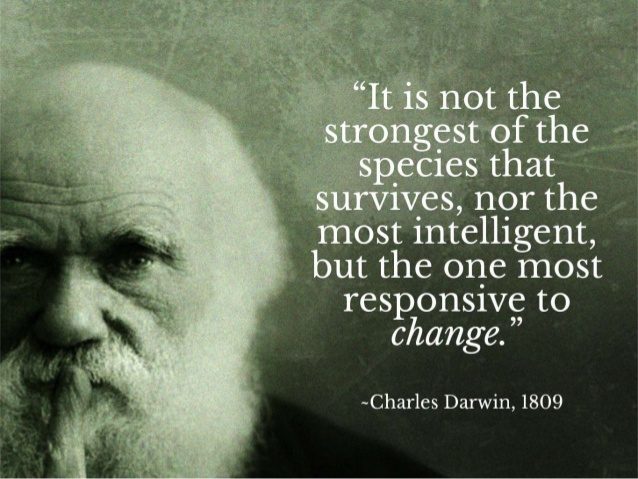
    While different sectors are at disparate distances from a radical shift necessitated by technological developments, it is, I think, inevitable. In this fantastic post titled ‘Knowledge is faster than mortar‘, which looks at scale through a different lens, the author makes the point that ‘the old mechanisms don’t fit the new social structure.Old mechanisms were built to scale stability, new ones will have to be built to scale despite instability. Anti-fragile, so to speak. Indeed, we will see many manifestations as existing structures try to adapt – internal mechanisms like Amazon’s 2 pizza rule, consumer facing disaggregation like Facebook that have a corresponding internal wiring, or brands tweaking their 4Ps even further for different contexts. But whatever paths businesses choose, this will hold true

    responsive-to-change

    until next time, the fast and the curious

  • A mind beyond auto pilot

    The world we create for ourselves, as I wrote a fortnight back, is a filtered version of all the stimuli we encounter. As we grow older, our stream of consciousness gets more populated because of our experiences and we automatically try to find patterns. That’s the brain’s basic learning process which helps us to navigate stimuli. The world though, does become complex, the navigation more difficult, and that’s probably how we slip into auto pilot.

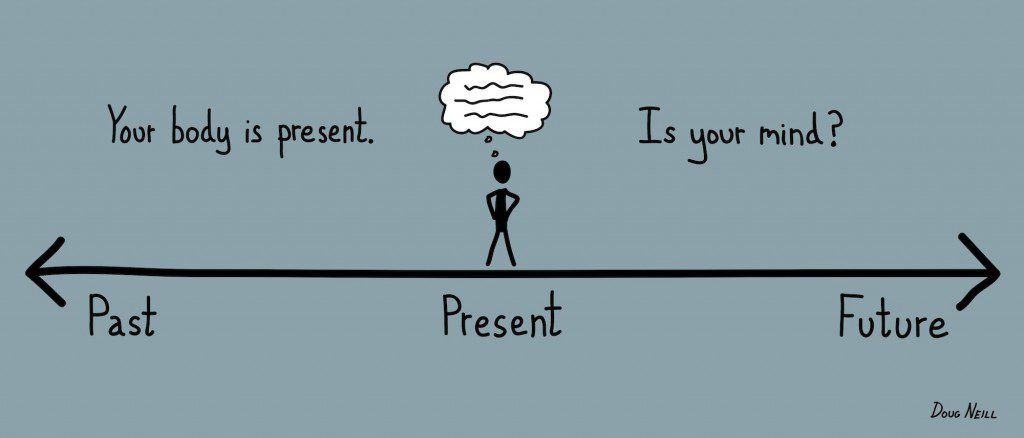
    We think we’re conscious of the things we do, and we are, at a superficial level, but are we really mindful? The simple experiment to do, and I think I’ve written this earlier, is to re-imagine the last hour of your life. How many actions you can remember is probably an indicator of mindfulness. There’s no question that the auto pilot is useful, but I doubt we’re in actual control of the takeover, and that’s where the problem is. Our decisions and our actions become mechanical, and even when they’re not, they’re dictated by filters designed by the auto pilot.

    mindfulness2

    (via)

    But I think there is hope. One of the best 2014 trend reports I’ve seen – by Zambezi – has ‘Mindful Society’ as its first trend. While that is more a take on digital devices and our time spent on them, the JWT trend forecast has ‘Mindful Living’ as their final trend, and talks about a growing interest to experience everything in a more present, conscious way. I also think that we might have unwittingly figured out a way to start out on this. One of the hottest trends this year is the quantified self – self knowledge through numbers – it encourages people to monitor all aspects of their physical, emotional, cognitive, social, domestic and working lives. (via)

    At this point, it is more focused on the physiological aspects, and there will most likely be a deluge of devices, services and allied products that would be an end in itself. However, it is also possible that we will truly understand our body, as numbers show the impact of our behaviour and consumption, and as a result, we’ll become more mindful in our actions. And maybe, just maybe, once we’re done with that, we’ll begin trying to do the same for our mind, and the decisions it makes. It’s difficult to imagine how that will work out, I agree, but hey, even five years back, did you think something you wear on your wrist could give you analytics on your sleep patterns?

    until next time, a qualified self 🙂

  • Humachines and the role reversal

    In his post ‘Virtual People‘, Scott Adams writes that his generation would be the last of the ‘pure humans’  raised with no personal technology. Someday historians will mark the smartphone era as the beginning of the Cyborg Age. From this day on, most kids in developed countries will be part human and part machine. As technology improves, we will keep adding it to our bodies.

    Singularity has appeared on this blog in various forms, and in at least a couple of posts, I have written about the augmented human, and like the proverbial frog in the slowly-boiling water, we wouldn’t know when it happened. (check this post for a fantastic short film on the subject) In fact, medical applications of 3D Printing are already accepted and on the rise. Not just ‘accessories like hearing aids or dental braces, we have moved on to a lower jaw, (previous link) 75% of the skullan ear, and yes, ‘cyborg flesh‘! It’s obvious that the applications are improving the lives of many. My question though remains – as we replace more and more of ourselves, possibly the brain itself within my lifetime, what happens to the essence of us that makes us human – the feelings, the emotions, the zillion unique reactions to various physical and mental stimuli?

    In this wonderful post titled “How not to be alone“, in which the author writes about how we have begun to prefer (diminished) technological substitutes to face-to-face communication, (I couldn’t help but remember this)  he quotes Simone Weil, “Attention is the rarest and purest form of generosity.” And from that statement I realised how the the narrative might come full circle – I remembered this post I had read a few months back. It mentions bots that have passed the Turing test (“test of a machine’s ability to exhibit intelligent behaviour equivalent to, or indistinguishable from, that of an actual human”) and has a compelling argument that while we’re singular entities with a complex design, we’re still just blueprints –  with many similarities. This also  entails that we’re building machines that can mimic, and evoke, our emotions. Thus, he writes, the era of artificial emotional intelligence is not far.

    Perhaps, in the future we will outsource our humanity and reverse roles – half-machine former humans who deal with each other in mechanical ways and go back home to a humanoid bot that will give it all the empathy and emotional anchoring needed. Or would it need it at all? 🙂

    until next time, be human, comment 😀