Category: Work & Org Culture

  • Money : AI :: Present : Future

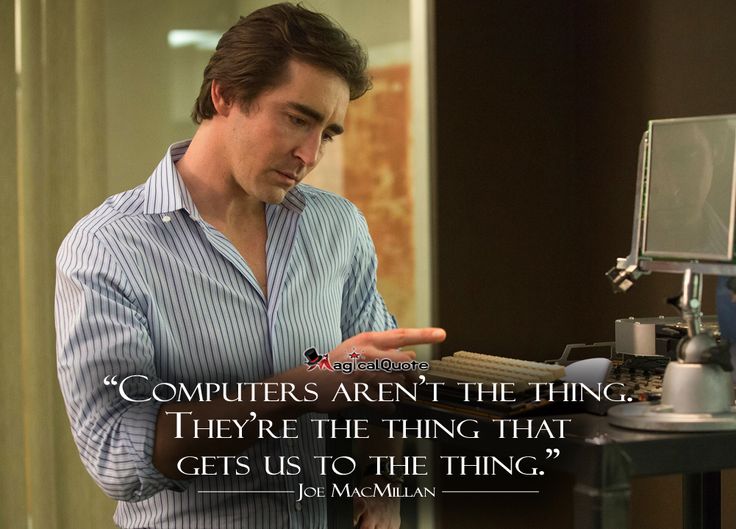
    Thing

    I might have found a remedy for the Mad Men withdrawal symptoms. “Halt and Catch Fire” – that’s where the line is from. While the show has me glued, it also made me really consider the connection between money & AI.

    A key factor that is driving the increasing adoption of AI in the work context is efficiency. Somewhere in the equation of calculating efficiency lies money, and how much of it can be saved. I am ignoring ‘time’ for now, because even that, mostly comes down to “time is money”. Jobs increasingly become task oriented and the objective is to make each task more and more efficient. If we continue that way, the pessimistic AI future is easy to imagine – it will happen in a ‘frog in boiling water’ manner, but it will happen. (more…)

  • Re: Org

    Timehop, which takes me on a nostalgia trip everyday, reminded me recently that it has been a year since I wrote The Change Imperative. The opening slide features a quote – “If you don’t like change, you’re going to like irrelevance even less“- attributed to Gen. Eric Shinseki. In the times we work in, I believe this cannot be overstated, not just for individuals but for organisations as well. Even as business dynamics force changes on the external manifestation of an organisation – the brand – any organisation that faces a client/consumer will also be forced to adapt its internal structure and practices to suit changing needs.

    For a long while now, I have been ambivalent about processes. I have worked in an era, and in organisations, where processes had a way of getting things done. But in parallel, I have also felt that many a time, processes have a way of forgetting what they were made for. The output overshadows the outcome. Over the last few months, my surmisal has been that, to use a Taleb classification, processes can make an organisation robust, but not anti-fragile. This very informative post by Aaron Dignan of Undercurrent – The Last Re-Org You’ll Ever Do -highlights many ways that organisations have tried to change standard structures and practices, and even suggests a six step path to reorganisation. (more…)

  • The Entrepreneur and the Professional

    A fantastic article in The Atlantic titled ‘The Case Against Credentialism‘ traces the social-cultural and academic  roots of America’s current business dynamics. The part that interested me most was what the author calls the tension between the two cultures – the entrepreneurial and the professional. While both are cultures of achievement, the basic tenet of the latter is that he who goes further in school will go further in life.

    It gave me an impetus to write about this in the Indian context. Nothing as exhaustive, but a little note based on my experiences thus far, with much generalisation. My skin in the game is that it affects me personally and professionally. (more…)

  • Culture Architecture

    Despite several posts on ‘culture‘, of the four Ps I’d mentioned in the Agile @ Scale post, ‘People’ is a topic that has gotten the least attention here in the recent past. As the change imperative forces organisations to be more responsive to rapidly changing external dynamics, the structures, processes and methods it had adopted for its internal stakeholders will most likely have to change as well. Jobs in earlier era were well defined constructs, but this era requires employees to work far beyond their job description in order to thrive. (“Why We Need to Change the Software in our Organisations“) It is probably not a coincidence that the four organisations that are defining the larger contours of business and technology are also the most favoured employers.

    The task is not easy. On one hand, there is a workforce that is increasingly getting overwhelmed by communication technologies that are dictating an always-on culture. (“Why you hate work.”) On the other hand, there is a new generation entering the workforce that has expectations of a culture tuned to their lifestyle and ways of functioning. They rapidly disengage if they feel this is no happening. In both cases, the end result is a loss in productivity. This is only one part of the story. There are several factors that define culture, and in an organisation, there are several factors that resist change as well.  How does an organisation adapt to these dynamics? A few thoughts, some strategic, some tactical. (more…)

  • Linking learning & labour

    I’m a huge Asimov fan, and am constantly amazed at how he was able to have a perspective of the future on multiple fronts. I was reminded of two of those recently thanks to their application (of sorts) in contemporary scenarios.

    First, Hari Seldon‘s (pretty much the foundation of Asimov’s Foundation series) psychohistory, which was able to make general predictions on the future behaviour of large populations using history, sociology and statistics. The easy contemporary connection is big data and predictive analytics.

    Second, a short story written by him called ‘Profession‘, (do read) in which every person’s profession is based on an analysis of his/her brain, and no choice is given to the person in this matter! In India, we seem to be already there even without the analysis!

    Collectively, these two made me think of employment, and on a related note, education. The thought was that with so much of data available on education and employment, we should be able to create ‘tests’ to compute the interest and aptitude of individuals at a very early age. What this would aim to do is to eliminate the herd education that currently exists. Instead, children would learn things that help them in a profession for which they have the intent and interest, using say, a combination of traditional classrooms and MOOCs. Also, this would no longer be one part of a life cycle, but a continuous process – helping the individual thrive in a dynamic environment.

    If you remember, LinkedIn was my representative for ‘L’ in the ‘change imperative‘ deck. That was because I felt that it had the data and the vision to be the catalyst for this kind of a change. I was very happy when it underscored this faith with the fantastic ‘future self‘ experiment, in which they identified the future professional self (5 year time frame) of LinkedIn user Kurt Wagner – another user Mussarat Bata – using various data points!

    LinkedIn hasn’t really built this as a public tool, but just imagine the possibilities! A platform that shows people the possibilities which take them closer to their ‘purpose’. (remember ‘The Evolution of Work and the Workplace‘?) I sincerely hope to see this in my lifetime. 🙂

    until next time, live and learn

    Clipboard01