In vs Amazon, I had cited Simon Andrews’ article – it might be “easy” to get about $50m, the journey to $100m and beyond gets tougher because efficiencies start maxing out. In this context, “efficiencies” relate to acquisition when building a DTC business. It led me to think of “maxing out efficiencies” in the broader context of the organisation and the business environment it operates in. (more…)
Category: Work & Org Culture
-
Evolving against entropy
In the last fortnight, I had two interactions with customer care teams. The first was Kotak, for a bank account. There were failures at multiple levels, but the biggest takeaway was how difficult it was to get through to a human. Chatbots have their uses but this was extreme! Twitter DMs weren’t a help either. The second was Amazon, and that surprisingly included being put on hold for about 15 minutes and transferred 5 times! Thankfully, the problem was resolved in 30. But given the famed Amazon customer-centricity, this was a disappointment, and I wondered if at scale, it was inevitable.
What causes it? The best frame I have seen is entropy. (via) Yes, that physics and thermodynamics thing – the degree of disorder/randomness in the system. Though the meaning remains the same, the application changes. In the context of a business, it is the tax applied by the system between input and output. Just imagine the effort that is required to get things done in a corporate structure as against a startup. While it is theoretically possible for a complex system to have lesser entropy than a simple system, I have not seen it in practice. I can imagine why it is so – the randomness that can be generated by different touchpoints, and their optimization for following rules as opposed to providing solutions. What happened to me with Kotak and Amazon were examples of that. (more…)
-
Choices & Automation
Taylor Pearson wrote an excellent primer on blockchain a while ago. While explaining why blockchain matters, he quoted something by Alfred North Whitehead
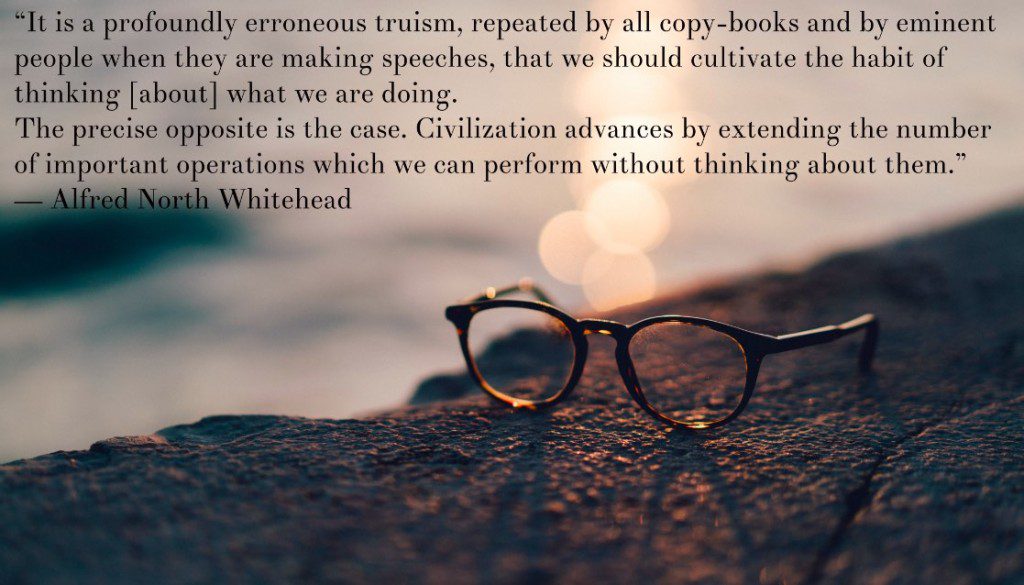
Photo by Joshua Newton on Unsplash
-
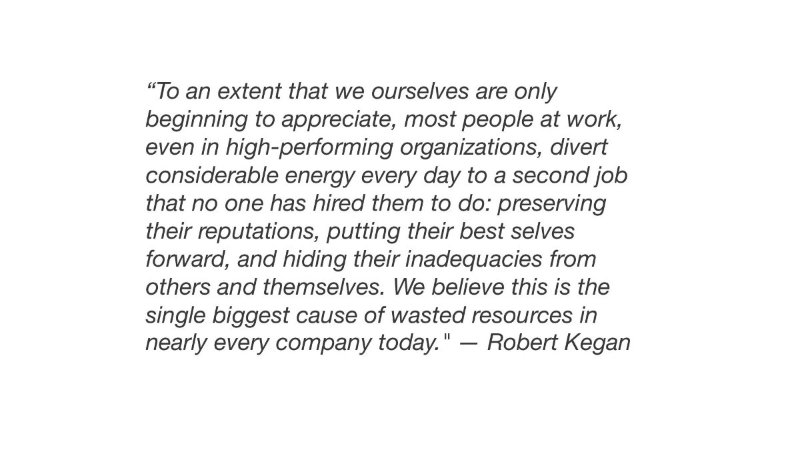
The Second Job

I caught this in the Farnam Street newsletter, and went about looking for the source. An HBR article from 2014 titled Making Business Personal, which also writes at length what and how certain organisations overcome this.
-
That passion – profession debate, again
In many beer fueled conversations, I have heard the sentiment of “quitting my job and doing something I am passionate about.” While I see merit in that line of thought, these days I also end up playing party-pooper by asking if he/she has a business model in mind, especially since the ‘passion’ is more often than not from the usual suspects list – digital photography, cooking/baking, writing, travel and so on. To clarify, unlike funded startups this model doesn’t even have to scale, but in the medium-long term, the revenue has to be greater than expenditure. That’s a requisite for survival in the world, unless one has alternate sources of income.
I saw a meeting of worlds when I noticed yet another job listing that demanded the person to be “passionate about digital marketing“? As someone who has been working in the domain since 2004, I have seen a version of this phrase appear in many job descriptions. I could replace digital marketing with startups, consumer insights, programming and so on, the question remains the same. (more…)