
Category: Social Media

  • Revisiting Social Commerce

    It’s been more than 2 years since I wrote about social commerce on afaqs, and since then, there have been massive changes right from the definitions to the operations of social commerce. Karthik’s recent post on the subject led me to think about it again.

    I’ve always felt that most of the popular definitions of social commerce have constrained its actual scope. Back in 2011, facebook stores accounted for most of the social commerce discussions. These days, it is mostly referral traffic and sales from social, and that too, in terms of last-touch attribution, as the Ecommerce quarterly (that Karthik cites) would suggest. While I’d not contest EQ’s methodology or assessment, I think it’s only fair to point out that there have been a great number of exceptions. (read; Disclosure: that list includes Myntra where I work) I’m not a fan of how Facebook has throttled what we used to call organic reach, but if you want to read about how Facebook helps target users at different levels of the funnel, Zappos serves as a good example. Facebook’s Custom Audiences and FB Exchange products allow different ways of targeting consumers. Twitter is a bit late to the party, but their products also have excellent potential from what I’ve seen, and they’re moving quickly! (already into retargeting)  YouTube is already a big bet for advertisers, and Pinterest is already being used by scores of Etsy users! (read) From small experiments, I also suspect that Google+ is a potential top rung player. Even if you’d like to leave the $ out and consider (for example) only organic (eg. Open Graph actions) there are case studies evolving. (example)
    tumblr_lteusu0d0K1r54seio1_500

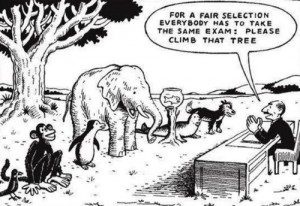
    So, can commerce be driven through social channels – advertising as well as organic? An emphatic yes would be my answer. Yes, it might score low if one considers only last-touch attribution, but hey, many of Facebook’s strategic PMDs are getting a handle on multi-touch attribution. (Kenshoo is an example) One should also consider that other traffic channels like search, affiliates etc have been around for longer and have tried and tested models. The point is rather simple – if we judge social’s contribution on the basis of models created for an earlier version of the web, it would not measure up. We’re at a stage where both technology and tools are still evolving to help measure social on terms that balance its uniqueness with the needs of the business. The good news is that the little that I have seen of Facebook’s strategic PMDs has been inspiring!

    (Image via)

    But I think using social channels as sources of traffic/revenue for commerce is still not capturing ‘social commerce’ in its entirety. Though arguable and reducing in favour, I’d still label many group buying options as social commerce. (example) But to me, the elephant in the room is  p2p commerce. Though the collaborative economy is more vast in scope, I’d put it in the same bucket in this context. (do read Jeremiah Owyang on the subject) From Airbnb to RelayRides to Loosecubes to TaskRabbit to even KickStarter, commerce is now happening between individuals with everyone playing creator, buyer and seller as per context. While the $ is inevitable, trust and one’s network itself are becoming currencies. Yes, these also use social platforms for extended reach, but this is inherently more social than the pure commerce play of brands.

    It is interesting to see social platforms working on these lines as well. Facebook’s Marketplace was probably a bit ahead of its time, but nothing stops them from bringing it back. I read recently that Google is planning to release Mine – a service integrated with G+ that allows users to keep track of “belongings” and then share those with friends in different circles. (via) Yes, there will obviously an Android App. It’s not just these platforms, I’d think that Amazon is slowly approaching it from a different direction as well. (read)

    To sum it up, commerce has always been social, it’s only the dynamics that keep changing.

    until next time, commercial breaks
  • Can media become social enough?

    A few days back, it was reported that Facebook now had a million active advertisers, and that LinkedIn has 3 million company pages. I’ll let that sink in, in case you hadn’t heard. Despite all the social-ness, I realised it’s impossible not to call it media. The wiki definition for media is “tools used to store and deliver information or data” That, for me, is a smartphone now! I also wondered how many media behemoths could boast of a million active advertisers. And that’s when it really struck me how much the traditional media we were used to have been sidelined – yes, they still get advertising revenue, but from a sheer reach perspective. Google, Facebook, YouTube and many more platforms get anywhere between a few million to a few hundred million visitors every day.  To put it all in perspective, TOI – the world’s largest English daily has a readership of over 7 million.

    Media and advertising have had a very intertwined life, unless of course the publication/channel has been on solely a subscription based model. I think the magic of Facebook (and Google, before it) and those that followed is that they have democratised advertising by not just making it something any small business could spend on according to their means, but also giving them the ability to advertise according to contexts – intent, interest, social etc.  Though Google, Facebook etc are still intermediaries, they never flashed their powers, though the latter has begun to, recently. As brands move away from a one-size-fits-all mode of advertising, these platforms give them more options of form and function, and changing the face of advertising. (Google’s exploits are known, here’s a pertinent read on Facebook)

    In such a scenario, what really does a traditional media channel have to offer to its consumers and clients? I’m not saying that they’re all going bankrupt next Sunday, but it’s clear which way the wind is blowing. One way, of course, is to use their brand value, and replicate (and grow) their audience on devices and platforms which better serve advertising interests. They can hone their value offerings by offering various contexts and their combinations – local, social, interests, and so on, and build business models for each. The early movers are already making big deals. But that is the red ocean that everyone is fighting for. How really can a player differentiate?

    Biz_Is_The_ArtI had a vague thought. Media’s original strength was its relationship with users and the trust involved. In the social media era, how can that be leveraged? Flipboard has already allowed users to become curators and create their own magazines. Is that the future, along with shared revenue on advertising? What if users can also curate the advertising their ‘subscribers’ can see? After all advertising is also news/information and has a certain value depending on the source. Traditionally, media  has been the middle man between advertisers and users, but what happens when everyone is media? Can media start aggregating influencers in every domain, including niches, provide them the material for curation, negotiate on their behalf to relevant advertisers, and share the revenue? Perhaps the next  disruption will be the platform that can handle the complexities involved. What do you think?

    until next time, mediator

  • On Medianama

    Converted the talk at the Social Business Summit into an article at Medianama. It’s long, but do read! 🙂


  • @ Social Business Summit

    I was quite thrilled to be invited to speak at the Mumbai version of the Dachis Group’s Social Business Summit – not just because of my awesome co-speakers, but because this is a platform that has seen the likes of Tony Hsieh and John Hagel earlier this year! To confess, a little nervous too, since (as my friend Kavi Arasu, whom I met for the first time after years of knowing him online, put it) I was going to ‘open the batting’! But in the end, it did turn out very well, judging from the audience reaction. Here’s my presentation – The Currencies of Engagement @ Scale, with a talk flow right below since slides with Yoda and Spock could seem way out of context in the subject of Engagement @ Scale.

    The currencies of engagement @ scale

    It was a fantastic experience – the crowd, perspectives of co-speakers, meeting Gaurav, Haroon, Nadhiya for the first time outside of Twitter, catching up with Gautam, Sumant, Sanjay and Ideasmith, and being introduced to a whole bunch of people that I hope to be in touch with.

    But my biggest thrill was in getting this platform to share my ideas on an evolving domain that I am passionate about, and being appreciated by the likes of Jeff Dachis and Michael Jones. It was both exhilarating, and humbling.


    A few photos here, though my expressions make it seem more like ComicCon or a theatre workshop! :O

    I also wrote a more elaborate post at Medianama. Do take a look.

    until next time, #SBS2013 #ftw 🙂

  • The more things change….

    Just a couple of weeks back, I’d written about influence and context, and last week the twitterverse had some excitement delivered courtesy Disney. I couldn’t experience it first hand, but got quite a lot of perspective thanks to Karthik’s post and the comments that followed.

    Personally, instances such as Disney serve as a great filter for keeping track of the trust quotient. I don’t expect agencies/brands/celebrities to be unbiased or disclose, but once upon a time, it was natural for regular twitterati to do that. But times have changed, and all of this is personal philosophy, so I’ll move on.

    On hindsight, and when comparing the patterns of evolution of traditional and social media, the current scenario seems inevitable! Platform – Community – Audience -Brand – Ads (hashtags) – and when ads became noise, brands differentiate by bringing in a fresh voice. (celebrities/micro celebrities) Where we are now is with an army of mini TOIs, relatively more genuine-sounding, and significantly less costly. There are quirks, of course. For instance, brands don’t have to pay the platform to be present, and can incentivise the community to provide publicity. On the flip side, brands are also ‘being held to ransom’ (previous post) by ‘influencers’ and we’ll probably see guns for hire being used by rival brands pretty soon. [Just last week, we saw a tweet from a person working at a competitor stating that she liked shopping at Myntra. One of the various scenarios we considered was a #conspiracytheory – that the moment we used the tweet in some way, the person would prove to be a non-employee and we’d be accused of playing dirty]

    At one point, I really thought (or hoped) social would be new wine, but it has more or less ended up a new bottle. If we continue the evolution pattern, the future is easy to imagine. Context will disappear, and noise will magnify, until the next disruption. But I still have some hope, because the nature of the platforms (and the tools that are getting built) are such that a user can, at least to an extent, mould it according to the way in which he wants to consume it.

    That does take me back to what I said in the last post – people will actively build their own trusted sources. And the real opportunity for brands is still to become a trusted source. Yes, I do think it’s possible, and we have a relaunched buzzword on cue – social business. In fact, there are probably brands doing it already, spending resources to build the foundations so that the hashtag (or its equivalent in the future) is not manufactured for its own sake, but is organically and genuinely built by contextually relevant influencers who can be publicly rewarded for helping the brand meet its business objectives.

    But wait, that was where social platforms started too. Which leads me to wonder if the future of brands and media will always work in cycles, and end up near square one!

    until next time, the more they remain the same…

    zp8497586rq