Category: Brand

  • The Social Product

    A few days ago, I read this post that cited studies on consumer sentiment (US, UK) about brands being present on social media. There are plenty of interesting perspectives and nuanced insights but one key takeaway is that consumers feel there is a glut of companies on social media, though it seems the younger age group feel that presence on social media adds to trust. Around the same time, I also came across the theory of peak advertising which begins with the decreasing effectiveness of online advertising and moves through various stages to suggest alternatives to the current business models that sustain the internet.  Collectively, it would seem as though the (generic) advantage of just being present on social is plateauing, or probably even going down. There are obviously brands that are using these platforms effectively, but increasingly, social is being used as media and this is easily replicated by other brands. At a larger level, the advertising barrage on social is also reducing effectiveness. That led me to think – before the utopia of social business, what opportunities does social have beyond the traditional marketing, advertising media based approach, enterprise collaboration, and social CRM?

    In the second Myntra post, I’d written about how I felt that ‘product’ was best placed to deliver sustainable business advantage. Though it was related to the website/features in that context, I’m now considering if this is applicable across the board – to physical products as well. Also, the more I see social evolving on customer care, marketing, advertising and sales, the more I think these are becoming hygiene. I have omitted marketing because I think there is scope to build a unique brand and thus some business advantage in the long run. However, I also think that this marketing will have to significantly integrated with ‘product’.

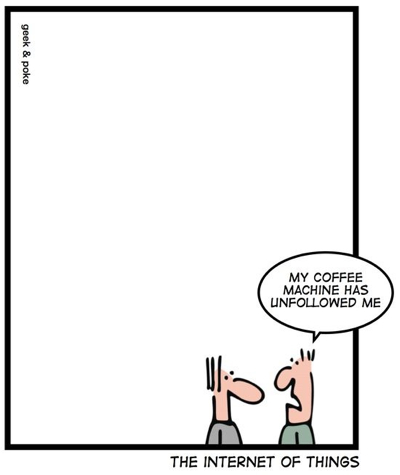
    In this context, I found this Forrester post titled “There is no Internet of Things” extremely interesting. Though we’re in the early stages of this phenomenon, I think it’s a good time for her to have raised the point of fragmentation and apps/brands working in silos. There are some excellent examples and scenarios in that post that make it a must-read. The conceptual answer to this is in the title of this HBR post – “The Age of Social Products“, and it makes a great point on ‘shared purpose’. “In an age of social products, competitive advantage comes not from product features but from network effects.” (though at this stage, I do think it’s both and not an either/or) Nike, as mentioned in the post, (and as usual) continues to be on the cutting edge. The common theme in their case is that the product + community (user+developer) offering only uses popular social platforms to augment, and is not dependent on them.

    The current approach to social (media) is either to use $ or influence. I’m not sure there’s enough importance given to the network and the effect that’s created over a period of time. As this superb post states on the subject of disruption and diffusion states, “It’s not the nodes, it’s the network” In that light, I feel social products might be able to do more justice to the promise of ‘social’ than its current avatars, especially social media. I did think the same way about social platforms earlier, but we live in hope!

    IoT

    (via)

    until next time, objectifying social 🙂

    P.S. I was reminded of a term coined much earlier – social objects. In that context, it was anything that could be a conversation starter, and the focus was more on its ability to connect people around a subject of common interest. Social products have the ability to take that connection and give it a platform where even people who are not in the same time and place can be part of the conversation. This is beyond its ‘utility’ not just as a product but also as a device that talks to other devices and makes itself more useful. I’m actually thinking of that ‘bottle of memories’ I mentioned in an earlier post, probably in a smarter avatar – like this or this – but also ‘tagged’ (say, using an augmented reality app) with the people who are part of the stories associated with it. Now, at some point, when I see the bottle, and get particularly nostalgic, I could use the same app to see what those people are up to, and quickly ping them to start a conversation about the good old times. In the collaborative and sharing economy, think of the possibilities! (If you’re interested in this sort of thing, you should like this post) When I think about it, what we probably need to accelerate this is a browser (what it does for the web) equivalent.

  • A culture of innovation

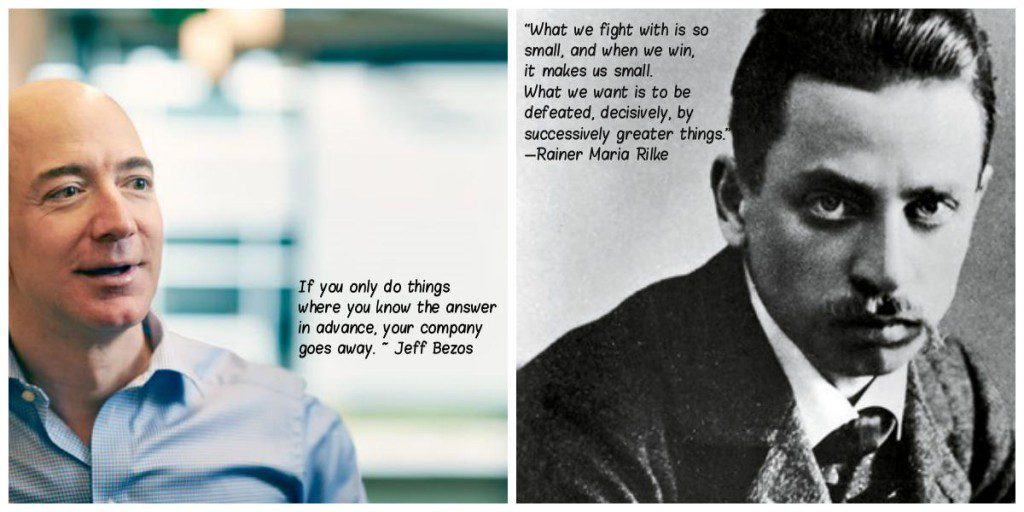
    More than four years ago, I’d written a post juxtaposing product and consumer life cycles wondering how products could evolve, yet be relevant to users at various stages of their usage maturity. Personalisation as a theme has advanced much since then, and web based services are definitely closer to cracking this. I also got a perspective from Jeff Bezos in this post All businesses need to be young forever. If your customer base ages with you, you’re Woolworth’s” though I’d take it with a pinch of context.

    But when disruption is the norm and technologies like 3D Printing and themes like the Collaborative Economy (and others) are poised to have an impact on an increasing number of business models, how does a brand pace its innovation? Branding Strategy Insider asked a relevant question on this premise – Can brands innovate too soon? The post quotes Michael Schrage in providing a good perspective “Your own rate of change is determined less by the quality or price/performance of your offerings than the measurable readiness of your customers and clients … Their inertia matters more than your momentum.

    This post I came across cites a research by Forrester which points out that most innovations remain incremental in impact, rather than being radical innovation..Companies often ‘innovate’ things customers don’t even want. The post suggests a simple cyclical framework of Learn (strategy) – Make (technology) – Test. (design) A more nuanced view (and framework) of innovation can be found at Digital Tonto. Bezos once again has a take on it “We innovate by starting with the customer and working backwards. That becomes the touchstone for how we invent.

    Social technologies provide multiple ways for an organisation to simulate scenarios and structure their innovation pathways in ways that will optimise customer benefits and business objectives. In fact, I believe that the responsive organisation (via) will soon become a strategic imperative. As quoted in that post “If the rate of change on the outside exceeds the rate of change on the inside, the end is near.” I also think that the biggest challenge in this entire movement is a mindset-culture lag. In a sense, all the so-termed disruptions happen because incumbents were not agile enough to adapt to a rapidly changing environment. There is some wonderful learning from the founder of Sonar in this post titled “Postmortem of a Venture-backed Startup” One of may favourites is “Think of culture as a cofounder that is present when you are not.” The thing is, it can work both ways! A cultural mindset to experiment, fail, pick yourself up and work harder, and win is probably what will define the winning institutions of the future.

    collage1

    until next time, “It is not the strongest of the species that survives, nor the most intelligent, but the one most responsive to change.” ~ Charles Darwin

  • Social @ Myntra – Part 2

    continued from Part 1

    Creating, correcting and maintaining brand perception and resolving customer issues were fundamentally the objectives when operating in the customer care and brand domains respectively. But this was not an end in itself. The end objective of the business is revenue, and that makes up the remaining story.

    3. Product: In this context, it includes the website itself, and the various features/enhancements/new products (eg. gift cards) that get introduced on a regular basis. Including social buttons on the home page and product pages were a given, though getting them above the fold was a mission I lost! The first major change was switching from FB Connect to the Open Graph. The potential applications, using social and interest graphs, are phenomenal, but we never progressed that far. At a basic level, I had slotted activities in this domain under acquisition and retention, and we have only implemented a small portion of the former. The easiest application of the social graph was using it for social proof. Kuliza’s Echo made that job relatively easy for us. It not only helped seamlessly amplify word-of-mouth, but also gave us a lot of data on consumption. One of the plans was to integrate this with Elevate, another Kuliza app – but inside Facebook, to try and beat FB’s throttling of organic reach. 🙂 Another application of Echo, which should soon see the light of day, is a Fab-like social feed. If a user has registered on Myntra using Facebook, he/she would see the actions (Likes, Purchases, Wishlist additions) of his/her friends on a separate feed inside Myntra. Our expectation is that this would prompt more social actions inside Myntra and accelerate word-of-mouth inside FB further. This was actually a Phase 1 of a larger plan I had in mind. Let me explain.

    While brand and customer connect can provide a strategic advantage on social, I’ve always felt that it was in the product domain that social could provide a sustainable strategic advantage. This came from my notion that ‘loyalty’ existed when the exit barrier for a customer to leave Myntra was high enough to beat any sustainable offering from a competitor. ‘Brand’ is one standard way to achieve it, but it is relatively less tangible, and in a commoditised marketplace, it would take more time. Generic discounting is not sustainable. I think, in this context, ‘Product’ can reach this ‘barrier’ in lesser time, and at lower costs. An ideal in my mind was using the social, intent and interest graphs of users from across various platforms to build a personalised experience, and through that, a gamified customer acquisition and retention architecture inside Myntra, (thereby minimising dependencies on other platforms) and then using social media to amplify relevant actions to further drive acquisition. But this approach has a high dependency on changes in the existing product and every new product/feature having relevant social features baked in (or at have it in the vicinity on its roadmap) to contribute to the larger agenda of the architecture. It also takes a mindset and backing. I did have a rough blueprint, but at this point in the e-commerce wars, this approach probably seemed a nice-to-have. 🙂

    4. Sales: Conventional notions claim that social media should not be used for sales pitches, but from my humble experience, I’d beg to differ. It’s just a matter of what-when-how, and how much. From generic product pitches on the Facebook Page as part of the larger content strategy, to custom links on Twitter, we have consistently shown and tracked revenue from social channels. Even Pinterest and Google+ are contributors! I must admit that in the larger scheme of Myntra’s monthly revenue, these are insignificant, but let’s just say that the total contribution are in double digit lakhs every month. In fact, it reached a point where we were given a budget to see if we could scale it. In this context, I have to mention this brilliant idea by S – she used customer generated product images from our Pinterest ‘Shopped from Us’ board every week to make sales pitches on Facebook! Works like a charm. 🙂

    The area where there were a few attempts, but didn’t really pick up was enterprise collaboration. We managed to build a fairly large community on Yammer, but what I’ve realised is that it needs champions at the highest level in all parts of the organisation using it on a consistent basis for it to be sustainable. I also had this grandiose vision of using Google+ and circles to connect customers, Customer Connect teams, Partner brands and employees in general, but this one was limited to a word document! This is an area that I believe to be a must-have as we evolve towards social business, but in the larger list of priorities, is still a few steps away.

    That gives a broad view of what I’ve been up to for two years. The generic point I’m trying to make through the two posts is that from basic business outcomes like customer satisfaction and sales to more nuanced ones like brand perception and sustainable strategic advantage, social can and should play an integral part. There will be differences in terms of scale, strategy, resources etc depending on the domain, maturity of the industry/organisation, target audience and so on, but the important part is to begin because the brand/organisation needs to evolve as well. Social media has shortcuts, I’m inclined to think that social does not. These are days of nascence, and social will continue to evolve – enterprise social networks, social business, big data, the Internet of Things (add buzzwords to taste) and more will all have their hype cycles and age of maturity. By all means, measure ROI, but remember, we spend on movie tickets, we invest in mutual funds. I think we’re clear on the expected time frame of returns in both cases.

    understand_the_principles

    (via)

    Myntra will remain dear to me, like all the other brands I have worked on, but it will probably have a more lasting signature, because not since my days at GIM have I experienced such a rewiring of my worldview. This stint has given me oodles of confidence, friends whom I hope will last a lifetime, and relationships of trust that I will cherish.

    Before I end, the last hat tip – to the super S, who joined the team mid last year and has since then, proven time and again that she’s the best social ‘investment’ we made, and made this little social adventure a total joy! “I used to believe that we are here to teach what we know. Now I know that we are here to teach what we are meant to discover

    until next time, </ head – social media> 🙂

  • Social @ Myntra – Part 1

    [The intent in writing this is manifold – primarily my obsession for chronicling, and it being my way of expressing gratitude. But since this might be useful to other social practitioners, I have uncharacteristically added text highlighting and such, and also sought to bring some semblance of order as opposed to the regular free flowing text 🙂]

    Almost exactly a couple of years back – Autumn Winter 2011 – the blog had an update on a new assignment. I can only vaguely remember writing the post, but what I have not forgotten is the excitement at the opportunity – to experiment with concepts, ideas and hypotheses. I have been blessed with great bosses, they have wanted to hire me again. So the first hat tip is to S, not just for believing I could chart a social agenda for Myntra, but for using his auctoritas in the organisation to ensure I got a runway good enough to attempt a flight. The second hat tip is to Mukesh, Myntra’s founder-CEO, who nearly stumped me with his first question as I was about to begin my huge social roadmap presentation (towards the end of Oct 2011) – why does Myntra need ‘social’? It was a very fundamental question – it not only underlined what I had in mind, but also served as a subconscious beacon during my stint.

    We began with stating objectives. The idea was not to create a silo out of social, but to tie its objectives and strategy to various existing domains, and therefore business outcomes. This would ensure that social could create a strategic business advantage in the long run, and also meant that we could use domain specific metrics to track the progress of social investments.

    The best advice I got, again from Mukesh after the first presentation, was to prioritise, because there was so much we could do. Thus began the planning – focus areas, time frames, strategy, resources, measurable outcomes. Our focus areas were primarily four – Customer Connect, Brand, Product, and Sales, and everything we did had a link with business metrics in these.

    1. Customer Connect: Before anything else, this domain had to be addressed. The rationale was simple – until we resolved the issues that customers were sharing, there could be no conversation on any other topic. We began with a shared Google doc, taking complaints from Facebook and Twitter, getting them resolved internally, and then communicating back on the relevant channel. The objective of solving customer issues quickly could easily be measured by standard Customer Satisfaction indices around the number of issues resolved and average turn-around-time. By April 2012, the excel sheet process became crazy enough for us to opt for a more robust approach. After evaluating social CRM options at varying levels of complexity, we began using Get Satisfaction in April 2011, one of the first e-commerce companies in India to do so. It allowed us to seamlessly integrate with Facebook, and later Twitter, via Hootsuite. The metrics began looking much better since then!

    2. Brand: In the absence of consistent brand campaigns, social automatically becomes one of the few media platforms available to create a perception about the brand. There are many aspects to this, and among all focus areas, this is the domain which is evolving most rapidly, and in which there’s always something to do.

    Listening: Unlike broadcast media, social platforms have conversations – about the brand, to the brand. The best example in the Myntra context is the reaction to our first Lisa Haydon ad. (details) Before ORM became a buzzword and a zillion tools were spawned, the choice was simple for frugal social folks – Hootsuite vs Tweetdeck. We chose the former, and continue to use it even now. Though we did try out many tools, we couldn’t really reconcile the amount we would have to pay with the value we could derive from them. Finally, Unmetric has been brought on board because they manage to give a view of the brand vis-a-vis competition, and also actionable insights.

    Branded Content: I had been a blogger for 8 years when I joined Myntra, and have always considered it the original social platform. Style Mynt was my first major project at Myntra. (details) Born on December 1st 2011, with no further investments in manpower, (because there were people in various departments who were interested in, and could write well about fashion)  and costs that only included theme and hosting charges. It not only gave Myntra a platform to express fashion thought leadership and style advice with utilitarian value, but also provided content for social networks and served as a good medium to build relationships with partner brands. (eg. with behind-the-scenes brand focus posts) . End-to-end project management was fun, especially content planning and tweaking themes, and I was even de facto editor until April, when we saw that this kind of content creation had tremendous potential, and hired a full time editor. Later, the activities on Style Mynt also resulted in video content. On Twitter, we created lists and constantly curated them – one of the applications is the Myntra #LookGood Daily. The objective in all these efforts is to create a strong association between Myntra and fashion/style. There are many ways to measure this – blog subscriptions and visits generated to Myntra from the blog, questions in the brand track for evolved brands, and for others, the share of voice in relevant keywords which can be tracked using monitoring tools. Though not the primary objective, Style Mynt has been a contributor to revenue as well, and Thinglink needs to be mentioned in this context. (details)

    Social Media: Or rather, social as media. In 2011, Facebook and Twitter were the only platforms that were considered serious enough to be active on. We tracked platform metrics (Likes, PTAT, Followers) because they were surrogates that gave us an idea of the reach of our content and even brand salience to an extent, all the while conscious that they were a means, not an end. The content strategy on both were in a constant state of evolution, until it found its current version which aims to balance infotainment, (with creatives made specially for social) content marketing and selling pitches. Facebook Insights, though by no means perfect, gave us indicators of the efficacy of the content we were sharing. ‘Social as media’ is also where the much vilified hashtags on Twitter can play a part. All our hashtags have had a clear objective – to create some buzz around a tactical or strategic initiative. (examples) Their reach can be measured using free/paid tools. Also to be mentioned in this context – we are connected to over 60 of our partner brands on Twitter.

    We tried out an interesting Foursquare experiment as well, to emphasise the fashion destination positioning – leaving tips at retail outlets of partner brands on seasonal trends. Being a fashion brand, we got active on Pinterest and Instagram early too. We’re probably the first Indian e-com/fashion brand to have season collection videos on Instagram. We were present on Google+ because it had a rub off on SEO as well, but in addition, there is much potential for creating excellent branded content using Hangouts. (and its On Air version) On YouTube, we began with content curation until we got our own videos. But even given that, at this stage, I’d have to say that it is an under exploited channel.

    The value for the original two can now be measured in terms of reach metrics (brand) as well as revenue. The others are in a nascent stage, and will evolve rapidly, I’m sure. Earlier this year, Franchisee India gave us an award for the Best Use of Social Media & Communication Strategy. In terms of ‘vanity metrics’, when I started out, we had 5.8L Likes and 984 followers, and were non existent on the other platforms! Now, we have over 1.5m Likes, 13000+ followers on Twitter, more than a 1000 followers on Pinterest, 500+ on Instagram, 400+ on Foursquare, 600+ subscribers on YouTube and 3000+ on Google+.

    Corporate Brand: Style Mynt had taken off very well, and blogs were in tremendous favour within Myntra. 🙂 I pitched that a corporate blog would allow us to showcase values, culture, and build trust, within the organisation and among consumers. Myntra’s corporate blog is now a year old and continues to do exactly what I wrote it aimed to do in its About page.  The benchmark continues to be the Cleartrip blog, but this one is a labour of love at this point. I’m confident though, that having a place to air the brand’s side of the story can only do good in the long run. I’d also recommend the use of Quora – you cannot be present as the brand, but if you can get 2-3 management team members to be active, it could do a lot for you.

    Blogger Outreach: Fashion is a domain of specialisation for many bloggers, and we began associating with them pretty early. From guest posts to sponsored contest giveaways in the initial days to a more organised and rigorous blogger outreach program for reviews more recently, we have tried a lot of stuff. They’re invited to our events, their posts get promoted via twitter, we have a board exclusively with their posts on Pinterest, and they even get #fridayfollow tweets from us. We have built relationships and there are plans in the pipeline that for more concrete ways to take this further – providing value to both parties. These efforts help in associating Myntra with fashion, catering to the bloggers’ niche audiences, and generating positive buzz about Myntra.

    This has proven to be longer than I expected! Therefore, to be continued..

  • Manufacturer, Market, Media

    Sometime last year at Myntra, we were having a planning meeting and everyone was asked for their take on the future of (fashion) e-commerce in a 5 year time frame. I confessed that I had no idea, and asked the group whether they had heard of 3D printing. Since this was before the hype machine went into overdrive, none had. My perspective was that if I could print branded merchandise on my own, what would be the role of an intermediary? (interestingly, I read something on a similar note more recently)   I have no idea how mainstream this phenomenon will become, but 3D printers are already being sold online by Staples and Amazon. eBay also has an app that allows users to buy custom goods from three of the top 3D printing companies. (via)

    There are multiple themes which we can explore from here – the augmented human, the collaborative economy and social commerce – to name a couple. But since these are fairly obvious and have at least been kickstarted on the blog, I thought of connecting this to my post from last week – the future of owned media – in which I explored the possibility of a media marketplace which is tapped by businesses to create, curate and possibly even market content that is relevant to them. The journalism that brands want subsidising the journalism that society needs. I hypothesised whether Bezos’ purchase of WaPo was a vague start to this, given Amazon’s presence in multiple domains.

    It’s interesting that Bezos had invested in MakerBot, probably the original poster boy of 3D printer manufacturing, (via) but thinks the digitisation of physical goods is a while away. It becomes even more interesting when WaPo publishes a story on the business case for 3D printing in the context of e-com players’ need to minimise delivery time. The long tail would explode even more! The article also mentions how “Amazon’s giant fulfillment centers could be another place where just-in-time manufacturing and delivery come together.

    What role does media play in this? IMO, we’re increasingly moving towards interest based communities and our consumption of media is influenced by this. With Kindle, WaPo and several other components in the mix, Amazon could indeed be well placed to aggregate the long tail of not just creators and consumers of physical goods, but information (media) as well.

    until next time, the Amazon of news