Category: Brand

  • A new medium

    I haven’t taken you outside of the blog in a while, but here goes.

    LinkedIn recently opened up its publishing platform, and since it’s a contextually relevant platform to publish my ‘work’ posts, I was immediately interested. Thanks to Gautam, I discovered this link, applied, and soon got publishing rights. It was a harder task to write something though! I have finally managed something that is a differently framed version of concepts that I have written on the blog already. Do take a look here.

  • The overhaul of currency

    Back in 2012, in my first post on institutional realignment, I’d written this – “…my biggest hope is that the current currency of our lives – money – will have a better successor, one that will be better connected with our unique identities, and weave in contexts better.” In the two years since, this movement has not only begun, but is also figuring out its own dynamics. I had expected, or wanted, a disruption of money, but it will most likely be a transition. At this stage, I see at least three broad areas to frame this movement -the democratisation of finance, alternate currencies and marketplaces for value exchange.

    Democratisation of finance: This is probably where it began, because the internet has a reputation for removing intermediaries who do not add value in this case, financial institutions. From projects in Kickstarter, Indiegogo, and GoFundMe to social investments like RangDe and Milaap, there are now many ways to mobilise funds for me and you from people like me and you, according to personal passions, interests and belief systems. I’ll add more to this in the ‘marketplace’ section.

    Alternate currencies: Arguably, money as an institution has built a network involving processes, dependencies and establishments keeping in mind the dynamics of an earlier era. A civilisation connected by the www may find these tedious and irrelevant, and thus it’s only natural that it builds its own institutions. Bitcoin (a good introductory guide) is the one that made this phenomenon (relatively) mainstream, to the point that it even has ATMs. Bitcoin may or may not survive, it is probably the Napster in its domain, it has changed the game irretrievably. While on the subject, do read this fantastic tongue-in-cheek take on how it’d be if the roles were reversed – a cash based mechanism replacing digital currency. Meanwhile, there are other currencies similar to Bitcoin, and then there are completely different thoughts – for example, Pay With a Tweet. Which leads us to the various payment mechanisms that are being built.

    Marketplaces & Value Exchange: While the other two are the dynamics, this is where the mechanics play a part as well. In the ‘democratisation’ section, I had referred to several platforms that aid both discovery and action. There are many more stories in this line – from AgreeIt, an app that allows crowdfunding from friends on Facebook to crowdsourcing for emotional advice, ideas and so on to selling one’s reservation at a restaurant/spot in a line through Shout to  a ‘new media company’ Ideapod that wants to “amplify the ideas that shape our world, create genuine and enduring dialogue around ideas and spread ideas that matter through new and traditional media channels.” to ordering food from neighbours, (Eatro in London and Imli – a startup I mentor at the Microsoft Accelerator- closer to home) there are various models of value exchange that are shaping themselves. In fact, the entire ‘social commerce via collaborative consumption‘ route is based on these marketplaces. (a few good perspectives and stats on its drivers here)

    But, irrespective of the currency, every transaction requires (another) key element – trust. The social web is also building its own mechanics for this – from relatively generic clout mechanisms (Klout, Kred and the likes) to more context specific ones like LinkedIn or GitHub or even Wiki and review mechanisms. (from Amazon to TripAdvisor to Foursquare to GoodReads to Zomato) We earn trust through our knowledge and actions in these mechanisms. We earn social currency. That brings me to the final portion – how does all of this impact brands and what would be their role?

    Brands & the trust economy: Across the ages, corporations have been built on competitive advantages pertinent to the economies they operated in. I found a fantastic illustration in this context here
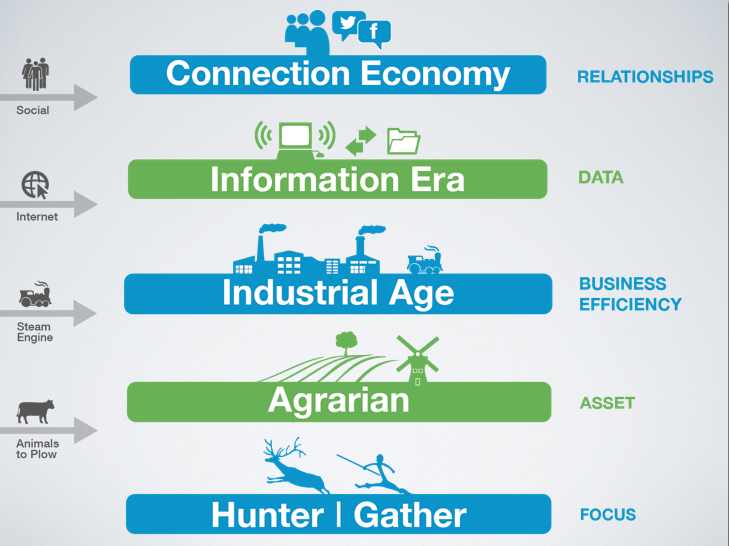
    Economies and competitive advantages

    I think relationships are indeed going to be the major competitive advantage in the future, and if so, the currency that would play a bigger role than money would be trust. As in many other developments prior to this, there are opportunities here for brands to weave themselves into the consumer’s narratives and go beyond transactional relationships, and to earn social currency. Many of them are already on it, finding ways to earn consumer trust and helping him/her develop and change perspectives about various currencies and relationships between them. Since we’re talking of finance, let’s use an example in that domain. Fidor bank helps its consumers discover crowd sourcing options, staying true a bank’s generic commitment of excellent wealth management. Yes, it’s still money, but it understands that it can be deployed beyond traditional options. In the process, it also helps the consumer to belong to a community.

    Brands actually have an option to join in wherever there is consumer spending. Nike+, as usual, did something back in 2012 – they allowed runners to trade in (running) mileage for Nike goods (I had shared the video in the institutional realignment post too) While this ties in beautifully with Nike’s business purpose, maybe some brands would have to lean a little more towards the consumer side and get into relatively unrelated narratives, and a relationship, before connecting it back to the business purpose. For example, airBaltic’s loyalty program Baltic Miles rewards frequent fliers who jog enough to burn off the same number of calories as miles they’ve flown. One of the aspects of agile marketing would be to enable identification of opportunities early. For example, imagine Coke getting into the act in Beijing’s first reverse vending machines that pay subway credits in exchange for returned containers.

    In what might seem like a ‘changing of goalposts’, just as brands are beginning to vaguely realise that their currencies of engagement with consumers need to change, the consumer’s relationship with the common currency of transaction – money – is also changing. The two are very related, and brands need to tackle both to have meaning and relevance in a consumer’s life, because if (as Godin says) “money is a story“, we’re probably nearing a plot twist.

    until next time, the end of money’s monopoly

    P.S. For another detailed look at the subject, you’d want to read Gauravonomics’ post on ‘The Future of Money‘.

  • Brand, Journalism, Marketing

    A few months ago, in The Future Of Owned Media and Can media become social enough?, I’d written about a marketplace model that would connect journalists and ‘buyers’. More recently, I saw an article about Contently raising a round of funding to work on its stated objective – connect freelance journalists and writers with nontraditional publishers, such as brands, agencies, nonprofits, and new media companies. These organizations use Contently’s technology to commission projects, such as sponsored articles, infographics, and blog posts.

    Like I’ve tweeted before, journalism is definitely in need of a business model. Media (with advertising) is arguably not the best bet now, because of various reasons. Digital has allowed brands to create their own media platforms (blogs, websites) and social has enabled them to (at least) broadcast it themselves, without a dependency on traditional media. Frank Strong, in a post titled ‘Why Content Marketing is the new Branding‘, rightly states that content is currency. It not only builds perception, but enables us to transact with consumers, keep a conversation going, and at some point, achieve a certain business outcome.

    However, except for campaigns, marketing collateral etc, brands have never really required/produced ‘content’ on a regular basis, and thus they are not wired for it. But content marketing obviously requires sustainable quality content, and that’s where brand journalism can play a part. I’d come across the term ‘brand journalism’ first on this post in early 2013 – ‘The Role of Brand Journalism in Content Marketing‘ – where it is defined as “research, storytelling and reporting for a non-media company, in that company’s line of business, with the goal of thought leadership.” (Erica Swallow) There’s a media vs non-media debate in the post, but my little tiff with the definition is that ‘thought leadership’ is rather limiting. There might be other business objectives/outcomes. Unless we’re talking of a leadership among the consumer’s thoughts. (share of mind)

    Meanwhile, in addition to a structured way like Contently, I can see brands already doing other forms of brand journalism. (used loosely) I’d classify blogger outreach, guest Twitterers, all under this, because the brand is using a content creator’s contextual reputation to enhance its own standing. The latest example I saw was quite fantastic – teen retailer Wet Seal ‘handing over’ its Snapchat account to MissMeghanMakeup (aged 16) who has quite a social following on various platforms. (via) To note that this is not Miss Meghan’s only client!

    I can paint a rather utopian win-win-win picture with this – brands with a purpose that has a social-societal perspective, journalists, who have created trust and a reputation of their own, who can identify with the brand’s purpose and who can write honestly (with disclosure) and consumers, who get to know more about the brands they align with through superb narratives created by these journalists. (among other storytellers) But I’d be surprised if it pans out this way anytime soon.

    It will have its challenges, but most of it is when we try to fit this method into the ‘containers of the past’. Its potential to succeed is because it offers much for all stakeholders. Journalists will have the option to be authentic in their writing, and give full disclosure because they’re not tied to the (traditional) media aspect. (newspapers/channels with their own business interests) Brands can be transparent about who has been commissioned to produce their content, and can use paid, owned media to promote it. Consumers get an interesting mix of narrators. It is a shift because the players (Brand, PR, journalists, media platforms) and/or their roles (production, distribution) will transform, but I do think brand journalism (a type of content) + marketing stands a chance.

    Clipboard01

    until next time, to better brand stories

  • @ #WIN14

    BlogAdda and I go a long way back, practically to around the time they were born, and when I was asked to be a speaker at #WIN14, there really was no question of not going. The icing on the cake was being a part of this excellent list of speakers!

    My favourite talk of the day was delivered by one Kavi Arasu, who, first virtually and then really, has become a very good friend. As I tweeted

    Meanwhile, I was part of a session whose subject was ‘Influence of Blogging’ and my fellow speakers were Lakshmipathy Bhat and Anaggh! The areas I tried to cover in 15 minutes were the changing nature of influence, its effect on brands, how blogs can help in that context and how bloggers can create a market for themselves.  (does that explain the breathlessness? 😀 ) Do take a look and let me know your feedback.

    Shekhar Kapur made his presence felt in the second half by being his usual articulate self. His analogy of crests and troughs, and tsunamis, to explain media cycles, time, and social was just fantastic. He had the audience spellbound, and deservedly so.

    It was wonderful to meet people,  some of whom I knew online, but had never met – Anaggh, Maneesh, Kalyan, Ankita, Rakesh, and others whom I got acquainted with at the event   – Ravi Subramaniam, Ashwin Mushran, (what a fantastic compering role he played!) Anuradha Goyal, Amit Agarwal, Sampath Iyengar and Anil P.

    A big thanks to BlogAdda for putting together a great event (photos) and having me over, and to Courtyard by Marriott, who were great hosts!

  • Brand Agility

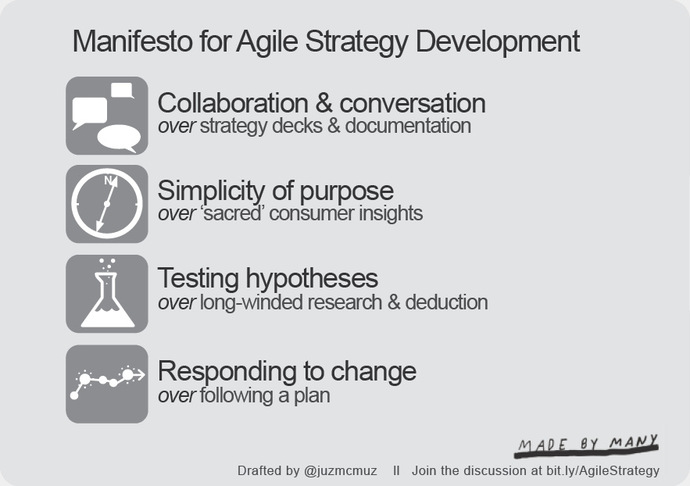
    One of the movements that I’d mentioned in the drivers for brand/marketing in 2014 and beyond is agile marketing. In my mind, there are various factors that are contributing to this eventuality like fragmentation of media platforms and the phenomenal amount of data being created and consumed to begin with.

    Simulations, testing, analysing data, and quickly adapting are the basics of this approach to marketing. In terms of ‘ingredients’ to play with, I’d still go with the traditional 4Ps of the marketing mix- Product, (includes packaging) Price, Place (I include the internet with Platform) and Promotion, with Purpose being an umbrella addition. The input and the output, I have categorised into business dynamics, using the other favourite marketing letter – C. These are consumer, competition, channel, content and context, and the cohesive narrative that is created. I’m trying to evolve a framework from these, while watching brands actually practice it – with or without a theoretical structure to the approach.

    One of the brands I’ve noticed doing a good job using many of these ingredients and the I/O is Uber. That’s despite the recent surge pricing bad press. In fact, I’d see this as an example of their ability and willingness to adapt. In the US, they’ve been honing their craft for a while – free rides for students during the Boston school bus driver strike was the first occurrence I noticed, and then soon after, the delightful hat tip to pop culture on National Cat Day in a tie up with Cheezburger.

    They launched in India recently, and true to form, wasted no time in launching the UberSLEIGH during Christmas in Delhi, Bangalore and Hyderabad –  a tie up with Goonj. From a critical agile marketing evaluation perspective, it would be easy to argue that Christmas is a recurring annual event that brands plan for. But auto-rickshaw strikes are relatively less predictable. A fortnight later, on January 6th, Uber slashed rates by 75% in Bangalore in response to a strike. What is easy to see is the anatomy of an agile strategy. To me, it seems that they are well on their way to developing a flexible marketing framework that helps them take advantage of any variations in the ‘input-output’ factors I’d mentioned earlier – in this case, pricing product and place in response to consumer and context.

    Newer brands might have an advantage in developing these frameworks because of minimal ‘baggage’ in their brand philosophy. But then again, the advantage for existing brands might be their existing role in a consumer’s life. Traditionally, brands have attempted to build a unique/distinguishable/identifiable ‘idea’ of itself in the mind of the consumer, with different forms of the promise+identity+attributes+personality framework and (relatively) limited broadcast media options. Iterations cycles were lengthy and included brand tracks and insights which resulted in large campaigns. Several things have changed now. Consumers have shorter attention spans and are increasingly fragmented in their consumption habits. Social platforms have caused brands to cede control over the conversations – any consumer’s experience can potentially create the perception for millions of potential customers. Platforms for reaching the consumer are exploding, and each have their protocols. The potential amount of data from all of this is huge! The challenge for brands is to stay relevant across contexts and create a cohesive narrative, and this requires an evolution in marketing processes. Like I’ve written before, if technology is invading marketing, then perhaps agile – which is a popular approach among that kind – is the way to go!

    manifesto_agile_strategy_development_3_content

    until next time, sprints and marathons