
Category: Brand

  • Re-framing employment

    For untold generations work was simply a matter of maintaining the status quo.

    Across the world, the debates on productivity, reduced work hours, 4 day work weeks, DND after work hours etc are intensifying. Add to this the narratives of “the end of employment” and the “gig economy”, (and therefore the case against full time employment) and the signs of an upheaval of our concept of work seems imminent. I can vouch for that from my own experience as well – expressed to a certain extent in earlier posts –  The Entrepreneur & the Professional, and Re-skill. My posts on AI and its impact on employment are also related to this in a “bigger picture” way.

    It is personal in a different way too, because it’s increasingly an application of a broader life framework and worldview. In fact, I was accusing myself of over thinking this, until I read this fantastic piece – How Not to Let Work Explode Your Life. That’s where the quote at the start has been taken from. It traces the origin of the clashes we are facing in our work-life environments now to trends that have been forming for centuries. Long, fascinating read, and a confirmation of many of my complicated thoughts! (more…)
  • Money : AI :: Present : Future

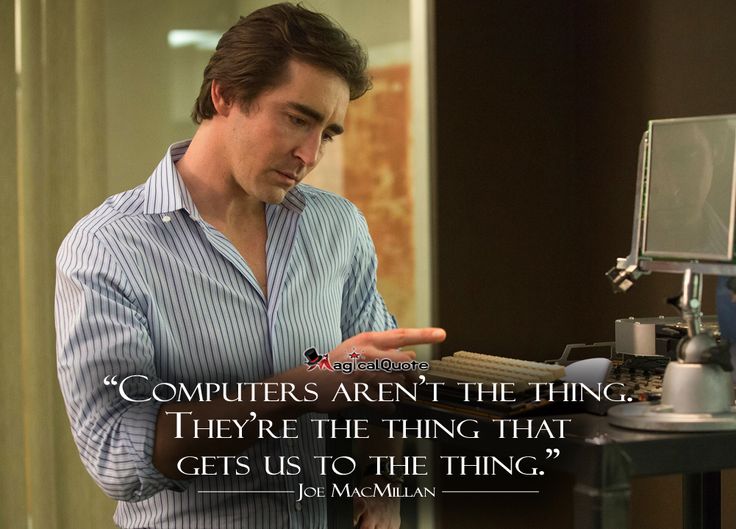
    Thing

    I might have found a remedy for the Mad Men withdrawal symptoms. “Halt and Catch Fire” – that’s where the line is from. While the show has me glued, it also made me really consider the connection between money & AI.

    A key factor that is driving the increasing adoption of AI in the work context is efficiency. Somewhere in the equation of calculating efficiency lies money, and how much of it can be saved. I am ignoring ‘time’ for now, because even that, mostly comes down to “time is money”. Jobs increasingly become task oriented and the objective is to make each task more and more efficient. If we continue that way, the pessimistic AI future is easy to imagine – it will happen in a ‘frog in boiling water’ manner, but it will happen. (more…)

  • Brand Interfaces

    A couple of months ago, I had written a post on the inevitable ambient future of what we now call the internet, and the role of AI in it. The post was mostly on the rapidly changing nature of interfaces. The ones we actively interact with – mobile, VR/AR, gesture/haptic based tech – and the relatively more ambient ones like a certain kind of wearables and IoT. In that post, the argument was that Google was best placed to tie together data from mobile, social, sensor, location etc and give it context with the help of AI. (Hello, Alphabet!) As this Wired post states, Google is not a search company, it is a machine learning company. Do read about Google Brain while you’re at it! It has a role in several Google products we use, and shows the potential of what is possible when machine learning really works on content surfacing.

    But all that is only context setting. Something that has been occupying a lot of my mind space these days is the impact of these continuing developments on brand communication and distribution. For years, the limitations of traditional media have forced brands to communicate to lumpy masses of ‘target audiences’. As the internet transitions into a much more ambient an ubiquitous form, all of brand marketing will be digital either overtly or under the hood. But even digital’s early versions have been on the same path, with incremental changes based on intent/interest. That, I think, is about to change fast. This superb article on the same subject puts it really well – we need not simply digital strategies but strategies for a digital world. It also explores the technological and platform advances that will allow frictionless experiences for consumers and what it means for brands.  (more…)

  • Re: Org

    Timehop, which takes me on a nostalgia trip everyday, reminded me recently that it has been a year since I wrote The Change Imperative. The opening slide features a quote – “If you don’t like change, you’re going to like irrelevance even less“- attributed to Gen. Eric Shinseki. In the times we work in, I believe this cannot be overstated, not just for individuals but for organisations as well. Even as business dynamics force changes on the external manifestation of an organisation – the brand – any organisation that faces a client/consumer will also be forced to adapt its internal structure and practices to suit changing needs.

    For a long while now, I have been ambivalent about processes. I have worked in an era, and in organisations, where processes had a way of getting things done. But in parallel, I have also felt that many a time, processes have a way of forgetting what they were made for. The output overshadows the outcome. Over the last few months, my surmisal has been that, to use a Taleb classification, processes can make an organisation robust, but not anti-fragile. This very informative post by Aaron Dignan of Undercurrent – The Last Re-Org You’ll Ever Do -highlights many ways that organisations have tried to change standard structures and practices, and even suggests a six step path to reorganisation. (more…)

  • The purpose of brand

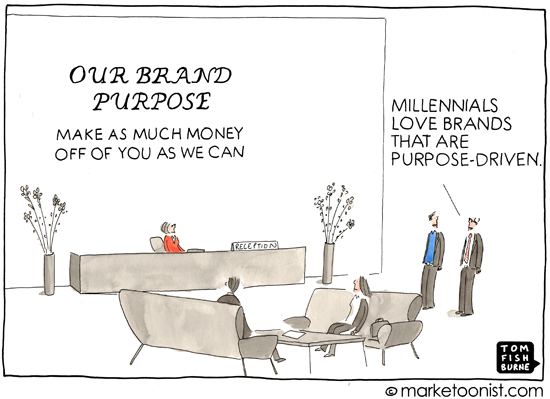
    The Guardian had an interesting post recently, titled “Brand is becoming meaningless“, it (brand) is being replaced by a company purpose that the organisation can rally around. Yes, there is a study that this is linked to, and quotes. To paraphrase, brand is the effect, not the cause, and that has made it lose its fashionable shine.  Someone should tell Maggi this, they just lost $200 mn in brand value, even as the corresponding goods value is ‘only’ $50 mn! (via) Now, just so we are clear, I am not completely against this thought, all the more because this is something I have been writing about for a while now.

    131028.brandpurpose

    (via) (more…)