Category: Digital

  • Social Nextworks

    The impending death of Orkut (2004-2014) made me think of the evolution of social networking and its transience. Orkut lived ‘only’ for 10.5 years, and this is despite being part of Google, though some would call that a disadvantage. Facebook  has been around for the same time, and the fact that it is a force to reckon with is a testament of its understanding of this transience. It also explains the acquisition of Instagram, Whatsapp and the attempt on Snapchat.

    However, I recently realised that I am probably more active on Whatsapp, Instagram and Pinterest than Facebook and Twitter. I am also reasonably active on Secret. That made me dig a bit deeper.
    Clipboard01

    (via)

    What is changing? From my observations, there are at least two factors that are driving the change.

    Perspectives on connectivity: The early era was fueled by the need to connect. Facebook is soaring well beyond a billion users, and its longevity is (also) because the need still exists. It continues to look for better ways to do this, manifested through front end and back end changes. But despite this, and my own curation of my newsfeed by sending signals to Facebook, I am regularly overwhelmed by the volume. This goes for Twitter too. Personally, I have treated these platforms as a means of self expression. I would also like to choose the people whose perspectives I want, and who are entitled to a judgment, if any. But that’s not so easily done on popular platforms.

    That’s when I start to look at the many ways to handle this – from social networks to messaging apps. I could go to where the crowds are relatively less and/or are more ‘focused’ – by domain or use cases, (LinkedIn, Pinterest, Instagram) I could interact with smaller groups, (WhatsApp) use ephemerality (Snapchat) or be anonymous (Secret) As I mentioned, at least three of these work for me. A wonderful nuance I caught in Mitch Joel ‘s prophetic ‘The Next Big Thing Online Could Well Be Anonymity‘, is that it may not just be ‘something to hide’ that makes some prefer anonymity, but it could also be so that ‘who they are will not become a focal point within that discussion’. Anonymity on the web is not new, but many of its enablers are.

    Devices: The networks of an earlier era (eg.Facebook) were made for desktop and had to adapt for mobile. On the other hand, Instagram, Whatsapp, Secret, Snapchat etc are mobile natives. Given the increasing ubiquity of smartphones, their growth is not surprising.

    What are the possible business models and what’s a brand to do? As more and more users flock to these new platforms, they would need to mature, with business models which could mean associations with brands – the journey from social network to social media.

    Instagram and Pinterest are already social media, making advertising at least one of their revenue sources. WhatsApp does not like advertising and already makes money on downloads. Its competitors like Line, KakaoTalk, WeChat etc, however, have found various other means – virtual items, (stickers, in app purchases in free video games) promotional messages, baby steps in electronic payment handling fees, and interesting tie-ups. Snapchat already has many marketers on it and is likely to offer promotion options too, probably tied to a time bound event.

    Secret has a lot of negativity surrounding it – s3x talk and startup malice and being just a fad – and there are comparisons to Formspring and its demise despite funding. But beyond advertising and in app puchases, maybe, there’s also potential for insights on a brand and its use cases? Things that cannot be found on indexed platforms. Also, Whisper already has a content deal with Buzzfeed.

    Analytics for such platforms haven’t even really begun yet, but it can’t be far away. But more importantly, all of these platforms are potential enablers for a brand to take forward its narrative and become relevant to its users. It continues to be about storytelling, and digital.
  • The Change Imperative

    Ever since I first wrote about institutional realignment, I have been more conscious of it and its implications on our lives. To a certain extent, even paranoid, because of the pace of change. Ray Kurzweil is hard at work to make himself immortal, and believes we should get really close by the 2030s. He has been right before on many things of this nature. Moore’s law, digitisation and everything related are also getting us really close to the singularity. I am reasonably convinced that I will see both in my lifetime. If you live to be 200 and have robots smarter than you around, what does that do to education, money, marriage, work and pretty much everything that constitutes life? On the flip side, natural resources are running out, and I can see the complications already. It’s not a good sight, or experience!

    I am finding it impossible to wrap my head around what all of  this would mean to our concept of life. In the meanwhile, I do know that everything is changing at breakneck speed, and in order to survive, we need to be cognizant of things that can impact our lives – as individuals, and as organisations.  I have deliberately avoided the word ‘disruption’ because it gives me a sense of suddenness and it is a furiously debated topic these days. Rather, to quote John Green (said in another context) I think we’re in the first state of “Slowly, and then all at once”.  This, is my take on ‘Change’.

    (Thanks Nikhil for helping on a couple of alphabets and Amit for Unsplash, the source of many images used)


  • Agile @ Scale

    Prelude

    I think I used ‘dis-aggregated social network‘ on this blog for the first time in 2009, referring to Google’s basket of services that were connected relatively flimsily then. IMO, Google has always been that way, even including Google+. (read) I remembered it when I tweeted this about Facebook – around the time news of their Fan Audience Network started trickling in.

    It got me thinking (again) on ‘scale’, a recurring theme here. In a less complicated world, where the trends in the business landscape were significantly more linear, (growth, competition, consumption, economy) scale was a powerful weapon to wield. But it’s a different world now. Artificial Intelligence, 3D Printing, Internet of Things, Wearables  and a hundred other things might completely disrupt the status quo and the need an incumbent brand satisfies. These are the known ones, and then there are the conceptually invisible (at this point) ones. Surviving (let alone thriving) in this shifting scenario requires agility, and it is difficult (though not impossible) to see scale and agility together. I looked to Google and Facebook for an approach towards this because not only are they surviving, they seem to be thriving. Yes, we’ll get to Amazon in a while.

    What does it take to be agile at scale? I can think of four ingredients, the last three repurposed from the title of this post by JP Rangaswami.

    Purpose

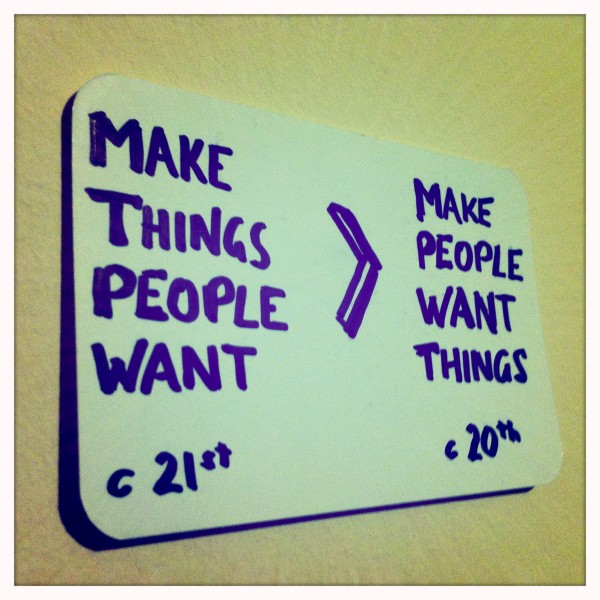
    I remember talking about re-defining of scale at the Dachis Social Business Summit. The thrust of the presentation was that brands could engage consumers at scale only if they use currencies that create value for the user in the context of a shared purpose. I have elaborated it in this post at Medianama. Recently, I saw that Hugh MacLeod has brought it out beautifully here. Simply put

    Make-Things-People-Want-600x600

    (via)

    Possibilities

    The purpose need not have one constant rendition. As the landscape changes, a business will need to adapt it to suit changing circumstances. For that, a business needs to understand the possibilities. I saw a very good line in this post about being a maker – the more you work in the future, the less competition you will have. How much into the future a business needs to be working is subjective and depends on its dynamics, but if it doesn’t disrupt itself, someone else will gladly do it for them. (“The Jeff Bezos School of Long-Term Thinking” is a good read in this context)

    Platforms

    While purpose and possibilities are all good at high altitudes, a business also needs strong operational  platforms to back it up. As organisations scale, I have seen two things that affect agility. One, the processes that are introduced to create efficiency @ scale more often than not, become the goal instead of a means, slowing things down and taking away from actual goals. Two, as processes and manpower increase, silos are created. The good news is that it is easy to see technology platforms bringing more efficiency into processes as well as an iterative way of thinking in the near future. It is already happening in marketing. This, and many other factors are also dictating a consumer experience driven approach and are forcing organisations to break silos. As the entire brand/organisation becomes a platform (read) that regularly revisits its context and purpose in the life of a consumer, ‘everything becomes a node on the network

    People

    HuffPo had a post sometime back, citing Zappos, calling 2014 the year of workplace reinvention. It is interesting to note that parent company Amazon has apparently aped Zappos’ ‘pay to quit’ policy, even as more and more stories about working there being a ‘soul crushing experience‘ are coming out. Meanwhile, the two points it mentioned for this to happen are purpose and trust. These I’d say are the bedrock of culture. It’s intuitive that a workforce mindful of the organisation’s purpose and their role in it would keep an eye out for the business’ possibilities, be ready to work beyond silos towards a great consumer experience, and bring in others who would help the business scale. This, along with purpose, has to be the glue that holds it all together, enabling the organisation to move fast without cracking.

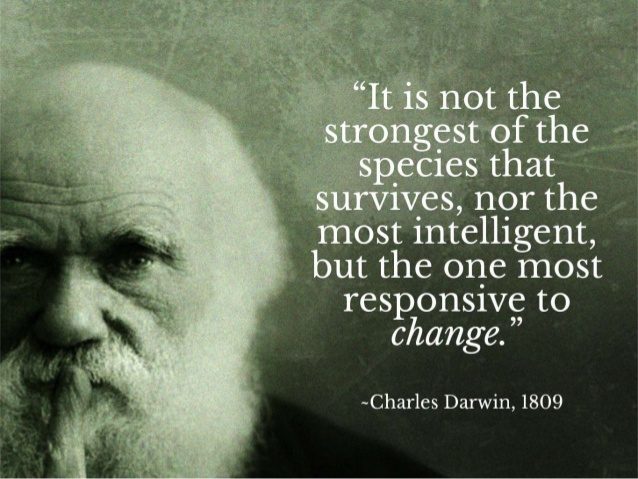
    While different sectors are at disparate distances from a radical shift necessitated by technological developments, it is, I think, inevitable. In this fantastic post titled ‘Knowledge is faster than mortar‘, which looks at scale through a different lens, the author makes the point that ‘the old mechanisms don’t fit the new social structure.Old mechanisms were built to scale stability, new ones will have to be built to scale despite instability. Anti-fragile, so to speak. Indeed, we will see many manifestations as existing structures try to adapt – internal mechanisms like Amazon’s 2 pizza rule, consumer facing disaggregation like Facebook that have a corresponding internal wiring, or brands tweaking their 4Ps even further for different contexts. But whatever paths businesses choose, this will hold true

    responsive-to-change

    until next time, the fast and the curious

  • Mentoring Startups @ Microsoft Ventures’ Accelerator Program

    When I come to think of it, my sales/brand jobs have all been on startup mode, though the organisations themselves were quite established – Dishnet DSL in 2002, WorldSpace in 2003, MidDay Bangalore in 2006, Bangalore Mirror in 2007. Myntra was still a startup when I joined in 2011. I really can’t remember when I first became interested in startups – perhaps Bangalore’s culture of entrepreneurship affected me soon as a landed here – in 2003. But it really started manifesting itself only during my stint at The Times Group. Muziboo was probably among the first I actually interacted with (in 2008) and I still remember sending feedback to Deap for Burrp’s mobile site in 2009.

    It was in 2010, when I started writing the startup column for Bangalore Mirror that I understood why I probably had such a fondness for startups – in them I see individuals who have in some way connected to their purpose in life. That gives them a passion and energy that is amazingly infectious. After the column’s run ended in 2013 (at 97 Bangalore based startups!) I had no official reason to associate with them any longer, though the connections I’d made early on – Zomato, for example – gave me an occasional opportunity to indulge my interest.

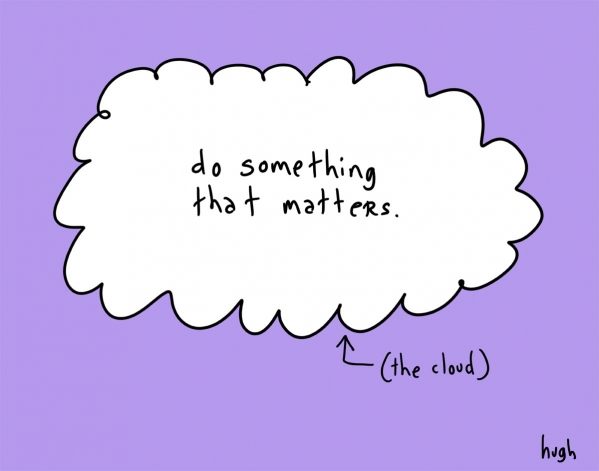
    do-something-that-matters-2

    (via)

    All of this would explain my immense happiness when I was invited to be one of the mentors at the Accelerator Program of Microsoft Ventures last year. The Accelerator is part of a global establishment and helps entrepreneurs launch/scale their startup through a 4 month intense program that begins in January and July every year. At the accelerator, the entrepreneurs get access to quite a few things – a pool of mentors with expertise across various domains, (design, brand, technology, to name a few) office space to work from, and a ton of connections to help them gain funding and scaling opportunities. (FAQ) The other crucial factor they get, and I’ve seen it not getting the attention it deserves, is the Accelerator team itself. I have seen their diligence and their interactions, and they add an enormous amount of value in shaping ideas into executable plans.

    I’ve now been part of the last two batches, mentoring a couple of startups in each batch – TommyJams and Tookitaki in the previous batch, and Imly and Voonik in the current. Respectively operating in the domains of entertainment, advertising, food and fashion, these four by themselves are enough to give you an idea of the diverse kind of startups that make up each batch. Though I’ve worked closely with these, I’ve also had multiple conversations with other startups and have been impressed by the sheer quality of ideas behind many of them, their willingness to learn and reinvent if necessary, and the tenacity with which they execute their plans.

    My role may be that of a mentor, but I’ve learned quite a bit too. My learning has been in many forms – watching the startups in action, understanding at least a part of the intricacies of the domain they operate in, their approach to the challenges they solve, and most importantly, conversations with other mentors. Many of the mentors belong to the investor community and bring with them fantastic perspectives on a wide variety of things.

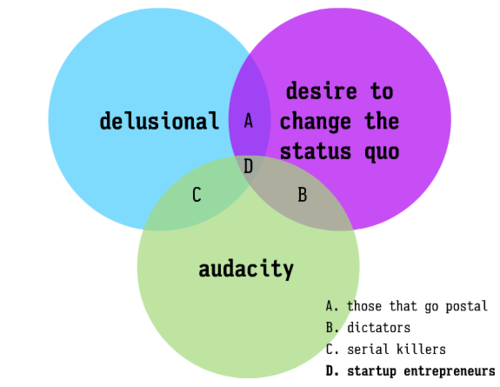
    It has been an exciting experience for me thus far, and I’ve been planning to write about it for a while now. The immediate trigger came last week  in the form of an invite for the Demo Day of the current batch. I also learned that the Accelerator had started taking applications for the next batch. In my own selfish interest, I’d like to play a role in the life of some entrepreneur out there. If you think you are ‘D’ in the figure below, apply away!

    tumblr_lo1pofU25f1qjg2hr

    (via. Check the superb original deck here. Thanks @m3sweatt for p0inting out )

    Disclosure: In case you’re wondering, mentors don’t get paid, not even to write this! 🙂

  • An Internet of Things narrative

    Towards the end of last year, I’d written a post on the ‘social product‘. Its premise was that given social’s conversion to media, the opportunity for fulfilling social’s initial promise would fall on ‘product’ – using data, network effects, and relationships to connect consumers along a shared purpose. In the last few weeks, I have seen rapid acceleration happening on this front. I can see at least two narratives working in tandem, and I’m sure that at some point they will begin to augment each other really well. In this excellent post on technologies that are shaping the future of design, sensors occupy the top slot, and they are at the basis of both the narratives – one on humans, and one on things. The official classification, roughly, translates into Wearables and Internet Of Things respectively for the scope of discussions here.

    This post is about the second. So, what is the Internet of things? The wiki definition is simple, but effective –  “The Internet of Things (IoT) refers to uniquely identifiable objects and their virtual representations in an Internet-like structure.” The best primer I have come across would be this infographic, which has everything from a quick technology explanation, applications and challenges to market size, statistics, and interesting use cases. For a really solid perspective, look no further than this deck titled ‘The Internet of Everything‘.

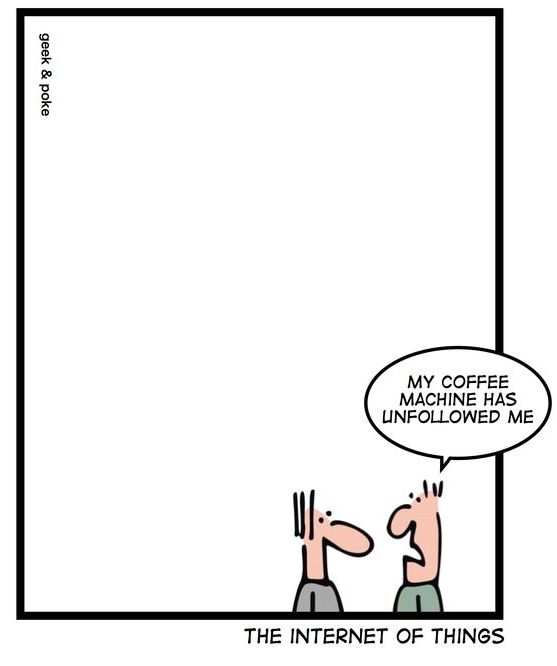
    How does it affect us? For now, it is about convenience. If you’re familiar with Android launchers, imagine an IoT version – it’s almost there, using iBeacon! There’s more – Piper, which works as an IFTTT for your home, the smart fridge that can order groceries from the online store, the smart TV that can learn preferences and help us discover content, the washing machine that can help order detergent, the egg tray that will let you know about the number of eggs it holds and their ‘state’, the automated coffee machine, Philips’ connected retail lighting system, Pixie Scientific’s Smart Diapers, the GE a/c that learns your preferences, the smart bulb that doubles up as a bluetooth speaker, (!) and so on. Some of the products are really useful and solve a need, while some others are more fads and probably not adding the value that reflects the potential of IoT. But that’s just the learning curve in progress, as the market starts separating needs and wants.

    All of this also means that consumption patterns will begin to change, as more purchases become automated, and more importantly data-driven. In my post on the driving forces of 2014, I had brought up technology as the biggest disruption that marketing has seen. This is most definitely one of the manifestations.

    Clipboard02

    What can brands do? For starters, get interested. Think about the tangible benefits that can be offered to consumers. What are the kind of data patterns that devices (or products) can surface to help the consumer make better consumption decisions? What kind of contexts can be relevant? Instead of force feeding advertising on traditional channels and fracking social platforms, can communication to consumers be made seamless using data, contexts and easy processes? While ‘device’ brands might have an initial advantage, ‘product’ brands need not be left behind at all. As the washing machine post (linked earlier) suggests, a Unilever or P&G might subsidise a machine, because it’s pre-sold with 500 washes worth of their detergent. It could even be real time, with SDK, API systems telling a partner brand to push a contextually relevant communication to a consumer. As things start storing and communicating data, privacy will be a major factor that decides whom consumers will share what with. Unlike media, trust cannot be ‘fracked’, it needs to be earned over a time frame.

    Where does it go from here? A common language/protocol/registry is a good start, as is a white label platform – both are trying to connect an assortment of devices and gadgets. While there is value in data at an individual level (more on that in the next narrative) one of the critical factors in the success of this phenomenon is the devices talking to each other – humans acting as middle men to pass on data may not be a smart way ahead!  Digital Tonto has an excellent nuanced perspective that differentiates IoT from the web of things. (WoT sounds cooler!) The difference is in connection and interoperability.

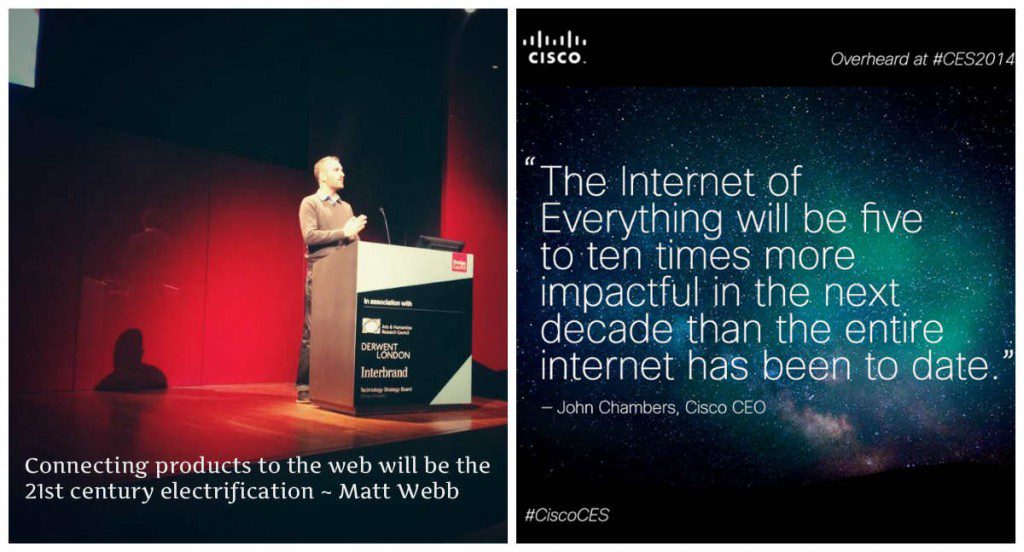
    collage

    Equally important is this phenomenon’s ability to solve human needs. (Internet of Caring Things)

    Collaborative consumption is fast becoming a consumer reality. As always, brands (generalising) are bound to be a few years behind, but the hope is that the web of things will force them to start collaborative creation and distribution and more importantly, focus on consumer needs.

    until next time, #WoTever

    P.S. In a corruption of Scott Adams’  idea, I think #WoT is paving the way for robot domination. 😉

    P.P.S. If the subject interests you, check out my Internet of Things Pinterest board.