
Category: Strategy

  • Empathy & Monoculture

    Thanks to Shefaly, I saw this excellent video on Aeon about “outrospection.” As opposed to discovering who we are and what we do in this world by looking inwards (introspection), “outrospection” is about discovering it through cognitive empathy – consciously looking to understand the perspectives of others, and going beyond the labels we might have made for them. The idea is that outrospection is the ask of the times we live in, and not introspection.

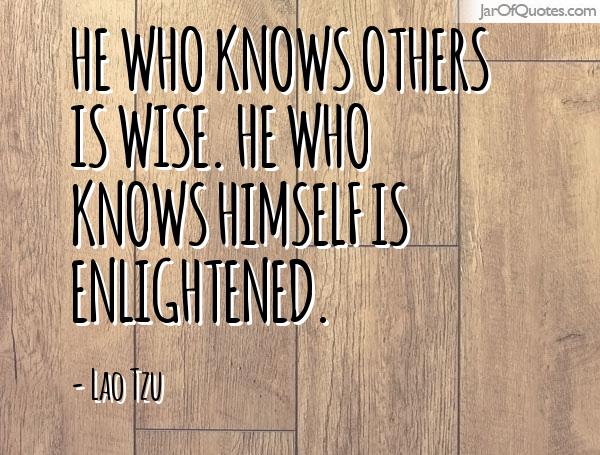
    I quite disagree with that either-or view, and think both have their place in this era. They both work in tandem. For example, to let go of my prejudices, I’d have to understand why they exist in the first place and then proceed to change my perspective. Here outrospection follows introspection. Once I let go of my biases and listen more objectively, my worldview and my view of myself starts shifting again. In this case, introspection follows outrospection. As Lao Tzu says,
    3f3f3c8752b634128418895a84c26f6b (more…)

  • Algorithms, the institution of the future!

    Tom Goodwin’s precise summing up of the shifting business environment is now legend – Uber, the world’s largest taxi company, owns no vehicles. Facebook, the world’s most popular media owner, creates no content. Alibaba, the most valuable retailer, has no inventory. And Airbnb, the world’s largest accommodation provider, owns no real estate. Something interesting is happening. 

    Institutional realignment is now on an accelerated path. In this superb, nuanced post titled ‘Uber and AirBnB make the rules now – but to whose benefit?“, Vili Lehdonvirta brings up very interesting perspectives. (To paraphrase)

    – If buyers switch to a new market, sometimes sellers have no choice but to follow, irrespective of whether it brings them gains or losses (eg. if there is very little business outside of Uber to be had)

    – Even if everyone participates with interests intact, the collective effects on society may not always be positive (eg. AirBnB rooms causing nuisance to neighbours)

    – These conflicting interests are usually reconciled by political institutions, but they face the challenge of siding with incumbents or upstarts.

    And towards the end of the article, this very important thought – these new platforms appear to provide access to those who have been denied it by the institutions and processes thus far, but is it that simple? In this context, the new jobs being created are quite different from the typical ‘job’ description. That brings me to a key institution – the traditional workplace.

    (more…)

  • Brand Storytelling

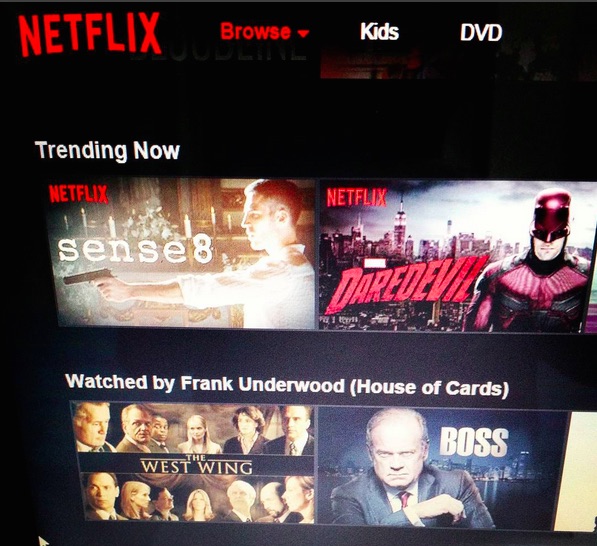
    Recently, on Netflix, I caught something that I had read about almost a year back – an easter egg of sorts. On my feed, I saw shows ‘watched by Frank Underwood’. For those who haven’t watched House of Cards, that’s the name of the show’s protagonist, played by Kevin Spacey. (fantastically, I’d add) The shows selected seem absolutely true to (his) character, which is manipulative, scheming, and truly Machiavellian!

    Netflix (more…)

  • Brand Interfaces

    A couple of months ago, I had written a post on the inevitable ambient future of what we now call the internet, and the role of AI in it. The post was mostly on the rapidly changing nature of interfaces. The ones we actively interact with – mobile, VR/AR, gesture/haptic based tech – and the relatively more ambient ones like a certain kind of wearables and IoT. In that post, the argument was that Google was best placed to tie together data from mobile, social, sensor, location etc and give it context with the help of AI. (Hello, Alphabet!) As this Wired post states, Google is not a search company, it is a machine learning company. Do read about Google Brain while you’re at it! It has a role in several Google products we use, and shows the potential of what is possible when machine learning really works on content surfacing.

    But all that is only context setting. Something that has been occupying a lot of my mind space these days is the impact of these continuing developments on brand communication and distribution. For years, the limitations of traditional media have forced brands to communicate to lumpy masses of ‘target audiences’. As the internet transitions into a much more ambient an ubiquitous form, all of brand marketing will be digital either overtly or under the hood. But even digital’s early versions have been on the same path, with incremental changes based on intent/interest. That, I think, is about to change fast. This superb article on the same subject puts it really well – we need not simply digital strategies but strategies for a digital world. It also explores the technological and platform advances that will allow frictionless experiences for consumers and what it means for brands.  (more…)

  • Re: Org

    Timehop, which takes me on a nostalgia trip everyday, reminded me recently that it has been a year since I wrote The Change Imperative. The opening slide features a quote – “If you don’t like change, you’re going to like irrelevance even less“- attributed to Gen. Eric Shinseki. In the times we work in, I believe this cannot be overstated, not just for individuals but for organisations as well. Even as business dynamics force changes on the external manifestation of an organisation – the brand – any organisation that faces a client/consumer will also be forced to adapt its internal structure and practices to suit changing needs.

    For a long while now, I have been ambivalent about processes. I have worked in an era, and in organisations, where processes had a way of getting things done. But in parallel, I have also felt that many a time, processes have a way of forgetting what they were made for. The output overshadows the outcome. Over the last few months, my surmisal has been that, to use a Taleb classification, processes can make an organisation robust, but not anti-fragile. This very informative post by Aaron Dignan of Undercurrent – The Last Re-Org You’ll Ever Do -highlights many ways that organisations have tried to change standard structures and practices, and even suggests a six step path to reorganisation. (more…)