Category: Strategy

  • Brand with a world view

    In Feels & Fields in Marketing, I had written about my view that the sustainable advantage in data driven marketing over the long term might be lesser than an approach where the brand is marketed as a worldview – reflected in thought and deed. A couple of nuances I’d like to point out here. One, the reason I feel so is because from the evolution of digital media thus far, the end game of new platforms/technologies arguably seem to be a version of a “cost per” arms race, and that end game is reached rather fast. Two, I don’t strictly see data and story telling as an either/or. It’s just that I don’t see a lot of justice being done to the latter thanks to the focus on the former, and I also see the dumbing down/tempering of messaging to access a larger mass.

    However, I’ll admit that putting down ‘brand with a worldview’ into a generic framework is a rather challenging. But I have seen quite a few examples – personal experiences as well as larger campaigns – that highlight various aspects of this approach. The new POTUS has in fact, provided quite some fodder for this. Hardly surprising, since his usage of extreme stances contributed majorly to his victory.  (more…)
  • Feels & Fields in brand building

    information attention

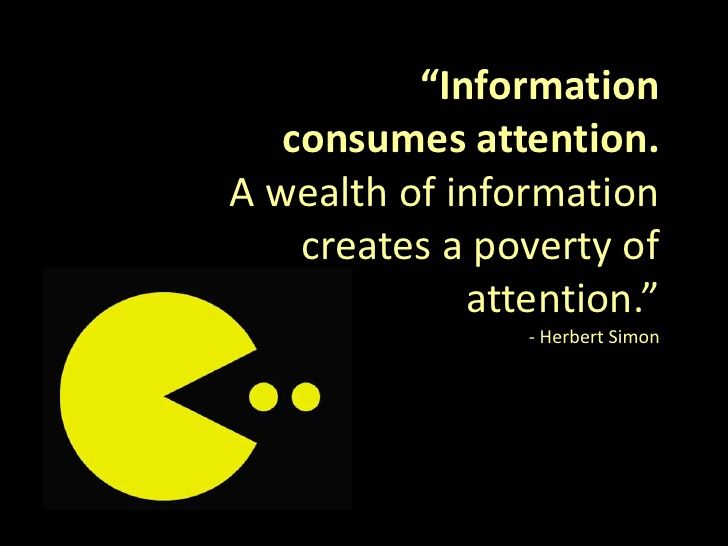
    In Scarcity Thinking in Marketing, I’d written about how, in an era of ‘infinite’ consumption choices, attention is arguably the most precious commodity for a brand. Also, as Faris pointed out in his excellent post, it is a zero sum game, and we’re approaching “peak attention”. We’re also well on our way to manipulating (read fracking)  it. State of the art marketing technology (say, programmatic) can sift through a consumer’s data from multiple sources, and use interest, intent and a bunch of other contexts to deliver an ad at the precise point when he/she can act favourably.

    Very few brands, however, are close to this level though. Having the data is in itself a huge step, converting that to actionable insights is even huger! Data can be true, but not necessarily accurate. (read) Also, arguably marketing tech is still a wild west with snake oil salesmen. But more importantly, even if we assume that all the brands will finally get there, it then becomes a ‘square one’ driven by who can pay the most. In that respect, I do not see this as a sustainable advantage. Arguably again, at that point in time, new tech might come up with a potential of first mover advantage, but the way I’ve seen the digital marketing narrative evolve, it is probably an optimisation play than anything else. e.g. In the early days of Facebook marketing, much was made about storytelling and organic Likes, but look where we are now! Similarly, something radically different like VR is now being talked of as paradigm shifting storytelling opportunity, but until proven otherwise, I’ll be cynical.  (more…)

  • Scarcity thinking in marketing

    A brand could be defined as a perception in the mind of a consumer, based on his/her/others’ experiences. These experiences could be either of the product/service itself, or its marketing communication. Earlier, in a post in a different context, I had alluded to the framework of choice during consumption. To elaborate, what are the factors that influence a customer’s decision to buy/not buy? The basic 4Ps of the marketing mix cover a lot of ground in this regard. But it does not really acknowledge (even when it is extended to 7Ps) the one thing that is increasingly becoming the most scarce commodity – time.

    141027-attentionspan (more…)

  • The evolution of growth

    The decreasing life expectancy of Fortune 500 companies is no secret – from about 75 years half a century ago to 15 years now! Martin Reeves’ TED talk “How to build a business that lasts 100 years” becomes all the more interesting in this context.

    On the one hand, there is the day to day pressure of meeting business goals (read metrics) while on the other, there’s really no telling what black swan event in the business’ landscape might happen. As the thinking goes, the business would have to monitor changing consumer needs and ‘disrupt’ itself before others do the job for them.

    The Four Horsemen seem to have an ability to balance these two forces quite well. Microsoft is now reviving itself. That would explain why they are now pretty much platform monopolies who increasingly have only each other as competition. Most other businesses focus predominantly chase growth, with efficiency as a key driver and corresponding metrics as score keepers.  (more…)

  • Information & Interfaces

    I’m still stuck on the narrative of consumption – both on the intent and interest front, as I wrote in Intent, Interest & Internet Dominance, as well as on the interfaces through which it will happen, something I started writing on in Consumer- facing AI : Phase One.

    In this era of abundant choice, a device I use when fighting battles with myself on personal consumption is the can-want-need framework. ‘Can’ is made increasingly easier now because of convenience, ‘want’ by the choices around, and sticking to ‘need’ is a very difficult task! I read a really good post which has mirrored this in the (consumer) technology space – “How Technology Hijacks People’s Minds…“. (more…)