
Category: Strategy

  • Brand – ego vs evolution

    In my previous post on brands, I had briefly touched upon the brand’s integrity of intent as an imperative to its success. I brought up two approaches to it – one based on self image and the other based on self actualisation. The first is a target, the second is exploration. While I was agnostic to the approach earlier, the book I am reading now – Matt Ridley’s The Evolution of Everything – has given me a bias for the latter.

    This is why – evolution has been the longest running phenomenon ever, beating anything made by man quite easily. Because before there was mind, there was matter, whether it was perceived or not. That includes even the idea of God, which is probably the best brand ever built. Arguably, evolution’s success can be attributed to its having no end goal in mind. Can that work for a brand? (more…)
  • Brand with a worldview – Part 2

    I think my first thoughts on the subject appeared in 2012 – Mean better than average, featuring Cleartrip, who had put a non-customer in place with sarcasm after a polite conversation failed. It took another 5 years for a redux in Feels & Fields in Marketing. The framing was that if the end game was for the brand to be the first choice when a consumer thinks of the category, what would be the strategy in a world of attention scarcity? Using the powers of targeting and personalisation to catch the customer at the right time and place (medium + stage of a funnel) with the right messaging, or having a world view that is so relatable to a kind of customer that the brand becomes entrenched in his/her mind? Or both?

    I followed it up with  Brand with a worldview, which had examples from the Super Bowl 2017 ads, many of which had an overt or covert political stance. My inference was that we are largely irrational creatures, and absolutely prone to confirmation biases. We’d love our brands to echo our world view… Smart money would be on brands that can use data to glean consumer sentiment beyond domain, and leverage that understanding when forming a world view.

    This post takes the thought forward, and I have framed it quite simplistically with 3 aspects – customer, competition, and company. We also have a hot example to embellish the hypothesis – Nike! Tons have been written about its latest adventures, but let’s just overdo it anyway. (more…)

  • Has marketing left brand behind?

    A couple of months ago, I attended an event on brand building. The gentlemen who presented had a lot of experience between them – agency and client side, as well as across domains ranging from baby care to FMCG to jewelry to auto to e-commerce. The attendees were all from new economy companies. During his talk, one of them pointed out that though digital offered the capability to target an audience of one, brand communication was better done keeping in mind a larger base. To elaborate, while the product might work for many user personas, brand building would be focused on specific buyer personas.

    A lady in the audience asked a version of the question I wanted to ask. Precisely because digital gives us the capability to target an audience of one, shouldn’t brand communication follow? In other words, shouldn’t all user personas be buyer personas? The speaker stuck to his original point, his contention being that communication needs to be for an audience and not each individual. This is a topic I have spent quite some thinking time on, and have simplified into the 3 points below. (more…)

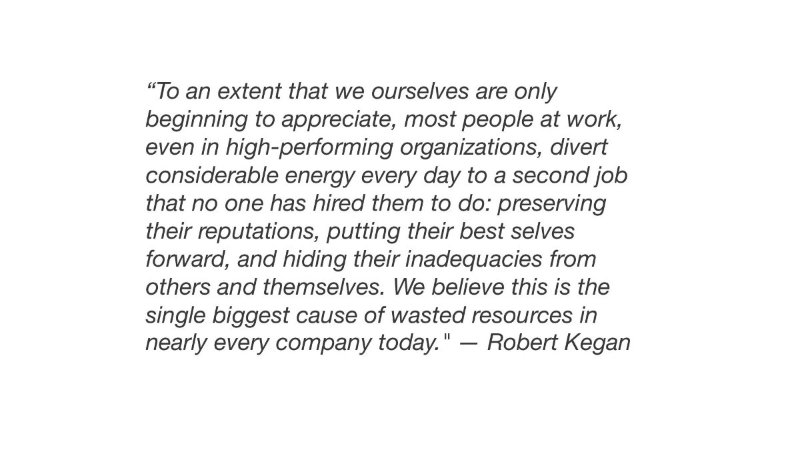
  • The Second Job

    Rep

    I caught this in the Farnam Street newsletter, and went about looking for the source. An HBR article from 2014 titled Making Business Personal, which also writes at length what and how certain organisations overcome this.

    (more…)

  • The brand protocol

    I have spent a few posts thinking about this concept – the ‘why’ in Scarcity Thinking in Marketing and Feels & Fields in Marketing and some of the ‘what’ in Brand with a world view. Essentially, the idea is that as customer attention becomes increasingly more scarce, brands will have to think beyond ‘fracking’ and the efficiency driven marketing approach (with all the seemingly contextually relevant data they offer) for a sustainable advantage.

    I have to confess that it doesn’t seem that way now. In Pipeline to Platform Organisations, Neil Perkin makes the point that this  (pipelines to platforms) is one of the most significant shifts in internet era business economics. And the argument is indeed right, proven by the fact that Facebook, Google, Amazon, Uber, Airbnb and even Apple to a lesser extent are all great examples of platform companies. In fact, the article he has linked to states that in 2013, 14 of the top 30 global brands were platform companies. They have been built to scale, which they have achieved to a large extent by building fairly insurmountable ‘moats’, hugely powered by network effects. And there lies my problem because they are now well on their way to becoming platform monopolies (euphemistically called ecosystems) – the new intermediaries on the very web that was supposed to help level the playing field. Arguably, it’s becoming increasingly clear that a fight against them based on efficiency/network effects is either doomed from the start, or becomes unsustainable. (more…)