Category: Strategy

  • Processes, People & Culture

    It has been more than three years since I wrote about my Indigo fandom. Since then, they have been my preferred airline, mostly thanks to their on-time promise. A few weeks ago, Karthik wrote an excellent post “Why I love an errant Meru and hate the awesome Indigo!” that offered some unique perspectives based on a few of his recent experiences with the airline. He ends the post with When did the ‘plastic’ nature of Indigo’s customer-facing organization set in? May be around the same time their hostesses were asked to use wigs? It restored a sense of objectivity to my fandom.

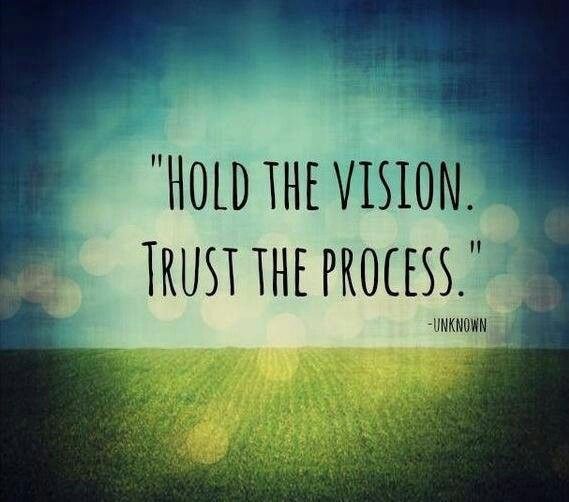
    Our way of doing things” is how one definition of culture goes and I remembered Gautam’s recent insightful post on the components that make up ‘culture’ in an organisation. If you look at these factors, you’d wonder whether a cultural change was at the root of Indigo’s new avatar. It made me think of something I wrote earlier – Culture Architecture – the thrust of which  was culture being a strategic business advantage. But how can that be made sustainable? I’ve been a big fan of processes. Indeed, one of my favourite posters is

    626854484bf91ac616669379d9a394fd

    (via)

    (more…)

  • The Agency Experience

    Last Thursday was my first anniversary at GroupM, and the next day was my last there. A short tenure, and one year in an agency is too less a timeframe to be exposed to all the facets, people and processes a large (media) agency has to offer. But limiting though it is, I’d still like to share my (limited) thoughts, because I wasn’t able to get these perspectives before I made the shift to the agency side. My contacts on the client side had near zero clue on life in an agency, and my agency friends were veterans who had always been on that side. It wouldn’t have occurred to them that these things might be unfamiliar to a n00b! 🙂

    These are based on what I saw and experienced, and hence more subjective than objective. I’m restricting it to three aspects that bring out some good and some not-so-good points. (more…)

  • Culture Architecture

    Despite several posts on ‘culture‘, of the four Ps I’d mentioned in the Agile @ Scale post, ‘People’ is a topic that has gotten the least attention here in the recent past. As the change imperative forces organisations to be more responsive to rapidly changing external dynamics, the structures, processes and methods it had adopted for its internal stakeholders will most likely have to change as well. Jobs in earlier era were well defined constructs, but this era requires employees to work far beyond their job description in order to thrive. (“Why We Need to Change the Software in our Organisations“) It is probably not a coincidence that the four organisations that are defining the larger contours of business and technology are also the most favoured employers.

    The task is not easy. On one hand, there is a workforce that is increasingly getting overwhelmed by communication technologies that are dictating an always-on culture. (“Why you hate work.”) On the other hand, there is a new generation entering the workforce that has expectations of a culture tuned to their lifestyle and ways of functioning. They rapidly disengage if they feel this is no happening. In both cases, the end result is a loss in productivity. This is only one part of the story. There are several factors that define culture, and in an organisation, there are several factors that resist change as well.  How does an organisation adapt to these dynamics? A few thoughts, some strategic, some tactical. (more…)

  • @ Social Media Week 2014

    The role of content in a brand’s narrative is an oft appearing topic on this blog, so I was glad for the opportunity to discuss the subject with various entities who have a stake in this new ecosystem. I’ll be moderating a panel titled “The New Content Ecosystem – Evolution & Design” on Sep 25th, 2-3 PM during Social Media Week.

    A fantastic mix of folks makes up the panel – Asit Gupta, founder of Advocacy Asia, Abhishek Chatterjee, founder of Tookitaki, Arunabh Kumar, founder of  The Viral Fever, Akash Deep Batra, Regional Digital marketing & eCommerce Manager APAC at Nestle, and Kalyan Karmakar, food insights consultant, blogger and columnist – it’s bound to be an interesting chat.

    If you happen to be around, do drop in and participate in the discussion that follows. If you’d like me to ask questions on your behalf, use the comments section below, give me a shout out on Twitter.  #SMWMumbai

  • Platform Principles

    Though not by design thus far, I have actually been expanding on the 4P (planning to add one more) framework I wrote about in Agile @ Scale. The attempt is to help me navigate the concept of brand in a rapidly changing landscape. The Change Imperative tried to showcase some of the possibilities of these dynamic shifts, and Revisiting Brand Purpose dwelt upon purpose in the framework. This post is on platforms. Though media platforms have been around for a while and have been utilised by brands, and the internet, mobile and different OS can also be treated as platforms, I’m choosing to focus on the brand/ organisation as a platform.

    Thus far, the organisation as a platform has been built to leverage scale for competitive advantage. But technology and open platforms are easily on their way to make scale matter much less. As this post  succinctly states, connections weigh more than efficiency now. So how can the organisation move towards connections?

    My thought process on this was probably started in Social’s Second Chance. Social tools and platforms have brought the brand into full contact with the user and have caused paradigm shifts in not just marketing but across the organisation. This deck makes an insightful point that traditional marketing structures are dialectic in nature while social platforms are dialogic. That explains why brands are using social mostly as media and trying to frack it, despite there being better ways to approach it, even in the context of marketing. Experience > exposure is a lesson yet to be learnt.

    Among other reasons, one of the big factors that are contributing to a resistance in truly embracing social in entirety is a fear – loss of control. This is a great read on designing for the loss of control and my biggest takeout from it is where it quotes from ‘The Power of Pull‘ – “shaping strategies” on the individual, institutional, and societal level.

    I think there’s tremendous scope in rethinking the brand/organisation as a platform. In the bid for competitive advantage through scale and efficiency @ scale, it is possible that the organisation/brand has chosen to see value very myopically – as a transaction. What if the organisation transformed itself around connections – connecting employees to a sense of purpose, partners to the kind of work they’d want to associate with and its own narratives with that of the consumer’s? Of course there’d be transactions involved too, but how about engaging each in a way that understands and works with the unique value in every interaction within the context of a shared purpose?

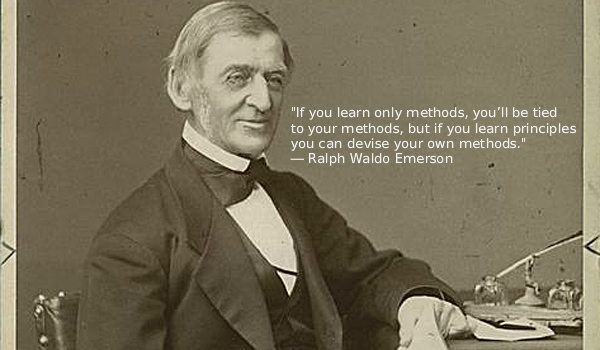
    (Arguable) I think efficiency lays more stress on methods, but engagement has the potential to focus on principles. Profitability at any cost vs value creation as a means to profitability. The choice might actually make the difference between survival and irrelevance.

    Emerson