Category: Mind

  • The Molecule of More

    Daniel Z. Lieberman, Michael E. Long

    The ‘molecule of more’ whose machinations make you desire what you don’t have, and drives you to seek new things. That which offers rewards when you obey it, and punishes you when you don’t. Dopamine, whose fingerprint is visible in most of the thoughts and actions we do on a daily basis, is the subject of the book. Discovered in 1957 by Kathleen Montagu, and first thought of as a pleasure molecule, only .0005% of brain cells produce it, but it has a disproportionate influence on us.

    (more…)
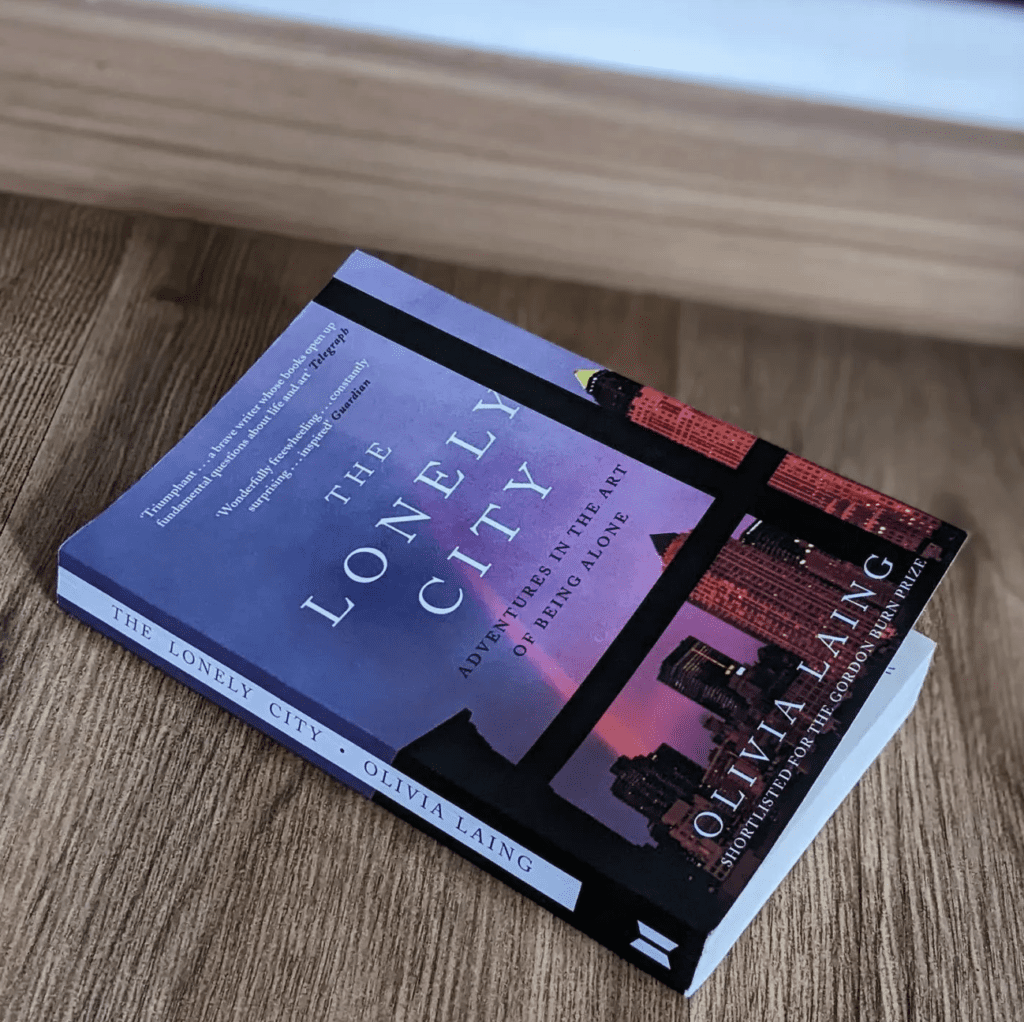
  • The Lonely City: Adventures in the Art of Being Alone

    Olivia Laing

    The Lonely City was a book that had been on my list for a while now, thanks to quotes from it reaching me from various sources. I now realise why a lot of people hold it in high regard. It’s not just the deep and poignant insights about loneliness, and its connection to art, but also how this relates to our humanity. 
    Olivia Laing uses the loneliness she developed when she moved to New York in her mid-thirties to explore the city and the feeling through art. In eight chapters, she fixes her gaze on the life and work of artists, some well-known and some unknown (to me) who have used their art in different ways to cope with their feeling of loneliness. 

    The connection between all of them is the liminality in which they operated – the edges of society’s discourse. I found two of them especially poignant. Henry Darger, born in the slums of Chicago in 1892, and who at the age of eight was sent first to a Catholic boys’ home and then to the Illinois Asylum for Feeble-Minded Children, and later spent almost six decades rolling bandages and sweeping floors in the city’s Catholic hospitals. It was only posthumously that he was recognised and attained fame. A lonely person who lived on the sidelines of society but whose art radiated unique perspectives. 

    The other is Valerie Solanas, who appears in the narrative of Andy Warhol (she attempted to murder him in 1968). Except for a few years, her life never really looked up. Hers was a vicious cycle of loneliness, her own mistrust and withdrawal fed by the society which shunned her. Her life just kept spiralling downwards until her death, alone in a welfare hotel, with her body being discovered after three days. 
    But towards the end of The Lonely City, Laing also shows how art is not only a medium of expression, but also a way in which the individual is trying to connect with those around him/her. An excellent read if only for the many perspectives of loneliness. 

    As she writes in her dedication, “If you’re lonely, this one’s for you”

    Some of my favourite sections in The Lonely City: 

    Talking so much you horrify yourself and those around talking so little that you almost refuse your own existence: demonstrates that speech is by no means a straightforward route to connection. If loneliness is to be defined as a desire for intimacy, then included within that is the need to express oneself and to be heard, to share thoughts, experiences and feelings. Intimacy can’t exist if the participants aren’t willing to make themselves known, to be revealed. But gauging the levels is tricky. Either you don’t communicate enough and remain concealed from other people, or you risk rejection by exposing too much altogether: the minor and major hurts, the tedious obsessions, the abscesses and cataracts of need and shame and longing. My own decision had been to clam up, though sometimes I longed to grab someone’s arm and blurt the whole thing out, to pull an Ondine, to open everything for inspection.

    What is it about masks and loneliness? The obvious answer is that they offer relief from exposure, from the burden of being seen what is described in the German as Maskenfreiheit, the freedom conveyed by masks. To refuse scrutiny is to dodge the possibility of rejection, though also the possibility of acceptance, the balm of love. 

    People who hoard are often socially withdrawn. Sometimes the hoarding causes isolation, and sometimes it is a palliative to loneliness, a way of comforting oneself. Not everyone is susceptible to the companionship of objects; to the desire to keep and sort them; to employ them as barricades or to play back and forth between expulsion and retention. On an autism website, I’d come across a discussion on the subject, in which someone had encapsulated the desire beautifully, writing: ‘Yes, very much a problem for me and while I’m not sure if I personify objects I do tend to develop some weird sort of loyalty to them and it’s difficult to dispose of them. 

    Sometimes, all you need is permission to feel. Sometimes, what causes the most pain is actually the attempt to resist feeling, or the shame that grows up like thorns around it. 

    Like Harris, Warhol could see that technology was going to make it possible for more and more people to achieve fame; intimacy’s surrogate, its addictive supplanter.

    The relief of virtual space, of being plugged in, of having control. Everywhere I went in New York, on the subway, in cafés, walking down the street, people were locked into their own network. The miracle of laptops and smartphones is that they divorce contact from the physical, allowing people to remain sealed into a private bubble while they are nominally in public and to interact with others while they are nominally alone. Only the homeless and the dispossessed seemed exempt, though that’s not counting the street kids who spent every day hanging out in the Apple store on Broadway, keeping up on Facebook even – especially, maybe – if they didn’t have anywhere to sleep that night. Everyone knows this. Everyone knows what it looks like. I can’t count how many pieces I’ve read about how alienated we’ve become, tethered to our devices, leery of real contact; how we are heading for a crisis of intimacy, as our ability to socialise withers and atrophies. But this is like looking through the wrong end of a telescope. We haven’t just become alienated because we’ve subcontracted so many elements of our social and emotional lives to machines. It’s no doubt a self-perpetuating cycle, but part of the impetus for inventing as well as buying these things is that contact is difficult, frightening, sometimes intolerably dangerous. Despite an advert then prevalent on the subway that declared ‘Your favourite part of having a smartphone is never having to call anyone again’, the source of the gadget’s pernicious appeal is not that it will absolve its owner of the need for people but that it will provide connection to them connection, furthermore, of a risk-free kind, in which the communicator need never be rejected, misunderstood or overwhelmed, asked to supply more attention, closeness or time than they are willing to offer up. 

    That’s the dream of replication: infinite attention, infinite regard. The machinery of the internet has made it a democratic possibility, as television never could, since the audience in their living rooms necessarily far outnumbered the people who could be squeezed into the box. Not so with the internet, where anyone with access to a computer can participate, can become a minor deity of Tumblr or YouTube, commanding thousands with their make-up advice or ability to decorate a dining table, to bake the perfect cupcake. A prepubescent in a sweater with a knack for throwing shade can grip 1,379,750 subscribers, declaring it’s hard to explain myself so those are what my videos are for!! And then you run the hashtag lonely through Twitter, can’t vibe with anybody lately #lonely, seven favourites; I love seeing people that I asked to do things with not reply to me and then do things without me. #lonely, one favourite; I’m having one of those nights. Too much thinking time #lonely I sound like a fucking sook with lots of cats. I wish I had a cat, no favourites.

    The Lonely City
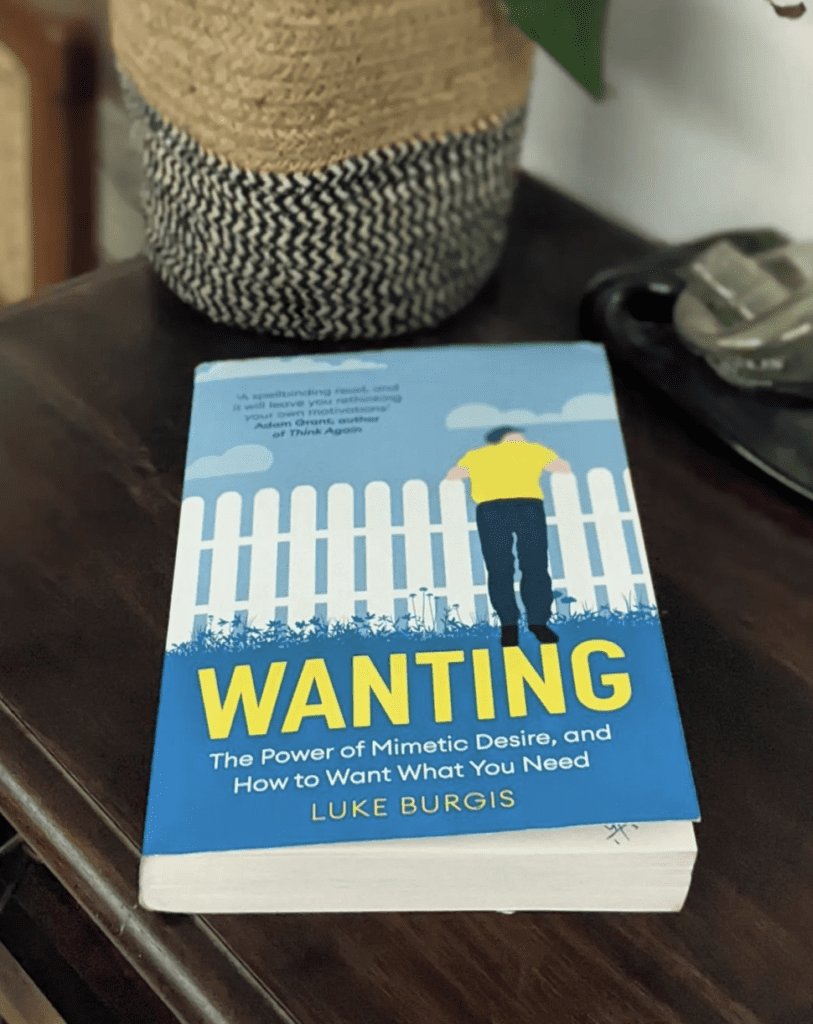
  • Wanting: The Power of Mimetic Desire, and How to Want What You Need

    Luke Burgis

    Schopenhauer is believed to have said “A man can do as he wills, but not will as he wills.” We can replace will with ‘want’ and it still holds. But we have convinced ourselves otherwise – that we desire things independently. Based on the work and philosophy of René Girard, and his own experiences, Luke Burgis sets about dismantling this notion – what the book calls the Romantic Lie – self delusion.

    If, in the free will debate, genetic and environmental determinism hasn’t made an impression on you, Girard postulates that most of what we desire is mimetic (imitative) and not intrinsic. We want what other people want. These desires are different from needs. Think of the latter as the two bottom rows of Maslow’s hierarchy and the former as the top three. And our choice of these desires are courtesy models – people or things that show us what is worth wanting. Look hard enough, and in all of your consumption and behaviour – from the choice of travel destinations to life partners, you will discover them. 

    Mimetic desire can lead us to destructive or productive cycles, and the book explores both paths. In the first part, we learn how mimetic desire starts in infancy to its evolution in adults, how it changes according to the person’s relationship with the model, how it works in groups (and causes societal conflicts) and how society has found ways (scapegoat mechanism) to diffuse it. This section has an excellent example of ‘models’ in action – Edward Bernays popularising smoking amongst women at a time when it was quite taboo. Another good example is that of a Romantic Lie – the efficient markets hypothesis – and what has been its anti-thesis consistently – Tesla. Musk clearly understands the power of mimetic desire really well. Dogecoin, anyone?

    Desire, according to René Girard, is always for something we think we lack — or else it wouldn’t be desire at all. And hence the model – the one who has what we lack. The person’s relationship with the model – either people belonging to the same time, place or social sphere (Freshmanistan, our immediate world) or outside it (Celebristan, outside our ‘world’) also has an impact on the kind of mimesis that happens. We don’t really compete with the latter, in fact we imitate them freely and openly, but with the former, we compete. [Sidebar – The use of ‘stan’ and the usage of phrases right below chapter titles indicated to me that the author probably has Taleb as one of his models]

    In a simpler world, our Freshmanistan was limited to those we actually were in touch in reality. And then came Facebook, which gave us practically infinite models. Scrolling, judging, comparing, imitating, seeking validation and praise….and feeling angsty! Burgis gives the example of one friend introducing another to baking, and how the desire to become the better baker locks them in mimetic rivalry that doesn’t end well. 

    A related part is about how the value of experts has shifted from people with a deep understanding of the subject to those with mimetic value. Just as we used to make fun of the Kardashians as ‘being famous for being famous’, we have experts who are ‘experts at being experts’. Also interesting that apparently Steve Jobs had a model too – Robert Friedland, a fellow student in college. And the example of Zappos, which was once a model, but imploded. 

    Mimetic desire spreads through culture, and creates competition and conflicts in societies. Early societies used sacrifice and the scapegoat mechanism – pinning the blame of the conflict on a specific entity – to diffuse the situation. It continues to this day – fired CEOs and coaches, ‘cancel culture’ etc. All parties silently agree that now that the conflict has been resolved, things will get better. There is an interesting perspective that the story of Jesus survived because though the mob tried to make him a scapegoat, it caused an enormous division in society, and one section called out the scapegoat mechanism – the folly of the crowd is shown to the reader of the scriptures, and hence it was unique for its time. 

    In the second part of the book, the focus is on how to break out of this cycle using techniques like disruptive empathy and intentionally discerning between thin and thick desires. Empathy is defined as the ability to share another person’s perspective without imitating or identifying with them to the extent of losing one’s own individuality. Developing thick desires, which endure and provide meaning, are a good way to not get distracted by thin, mimetic desires. Another interesting concept is ‘calculating thought’ and ‘meditative thought’. The former is the default, and the latter is slow, patient, and in the current usage of the word – nonproductive. This part also has a section on how to apply this to leadership, and ends with a perspective on the future of desire. 

    Mimetic desire permeates everything from the educational system to social media to venture capital, hijacking the original purpose of these entities. At an individual level, it impacts our work, relationships, parenting, and distorts the way we live our life. This book gives us a good perspective on making a different kind of attempt. By asking ourselves, why do we want what we want, really? 

    P.S. I tried reading Girard’s original work and couldn’t make a lot of headway. This is more accessible, and at some point, I am going to give the original work another shot.

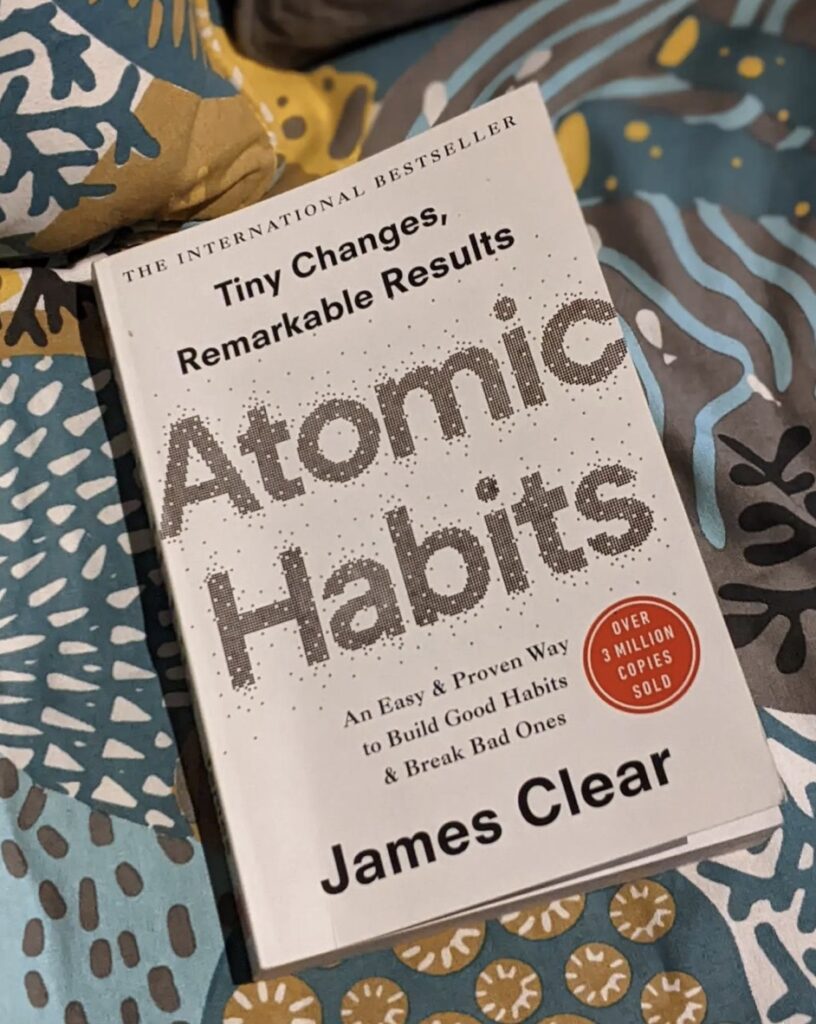
  • Atomic Habits

    James Clear

    Given that I read The Power of Habit a while back, and have been a subscriber to James Clear’s newsletter for a while, I should have read this a long time ago. But better late than never. 

    He begins by explaining how small changes can make a big difference over a period of time. Positively and negatively. ‘Habits are the compound interest of self-improvement.‘ Hence the word atomic – small, part of a larger system, and the building blocks of great results. 

    I think one of the best insights of the book is the three layers of behaviour change framework – outcomes, processes, identity. While most people focus on outcomes, systems (processes) are a better way. ‘ You do not rise to the level of your goals, You fall to the level of your systems.‘ But the best way is to focus on the ‘identity’ – the person you want to become. The first stop is to figure out one’s habits, which tend to be quite a few over a period of time. As per research, apparently 40-50% of our daily actions are habits. And many of them are not even consciously-created ones. A habit, as Clear brings up right at the beginning, is a routine or behaviour that is performed regularly – and in many cases, automatically. From an evolutionary perspective, ‘Habits are, simply, reliable solutions to recurring problems in our environment‘. And that means, nature has its own way of creating things that reduce our cognitive load. 

    He then proceeds to breaking down the process. The process of building a new habit (or getting rid of one) has four steps – cue, craving, response, and reward. Correspondingly, to create a good habit, make it obvious, make it attractive, make it easy, and make it satisfying (and their inversion to get rid of a habit). These make up the Four Laws of Behaviour Change. The remaining chapters are all about bringing this to life. From managing one’s environment to the role of friends and family, fixing procrastination, using commitment devices and motivation rituals, reducing friction, how to stick to good habits, and even automate them when possible. By the time you read the end of this part, you have a fantastic table that can be quite easily applied. 

    I liked the last 50-odd pages the most because of my own interest in the topics. The perspectives on the role of nature and nurture – ‘genes can predispose, but they don’t predetermine‘, and how to determine the game where your odds of success are higher. Habits are easier when they align to one’s natural abilities. ‘Boiling water will soften a potato but harden an egg. You can’t control whether you are a potato or an egg, but you can decide to play where it’s better to be hard or soft.’ 

    He also brings up the downsides of even good habits, the importance of reviews and realignment, and how one can break the beliefs that are holding one back. Becoming the best version of yourself requires you to periodically edit your beliefs and worldview, and expand your identity. 
    Some of the frameworks have been inspired by others (and Clear makes sure he mentions those) but through framing, easily relatable examples, and ways to implement them in daily lives, he makes application very easy. This is a must-read book, especially if you’re in your 20s and 30s. From experience, compounding is probably the most underrated phenomenon. The earlier you start, the better. ‘The costs of your good habits are in the present. The costs of your bad habits are in the future.’

  • Behave : The Biology of Humans at Our Best and Worst

    Robert M. Sapolsky

    I remember Don Draper’s words from Mad Men – “When a man walks into a room, he brings his whole life with him. He has a million reasons for being anywhere, just ask him. If you listen, he’ll tell you how he got there.” Robert Sapolsky asks this to our behaviour, and tries to answer it using multiple disciplines of science. 

    At any given point in time, we are behaving in one way or another. What influences that? To understand that, he travels back in time. From the seconds before that behaviour, and the possible neurobiological explanation, to the genes we have inherited, to the early days of our non-human ancestors and the environment that shaped many of their behaviours. Hormones, environment, culture, and events from millennia ago, all offer but clues to understanding how we are today. 

    From a narrative point of view, you’re first thrown into the deep end of the pool. I found the first few chapters reasonably tough to get through, simply because between the names of neurotransmitters and hormones and their little quirks, I had to repeatedly go back and check if I had understood right (even if it’s a remote understanding!) It doesn’t help that there are footnotes on practically every page. I stopped reading them after a while. It also doesn’t help that each chapter is a rabbithole with multiple little sections.

    And finally, I know the author means well and is probably trying to keep the prose conversational, but repeated “see what I did there?” are also a bit painful. As an exception, I did find the part on genes interesting, especially how it doesn’t act in isolation and interacts with the environment. ‘Genes aren’t about inevitabilities; they’re about potentials and vulnerabilities.’

    Having said all that, once we have gotten out of the body, and moved into environment, culture, decision-making etc, the text is a lot more accessible and at least to me, supremely interesting. Behaviour and what goes into it indeed becomes fascinating as we start to see the behaviour of other species and how similar we are in some aspects. It is also awe-inspiring to behold the species we have become. And much of it purely by chance. Also mind-bending how biology affects our tendency to violence, our sense of justice and many other things whose behind-the scenes we don’t really look at. 
    I think I’ll need at least one more read to assimilate everything in the book.

    But it is indeed fascinating to know that ‘we are constantly being shaped by seemingly irrelevant stimuli, subliminal information, and internal forces we don’t know a thing about.’ ‘Our worst behaviours, once we condemn and punish are the products of our biology. The same applies to our best behaviours.’

    It’s not the easiest read, but if you persist, a lot of insights await you.