Category: History & Politics

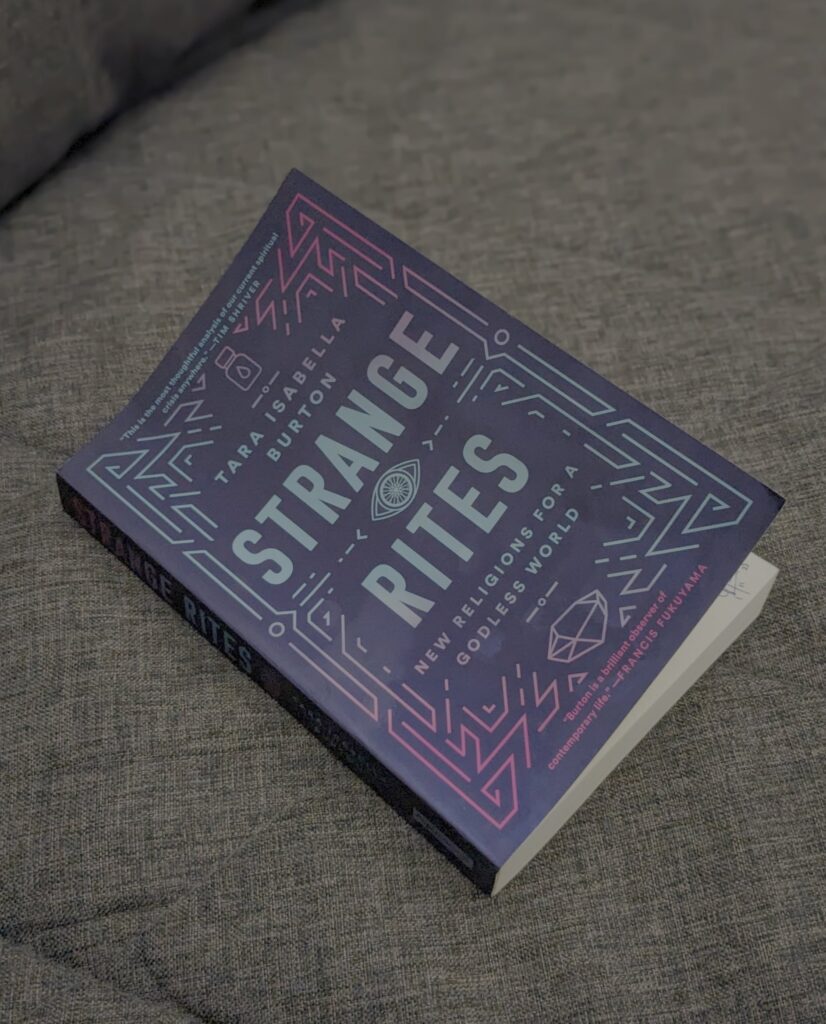
  • Strange Rites: New Religions for a Godless World

    Tara Isabella Burton

    Strange Rites is another book I discovered only thanks to a podcast. I found it a fascinating exploration of how the (almost) post-religion United States is evolving. Folks who call themselves Christians have been steadily decreasing, and ‘Nones’ who claim no affiliation to any organised religion is the fastest growing group. One-third of millennials (and one fourth of all adults) have no affinity to religion. Tara Isabella Burton tries to find out who (or what) is filling the God-sized hole.

    She begins with her personal experience at the McKittrick Hotel, home to the British theatre company Punchdrunk’s production – Sleep No More, an experiential phenomenon that she describes as “equal parts video-game, voyeurism and religious pilgrimage”. It’s a retelling of Macbeth but every part of it is subject to interpretation by the performers and the audience, with the latter also having the option to be part of the ‘play’.

    This serves as a preview of the world of SoulCycle, Korean beauty routines, Gwyneth Paltrow’s juice cleanse, Crossfit, Internet fan fiction, Headspace, and so on. A long list of options from which people can mix their own religious cocktail of spiritual, philosophical, aesthetic and experiential dimensions. It influences not just individual lifestyle but societal politics too.

    The author broadly classifies the non-affiliated into SBNRs (Spiritual but not religious), Faithful Nones (who hunger for something larger than themselves) and Religious Hybrids (who practice a portion of their religion, and supplement it with things outside it). All of them (and us) are looking for what religion originally delivered – meaning, purpose, community, and ritual.

    She then spends a chapter on the war that has been fought on religion within America – the institutional (centred around Church and society) vs the intuitional (centred around the person). And that progression and the heterogenous mixes that happened reflects in the changes in culture and mindset within society during the 60s, 70s and so on.

    And thus, while the new forms of religion aren’t new, the author cites three factors that makes this era different and likely to stick around – the absence of wider demographic pressure, the power of consumer capitalism, and the rise of the internet. While millennials are caught between their lack of belief in their parents’ religion and the political conservatism on societal issues, capitalism finds a way in, helping them create identities and tribes. It will sell us meaning, brand our purpose, custom-produce community, tailor-make rituals and commodify our humanity. That includes a spiritual entrepreneurship course at the Columbia Business School!

    This new age version of religion (spiritualism) has an interesting parallel – the role that the printing press and the spread of mass literacy played for Protestantism is what the internet is doing today for new age movements. From Yahoo Groups for The X Files and Xena to Harry Potter and World of Warcraft, people were no longer bound to their geography to find their tribe. Fan fiction boomed. The author cites two watershed moments which show how ‘fans’ started taking ownership – the call for Rowling to step away from the Harry Potter universe after her fall from grace, and Gamergate, when there was a backlash against a section of gamers who wanted video games to address the interests and concerns of minority players. Though it wasn’t the first of its kind, the movement was the first to get into a large cultural conversation. Many of the players on the reactionary side (against the demand) would later become alt-right/alt-lite celebs.

    Another evident phenomenon is wellness culture, which focuses on self improvement and commoditises self care. It has the fandom and the ‘theology’ of purpose and meaning to back it. The philosophy of SoulCycle, Goop etc have their roots in New Thought, one of America’s earliest spiritual traditions that blended liberal Christianity with Transcendentalism, and the path includes folks like Norman Vincent Peale (The Power of Positive Thinking), and the discourse in the contemporary era even included self care as a revolutionary act against Trump’s America! The other phenomenon that the author brings up is the revival and rise of witchcraft. The number of adherents are over a million. Here too, Trump served as a nemesis, with the larger narrative connecting the rituals of witchcraft to a higher social and spiritual purpose – dismantling toxic and oppressive structures associated with patriarchy, white supremacy and other unjust hierarchies.

    Another massive shift is in social-sexual identities. Though swapping, kink etc existed in the 1900s, many interests and groups were in the closet are now lifestyles accepted by the mainstream. A key role was played by the internet in transforming the modes and rituals of these communities too, accelerating access and consumption. Simultaneously monogamy is receiving a pushback. The 1970s and 80s were the peak time for divorces in the US, that means children growing up then have a fairly dismal view of marriage.

    74% of American millennials now say that “whatever is right for your life or works best for you is the only truth you can know”. While fandom, wellness, witchcraft, sexual utopias all play out, are there organising thoughts that can take the place of religion? The author works out three of them. The first is ‘social justice culture’ – a progressive mix of self care, moral determination through lived experience, and a fight against racism, sexism and other forms of bigotry and injustice. The second is a Silicon Valley based version who work towards an optimised self. Libertarian techno-utopians, rewriting biology and society through ‘hacking’. Despite their cosmetic differences, both groups have much in common. They both have a disdain towards society’s mores, maxims and rules. And both seek self actualisation. And yes, both are viable consumer categories for capitalism. Wokeness, self care and more!

    However it is the third that the author considers the most viable contender, and the most dangerous. Authoritarian, reactionary, materialist, and one that valourises submission to a higher political or biological truth. They find spiritual and moral meaning in primal, masculine images of heroes past. Yes, mostly white. They believe that biological determinism, gender binary, and natural hierarchies are what leads to progress. Not progressivism and political correctness. Jordan Peterson is one of the high priests, and r/TheRedPill forum is an active shrine of the movement. They provide a sense of brotherhood. Meme magic in 4chan, Pepe and Kekism all were connected to the Donald Trump campaign. Many mass shootings and other acts of violence are by graduates of this school of thought.

    Religion and politics have been connected throughout history, but is remarkable to watch the narrative in the contemporary era unfold as the author connects the pieces and lights up the path that got us to where we are. But then again, to learn of something and to learn from something are two different things. In my favourite reads of 2023, and highly recommended if you have any interest in modern society and/or religion/ and/or culture.

    Notes
    1. In 1890, a businessman Elijah Bond patented a “talking board” for mass use. That’s the Ouija board.
    2. Apparently Fifty Shades of Grey started out as fan fiction – based on Twilight’s lead characters!

    Strange Rites
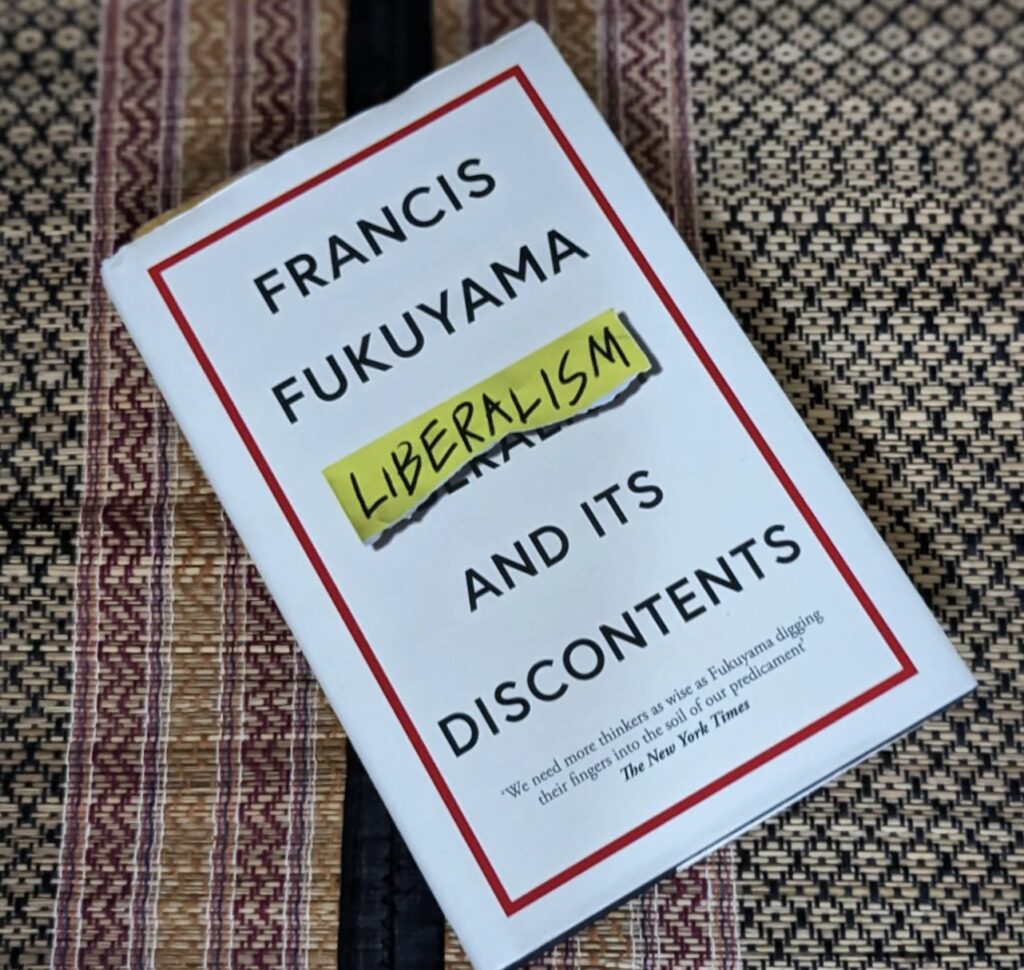
  • Liberalism and Its Discontents

    Francis Fukuyama

    In The Shock Doctrine – Naomi Klein’s book on how capitalism hijacked crisis to further its own unbridled growth agenda – she calls out Francis Fukuyama’s “History has ended. Capitalism and freedom go hand in hand” and essentially considered liberalism the endpoint of mankind’s ideological revolution. That book gave me a lot of (alternate) context on the general narrative of capitalism, and also shifted my view on Fukuyama because of his role in (probably) encouraging the Chicago School of thought that impacted the development of multiple countries across the globe.

    That meant I picked up “Liberalism and Its Discontents” with some skepticism, but though Fukuyama defends liberalism, I felt that he has tried to dissociate himself from the extreme forms the ideology has taken, and attempted to see the criticism and shortcomings objectively. In that sense, probably redeemed himself in my eyes a bit. (not that he cares)

    He begins by acknowledging the challenges facing liberal democracies, and then steps back to trace the historical and philosophical evolution of liberalism and how it came to be the go-to ideology after the Cold War, and begins his defence by reminding us of the significance of individual rights, rule of law, and market economies in creating and maintaining political and economic freedom. He also looks at liberalism’s internal frictions and contradictions. For instance, tension between individual rights and collective identities, and the excessive focus on individualism undermining social cohesion and communal solidarity. Individualism, which has resulted in the twin extremes of identity politics and populist nationalism.

    Liberalism is attacked on many fronts since its basic tenets are all open to separate criticism, thereby questioning its essence. Collectively, these forces challenge the principles of liberal democracy by undermining institutional structures, eroding trust, and fostering polarisation in the general public. What has also compounded this is the the rise of social media, surveillance technologies, and artificial intelligence, and while these could be beneficial to liberal values theoretically, the current usage is mainly manipulation of information, erosion of privacy, and the potential for authoritarian control.

    But what I felt was that his thinking is still largely Western, and thus does not really go deep into the nuanced challenges faced by other parts of the world, or the intersections of related issues – globalisation, economic inequality, and complicated cultural dynamics, which foment populist movements. And because of that, his dismantling of the alternatives seem less convincing, and look closer to the paraphrasing he attributed to Winston Churchill – liberalism is the worst form of government, except for all the others.

    Liberalism and its discontents | Francis Fukuyama
    Screenshot
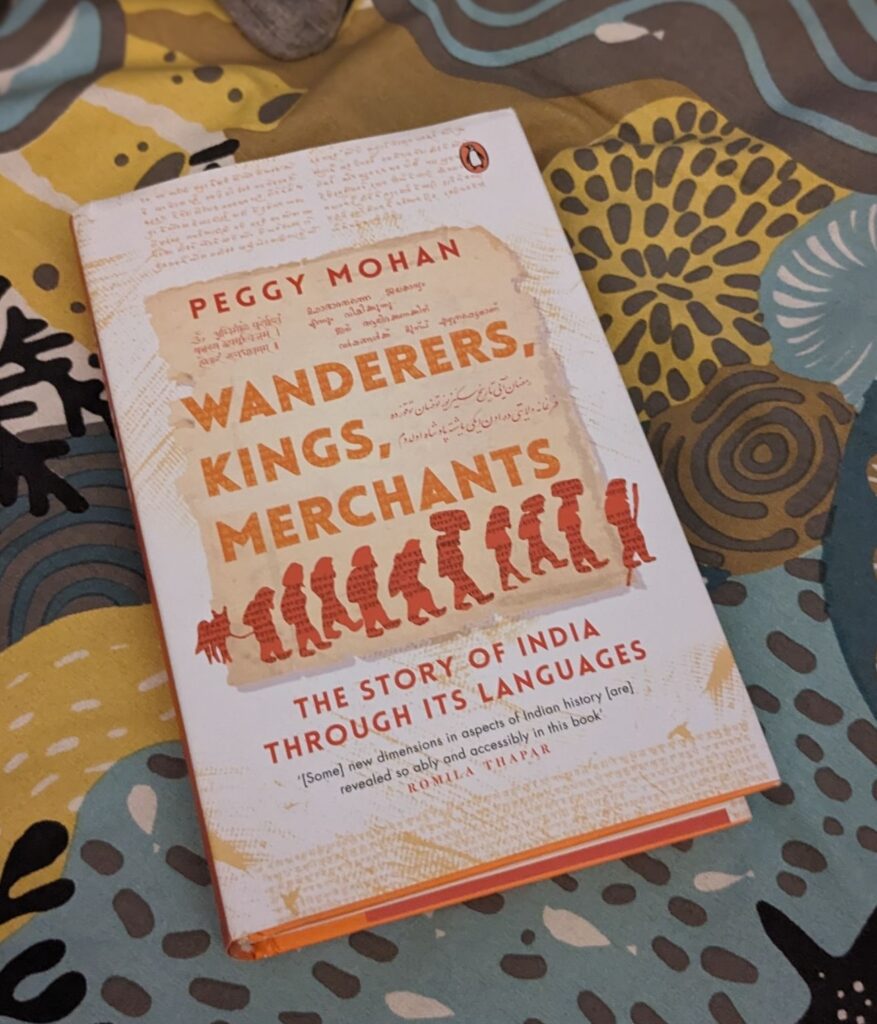
  • Wanderers, Kings, Merchants

    Peggy Mohan

    For a while, I have been fascinated by the similarity in words across languages – from the simple biradar-brother to the slightly more elaborate Agni-ignite. I even started a Twitter thread to keep track of these ‘discoveries’. Linguistics per se, the theory of it though, is less of a fascination. I started reading it with the notion that it would be this, but was pleasantly surprised. I love history and that’s what Peggy Mohan has actually done using language(s) and their evolution as her tool in Wanderers Kings Merchants.

    She gives us a quick introduction with Creoles in the Caribbean, and points out the appearance of the vocabulary layer, which is influenced by the more powerful group (usually male), and the more intrinsic sound and grammar, which is the maternal side of the story – mother tongue. With this background she brings the narrative to India and creates a storyline using different languages.

    She begins with the presence of sounds of Dravidian origin in the recitation of the Rig Veda, and with supporting historical & DNA evidence of a male-driven migration about 3500 year ago when the Harappan civilisation was in decline, traces the Vedic male – local wife combination which led to the Dravidian sounds in the Rig Veda. To be noted that this didn’t happen in the beginning when they were orally preserved and transferred, but around 700 years later when they were formally compiled, edited and written down, reflecting a Sanskrit which by then had vernacular sounds. This was also when the Kuru super-tribe spread east and south, from Kabul to Andhra, taking Sanskrit along. This Sanskrit then mixed with the language of the elite in these regions and created the first versions of Prakrit. As the language trickled down from the elite to the masses, or rather, locals moved up in lifestyles and hence words used, the influence of the latter’s native tongue became stronger and around 1000 CE marked the beginning of the Indo Aryan languages, first as dialects in small areas, and then gradually expanding their domain.

    Meanwhile, in my little state of Kerala, around 800 CE, brahmins relocated from the north – Namboodiris, at the behest of local kings. As with the story up north, male-driven migration + local women and an elite happened. The brahmins’ original Apabhramsa language (a ‘corrupted form of Sanskrit that didn’t follow Paninian rules) faded because they had to pick up Malayalam in the long-term, and centuries later, a new language Manipravalam emerged – Sanskrit nouns in (erstwhile) Malayalam sentences. Interesting that a sociopolitical tumult also happened here around the same time – the rise of the Second Chera Empire and the beginning of a strong Malayali identity distinct from Tamil/Cholas. In parallel, a resurgence of Hinduism at the expense of Buddhism and the re-emergence of Brahminical Hinduism.

    Similarly, the Central Asian influx into the north (Delhi Sultanate, Mughals) brought with it Uzbek, which quickly vanished as the Central Asians started using the dialect in the region (Hindi) as their vernacular. It was only in the late 1700s that they moved from using Persian as the official language and started writing in Hindi – then renamed Urdu, with an infusion of Persian nouns.

    She then takes us to the contemporary example of Nagamese – the grammar of Assamese and a small portion of Naga. It grows even as the both Assamese and the Naga languages continue to exist. The flashback on Assamese is Ahom, courtesy migrants from Burma. This itself is a later episode of the SE Asia + Munda people of the Magadha region. This combination, and the presence of the Vratyas, a pre-Vedic Arya group, is what makes the Magadha languages different from Dravidian.

    The most recent play- British and English. The British not only created a Hindi-Urdu divide which hadn’t existed before, but also, thanks to having Indian employees, got the latter to pick up English, though mostly in ‘Prakrit English’ form in the beginning. Ironically, English really spread only after Independence, because the elites wanted to retain their hold on power using language as an access point, and were helped by the fact that no single language had the heft to cover the entire country. And that’s where we are now. ‘What had started as a code to identify the elite snowballed into something set to replace our older languages and cultures as it trickled down, forging a new homogeneity.’

    I have to admit I glazed over some of the parts where she decided to go a little deep (by my standards) on technicality of language, but I found the book to be mostly accessible, and definitely fascinating. If you’re even vaguely interested in history, this is a must-read.

    Interesting points
    Cows as a metaphor for women in the Rig Veda.
    The uncanny resemblance between Panini, and the Phoenicians (Poeni in Latin)
    Ditto Turkic Ordu (army) and horde
    Urdu got its name in the Deccan in 1780, and in its later usage was practically the same as Hindi, both belonging to Hindus and Muslims, until the British decided to cause a split by trying to create a shudh Sanskritised version of Hindi, and in addition the use of Devanagari script. The idea being that they wanted to undermine Urdu, written in Persian script, because it was associated with the Mughal empire.

    Wanderers, Kings, Merchants
  • Broad Band: The Untold Story of the Women Who Made the Internet

    Claire L. Evans

    I had a sense of deja vu while reading this, and later realised that it was thanks to Maria Popova’s Figuring. The books are very different in terms of scope, but are connected by the women-oriented narrative, the idea of intellectual successors, and the presence of what one could call a ‘crossover character’ – Maria Mitchell.

    When we think about the internet’s history, and its current pantheon, the names that pop up are all, or at least mostly, male. But Claire Evans points out that the origin stories are actually mostly female. Their contributions are practically invisible both in the public eye, and while we use the web.

    (more…)
  • The Shock Doctrine

    Naomi Klein

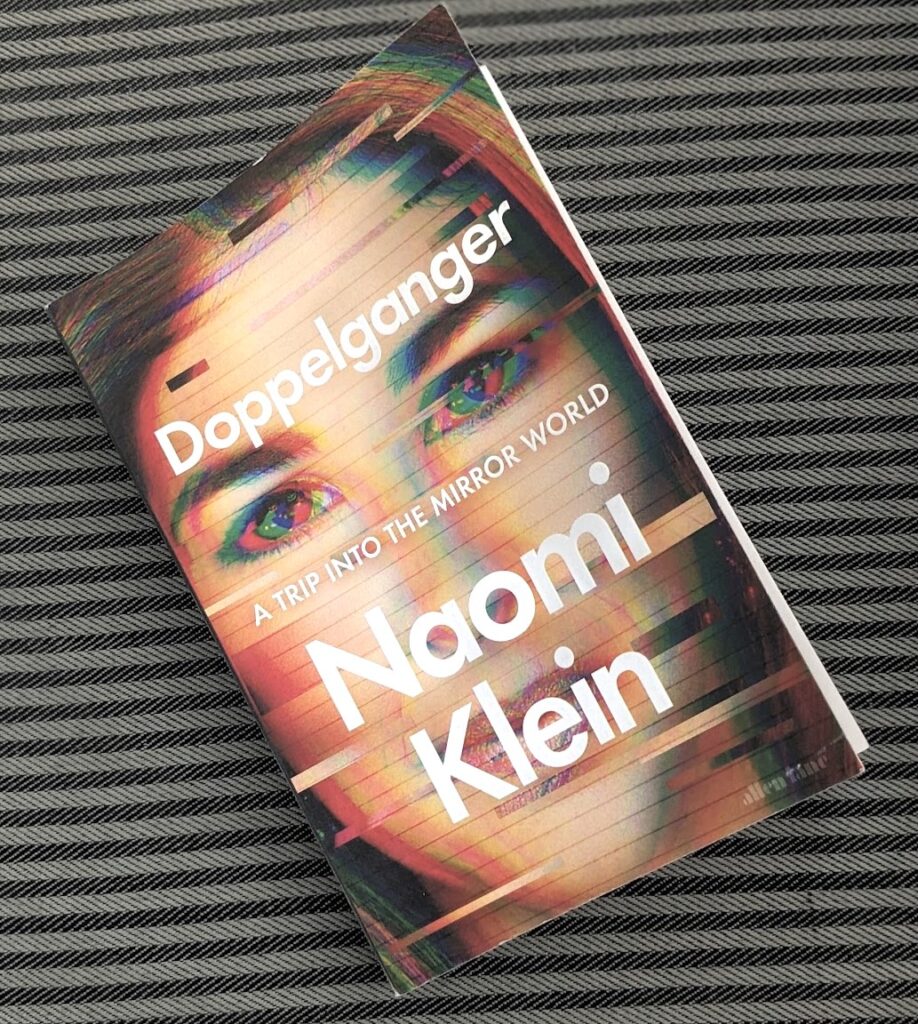
    One would think that when a disaster happened, everyone would do their best to help the victims. But it turns out that there are many who seek to profit. And such is the greed that sometimes disasters are created so that profits can be made. Naomi Klein calls it disaster capitalism, and this book is its ‘biography’ to date.

    She begins the narrative in New Orleans after Katrina struck, referring to an an op-ed penned by the high priest of the fundamentalist version of capitalism – Milton Friedman. His school of thought earned him disciples that consisted of everyone from IMF chiefs and Fed chiefs to Russian oligarchs and the Chinese Communist Party. The shock doctrine is simple – when a crisis occurs, there is an opportunity to effect change, because people are disoriented. Act decisively and administer economic shocks i.e. radical free-market “reforms” that will advance capitalism.

    The shocks and their perpetrators abound in history- Augusto Pinochet in Chile in the 1970s, Margaret Thatcher and the Falklands War in 1982, Tiananmen Square in 1989, Boris Yeltsin in 1993, NATO attack on Belgrade in 1999 against Yugoslavia, the ‘War on Terror’ and even a homecoming in America after 9/11! And these days, the shocks go beyond the economic.

    Klein begins at an individual level, when in the 1950s and 60s, Ewen Cameron, with CIA backing, set out to find a way to erase the human mind and then remake it, using physical and mental shocks. (Now available in Guantanamo Bay and Iraq!) This led to a training manual to be used against enemies, called Kubark Counterintelligence Interrogation. Around the same time, in the University of Chicago’s Economics Department, Friedman dreamt of its scaled version – de-patterning entire societies and taking them back to pure capitalism – free of regulations, trade barriers and public interests.

    Milton’s belief was that history got off on the wrong foot after the world wars when politicians listened to Keynes and started building the welfare state. The path to true freedom, according to him, was free markets. The original version had three conditions – governments should remove regulations that stand in the way of profits, they should sell off state assets to corporations who could make them profitable, and they should cut back on state subsidies and social programs. This was the Chicago School of thought, the Chicago Boys then set about implementing across the globe, helped by institution-building assistance from the likes of Ford Foundation! (Klein does a great little deep dive on this)

    They got their first chance to implement his ideology of unfettered capitalism in the 70s in Latin America. Klein quotes Eduardo Galeano “The theories of Milton Friedman gave him the Nobel Prize; they gave Chile General Pinochet.” Pinochet toppled the democratically elected, socialist Allende and in a dictatorial regime, began implementing not just Friedman’s ideas, but Cameron’s as well, making torture an instrument of the state. In the 80s, Margaret Thatcher used the Falklands War as a political tool against unions, who stood between her and Friedmania, in the process proving that implementation did not require dictatorships. In 1985, Jeffrey Sachs one-upped this in Bolivia by helping create an economic transformation plan that was implemented right after elections. NYT described Sachs as an “evangelist of democratic capitalism”. Behind the scenes, regimes used Cameron’s methods to full effect to control uprisings.

    Soon the IMF and the World Bank became allies to this ’cause’. Countries that were in an emergency needed to stabilise currencies. Financial bailouts came attached with strings of privatisation and free-trade policies. The Carvallo plan in Argentina is a classic example. Years later, Davison Budhoo turned whistleblower on this approach, disclosing that books were cooked to doom the economy of a poor but strong-willed country. This approach also provides context to Fukuyama’s “end of history” speech in 1989 in which he stated that free markets and free people were inseparable. (Personally, this was an eye-opener for me, as I had never read his books through this lens!)

    Meanwhile, in China, this was being proven wrong as Deng was pushing free markets but not really ‘free people’. In addition, party officials were using the former to become business tycoons. Friedman, during his visit, asked the government to increase the shock therapy! This created a crisis of layoffs and unemployment, the background for the Tiananmen Square protests and the following massacre. On the same day, the socialist Solidarity Party won the elections in Poland, following which shock therapy was implemented, leading to a full blown depression that lasted years.

    In 1994, the ANC in South Africa had a unique opportunity to reject free-market orthodoxy and create a nationalised economy. They even created a Freedom Charter, but their focus on removing apartheid and gaining political control caused them to underestimate the importance of economic control, which the white government, with support from IMF, World Bank, and GATT cannily seized. Meanwhile, in Russia, Yeltsin’s implementation of the playbook led to such protests that the regime became effectively dictatorial, leading to the rise of oligarchs and ultimately Putin.

    Also in the early 90s, the Asian Tigers – Malaysia, South Korea, Thailand were all growing rapidly even with their protectionist policies. The big corporations wanted in, and in the mid 90s, the IMF and the newly formed WTO, pressured the governments into lifting barriers in financial sectors, leading to a surge of (legal) speculative investment. And a crisis. And the vultures started buying local giants at garage sale prices. Samsung, Daewoo, LG and so on were split up and parts were sold. 24 million people lost their jobs in 2 years, and its imprint is now evident in religious extremism to child sex trade.

    And then it all came home to roost after 2001. Ironically, Rumsfeld’s speech on outsourcing all except war fighting to private parties happened on 10 September, 2001! In many ways, the privatisation of multiple government functions were the reason for the security failures behind 9/11. Abroad, ‘logistical support’ was extended until it reached a McMilitary experience, first displayed in the Balkans. Gated suburbs, movie experiences, fast food outlets, all part of fighting a war! Inside the US, Homeland Security is the classic example – politicians create the dead with rhetoric and policies, and private industry fulfils it. People like Cheney and Rumsfeld have made fortunes despite being supposed to serve the people.

    In the guise of getting Saddam pay back the debts to Kuwait, the US created a corporatist state of Iraq, after putting its civilians and citizens through the shock process. This time, not just economic, but physical and mental torture. An anti-Marshall Plan. With temp agencies running the business of war, and making money. Lockheed makes both the weapons and fighter jets as well as owns healthcare companies that treat people injured from the use of these weapons! It writes more code than Microsoft since it handles IT divisions of the government and its data management.

    Wars are not the only shocks. As shown in Sri Lanka, even tsunamis offer an opportunity for disaster capitalism. Fishermen turned out of their land so big hotels could get beachside properties for cheap and politicians and bureaucrats could make money.

    The dystopian future is already playing out in Israel – a corporatist government and a market that rewards a climate of war, because there are companies that make weapons, security systems, surveillance systems and so on.

    The good news is that societies are pushing back. Countries in Latin America, for example, are rejecting IMF and World Bank loans. People are electing politicians who are working on the common good.
    Naomi Klein does a stellar job of unveiling the thinking and execution of disaster capitalism. Thoroughly researched, well documented, and accessible, this book does provide a shock to the reader as well, because it shows how depraved humanity can be. But as she says, so long as we have the collective memory, our disorientation can be made minimal, and we can push back on vulture capitalism. And that’s why it’s important to read this book.

    The Shock Doctrine by Naomi Klein