Category: Fiction

  • India In Slow Motion

     Mark Tully, Gillian Wright

    A book written a decade back, and yet, it is still relevant because as the cliche goes ‘the more things change, the more they remain the same’. India has changed in many ways, and yet remains the same in many other ways, and that’s exactly the theme of this book too. Mark Tully and Gillian Wright have tried to study the various forces that keep India ticking at its unique speed – forces that accelerate and forces that pull it back. Through 10 unique scenarios they have attempted to not just unravel the fundamentals, but even taken a shot at the nuances that define the ‘Indian experience’.

    The book begins on a day that has left an indelible mark on modern India’s psyche and society – 6th December 1992 – the Babri Masjid demolition. The first chapter is about the rise of Hindutva, the role of the BJP, VHP, RSS etc and perspectives of the common people who reside in Ayodhya and the nuances in their approach to religion and gods. The second chapter shifts the premise to carpet making, child labour, and the machinations of organisations, including NGOs to achieve the moral high ground even at the cost of truth. (more…)

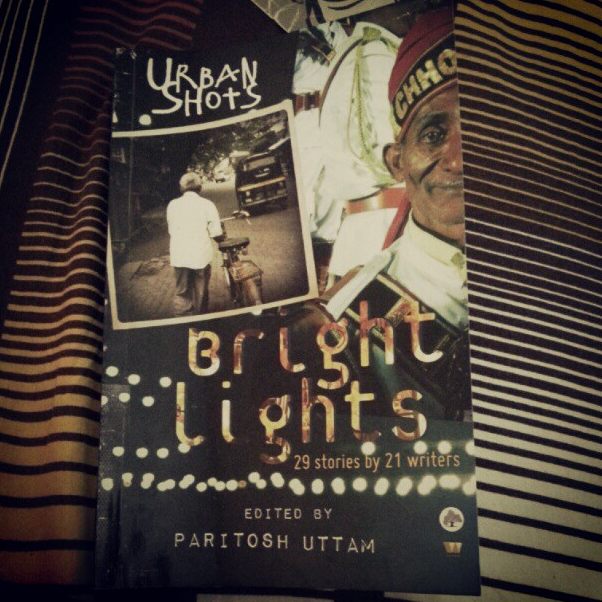
  • Urban Shots : Bright Lights

    Paritosh Uttam

    29 stories by 21 authors, held together by the premise of urban India. Each story is only about 4-5 pages long, so the chances of boredom are fairly slim. But most of the stories do revisit well trodden paths, and do not really offer a refreshing take. The twists are fairly predictable except in a couple of cases. It really could’ve done with better editing – not just in terms of basic grammar and punctuation but also with the ordering and flow of stories.

    My favourites were ‘The Bengal Tigress’ by Malathi Jaikumar, (for the tender nuances) Saurbh Katiyal’s ‘The Wall’ (mostly because of a setting I could relate to) Paisley Printed Memories by Sneh Thakur (for the superbly poignant portrayal of a terrible human affliction) and ‘Heaven and Hell’ by Shachi Kaul for its empathy and Rashmi Sahi’s ‘The Raincoat’ for a well written, meaningful tale.

    Some stories attempted humour, others were more sober, some were poignant, and many were interesting, and all were indeed interesting to some degree. But what I hoped for and did not find were slices of life that would narrate the human condition that connects all of us. Dissing Chetan Bhagat’s brand of ‘Rs.95 + hint of love in the title’ does not count! 🙂

    Urban Lights

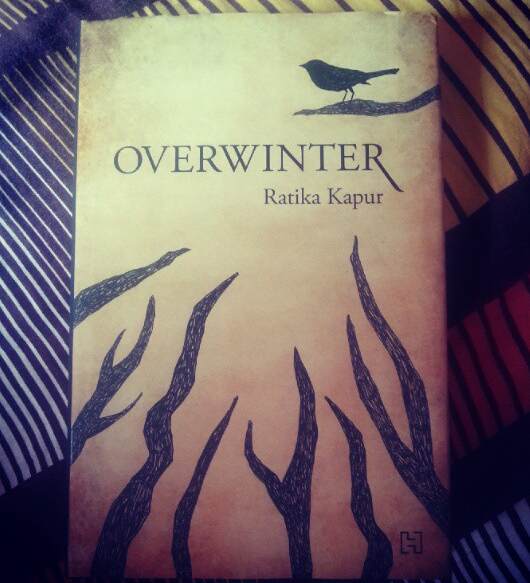
  • Overwinter

    Ratika Kapur

    ‘Mature’ is probably the first word I’d associate with the book. True, it does fall under the general existential angst category, but I felt that it does go beyond the stereotype – in the characters, the way they are handled, and the way situations flow. The story spans only a few months, though the narrative does go back in time to provide contexts and many events unfolding in the story do have a connection with the past.

    I felt that the only truly complex person in the book was Ketaki, the protagonist. I could pretty much relate to everyone else very easily, but her way of dealing with situations and people was the little unpredictability that made the book ‘different’. ‘Overwinter’ means spending winter or waiting for it to pass, and that is pretty much what Ketaki seems to be doing. The novel starts with a rather dysfunctional scene involving her and her uncle, but that’s not really a good indication of the story.

    Ratika Kapur shows tremendous skill in narrating day to day events (a trip from Delhi to Gurgaon, for instance) such that they completely step out of the mundane. This is also true of her excellent descriptions of human emotions. There is a sense of reality in the book – for instance, the conversations around the Nano or T20 cricket or Nadal vs Tsonga – that happens between characters. It’s as though I stepped into a living room and happened to hear these conversations.

    The other word I’d associate with the book is ‘intelligent’. The prose is assured, the narrative measured, and though you may not get a sense of closure that books often give you, this is a wonderful read.

    Clipboard05

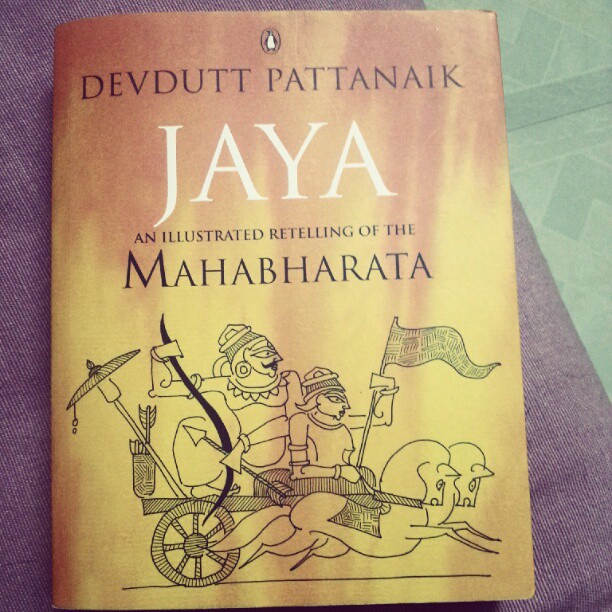
  • Jaya: An Illustrated Retelling of the Mahabharata

    Devdutt Pattanaik 

    I consider myself more well-versed with the Mahabharata than the average person, because of my interest in Hindu mythology and the amount of reading I’ve done on the subject. But I’m really glad I read Jaya, not just because of the small details I learned about (I counted 6 things I hadn’t known about – Sahadeva’s precognition gained by eating Pandu’s flesh, Draupadi cursing dogs to copulate in public for stealing Yudhishtira’s slippers, Vibhishana being present at Draupadi’s swayamwar, a couple of stories on why Krishna stepped in to protect Draupadi when Dusshasana tried to disrobe her, why Shakuni did his best to ensure the destruction of the Kuru clan, Draupadi’s regret over Karna and at least a couple more interesting tidbits) but because of the wonderful lessons it provides. The author also mentions several variations of the tale, regional renditions and folk variations adding layers to the original story. Even as one feels the familiarity thanks to the places (which still exist) mentioned and can identify with the experiences and tribulations of the mortal characters, there is also an awe created by the elements of divinity.

    Jaya’s excellent illustrations and the simple yet elegant and evocative storytelling took me back to a time when I first started hearing these stories – childhood. So vivid is the prose that one can easily create visualisations of the events. The explanation of events are done on many planes – rational, metaphysical, spiritual, bringing a lot of clarity to the complex tale. The concepts of dharma and justice are explained beautifully and even as the Pandavas grow their perspective during their exile and their pride, anger etc get tempered before and after the war, there is tremendous learning for the reader too. It is easy to understand why this is indeed considered the greatest story ever told, and continues to be relevant through ages. The original tale is epic, and so is the narration in Jaya. Very highly recommended.

    Jaya

  • The Storyteller of Marrakesh

    Joydeep Roy-Bhattacharya 

    The book begins with the proposition that there is no truth, and only opinion. This is a fundamental premise of the book and important from the perspective of its narration. Hassan, the primary narrator begins his story at the Jemaa el Fna, surrounded by his listeners, the motive behind the narration supposedly to prove the innocence of his brother Mustafa, who is in jail for a crime he seemingly did not commit. It involves the disappearance of an exceedingly beautiful woman who tantalised all the square’s inhabitants and visitors, when she made an appearance along with her male companion.

    Though Hassan starts the narration, some of his listeners add their versions of what happened on the night of the event, some contradictory, some corroborative. There are arguments, and debates of what actually happened and truth being an opinion is brought out many a time.

    The narrative shifts gears all the while, as speakers delve deep into their pasts for explanations, and Hassan himself highlights events of his past to give the listeners an insight into his and Mustafa’s lives and behaviour. The prose is elaborate, and vivid enough to be almost considered poetry as the author describes people, places and events in all their textures and facets. It is by no means a racy read nor is it gripping in narrative pace. As Hassan himself says, if that’s the kind of entertainment you want, you’re better off at a cinema. It’s not an easy style to get used to, but no harm in giving it a shot!

    Clipboard01