
Author: manu prasad

  • Branded Spikes

    While waiting for the cognitive teardown of the immensely viral Kolaveri (like this Angry Birds one) in the form of either ‘What we can learn from’ or ‘How to craft videos like’ posts and also wondering how long it would take my Twitter timeline to move back from RIP to make-fun-of when a celebrity dies, I read this very interesting post titled “The New Patterns of Culture: Slow, Fast & Spiky” (via)

    It offers fantastic perspectives on creation and consumption patterns of culture, and digital’s weighty role in the changes being wrought. The limited ‘spotlight’ options of an earlier era (mainstream media) now have to co-exist with platforms and mechanisms that are open to most. ‘Scale is no longer a guarantee of stability.‘ Consequently, attention is the more coveted prize. Another related phenomenon is that ‘Change no longer happens all at once for everyone‘. I remembered ‘IsItOld‘ when I read this. 🙂 I sense quite a few concepts agglomerating here. Small ideas, which I haven’t written about for a while now, and transmedia storytelling, for starters, and a reversal of polarity. (the last via Neil Perkins post, linked to earlier)
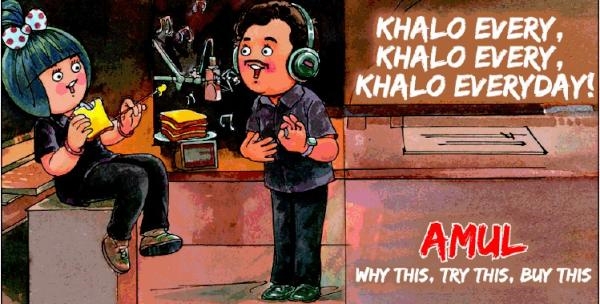
    Brands have always been using popular culture. One brand that I can immediately think of is Amul, and yet, I almost missed their Kolaveri ad. (via) Yes, not the greatest, but decent. The point here is that while they got the creation right, the distribution is still iffy. And that’s another challenge. Popular culture is more complex than ever before. With the abundance of content and platforms, keeping a watch on the long tail of culture, prioritising according to the audience-fit and then distributing it is not going to be an easy task.

    I have always liked (and hence, borrowed with credit in presentations) the analogy of bonfires and fireworks to social media and advertising. (respectively) The implications of this are not just in standard brand advertising but also in branded content. Brands now have to think of how the long-term story and the spikes can work together and ideally, complement each other, even while figuring out what role advertising and branded content play in each. Despite the seeming fit of social media to spikes, I wonder whether we will, in the medium term, see a role reversal – ‘mass’ media providing spikes and the internet dealing with the long term story, before settling into shared roles.

    until next time, get a spike mike

  • Thrillophilia

    An offbeat travel experience based on the concept of eco-tourism, that is Thrillophilia’s offering. In conversation with co-founder Chitra Gurnani Daga

    [scribd id=74579995 key=key-gkecel742reji8p0nrv mode=list]

  • Social+

    Consumption and curation. At some point I can still remember, I consumed newspapers, magazines and all other mass publishers (across platforms) and expected them to curate for me. Curation for a large mass, when linked to their kind of production process and business model, got tits first whiff of trouble when the internet only models came into the picture. In the early days of content abundance, an algorithm came into our lives and changed the way we found content on the net. A bit later, I was introduced to a different kind of curation courtesy the service then known as del.icio.us.  #youremember I would put Google Reader in the same category too.

    Then came Facebook and Twitter, and RSS died several times if we go by the blog posts. Facebook for me has been and is a social graph. The only way my interest graph has crept in (in terms of content discovery and consumption) is in the form of pop culture. Can that change? I wouldn’t write it off. Twitter started out as an interest graph, but when it scaled, it began flirting with social graphs. For me, it’s now both, and I find that difficult to work with. It’s probably a bit of my laziness too – curating who I follow, making corresponding lists etc erm, not done. Anyway, my discovery and sharing on that network is minimal now. So, in that respect, the curation I expect on these platforms is minimal too.

    Purely by activity, it would seem that I am more active on my interest graph networks now. I wonder if I am alone in not being sure of mixing my interest and social graphs -Delicious, Foursquare, GoodReads., and until recently, (generically) Reader. The curation is by a set of people I trust in that domain, and any ‘social’ that happens remains ‘by the way’.

    Google didn’t even see the social boat IMO, and when they did, it was too far out. Wave, Buzz: crash, silenced. But while writing the WT5 column late last week, I found that Google+ has been creeping in everywhere – search results, news, Reader (I haven’t forgiven you, Google) and building in features like Mutual Circle Chat and search options.  I was thinking about this when I received one of my best sources of curation these days – the weekly Only Dead Fish newsletter (email, how ironic 🙂 ), and that’s where I saw this excellent post titled ‘From destination social to distributed social : why Google+ is the Trojan horse of the social web

    That’s exactly what Google seems to be doing. Unlike Facebook, which built THE social network and then tried to link consumption on other sites in an ‘oh, okay, fine’ way, Google is playing a balance act, and to its strengths. By giving me the tools to build a social network on Google+, and simultaneously being present at my points of consumption, Google is making me play curator to both social and interest graphs. If all goes well, I think Google will not only collect data, but also build several social networks based on interest graphs. Google’s cash cow still doesn’t have much to do with all this, but once the networks are built, Google will have better contexts for AdSense, based on a really smart social algorithm.

    I have always believed that Android is the next Google. Still do, but now I think that Google+ is a contender too. Or maybe the social OS will be built by them together.

    until next time, evil graphs 🙂

    Bonus: A Google Ventures backed app on iPhone named Stamped – very relevant in this context.

  • Weekly Top 5

    [scribd id=73966483 key=key-5iuvg5hoyppfkqqnn6 mode=list]

  • Reap Benefit

    Reap benefit is an organisation that works with educational institutions as well as corporate entities to make ’going green’ actions a part of their daily lives. In conversation with co-founder Kuldeep Dantewadia

     
    [scribd id=73802819 key=key-1tqj5nwyfk9y8r5hrxkl mode=list]