Actwitty.com allows you to integrate your footprints from across the social web and present your complete identity in one place. In conversation with co-founder Alok Srivastava.
[scribd id=101237290 key=key-12zumrn4jpacpf8usniz mode=list]

Speaking of trust, between a corporation and consumers, one of the earliest controlled version of ‘outsourcing’ it was celebrity endorsements. I use ‘controlled’ because organic WOM is not really in the corporation’s control. Though it is still in vogue, the credibility is possibly dented thanks to abuse by the endorser, the endorsed and a media that creates more ways to make an a$$ of the end consumer. eg. passing off ads as content.
In the era of social networks and lightweight interactions, the beneficiaries of this decline would be micro celebrities (MC from now) who have created their own circles of influence in specific domains. I remember writing about that – over 3 years back, and following it up later with influence cycles and the tool based influence calculations being used by brands for promotions. The platforms used by these celebrities could be any – twitter, blogs, Pinterest etc and it does allow the brand to customise their interactions basis the medium itself and with help from the MC, use the strengths of the medium to the hilt.
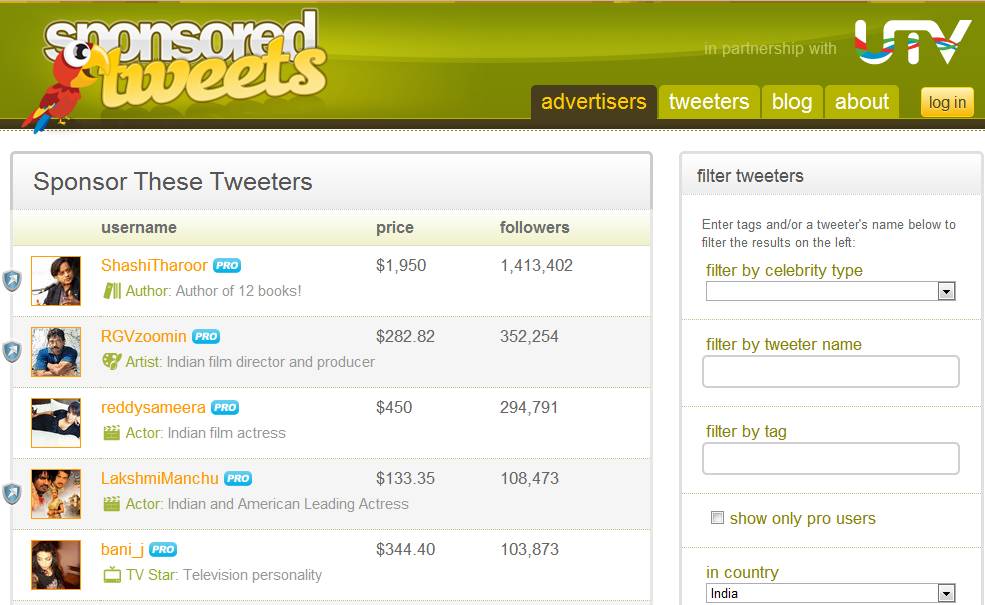 I was hoping that it would evolve such that brands would identify MCs who would be connected to their own category and therefore would wield their influence among people interested in that category. But judging by the directions the platforms are taking, the equations seem to be becoming closer to the earlier forms of media, and ignoring the social aspect. When Vijay shared this and pinky-swore that he wasn’t playing an April Fool prank, I was even more convinced of the direction. Full circle. Hopefully the lessons will be fast, and the new cycle will begin soon. 🙂
until next time, influenced?
YourCabs aims to build a car rental portal with a national footprint connecting consumers and cab vendors. In conversation with co-founder Rajath Kedilaya.
[scribd id=100612349 key=key-2inx3ahzp704adumxioe mode=list]
DoctorsBooking.com aims to enable patients to make responsible healthcare choices through accurate information and increased accessibility to doctors. In conversation with co-founder Roopa Rangaprasad..
[scribd id=99996782 key=key-1o8wqkzog31ewsgqla8g mode=list]