Author: manuscrypts

  • The Shadow Lines

    Amitav Ghosh

    “People assume that time is a strict progression of cause to effect, but *actually* from a non-linear, non-subjective viewpoint – it’s more like a big ball of wibbly wobbly… time-y wimey… stuff.” ~ Steven Moffat. This probably best describes the narrative structure of the book – it moves forward and backward in time, sometimes seeking parallels, and sometimes closure, it would seem.

    Many books in one, that’s a way to describe this work. It is Tridib’s life and relationships, seen through the eyes of the narrator. It is the narrator’s own story – in Calcutta where he grew up, in Delhi where he studied and then in London. It is his view of the world he lives in, the people who inhabit it and his changing relationships with them. It is also the relationships within the Datta Chaudhari family and with their friends – the Prices. But across these, I could see at least a couple of common threads. One, the aspect that gives the book its title (I assume). Places, events and people have lines connecting, and sometimes disconnecting them, but these lines exist only in some perspectives. Hence, shadow lines. In this book, I felt the focus is largely on places – the boundaries between nations are lines, and the connection between Calcutta and Khulna seems much stronger than between Kolkata and Srinagar though the latter pair exist in the same country. The second aspect that offers a connection is the end of the story, it is something that brings closure of sorts to all the three narratives I mentioned earlier. (more…)

  • Cult of impersonality

    Koramangala rarely disappoints. This time, it was the Uber ride, and the thoughts it sparked. From Whitefield to Koramangala, I repeatedly watched the driver refusing to learn from his mistakes. e.g. sticking to the right lane and getting stuck behind cars waiting to take a U turn, when we had to go straight. Advice was futile. This (the behaviour, not the driving!) took me in a couple of directions.

    First, our species’ (generalising, of course) refusal to rethink belief systems even when new data presents other possibilities. In the last few weeks, I have seen two levels of this. One is at a (public) personality level – from Modi to Tata. While I have little reason to doubt the Prime Minister’s intent in the entire demonetisation exercise, I see the absolute lack of empathy (no, crying and listing one’s sacrifices doesn’t count) and the failure to course correct as arrogant and cruel. When multiple sources indicate that Ratan Tata’s governance wasn’t really spotless, shouldn’t he be attempting a better route than allowing the spat to be drawn into something as silly as Twitter hashtag wars, especially when the claim is that the organisation’s legacy (and not his own) is paramount for him. In both cases, ego could be the barrier. (more…)

  • Farzi Cafe

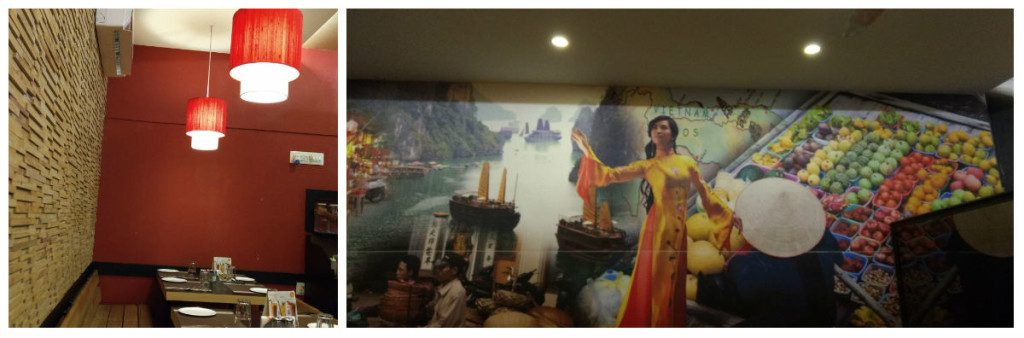
    Such was the hype around the opening of the place, that it seemed like our farz to drop in. Given that it meant going to Bangalore, we delayed it a bit though! meanwhile, bad wordplay aside, somehow, the word farzi had come to denote ‘fake’ in my mind, but in this context, I had connected it to Persian. However, as per their website, the connotation here is “creating an illusion”. Gotta say that with it being perched on the top floor of the UB City mall, the connect (illusion – UB – Mallya) was rather funny.

    We tried to reserve for Saturday night a day before, but apparently the tables were all reserved, so we shifted the plan to Sunday. The place was packed by the time we got there, and folks were being turned away. Lesson – make a reservation. Most of the tables are around the large bar, and that’s where  we got ours. High tables, with bar stools. If you don’t like those, it might be a good idea to specify that when you reserve. They have more standard seating too, but these are mostly with a higher seating capacity. Speaking of illusions, there is quite a lot of mirror play, giving the illusion of size, and with those lights, it must make a pretty picture at night.

    collage1 (more…)

  • Dealing with the revolution

    At the end of last week’s post “Understanding the revolution“, one of the points I wanted to emphasise was our individual role in dealing with it. I had mentioned two factors that I believe have led us to this point – rising inequality, and intersubjective realities. An attempt to fix also needs to begin here.

    When demonetisation first hit us, I tweeted this


    (more…)

  • The Consolations of Philosophy

    Alain de Botton
    “Helping us live our lives” is the purpose of philosophy, says the blurb on the book cover, attributed to Independent. I vaguely remember Plato saying that the purpose of philosophy is to teach us how to die, but let’s assume that Independent is talking about the purpose of philosophy in the context of this book. The intent of the book, therefore, cannot be faulted.
    The author, both in terms of content and style of writing aims to make the works of the masters accessible to us. Content both from what he chooses to share from the works as well as the packaging. The human conditions that are addressed are universal and what keeps us up at night – unpopularity, not having enough money, frustration, inadequacy (that’s probably not that universal), a broken heart, and difficulties. In each of these contexts, the author draws from not just the philosophies of Socrates, Epicurus, Seneca, Montaigne, Schopenhauer and Nietzsche but their lives as well. He also uses snippets from his own life to give it a contemporary flavour and wit to make it relatable. So far so good.