Author: manuscrypts

  • Empathy & Extinction

    In Sapiens, Yuval Noah Harari explains how we’re the most dominant species on the planet because we’re the only ones able to cooperate flexibly in large numbers. The ‘funny’ part is that the things we cooperate on usually exist only in our collective imagination – religion, nation, money. Intersubjective realities.

    But it gets funnier. When I look around now, I see these intersubjective realities actually causing more divisiveness between groups than unity. Offended because Spiegel allegedly called it a poor nation. Offended because Katy Perry used a Hindu goddess to describe her mood. New day, new reason to be offended.  (more…)

  • Sapiens : A Brief History of Humankind

    Yuval Noah Harari

    “Just six million years ago, a single female ape had two daughters. One became the ancestor of all chimpanzees, the other is our own grandmother.” That appears on page 5, and somehow it convinced me that I was going to enjoy this book. Actually, even before that, the framing of the massive exercise of universe creation, and evolution, neatly into physics, then chemistry, and biology is itself a fantastic beginning. This elegance in framing, which extends to the analogies used as well, played a huge role in me recommending this book to pretty much everyone I met, even while I was still reading it.

    To continue, after biology, which is the study of organisms, we come to the study of something developed by humans – culture, and that study is history. From as many as six other human species that existed until 100,000 years ago, we were the chosen ones. How did that happen, and how did we get here, that is what the book explores. (more…)

  • Rural Blues

    First published in Bangalore Mirror

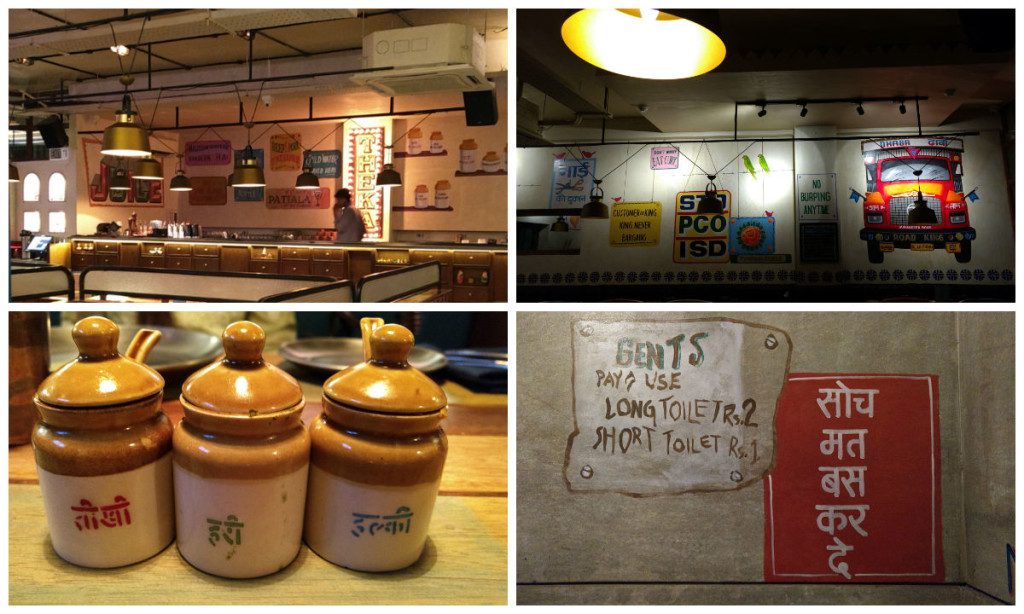
    For a few seconds after you’ve entered Rural Blues, you might get the notion that you’re in Santorini, and not Sarjapur Road. While some uncharitable souls might claim it’s because of the distance you’ve had to travel to get there, (map) it’s actually more an effect of the Mediterranean colour palette that has been used very well. The open courtyard section with the little waterway, and smart use of mirrors make for a very relaxing ambiance, even as a stage for live music gives it a dash of verve. The seating inside is more standard fine dining in comparison, with lounge chairs, sofas and functional furniture. The lighting adds to the elegance, and the only thing that sticks out literally and metaphorically in the scheme of blue and complementary colours is the red cola fridge in the bar area. Speaking of sticking out, I did wonder whether the spelling of some words in the menu – noodels, carribian to name a couple – gave it an unintentional rural touch! ‘Herbes’, in particular, could be a sore spot for a restaurant that’s meant to be fine dining!

    collage 1

    I am now beginning to think there’s some deep conspiracy that involves the state of menus in newly opened restaurants. This one practically came apart in my hands! While on conspiracies, the one we did discover later in the meal was that the place served cocktails. No, it’s not on the menu, but when asked, we were given a range to choose from – mostly vodka and rum based! By then, it was too late – we were well into our second beer. I briefly contemplated singing Kaisi teri khudgarzi – a song featuring Ranbir and the beer brand we were consuming, but refrained when I realised the risk of being berated for it. Flat beer joke, I know! (more…)

  • That passion – profession debate, again

    In many beer fueled conversations, I have heard the sentiment of “quitting my job and doing something I am passionate about.” While I see merit in that line of thought, these days I also end up playing party-pooper by asking if he/she has a business model in mind, especially since the ‘passion’ is more often than not from the usual suspects list – digital photography, cooking/baking, writing, travel and so on. To clarify, unlike funded startups this model doesn’t even have to scale, but in the medium-long term, the revenue has to be greater than expenditure. That’s a requisite for survival in the world, unless one has alternate sources of income.

    I saw a meeting of worlds when I noticed yet another job listing that demanded the person to be “passionate about digital marketing“? As someone who has been working in the domain since 2004, I have seen a version of this phrase appear in many job descriptions. I could replace digital marketing with startups, consumer insights, programming and so on, the question remains the same. (more…)

  • Falling off the map

    Pico Iyer

    The timestamp for the first chapter is 1990. I imagine myself then, 26 years ago, cognizant of the places being referred to in the book only thanks to an atlas, and a penchant for remembering country-capital-currency courtesy school quizzes. Just text in the head, with no images to go along, in a world before the internet.
    What then, are these lonely places? From Iceland up there to Australia down south and from North Korea to the right and Paraguay to the left (ideologically, just the opposite!) Pico writes about seven places (the others being Vietnam, Cuba and Bhutan) that have seemingly exiled themselves from the world. In Pico’s words, “Lonely Spaces are not just isolated places, for loneliness is a state of mind“.
    Australia is probably the one place that can be deemed ‘alone’ (in terms of geography) too, but all of the other places are just that – lonely, despite being inhabited by populations vibrant in their own way, or being surrounded by nations that are seemingly not too different from them. “More than in space, then, it is in time that Lonely Places are often exiled, and it is their very remoteness from the present tense that gives them their air of haunted glamour.”

    (more…)