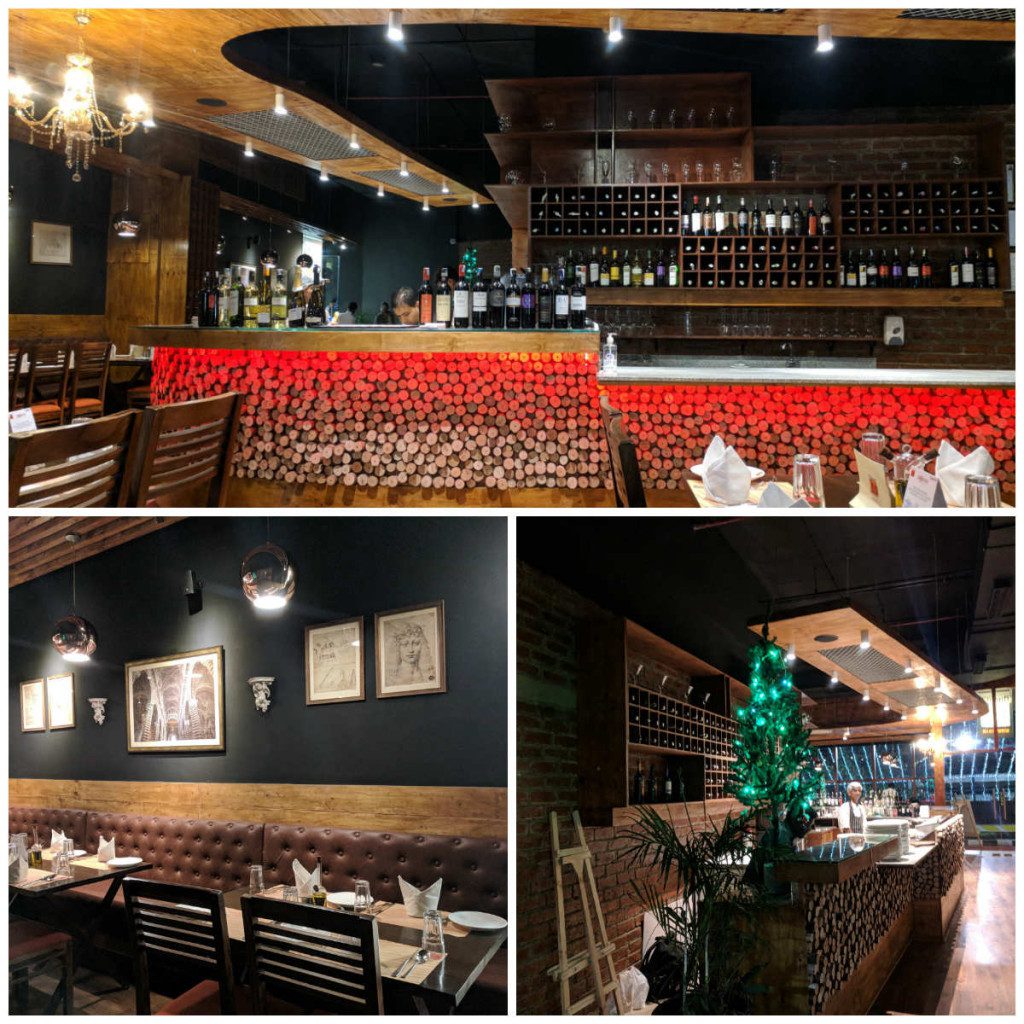
One Sunday, when we wanted to visit a new place but also wanted the comfort of a regular haunt, and were wondering how to reconcile the two, lo and behold, the answer arrived – Chin Chin. No, that isn’t a sound effect, it’s the name of The Biere Club’s new endeavour in place of Mustard & Cress. The seat covers have changed, and so obviously has the menu. The decor has been modified, but everything else remains unchanged.
Author: manuscrypts
-
Homo Deus
Yuval Noah Harari
The follow up to Sapiens, and therefore it arrived with huge expectations. To begin with, while this is a progression from the earlier work, it is also a standalone work. The book has three parts which I would broadly classify as past, present and future. The author spends the first third of the book summarising what he wrote in Sapiens, and if you have read that book, especially recently, you might find yourself muttering “Why doesn’t he get on with it?” 🙂
To be fair, he outlines his broad premise right at the beginning – having (relatively) conquered hunger, disease and war, humanity’s next agenda would be to master happiness, immortality and divinity. The path to that is what Yuval Noah Harari slowly but surely proceeds to elaborate on.The second part of the book is where Harari sets the premise and context for the future by analysing the present. As is his wont, he goes about dissecting the origins of our current belief systems and the occurrences that have led us to what he calls humanism, and our collective belief in man’s central role in the scheme of things. (more…)
-
An account of statements
In 2010, would the name Ramdev be familiar at all to you? 7 years is a long time, and we’ll come back to that. But don’t worry, this isn’t an ayurware post. This is actually a sequel. It features the successor of a companion of 7 years, who called it a day last month, after 7 years of service that began in January 2010, when the world was a different place.
The first month in this genre of books is always an eye opener because it all happened far back in time. Even the mundane makes a story – the ‘maid + cook’ is now paid close to 3.5x, but the mobile bill has actually fallen! Spar became Auchan and then Spar again. But the more profound ones lie beyond the routine accounts of a month. The inverter we bought in January 2010 was with us until last month. But the house whose EMI we used to pay now belongs to a different family.
We haven’t been to Blossoms in years, but it’s heartening to see that it’s still around. So is Woodstok in Indiranagar, a place that hasn’t disappointed us. My early days in Myntra are marked by a series of visits to Grigliato. Sadly, 3 Storys, a lovely coastal food restaurant off Lavelle Road can barely be found even on the internet, and cannot be found offline anyway! Through the years there are others who have fallen by the wayside – Veekes & Thomas, Sahib Sind Sultan, Huckleberry, and so on. (more…)
-
Red Rhino
The last time I visited the part of the world called Seegehalli, Uber made it seem like it was a rural heartland and therefore not a place it would operate in. That’s one of the reasons why we delayed the visit. That, and the fact that their brewery took a while to start. During the long weekend in the beginning of October, we felt adventurous and Uber was in a cooperative mood, and we finally decided to make the trip. There’s something about late Saturday lunches and craft brew that’s very appealing! 🙂
Red Rhino is perched on top of MK Retail (map), taking up a couple of floors. Very tastefully done, with lots of wood furniture and decor, a stage for live music, and an alfresco section, the place gave us a sense of comfort very quickly. It helped that that it wasn’t very crowded. We sat on the upper floor with a fantastic view of ‘rural’ Whitefield. 🙂
-
Ivory Throne: Chronicles of the House of Travancore
Manu S Pillai
Absolutely fantastic, and the strange thing is, if you had asked me when I was even at about page 400 (out of 555) I probably would have used milder adjectives. I also wouldn’t have thought (at that point) that I was likely to change my opinion later because knowing the direction, I didn’t think the last 100 or so pages would even be interesting to me. But while they’re not really the focus of the book, and more an inevitable ending, it (to me) is what delivered the texture that mattered most.
But let’s begin at the beginning. The focus of the book is definitely Maharani Sethu Lakshmi Bayi, who was the Regent of Travancore from 1924-31, but the author spends the first section of the book in setting the context. The canvas is vaster than Travancore itself and everything from the fall of the Zamorin and the entry of Europeans to the evolution of the intricacies that decide the ruler of the land and the prevalent socio cultural setting sets the stage for the reign of the Senior Maharani. (more…)