Author: manuscrypts

  • EDGE – Infusion Bar & Kitchen

    A long time ago, when I was still confused between a Tom Yum and a Tom Kha, we visited On the Edge in Barton Centre, had a meal for all of Rs.950, and loved it. Time, as it is wont to do, flies. 8 years later, the place is now ASEAN – On the Edge, and a version of it has opened in Whitefield. Edge – Infusion Bar & Kitchen.

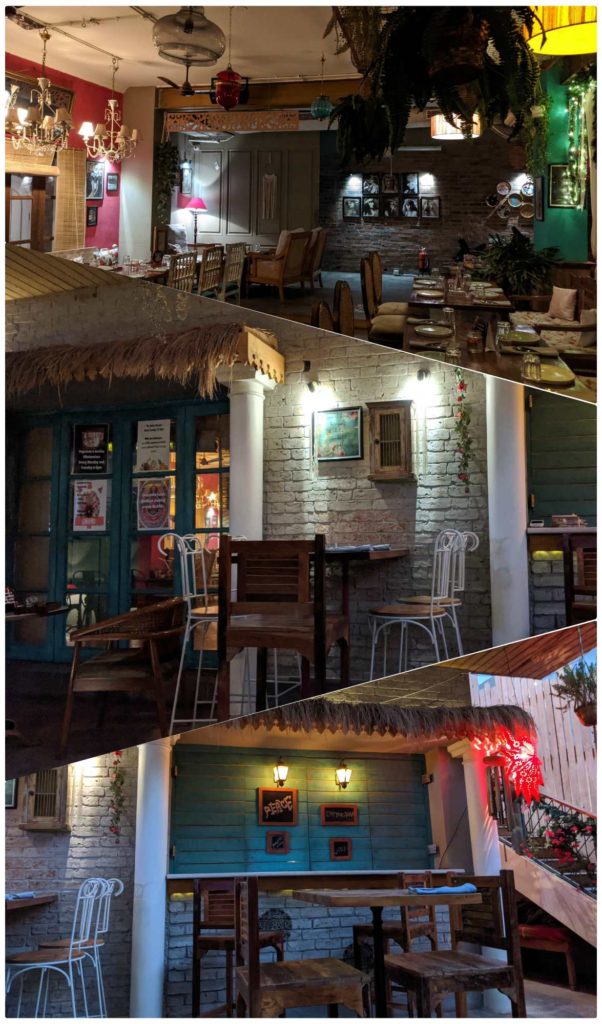
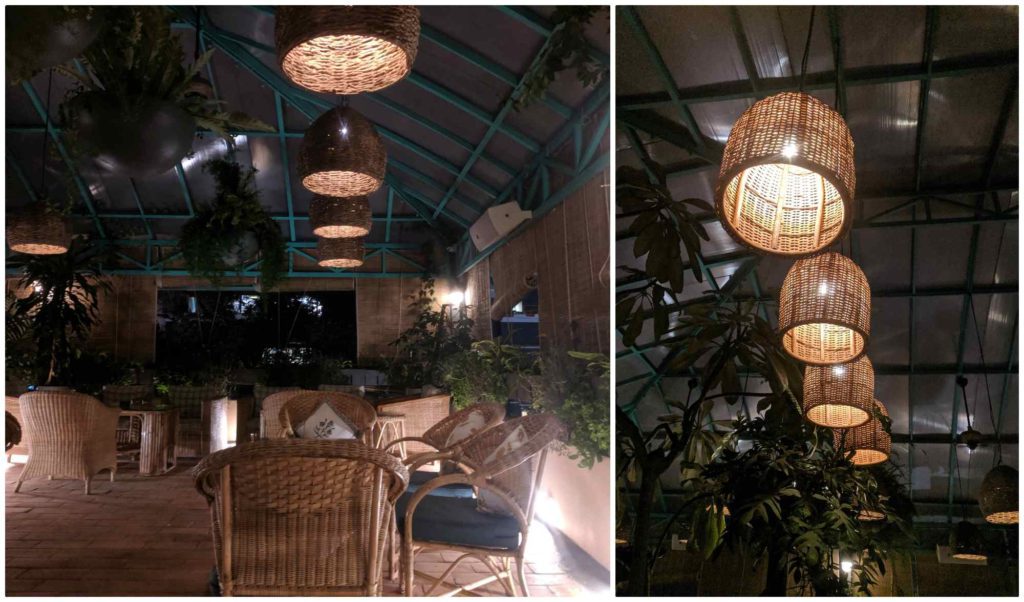
    The building (Miraya Rose) houses Ebony and Toscano in addition to Edge. And what’s more, there’s Daily Sushi, Cafe Noir and a Starbucks and Frozen Bottle in the same compound! Edge sits above the other two, and in a relatively small area, manages a bunch of seating options – high bar stools, a lounge section outside and casual seating inside. The decor and ambiance has a touch of class – special mention for the cutlery.

    We visited a fortnight after they opened for business, and found the place quite empty. While we were there, less than three tables were occupied. Not that we minded!

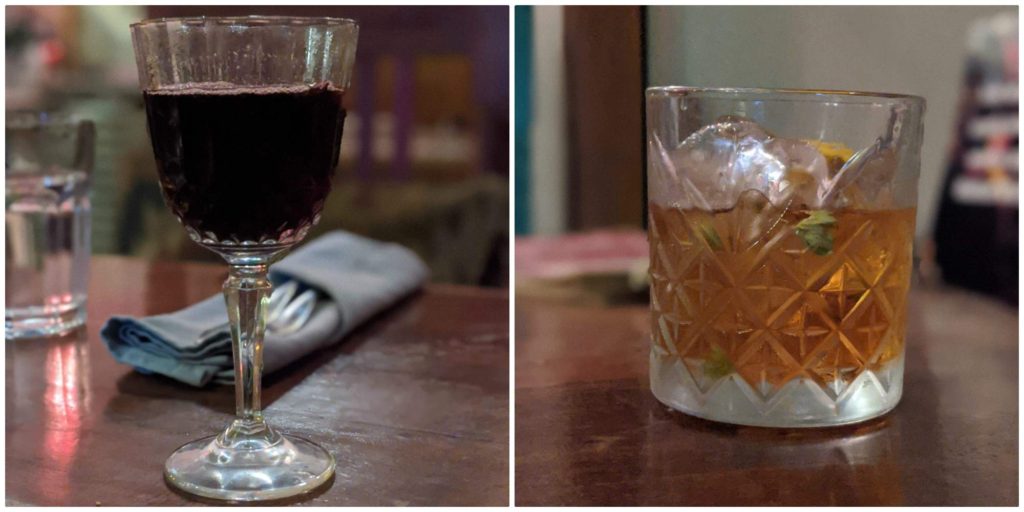
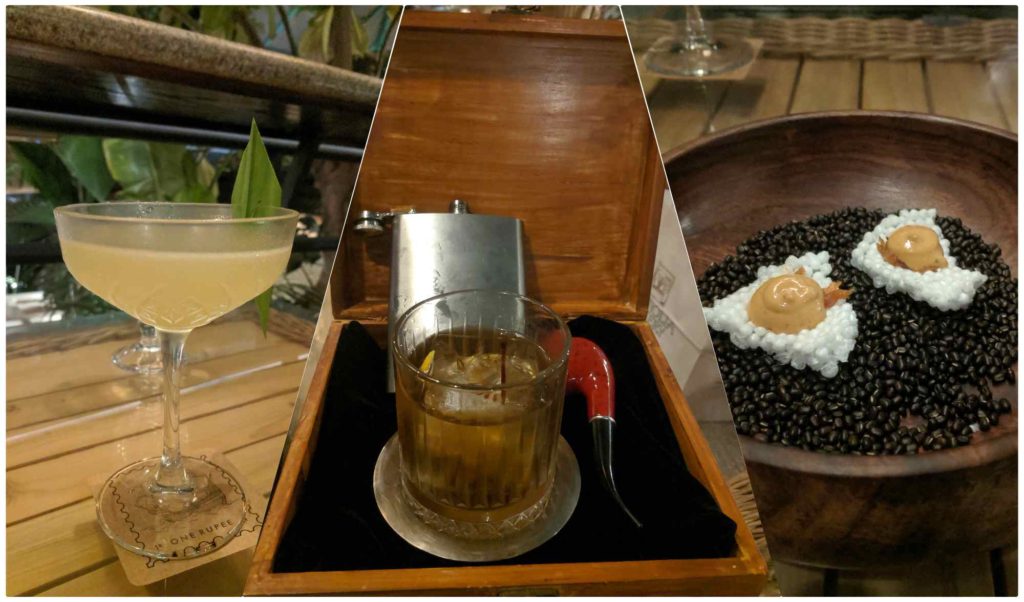
    There were plenty of cocktail options, but only a few based on dark rum/whiskey. So I went with an Old Fashioned, though I don’t trust places which call it Old Fashion! D asked for what I called a dirty sounding drink – Porntini, but it was a harmless concoction of vodka, vermouth and vanilla. The drinks, despite the names, were quite good.

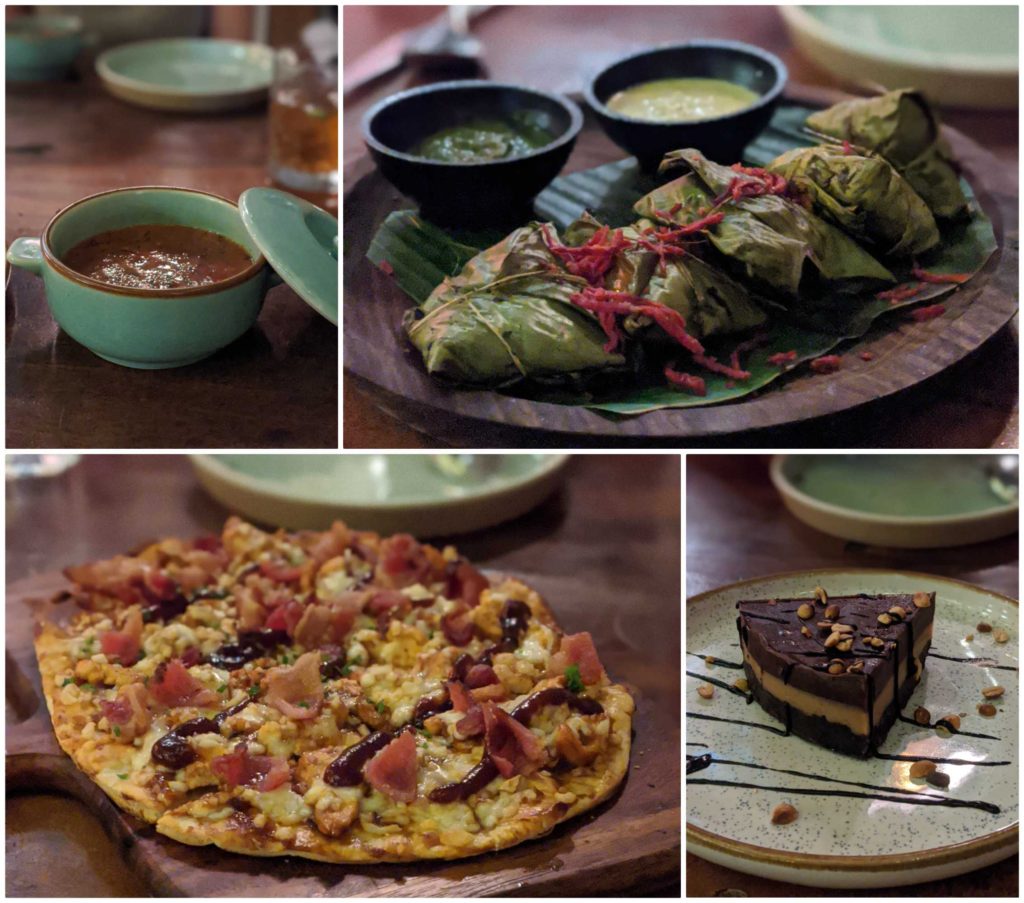
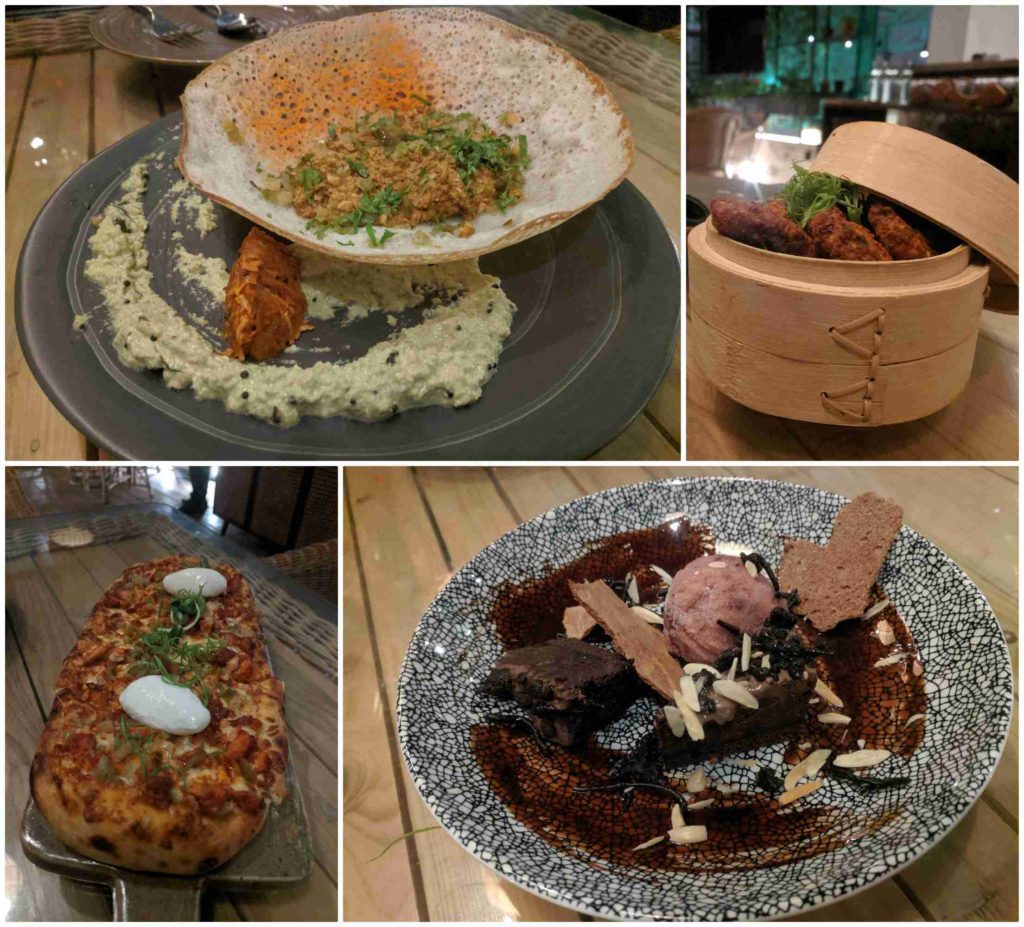
    We first tried the Togarashi Chicken Stick – wonton crusted, Togarashi seasoning and Sichuan chilli flavours. The potato spirals were a nice touch. The flavours worked well and the crust and the spiral added an excellent texture. The Chakori Murgh Tikka was next, the yellow chilli gave it a mildly spicy flavour which made it a good companion for the drinks.

    For mains, we asked for the All Meat Cajun Jambalaya. It had chicken and sausages (the shrimp was excluded on request) and was served with salsa, sour cream and guacamole. Great flavours, and surprisingly filling despite the seemingly small portion size.

    The playlist had a good lounge vibe, and the service was friendly. The bill came to a little over Rs.2200.

    Edge Infusion Bar & Kitchen, Miraya Rose, 66/2, Siddapura, Varthur Road, Whitefield Ph: 47483026

  • The Paper Menagerie

    Ken Liu

    What is with these Chinese (/origin) writers? Ted Chiang’s “Stories of Your Life and Others” was the best collection of speculative fiction I had read. Then there was Liu Cixin’s “The Three Body Problem” trilogy that had a fantastic story arc even while retaining scientific accuracy. And now, Ken Liu, who had translated Liu Cixin’s work into English, and has also credited Ted Chiang as an inspiration for the last story in this book.

    All fiction, the author says in the preface, is about prizing the logic of metaphors over reality, which is irreducibly random and senseless. This is what I would call the DNA of the book, and teasing out the metaphors in some of the stories is what I considered the most exciting part of reading this book. Also mentioned in the preface is the author’s perspective that he does not pay attention to the distinction between fantasy and science fiction or genres in general, and a few stories serve as excellent examples. Good Hunting could be steampunk and fantasy, The Waves would be science fiction and fantasy, The Man who ended history could be historical fiction and science fiction. The genre is rendered irrelevant in the larger scheme of things. Everything is speculative fiction. (more…)

  • Rassasy by Barcelos

    After three attempts at becoming food friends with Forum Shantiniketan, and mostly failing, we should have given up. But it’s food and drinks, so we persisted – this time with Rassasy by Barcelos. I had to google Barcelos to understand that they were a South African chain. That was the second warning, given the meh experience with Nando’s, but I ignored that too, mostly thanks to the Sangria pitcher pricing.

    Located on the ground floor of the mall, the place has two seating sections. The one inside offers plush sofas and generally more comfortable seating, but the evening breeze got us to sit outside.

    The warnings played out in the form of the sangria pitcher not being available. Funnily sangria glasses were available. When asked for the reason, we were told that the bar had opened only that day and they hadn’t got pitchers yet! And so we whined with glasses – D with a White Sangria with Kiwi & Grapes, and I with a Caribbean Sangria. D’s white sangria was mostly red, we were informed that the guilt lay with the grapes. My drink was like the Windies cricket team these days- mostly in shambles.

    The Cream of Broccoli (with chicken) saved the day a bit – creamy and flavourful with reasonably generous chicken. The Meat balls in spicy tomato sauce was the best dish of the day – the meat was cooked well and the spice was exactly the way we liked it. For mains, we tried the Portuguese Gravy  (Trinchado) with rice. This was peppers, tomatoes and onion (mildly spicy peri peri sauce to be added), served with spicy rice. This too wasn’t a bad dish and we probably would have appreciated it more if not for the sangria fiasco.

    The service was just about ok, the ambiance was decent enough, and they had a nice playlist. The bill came to a little over Rs.1750, and either by design or not, they forgot to add one sangria. Oh, well.

    Rassasy by Barcelos, Forum Shantiniketan Mall, Whitefield Ph:47483436

  • Traveling – in & out

    I borrowed the title of the post from a book I really loved – for exploring what travel could mean. Inward or outward, both of which I have experienced quite a bit this year.

    One step back. For the last few years, we have been taking two international vacations a year. That just fits our annual travel budget, and the leave calendar at work. But who doesn’t like to take vacays more frequently? So this year, we stretched to fit an additional vacation within India – to Mussoorie. This also came from a feeling that we were being unintentionally snooty by ignoring our own backyard these days. 🙂 (more…)

  • Everybody Lies

    Seth Stephens-Davidowitz

    I’m a huge fan of Asimov’s Foundation series. Hari Seldon, the seminal character in the series, develops psychohistory, an algorithmic science that helps him predict the future of large populations, (not individuals) though in terms of probability. As I read this book, I began to wonder if data would actually help us get to that level at some point.

    The premise of the book is that though everybody lies – to their friends, spouse, colleagues and most definitely to themselves, many of their actions – what they search for, what they click on etc – reveal their true nature. With the sheer amount if data that is being generated, data scientists are able to gather insights on our thinking, and potentially use that for the welfare of humanity.

    The book uses a bunch of examples early to show how data can help distinguish between what people say and what they actually do. Trivia: India gets called out early enough for being #1 in people who search for “may husband wants me to breastfeed him”! A large section of the first half is full of p*rn data. Reveals much!

    I not only got some validations about human behaviour, but also realised that some of my perspectives were not really true. For instance, I had thought that the web was now largely getting segregated into filter bubbles. Data shows otherwise! It also shows the clear possibility that many of our core beliefs and attitudes could be explained by the random year of our birth and what was going on the key years of our upbringing. One observation I could not really agree with was “it does not matter which school you go to.” While one study does show that, I can see it play differently around me, and perhaps there are psychological effects that does not come out in a study. Or it could be affected by “the curse of dimensionality” that the author brings up – if you test enough variables, one, by random chance, will be statistically significant.

    The last portion of the book offers a counter balance to the case made for data thus far in the book. The overemphasis on what is measurable, the limits of data, and the ethics of data usage – by private companies or the government.

    But the potential of data to cause a social sciences revolution remains well argued. However, just having data is not really enough, one needs to be curious (what data needs to be looked at) and creative (what’s the best way to frame the data or sets of data, build hypotheses) to make the best use of it. Some of what the author has done in the book is precisely that. Can data be misused? Yes, it can, but that’s the risk with every new science. That doesn’t take away from the exciting possibilities it has to offer.