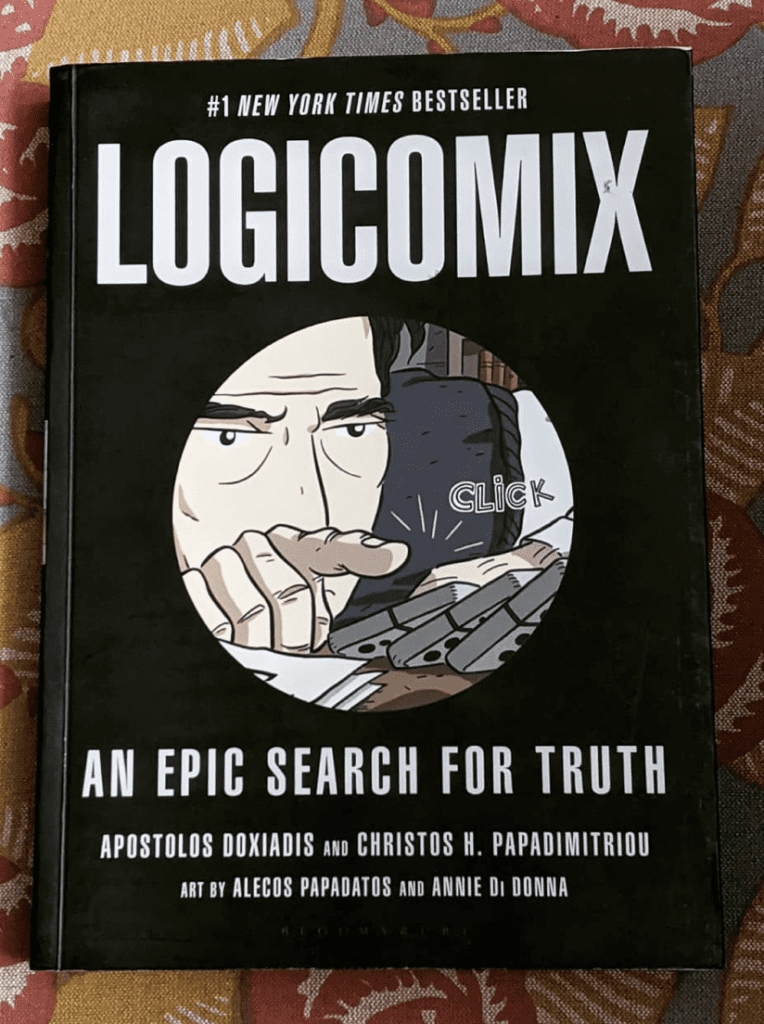
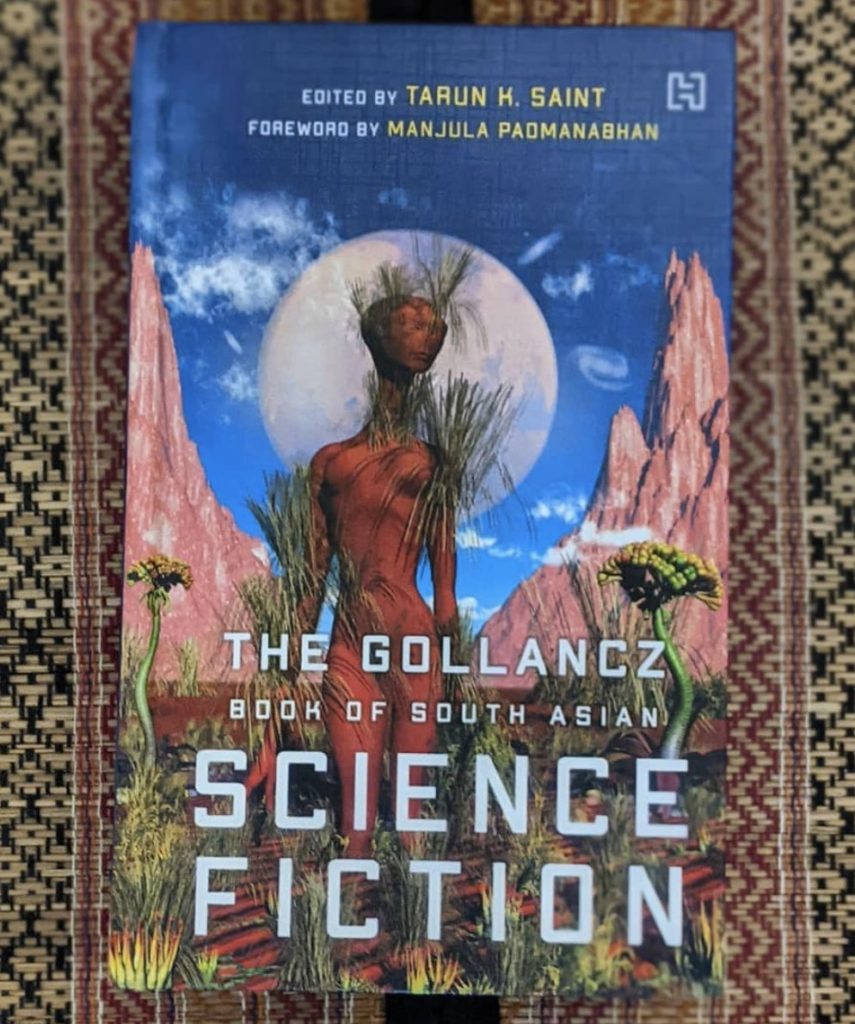
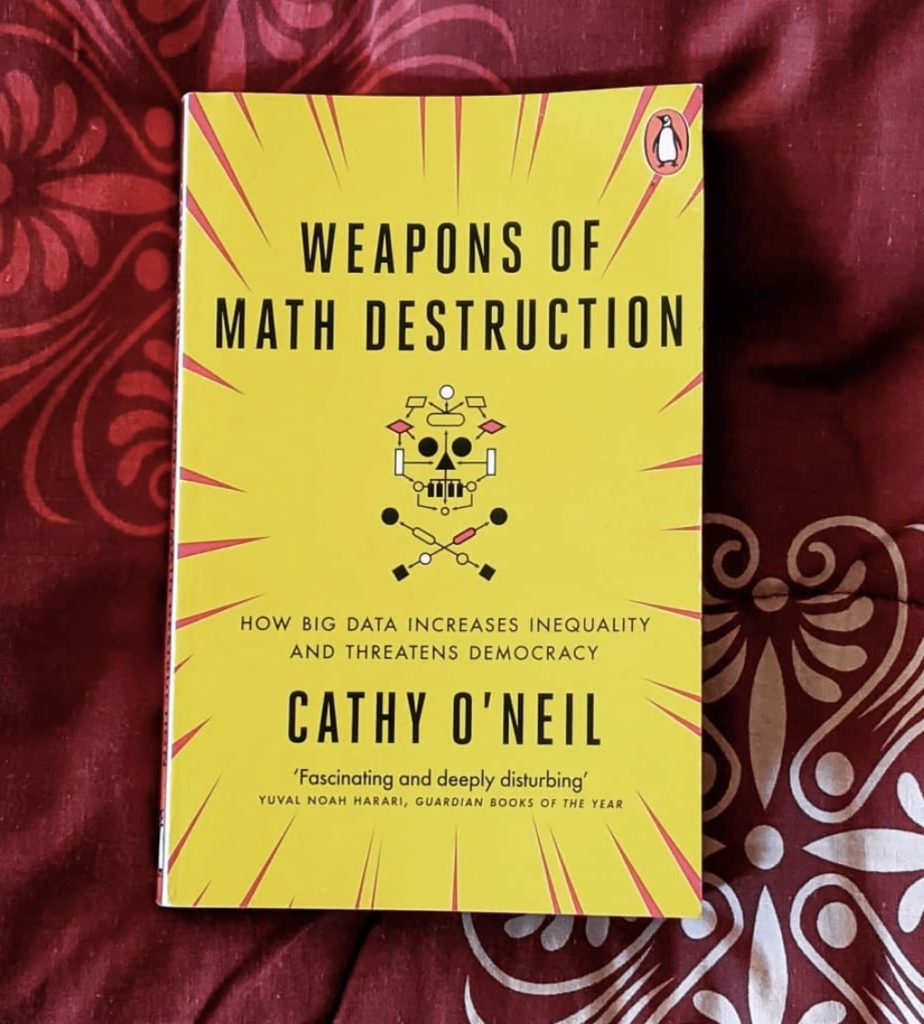
“You can either be judged because you created something or ignored because you left your greatness inside of you. Your call.”
James Clear
In an earlier post – An impulsive path to freedom – I had identified my own self image as a barrier to the freedom I desire. I wonder if it’s because it’s something I constantly think about, but I saw interpretations of it across a couple of pop culture phenomena I consumed recently.
As I was reading the book, I wished it were fiction. But unfortunately, it’s contemporary history – lives lived by people, and events that impacted their life. To think that millions of lives have been spent in ways that one could not even endure for days – conditions that are not just physically gruelling, but mentally debilitating. Ordinary citizens of the former USSR and current Russia, whose belief systems, values and hopes went through upheavals as the country’s political system experienced two decades of turmoil after the fall of the USSR.
Different generations whose worldview has been shaped by leaders from Stalin to Putin. Housewives, small traders, ordinary soldiers, students and staunch party workers, no one was really spared as the political, economic and social systems went through multiple changes upending millions of lives. Savings, livelihoods, lives, all lost, thanks to the whims and fancies of the powers that be. At an individual level, relationships with parents, siblings and friends were affected as the state created paranoia. Everyone was a potential informant, after all.
The author documents the atrocities of Stalin as told by folks who lived before, during, and after the era. Many acknowledge that the system could not have been this ruthless if there weren’t people to operationalise it. Was it by choice? Between making great history, and leading a banal existence. Many also believe that the Soviet became great because of him, and what he did was justified. Khrushchev opened up the system, and people even started making jokes about Communism (“A communist is someone who’s read Marx, and anti-communist is someone who’s understood him”).
Brezhnev brought in stability, and some success in foreign policy, but corruption, inefficiency and a widening technological gap with the West was the trade-off. It was hoped that Gorbachev would bring in the “happily ever after”, but glasnost and perestroika didn’t lead to better socialism, it paved the way for capitalism. The dissatisfaction and a foiled coup led to Yeltsin, and the rise of oligarchy. And then came Putin, in whose regime, there are confrontations between different ethnic factions. And at full circle, there are now many voices who hope for a return to Stalinism. In all of this, even as ordinary people suffered hardships, the pride for the purity of thought, and belief in the power of a united country persisted for many. Ideas and idealism stayed alive. But for most others, the only desire was to escape the system.
It is quite a brutal read, and I found it depressing, but these are stories that must be told.
One of the things that I have been very interested in recently is the abundance mindset. The internet offers many definitions, but at this point, “I know it when I see it”. It is also something I don’t have. Yet. Or at least, it is sporadic. And that’s something I want to remedy.
I know at least a couple of people who display it in most circumstances. They are calm like Stoics, but I think they embrace life and its flavours much more. And I have seen that this mindset makes their lives better – both professionally and personally. This is reason enough, but something I read recently also gave me an a-ha moment – George Saunders’ convocation speech at Syracuse University for the class of 2013. 1
What I regret most in my life are failures of kindness.
Those moments when another human being was there, in front of me, suffering, and I responded…sensibly. Reservedly. Mildly.
A pandemic is probably the best time to read a book on mass extinctions. Or not, depending on taste.
But this is a book I thoroughly enjoyed, even though I am not really a big fan of nature – plants or animals or for that matter, some humans either! Some of it is because of the many, many things I learned, and some of it is the accessible narrative style of the author – it evoked the sense of curiosity that I had for science in general as a child, and I confess, infused that sense of romanticism in science that I haven’t seen in a long time.
It is scientifically interesting to see how concerned we are about the pandemic, when, earlier this century, a species of Chytrid fungi (a genus had to be created for it, and it is called Bd for short) systematically started killing of frogs across continents. Making many of them endangered species. Or the Geomyces destructans, that killed off bats to the tune of 6 million!
Until the end of the 18th century, the idea of extinction did not exist. It then moved to a “uniformist” view that each species struggled and vanished. Then the discovery of the asteroid impact happened. The current version accommodates both lines of thought- long periods of nothing happening and then one cataclysmic event. It involves oceans, rising and falling, tectonic shifts, global warming and cooling etc and yes, an asteroid too. On a related note, there is also a small parallel narrative on Darwin, The Origin of Species and how it weighed in on the extinction debate.
The last 500 million years are divided into three eras, and a lot more periods. While there have been extinctions, in isolation and clusters, and mass extinctions occur every 26 -30 million years, the short list contains only the “big five”. The most famous one is the one that features the asteroid. That was the last one, which happened 66 million years ago, in the End Cretaceous period, leading to the extinction of 75% of species. The ones before were 201 million years ago -that led to the dominance of the dinosaurs, but killed 75% of species that existed then, 252 million years ago – the biggest one that knocked off 96% of all species, 375-360 million years ago – killing 70% of species, and 450-440 million years ago – 60-70% again. The sizes and descriptions of both the tiny organisms and the megafauna that lived, co-existed, and died is fascinating.
The name of the book, as you might have guessed, comes from the possibility of the sixth event that could be added to the big 5. From all the evidence so far, humans will most likely be the cause, but the twist is that we could be the victims too. In the context of the larger lifespan of earth, a short while ago, a species created a way to go beyond only the genetic code to store and distribute information. Language. They then found ways to communicate and collective think about and solve “problems”. And we’re here now.
The book gives a lot of food for thought, but more importantly, at least to me, invokes a sense of curiosity and awe. A lot thanks to science, and some because of the variety of places she visited to write this book. The moment she narrates, while on a tiny island at the edge of the Great Barrier reef under a starry sky – For a brief moment I felt I understood what it must have been like for an explorer like Cook to arrive at such a place, at the edge of the known world – sums up the effect of the book very well.
The Cyberiad by Stanislaw Lem is a book I recently read, and loved. It was written in Polish in 1965, and translated to English in 1974. Lem wasn’t an author I had heard of, despite having read many science fiction anthologies. An online post that extolled him at the cost of my favourites like Asimov was what led me to this book. (I would have linked it, but I’ve forgotten how I found it!) Lem has been translated into 41 languages and has sold 30 million copies. But he was rebuffed by quite a few American writers including Philip K. Dick, multiple times, because he was perceived as being annoying, and had commented that American writing was “ill thought out, poorly written…” Also, his belief was that the only true motive for writing was to contribute to literature.1
It made me think of a post in one of the newsletters I often recommend to folks – Taylor Pearson‘s The Interesting Times. As I tweeted sometime back, his writing is centrifugal – pointing to books, posts and ideas, and centripetal – goes deep into an idea and provides food for thought (the latter is different from what Austin Kleon meant in the original framing 2). The specific post I am referring to – 4 minute songs, which was about certain rules that a creators need to follow if they want their work to be consumed and appreciated, was the latter, and made me reflect. I wondered whether, even at an individual level, we are increasingly optimising for others’ consumption over our own expression.