Author: manuscrypts

  • The Lincoln Highway

    Amor Towles

    Somewhere in the last 100 pages, Duchess tells us that in vaudeville, it is all about the setup. He brings up Mandrake the Magnificent, who wasn’t a great magician, but what he lacked in the general act, he made up in the finale. The book is something like that. The countdown approach to chapters also helps set up a fantastic climax. 

    The Lincoln Highway is not Rules of Civility, it’s definitely not A Gentleman in Moscow. You’ll be better off without that set of expectations. The characters are younger and less sophisticated though still fascinating, and the narrative didn’t have the subtle nuances the earlier books had. It is probably closer to say, a Huckleberry Finn. Or as someone wrote, it’s an ode or love letter to the classic American road trip. I didn’t love it like I did the other two, but having said that, it is well structured and an absolutely enjoyable read. Something about the book(s) reminds me of Jeffrey Archer – the unambiguity of right and wrong, morally upright characters and a world that was less complex. 

    The story is of three boys in their late teens who know each other from a juvenile ‘camp’ – Emmett, Duchess and Wally. And Emmett’s precocious younger brother Billy, the fourth musketeer. Towles does a good job of creating multiple narrators – they add perspectives and help in making the characters (and their actions) relatable. The circumstances of the three are completely different, as are the reasons they landed up in the camp. Both of these factors exist on a continuum, with the three characters at different points. And in many ways, this have an impact on their character and the decisions they make. That’s essentially the book – good, evil, the choices we make, and their implications – now and later. In fact, with the destinations and detours, the road (The Lincoln Highway) from one end to the other (in this case, America) is probably a metaphor for life. 

    The book has connections to Towles’ earlier works. Amor Towles doesn’t seem to be done with Manhattan, and while it doesn’t have the presence it did in Rules of Civility, it is at least a side character. On p455, when Wally describes his uncle’s watch, I had a feeling of deja vu. Turns out the uncle is Wallace from Rules of Civility! The camp at Adirondacks is also revisited. And this might be just a coincidence, but June 1954 is when The Gentleman in Moscow ends. That’s also when this book begins. Maybe we have an Amor Towles Universe forming. I, for one, won’t mind that at all. 

    Asides: Once you’ve read about Leonello’s amazing business model and that special dish – Fettuccine Mio Amore (p 138), look up Amor Towles’ website for the recipe 🙂 
    My favourite part was in p505-6 when Abacus Abernathy gives a perspective on the two halves of life – divergence and convergence. First, the world opens out and then, as we age, it closes in. It was amazingly articulated and I could relate to it a lot. 

  • Planning for spontaneity

    Erich Fromm’s Fear of Freedom (1941) has been my favourite read this year. The book was largely meant as an explanation for the rise of Nazism, but by tracing historical patterns of man’s interaction with society, it ended providing some fantastic perspectives on the self. Specifically, man’s contradictory needs of wanting to conform and wanting to be free. As Fromm points out, across ages, we have attained a variety of ‘freedom from’ (nature’s whims, Church etc) but have also systematically discouraged the expression of emotions, our spontaneity.

    He lives in a world to which he has lost genuine relatedness and in which everybody and everything has been instrumentalised, where he has become a part of the machine he has built. He thinks, feels and wills what he us supposed to think, feel and will; in this very process he loses his self upon which all genuine security of a free individual must be built…

    By conforming with the expectations of others, by not being different, these doubts about one’s own identity are silenced and a certain security is gained. However the price paid is high. Giving up spontaneity and individuality results in a thwarting of life.

    Fromm explains how spontaneous activity is the means by which we can attain “freedom to”. This is positive freedom.

    Spontaneous activity is the one way in which man can overcome the terror of aloneness without sacrificing the integrity of his self; for in the spontaneous realisation of his self, man unites himself anew with the world – with man, nature and himself.

    The inability to act spontaneously, to express what one genuinely feels and thinks, and the resulting necessity to present a pseudo self to others and oneself, are the root of the feeling of inferiority and weakness.

    Somewhere in all this, I sensed the indirect presence of a favourite topic – the abundance mindset. Specifically, in the idea of spontaneity. In my immediate circle, I know three people who are quite spontaneous. Interestingly, they also share an abundance mindset. Yes, correlation, not causation. But maybe…

    Let me unpack the connections. One reason to not be spontaneous is conformism. But I have never really been a conformist. (I have recently figured out the probable reason, but that’s a different story.) However, there is a wrinkle, perhaps best explained by this:

    If loneliness is to be defined as a desire for intimacy, then included within that is the need to express oneself and to be heard, to share thoughts, experiences and feelings. Intimacy can’t exist if the participants aren’t willing to make themselves known, to be revealed. But gauging the levels is tricky. Either you don’t communicate enough and remain concealed from other people, or you risk rejection by exposing too much altogether: the minor and major hurts, the tedious obsessions, the abscesses and cataracts of need and shame and longing. My own decision had been to clam up, though sometimes I longed to grab someone’s arm and blurt the whole thing out, to pull an Ondine, to open everything for inspection.

    To refuse scrutiny is to dodge the possibility of rejection, though also the possibility of acceptance, the balm of love. 

    The Lonely City, Olivia Laing

    I’m still working out the paradox, but while I am nonconformist in most things, I also avoid getting judged. It doesn’t help that I am shy and introverted. My trade-off has been similar to Laing. Rather than conform, I clam up, as a shield against judgement. But it also means that I am forgoing chances of a genuine connection beyond a handful of close friends, and yes, this blog. Clamming up and spontaneity don’t mix well.

    “…to be ourselves causes us to be exiled by many others, and yet to comply with what others want causes us to be exiled from ourselves.”

    ― Clarissa Pinkola Estés, Women Who Run With the Wolves

    There’s another factor that works against my being spontaneous – a scarcity mindset. My reaction to it, instinctively to begin with, and by design later, was to create predictability by planning my life. Or, in the insightful way that Khaled Hosseini has framed it,

    But I had a plan for spontaneity. My thinking was that by making many things routine (clothes, diet, finances) etc, I can use choice avoidance to have the space and the mind space to be spontaneous. (read) But the extreme is a bad place to be, and in my case, I not only became a slave to routine, but also got upset if it didn’t happen in a certain way. As it goes, the neurons that wire together, fire together, and over a period of time, it also led me to seek efficiency in everything.The instrumentalisation of life, in Fromm’s words. Also, the crowding out of spontaneity.

    Before we get to possible solutions, a few reasons I need to solve this. At a human level, the combination of non-conformity and the slavery to routine and efficiency is practically a fool-proof way to push people away! Also, the uncertainty in things around us is only rising. Trying to have a plan that covers everything is just hubris. As a species, we will have to draw upon the innate strength that got us here – adaptability. And finally, there is philosophy

    People say that what we’re all seeking is a meaning for life. I don’t think that’s what we’re really seeking. I think that what we’re seeking is an experience of being alive, so that our life experiences on the purely physical plane will have resonances with our own innermost being and reality, so that we actually feel the rapture of being alive.

    Joseph Campbell

    So what’s a possible fix? In Atomic Habits, James Clear argues that we can behave in a certain way until we get to the mindset. Intuitively, and from experience, that seems relatively easier than theoretically changing a scarcity mindset. If one isn’t blessed enough to have an abundance mindset, maybe behaving like one does – spontaneity to begin with, will get one there. So, if spontaneity is the behaviour change, I have to go oxymoronic – force myself to be spontaneous! In other words, use my nonconformism to unlock the ‘freedom to’ be spontaneous. Hopefully, its positive results will temporarily override shyness, introversion and the desire for efficiency, and an abundance mindset might find a way in. The first baby step is to watch myself when killing spontaneity. I also have another clue. Money is a factor that has a disproportionate influence on my mind, and I have discovered that when something doesn’t make a dent there, I am more amenable to spontaneity, and joy.

    At a daily level, to quote from this fantastic read on happiness, “any neuroscience article will tell you that the “reward centre” of the brain – the nucleus accumbens – monitors actual reward minus predicted reward.” In my efficiency play, I will have predictable happiness, which will get normalised to practically zero happiness over time. I have found a couple of ways to engineer prediction error – one is not to plan the minutiae of travel, and the second is to spend more time with people who are spontaneous. Or as Venkatesh Rao puts it, ‘differently free people’, in this fantastic post. The good news is that I have three readily available ones and I am now ‘awake’ enough to spot others when I find them. Predictable unpredictability!

    Thus the idea is to go from choice avoidance based on efficiency to choice avoidance based on the freedom to be. As Venkat so brilliantly put it, “Detachment does not mean you don’t care what happens. It just means you don’t care whether a specific thing happens or not.” I have solved it in terms of conformity (freedom from) I now need to solve for spontaneity (freedom to). To live for an in-the-moment version of the want in Hosseini’s quote.

  • Debt: The First 5000 Years

    David Graeber

    If it doesn’t upend deeply held beliefs and origin stories, it isn’t really a Graeber book! The story goes that from money came debit and credit, but in Debt, he argues, with excellent evidence as always, that long before money came into the picture, we had ‘human economies’ which were imprecise, informal, and had a community-focused and shared ecosystem approach. An ‘everyday communism’ in which people owed favours to each other. And then the favour was converted into a mathematically precise entity, mostly thanks to the machinations of war, and sponsored by the state. Cash, barter, and every other method of financial transaction came later, and began exclusively for scenarios where there was low trust. Debts cannot be stolen, gold and silver can. Favours are relationships. Debt is a transaction. And thus ‘the history of debt is also the history of money’. 

    He begins with the morality of debt and the paradox of two popular views – paying back what one owes is moral, and lending money as a habit/profession is evil. In the fantastic section on ‘primordial debt’, he traces the cultural narrative of humans owing debts to the God who created them, and how sacrifices were a means to try and pay a debt that could never be repaid. People also owed a debt to society in general, and governments became the custodian of it.

    Using evidence (or the lack of it) he shows how the common story of barter leading to a common currency is a myth and that it stemmed from a narrative of ‘the economy’ that was ‘separate from moral or political life’. Barter is a very recent phenomenon, and the correct order is actually credit systems (‘virtual money’ – not to be confused with digital!) – money – barter. And when money came into the picture, it served as a yardstick – of debt. A coin was an IOU. And one that the state was interested in because they wanted uniform systems of weights and measures across their kingdom. 
    He proposes that there are three moral principles on which all economic relations are founded – communism (or love if you don’t want to sound political), hierarchy, and exchange. The first was based on expectations and responsibilities from/to each other. Then there is exchange based on equality and reciprocity (these don’t lead to a ‘market’). The hierarchies, over a period of time, formalised inequalities into castes and related customs and behaviour. 

    In early civilisations – India, Sumer – there were ‘primitive money’ mechanisms, such as the ones which were used to arrange marriages, resolve blood feuds ans other social interactions where there was a debt, but which was not easy to quantify. It was common for people to get into levels of debt that forced them/their family to get into ‘peon service’, which resulted in slavery. But they could work their way out of debt. Also, early kings did a reset on a regular basis by canceling all debts. But when violence got into the picture, things changed. War converted ‘human economies’ into ‘market economies’. In war, a person ‘owes’ his/her conqueror his/her life, and the conqueror can extract anything he wants. Humans became slaves, a commodity that could be bought and sold. To be a slave was to be ‘not free’ and in debt, forever. 

    All of this last part began in the Axial Age (800BC to 600AD) when markets first started appearing as a side effect of government administration. But this soon got mixed up with war. When wars abounded, being a soldier became a profession. Coinage was a way to pay these soldiers/mercenaries. Gold and silver were mined by slaves and/or acquired during a war, and states started insisting that they serve as legal tender for all payments. A sort of ‘military-coinage-slave’ complex. This was the time that coinage was invented. First by private citizens and then appropriated by the state. Alexander was apparently responsible for killing the old credit systems. Precious metals, owned by temples and rich people thus far, started making its way into the life of common folks. 

    In parallel, historic all-time greats such as Pythagoras, Confucius and Buddha co-existed (with little knowledge of each other) and humans started reasoned enquiry into the nature of things, and practically every major religion in the world was born, trying to find new ways of thinking about ethics and morality. They rejected the violence of politics, and tried using the knowledge from impersonal markets to create a new sense of morality. But except in China, religion and market couldn’t stay together for long. 
    In the Middle Ages (600-1450 AD), when old empires collapsed and new ones began to form, hard currency began to be less commonly used, but the system of accounts and credit continued to be used. Even Europe did not revert to barter. And elsewhere in the world, new financial systems and instruments began to emerge – promissory notes and paper money (China, where the empire survived), and letters of credit and cheques (in the Islamic world). The roots of most of the worldview in finance can be traced back here. First, China’s less-than-appreciative view of capitalism. ‘Merchants were greedy and immoral’ and ‘if kept under careful administrative supervision, they could be made to serve the public good.’ There is a very interesting part about Buddhism turning to high-interest loans and altering debt-contracts to fuel its expansion! In the Islamic world, the merchant was a respected figure, pursuing honourable adventures in far lands, sealing transactions with ‘a handshake and a glance at heaven’. Despite this capitalism in its current form didn’t emerge there because the government was kept away from the markets, and the merchants ensured profits were the reward for risk. Guaranteed returns (fixed rates of interest) were a concept frowned upon in Islam. Interestingly, over in Europe, this was when Roman law was revived and ‘interest’ began to be seen as ‘a compensation for losses suffered due to delayed payment’. It was also when the Jews started getting a bad rep for charging high interest rates. Interesting side journeys include the Crusades as a way to create new markets, and Shakespeare’s ‘Merchant of Venice’ being a guilty projection of terrors directed the other way around. 

    We finally get to the Age of the Great Capitalistic Empires (1450-1971 AD) – the Atlantic slave trade and the mining of gold and silver in the Americas, which was mostly used to trade in China, India and the Far East. This prompted the return of the bullion economy and the emergence of Italian city-states which ignored the Catholic Church’s ban on usury and ultimately led to the current age of great capitalist empires. Also, a reemergence of military endeavours – ‘when Vasco da Game entered the Indian Ocean in 1498, the principle that the seas should be a zone of peaceful trade came to an immediate end’. In the Axial Age, money was a tool of the empire. When the latter collapsed, the former went with it. But now, money was autonomy and political and military powers were reorganised around it. Municipal bonds were first introduced by the Venetian government as a way to levy a compulsory loan on taxpaying citizens to fund a military campaign. It promised 5% annual interest and these bonds were negotiable, creating a market for government debt. The beginning of paper money in the Western world. But it was the creation of the Bank of England in 1694 and its bank notes that truly made paper money mainstream. 

    In 1971, Nixon announced that foreign-held US dollars would no longer be convertible to gold. And that was the end of the gold standard. Since then, American imperial power is based on a perpetual debt – a promise to its own people and nations across the world! Fiat money backed by public trust. When it needs money, it prints it! And the premise that some of us have to pay our debts and some of us don’t. 

    Thus, a book that has world history, religion, the state and the military, and yes, the origin of money. It isn’t as though I can absorb or understand all the contexts and perspectives that Graeber offers in his books. But I read it for three things – one is that he provides view that is starkly original, different and thought-provoking as compared to prevalent narratives, the second is that his research quality is so good that even though I may not comprehend everything, there are bits that are amazing information/insights, and the third is that is that he is incredibly empathetic and earnest about how things should be better for everyone.

    Debt
  • Gawky Goose

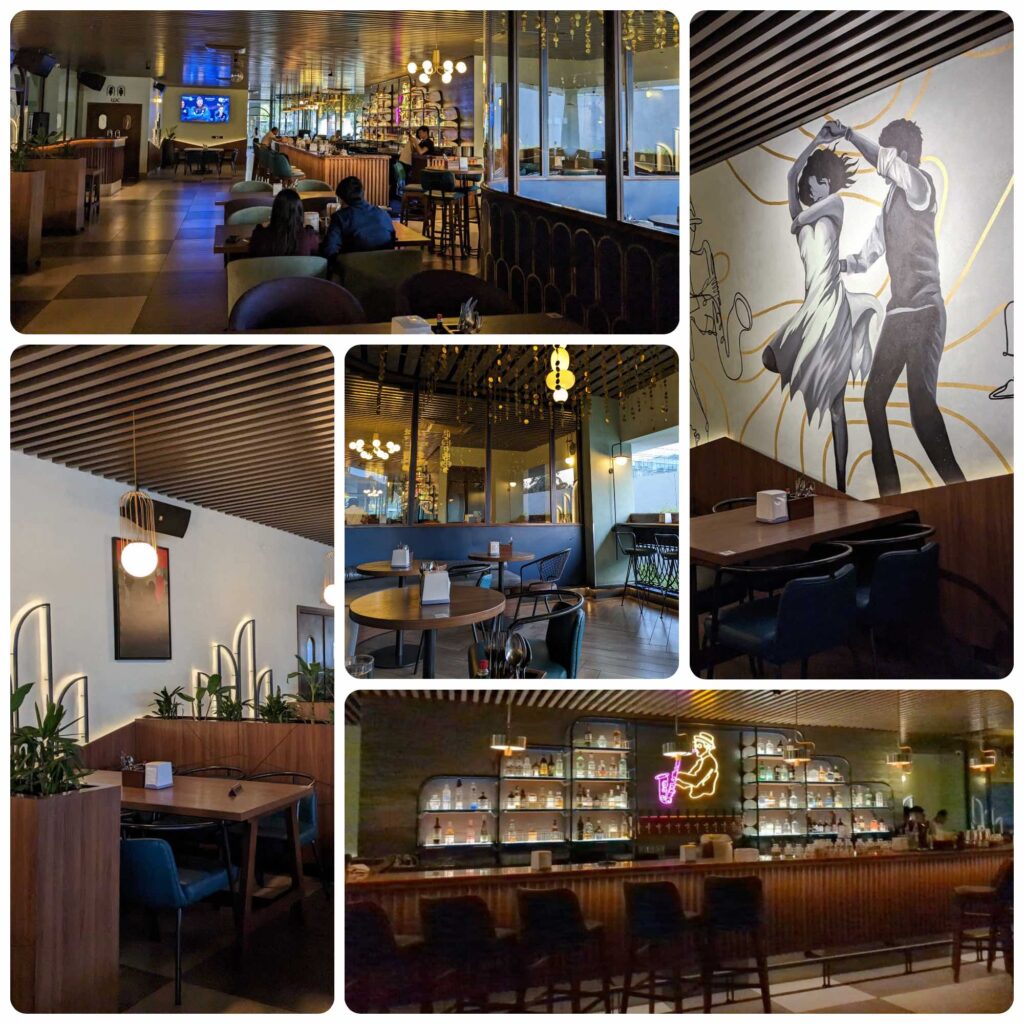
    We have almost stopped travelling to Bangalore for food, but since my first visit with the office crowd went reasonably well, and we had to find a meeting point half way, the Irish-themed Gawky Goose on Wind Tunnel Road seemed like a good option. It’s a fairly large space with three distinct sections. While the central section has predominantly plush settings with sofas and wing chairs, the two others are outdoor and al-fresco and more like a regular bar. The good part is that none of them really feel congested. And on weekend afternoons, there is a pleasant vibe.

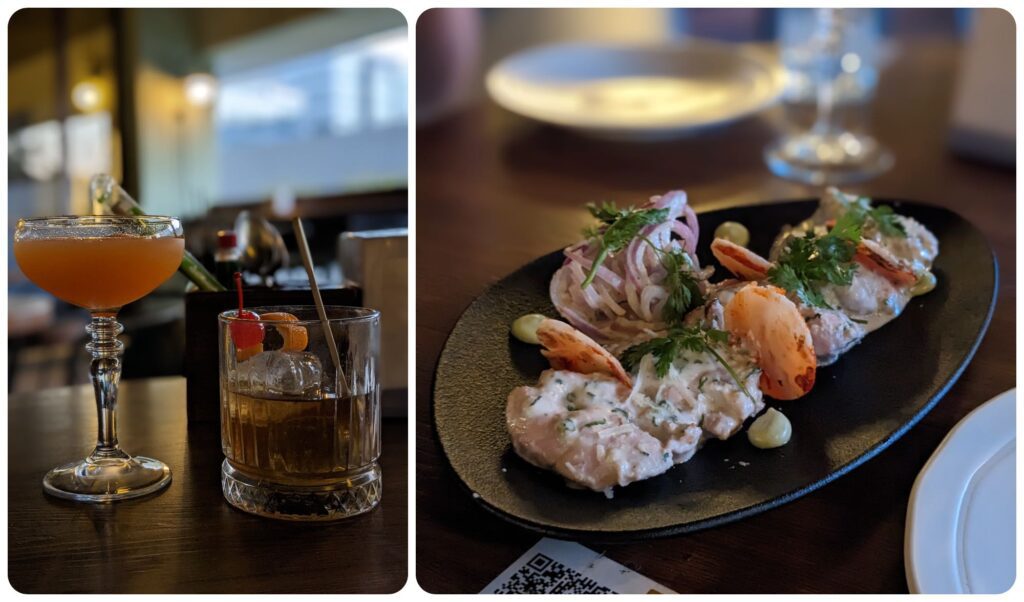
    We began with my regular Old Fashioned and a Brandy Sour for D. The only gripe with this was the pricing – quite high for a 30ml. However, since they had an offer running, we hardly paid anything for it!

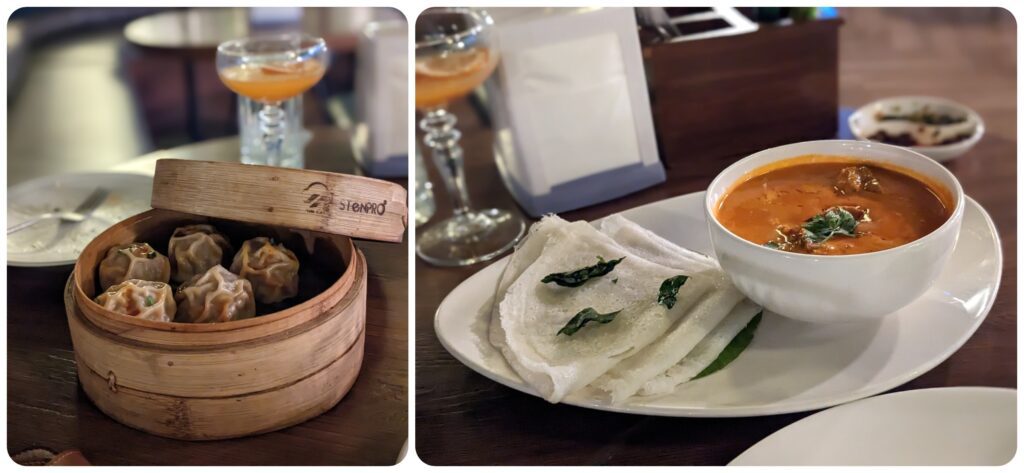
    The food menu is pretty expansive and has a whole lot of cuisines. We began with the Coorgi (sic) Pork that was superbly cooked and had just the right amount of spice. It came with soft Kadambuttu that complemented the taste very well. Up next was the Dan Dan Chicken and Water Chestnut Dim Sum, which had excellent spicy sauce and dim sums with great texture.

    Since the first round of dim sum worked, we ordered Chicken & Basil for the kids, and that was a success too. The Kung Pao Chicken was sweet and spicy with Hoisin sauce and Shaoxing sauce, a good break from the flavours thus far. And finally, we tried the Ghee Roast Chicken-stuffed Paddu. I am not a Paddu fan but this I was happy with. I did wonder whether they could have been more experimental than the standard chutney.

    We were reasonably stuffed, and tried only a couple of mains. The Spicy Chicken Diavola lived up to its name and the devil-style sauce, though the usual jalapeños were ditched in favour of peri peri sauce, pepper confit, chilli flakes and a topping of arugula. And finally, to calm everything down, we ended with a Grilled Chicken Breast, with red wine jus, Bok Choy and what someone called man-made-cauliflower – broccoli!

    A meal for two would be in the Rs.2000-2500 range. The service is prompt, and it’s worth mentioning that they employ at least two visually-impaired folks. That’s worth a clap. The food was quite good, and if it weren’t for the distance, we’d probably drop in again. If you’re looking for something a little different from the vanilla Indiranagar watering holes, this one is it.

    Gawky Goose, #77, Wind Tunnel Road, Murugeshpalya Ph: 9901787273

  • The Stranger in the Woods: The Extraordinary Story of the Last True Hermit

    Michael Finkel

    Michael Finkel begins the book with a quote attributed to Socrates – “How many things there are that I do not want.” It’s a perfect start because the subject of the book – Christopher Knight – eschewed everything that was non-essential to himself back in 1986, the year that Chernobyl happened, when he was twenty. In his first road trip, he drove till he nearly ran out of gas. “I took a small road. Then a small road of that small road. Then a trail off that.” And then he disappeared for the next twenty-seven years, in the woods of “the maine land of New England”, Maine. Living less than three miles from society, and yet inhabiting a world that was only his. 

    He ‘raided’ camps for his food, fuel, entertainment and other requirements. Books were a weakness – spy novels and science fiction to Ulysses, his favourite was ‘The Rise and Fall of the Third Reich’. Never extravagant, he only took what he absolutely needed, and felt deeply guilty about that. Reactions to him ranged from a deep admiration for the life he chose to hatred for the feeling of insecurity he created among residents. Eventually, he came to be known as the hermit. One whom no one could track, because he didn’t even leave footprints. He tried not to even give a hint that the place had been robbed, even refitting doors if it came to that! Though sensors and surveillance tools became more efficient, he managed to evade them. A camp for the disabled was ‘his private Costco’, and that’s where he was finally caught. 

    He didn’t really know why he chose to do this, but he was an introvert who found interactions with society and its rules tedious. Hermits are usually of three types – protesters, pilgrims, and pursuers. Japan has a million of the first kind – hikikomori – dubbed the lost generation. Most religions have the second kind. The third are the most modern, and they seek ‘alone time’ for what they want to do -from artistic freedom to self discovery. 

    Knight left because ‘the world was not made to accommodate people like him.’ ‘It wasn’t so much a protest as was a quest; he was like a refugee from the human race. The forest offered him shelter.‘ His plan was to eventually die in the forest. After he was apprehended, he spent some time in prison. In his own way, he tried to adjust. But he just couldn’t socialise, even his meetings with the author were awkward and full of silence. When the author saw him last, in court, after he had been living with his family for a while, he seemed compliant, where once he had been full of defiance. ‘He had seen the bottomless nonsense of our world and has decided, like most of us, to simply try to tolerate it‘. 

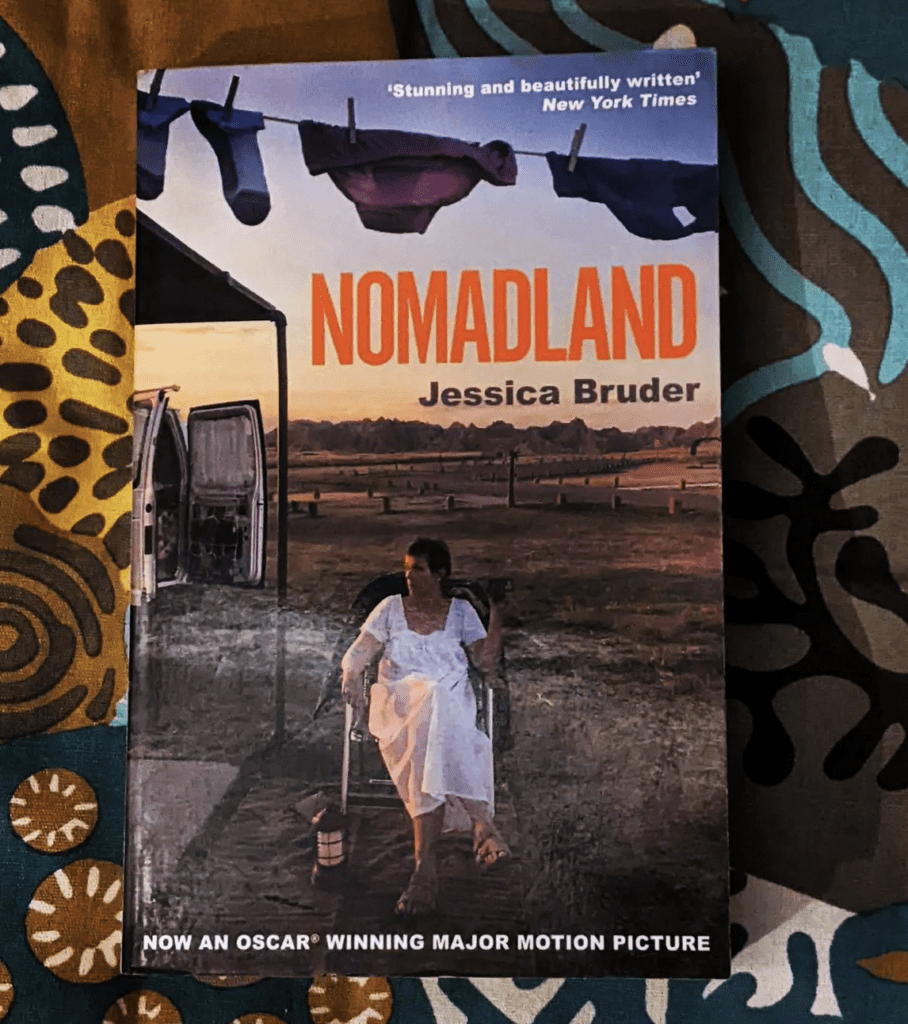
    I found the book deeply poignant. There is something noble about a person whose response to the way of the world was to quietly withdraw from it. Twenty seven years is a long time to survive outdoors, especially in a geography whose winters are cruel. And yet, that’s where he found peace. 

    Favourite quote: Not till we have lost the world do we begin to find ourselves ~ Henry David Thoreau