Author: manuscrypts

  • Armchair travel plans

    If I discount Pico Iyer, the travelogues of Pankaj Mishra, and Mishi Saran’s Chasing the Monk’s Shadow, I hardly read travel books. But I picked up Rahul Jacob’s ‘Right of Passage’ on a whim (influenced by Pico Iyer’s comment on the jacket) and quite liked it, mostly because its really not just a travelogue. Shall publish a more detailed post on that later.

    I was hooked on early enough thanks to the last lines of the preface

    Still, there is this final paradox of travel: time and again, these memories come back unbidden with the clarity of something that happened yesterday, long after we have returned to the rhythm of our lives

    Later in the book, he compares flight travels with train journeys – that he can remember his first flight journey but the rest are a blur. In contrast, however, he remembers most of his train journeys. Though I’m not really the most frequent of fliers, I can relate to that.

    I wonder if its to do with memories of childhood, in which train journeys played a very important part (for me), and that affinity meant that later journeys would also be cataloged better by the brain. Or is it the entire set of experiences – from ‘uniform’ airports to passengers consciously avoiding each other even if it means staring resolutely at the seat in front compared to colorful railway stations that seem to be oozing character to seats facing each other and almost forcing conversations?

    I juxtaposed this with cities and their culture too. Recently, when I went to Cochin, and dropped in at its most ‘happening’ mall, I wondered how much of homogeneity was being created by malls. The same brands, almost the same store experiences, familiar multiplex chains that somehow give you an air of familiarity even in an unknown town (not Cochin for me, but otherwise). How much of a city’s original hangouts and culture will survive this  onslaught? In fact, I even told D that I could already see landmarks of my days in Cochin  (local shops famous for some particular item) disappearing and the new ones (like a Nilgiris store) being unfamiliar to me. Would most people prefer familiarity over serendipity? Or would a middle ground be found – carefully packaged serendipity?

    Going beyond the things to be seen in a place, every travel experience is also about the  discovery of the character of the place you visit. Will we end up creating a homogeneous world, in our constant quest for convenience, and change travel from the train journeys they should be (opinion) to controlled fancy flights?

    Fortunately for this generation, this is perhaps not a reality we’ll live to see, and even in the sunset years we will have our memories and photographs and be thankful that not all journeys need travel.

    until next time, planed travel
  • Phobidden Fruit

    This review was originally published in Bangalore Mirror. Have made  Vietnaam ke vaaste changes to this edition of the Phobidden Fruit review. 🙂

    Phobidden Fruit is on 12th Main Indiranagar and is less than 50m from the Sony junction (with 100 ft Road), going towards Daddy’s Deli. Parking shouldn’t be too much of a problem, there is 12th Main itself and enough smaller side lanes.

    Since the cuisine was specialist, I had the Pho sight to go prepared, and was accompanied by a few Nam ‘veterans’ – Madman, and Prateek and Nithya Dayal. 🙂

    The place is a sort of glorified garage space. But though the ground floor is relatively uninspiring, negotiate the spiral staircase and you’re transported to a cheerful casual dining ambiance with wooden seating and pretty cushions. We got to hear some 80s pop and with the occasional creaking of the dumb waiter, this seemed just the right setting for a relaxed meal.

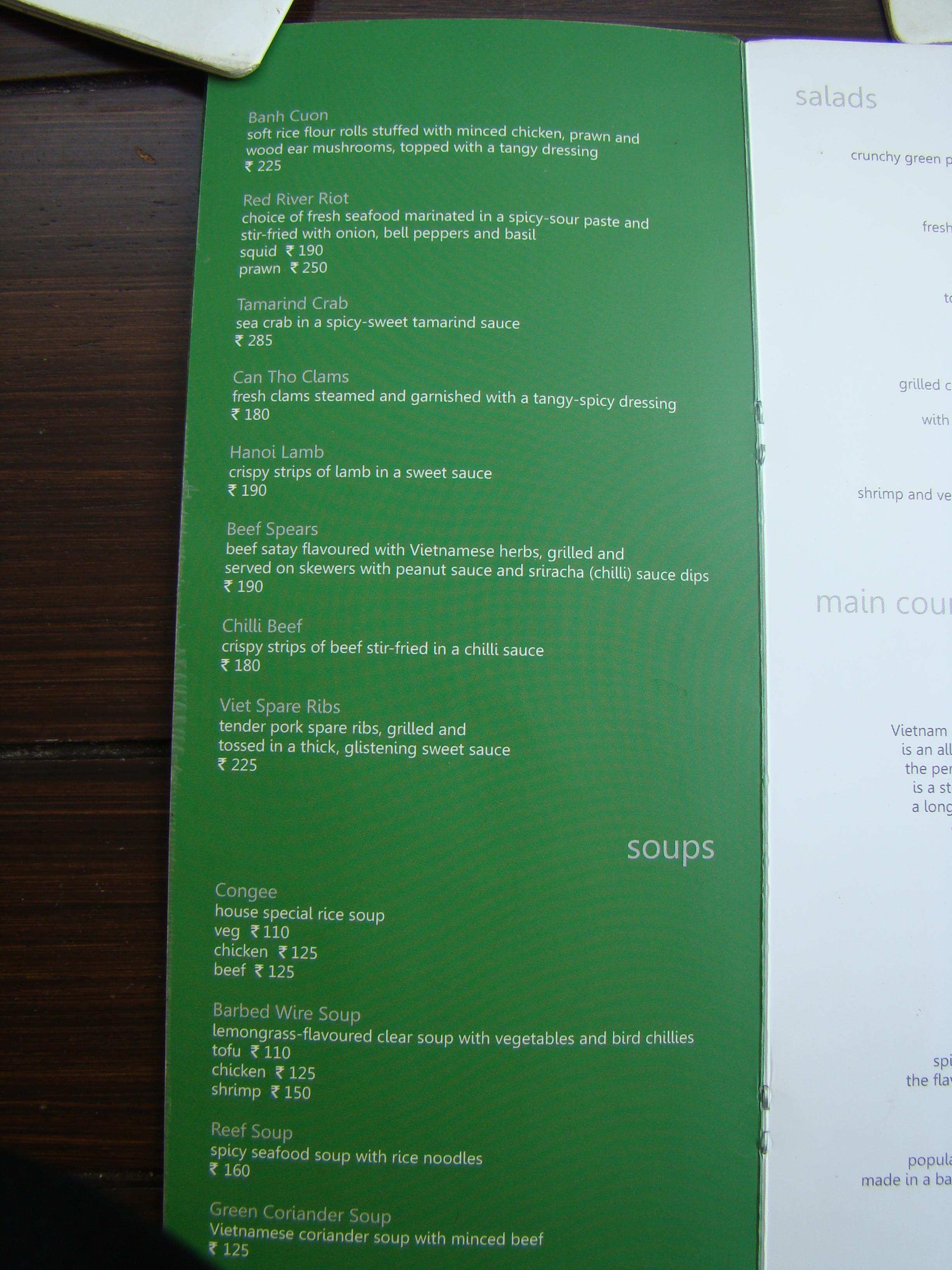
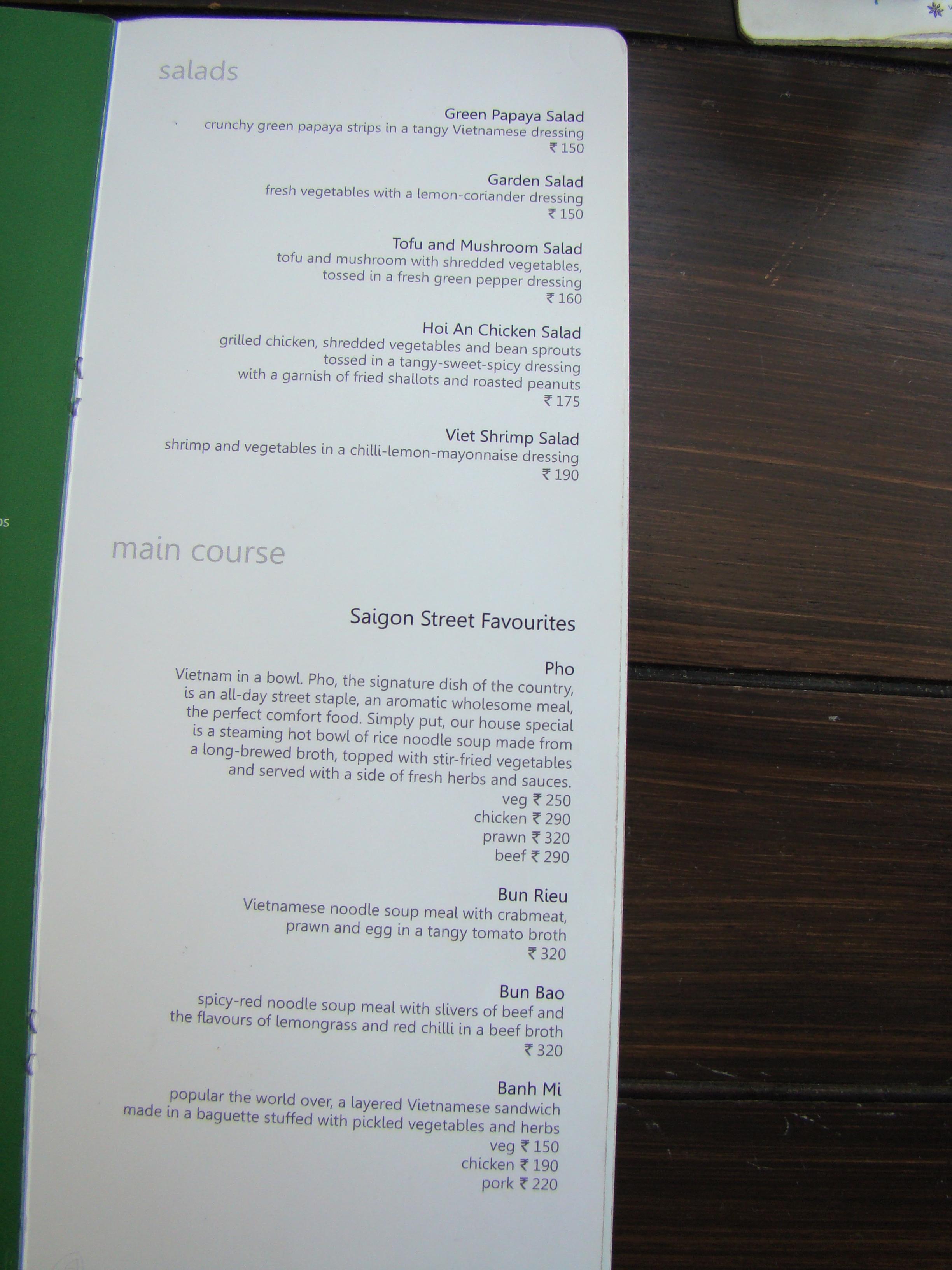
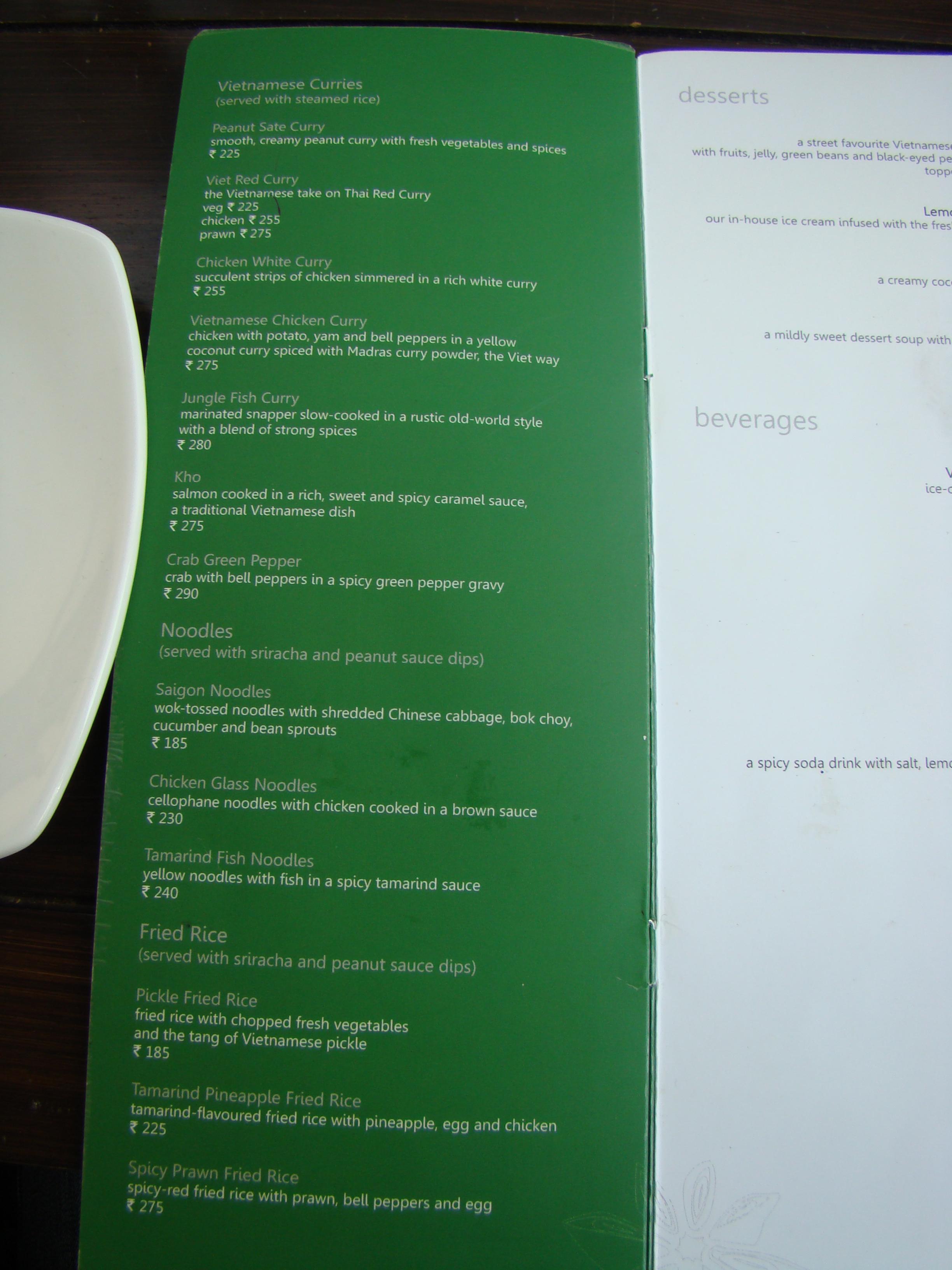
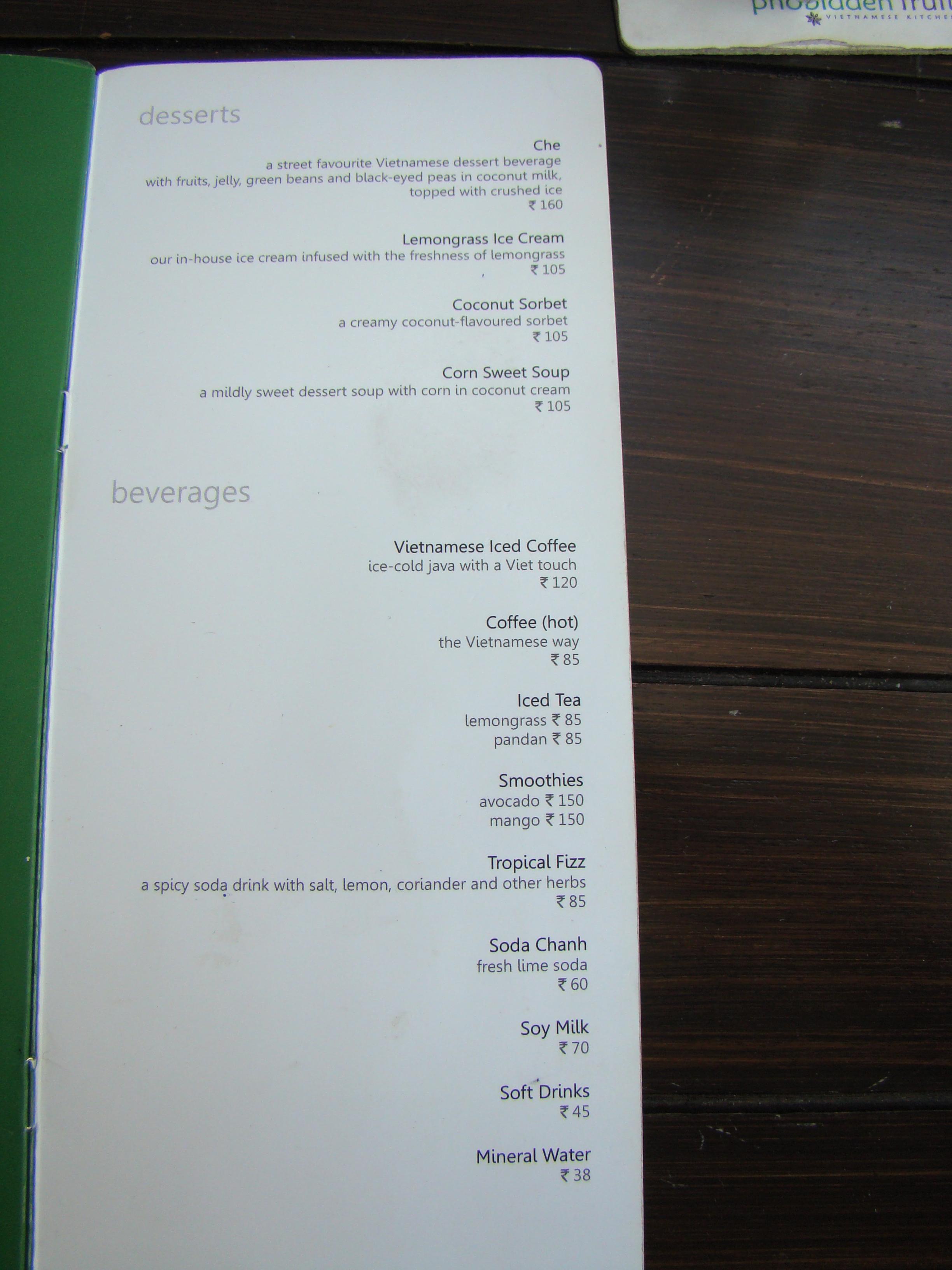
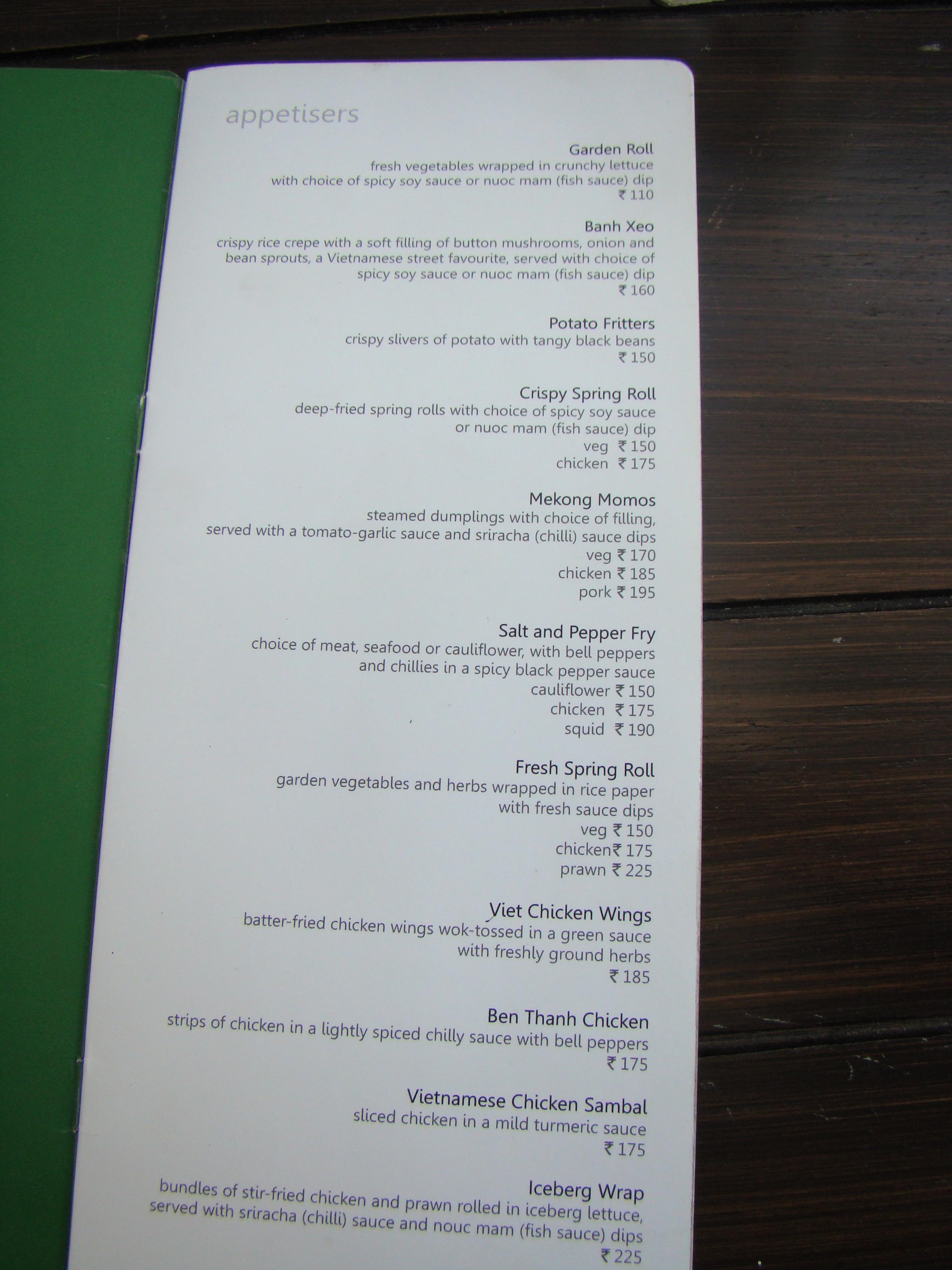
    The menu offers a bunch of appetisers, and has quite a few options for vegetarians and non vegetarians. In fact, the latter would be spoilt for choice – chicken, beef, clams, pork, prawn, fish, squid, lamb…see? You can take a look at the menu below

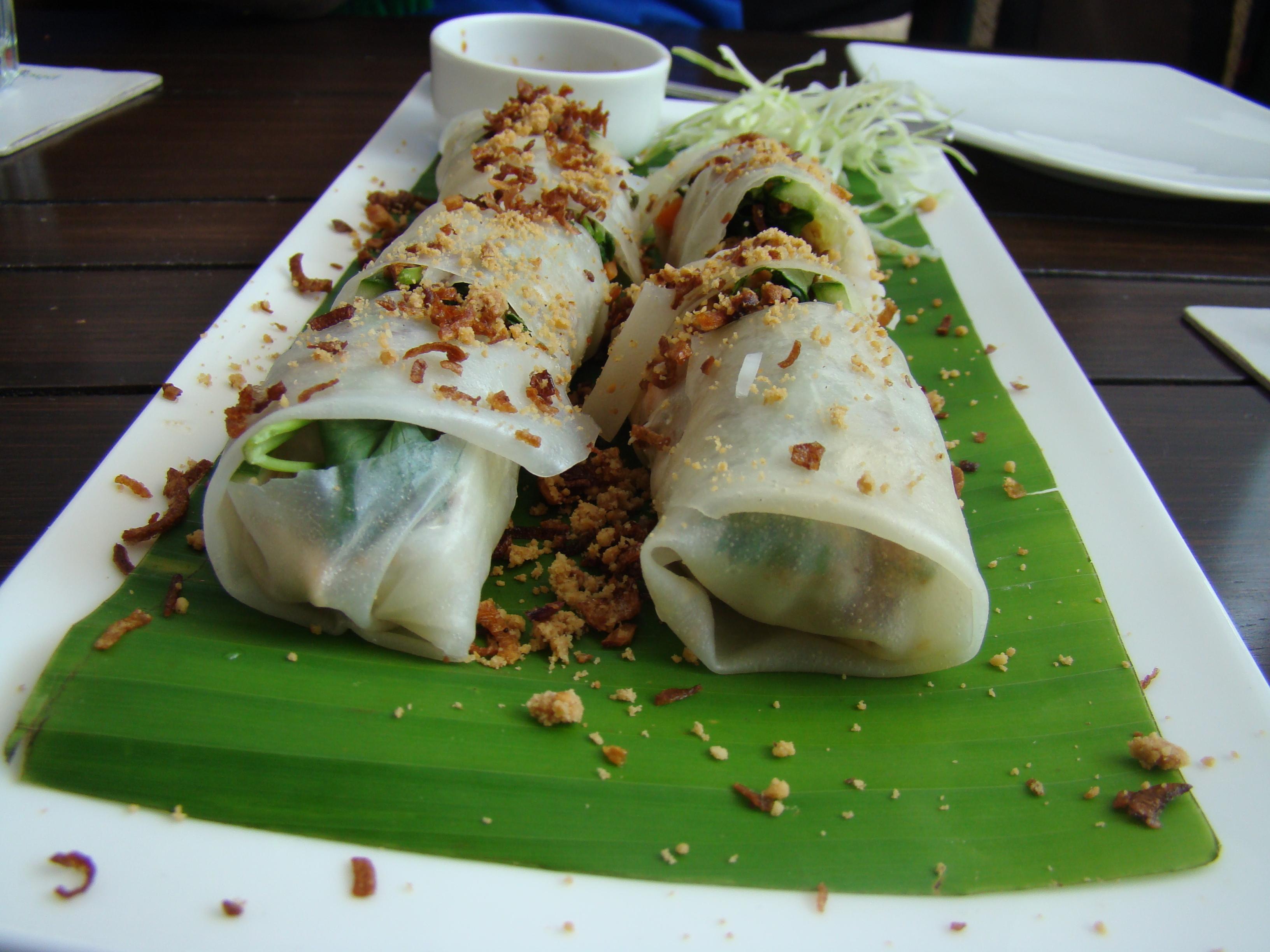
    We started quite well. The Banh Xeo, crispy rice crepes with a filling of button mushrooms, onion and sprouts accompanied by a spicy sauce ended up  the favourite, as did the Fresh Spring Roll (Chicken), though Madhu did mention that it might have worked better with rice noodles inside instead of rice, and could have done with some more herb flavour. The Viet Spare Ribs were fairly good too, despite the ribs being stingy on meat.

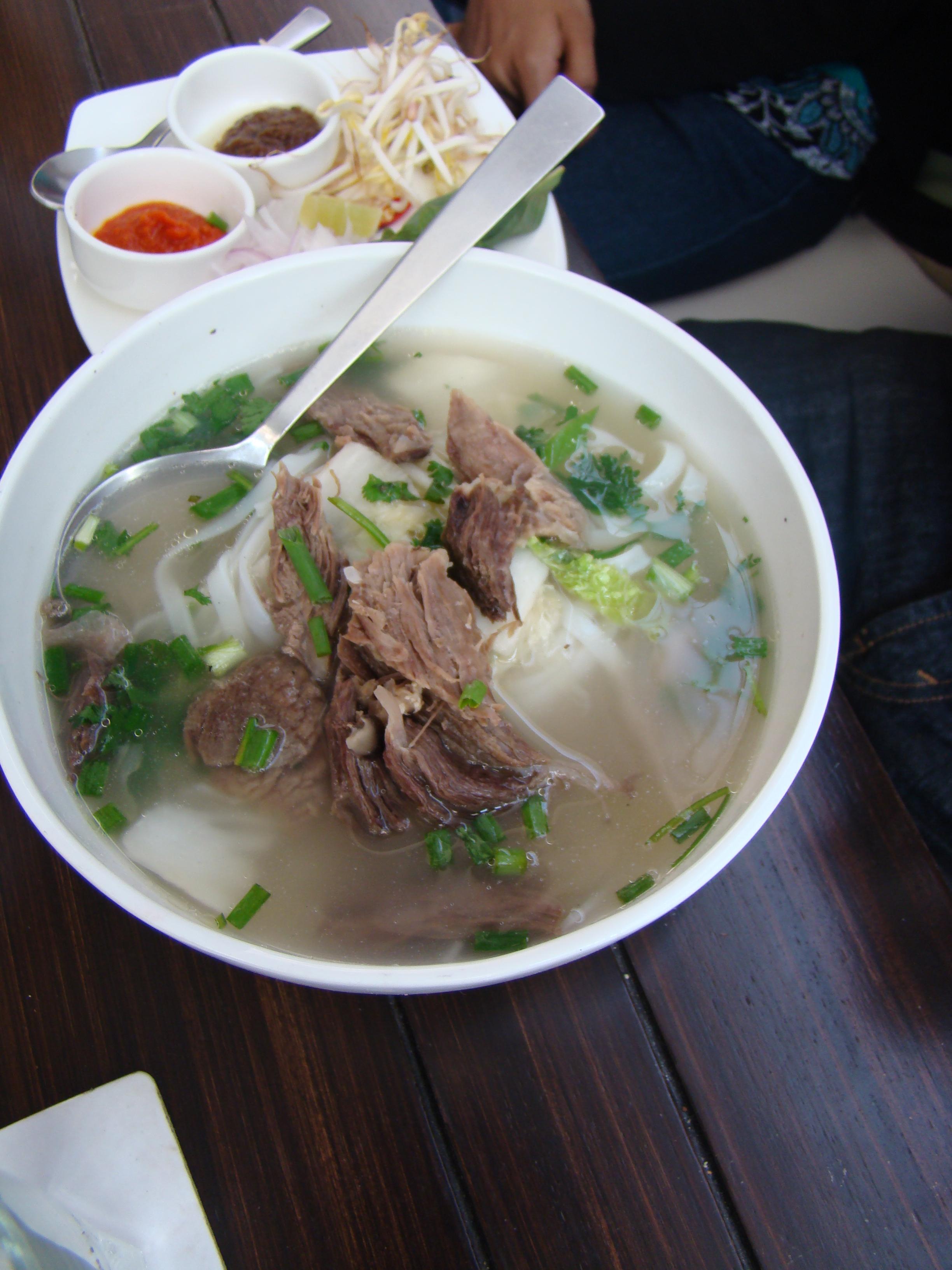
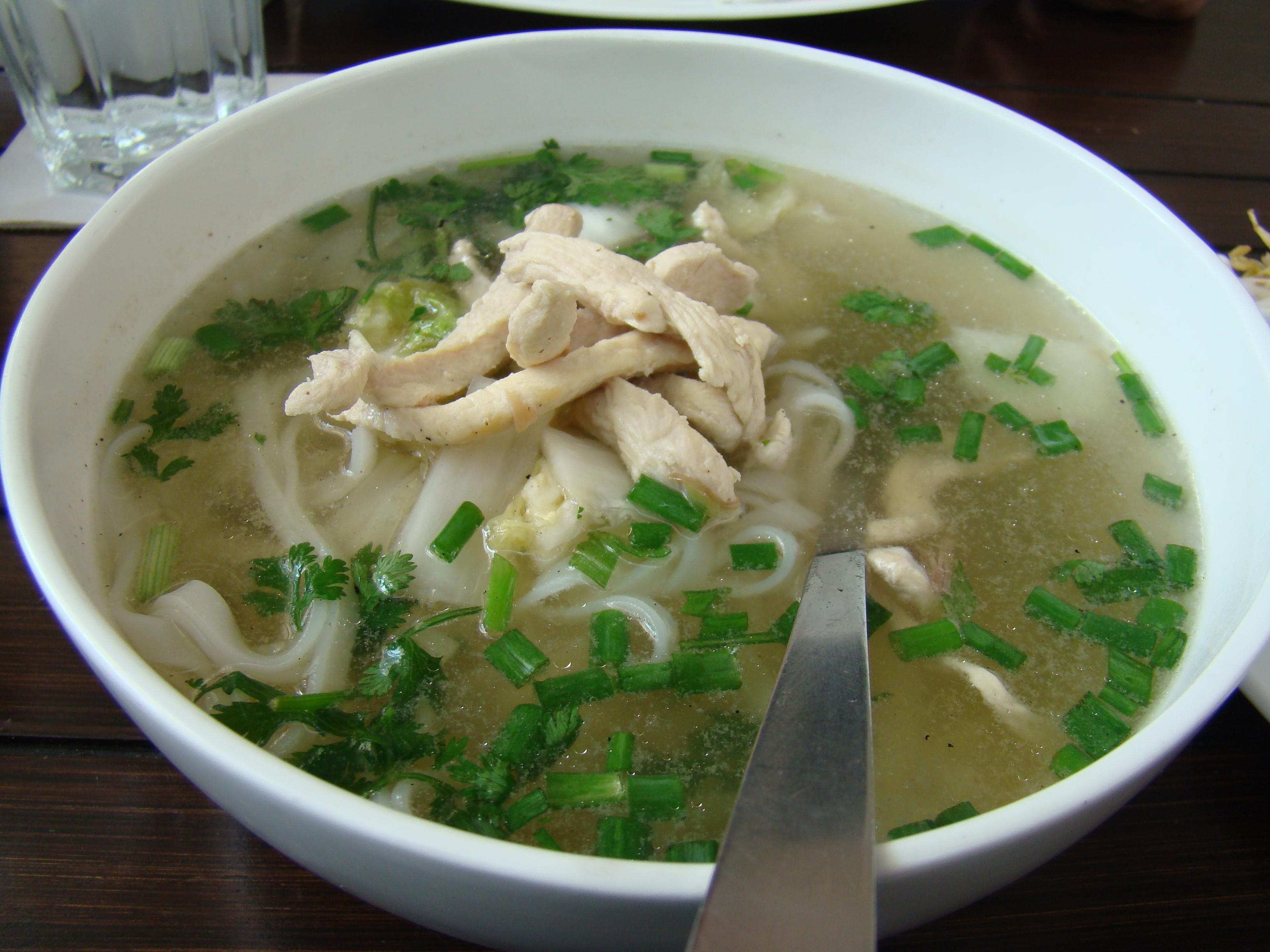
    After the starters, it was time for the Pho play. The Pho (we tried Beef and Chicken) shared a common broth and the meat was added later, but it’s still a Saigon pick, as is the Viet Red Prawn Curry.

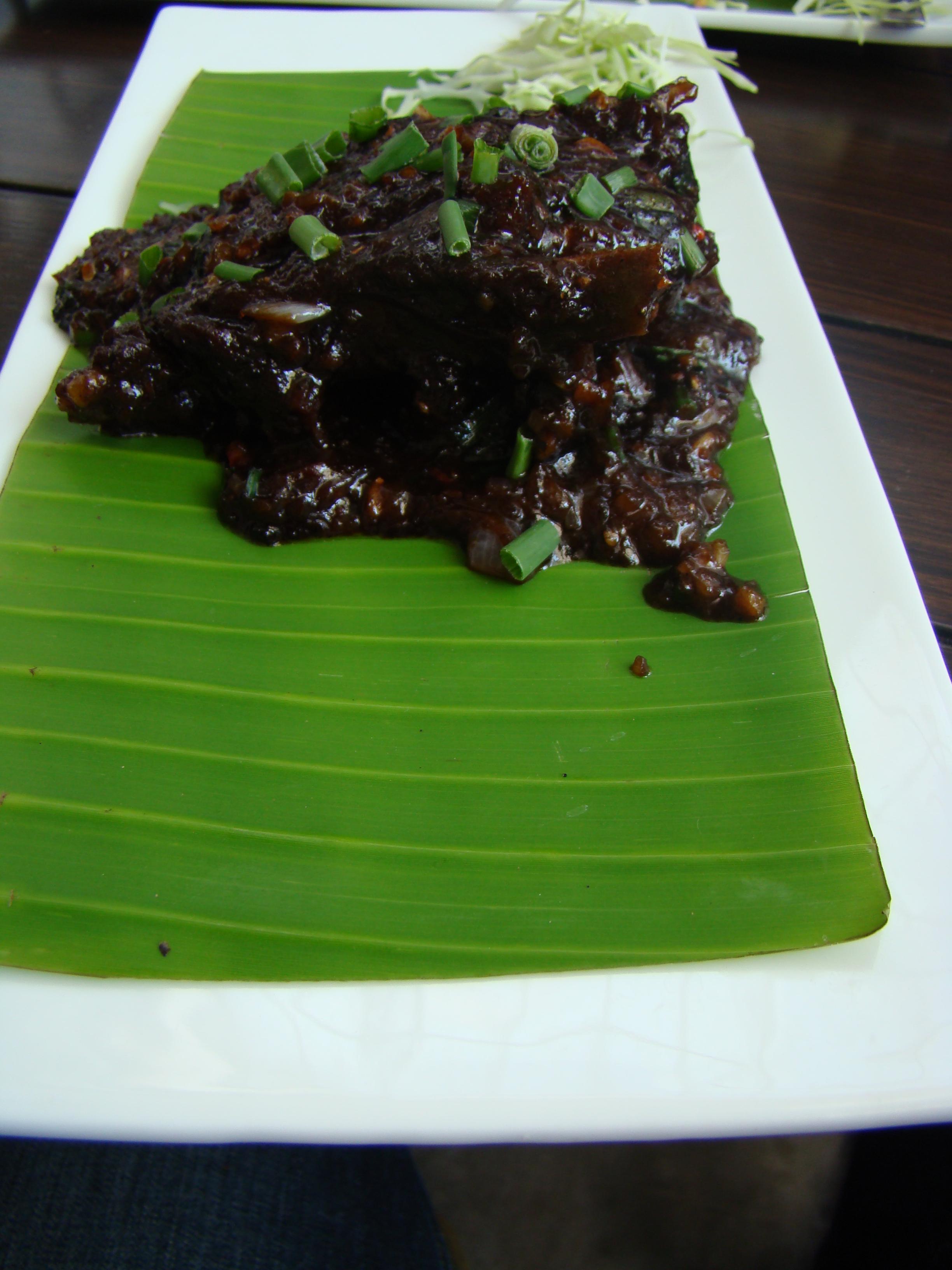
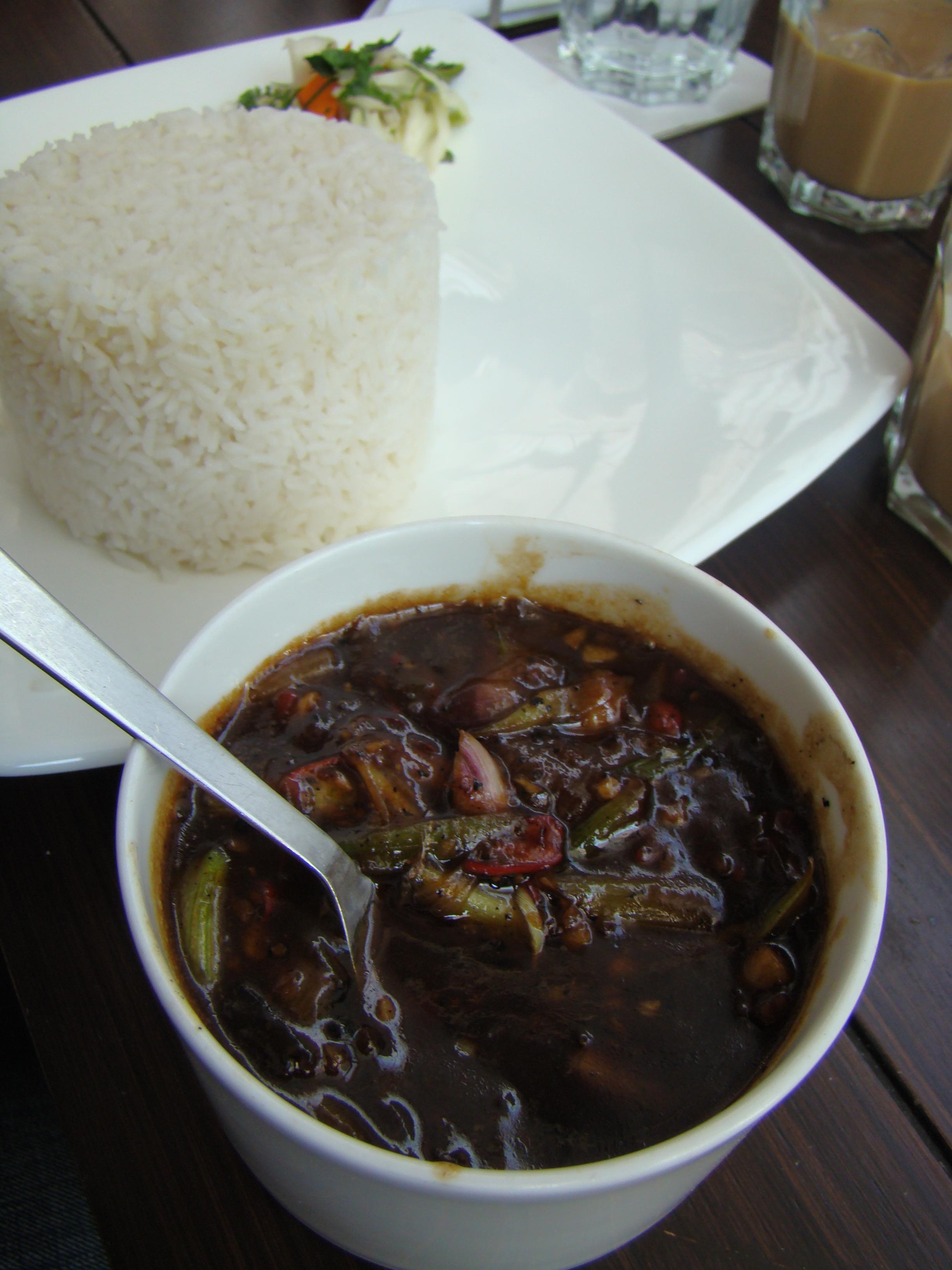
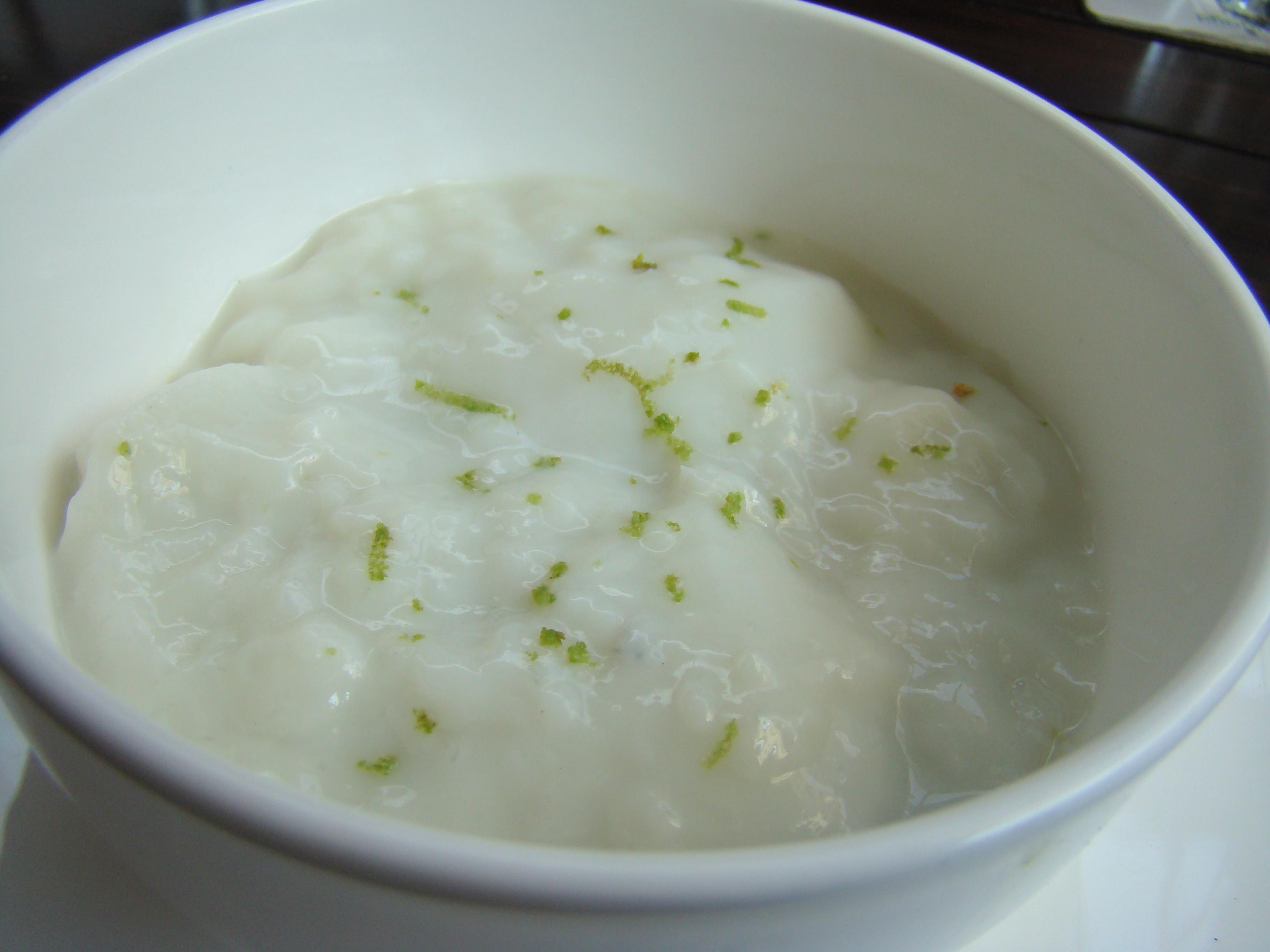
    The Saigon kick was delivered in the form of the Kho that I ordered, salmon cooked in a rich, sweet and spicy caramel sauce. There was notthing to counter the overly sugary sauce. The desserts were also bit of a disappointment. The Coconut Sorbet, while not lacking in flavour, missed out on the texture of a sorbet. The Lemongrass Ice Cream again got the flavour right, but was more like a custard. The Che too seemed to stray from its original version. We tried a Vietnamese Iced Coffee, but instead of the condensed milk and strong coffee that was expected, this turned out to be a much diluted version.

    The service is quite prompt and despite all the tables being full, managed to do a good job without any major trouble.

    All things considered – a catchy name, a relaxed setting, and the possibilities of a unique cuisine, this place deserves a visit. So, if you’re feeling blue, and would like to ginger up your appetite with a new cuisine, but without an astronomic bill, you could try out this Vietnamese gastronomic experience.

    Phobidden Fruit, #965, 12th Main, HAL II Stage, Indiranagar.  Ph: 41255175

    PS: If you’d also like an advanced user review, do read this. (HT: Madman) 🙂

  • Whose line is it anyway?

    When I wrote about the ‘notional boundaries’ in the context of the Arundhati Roy speech, I was reluctant to push the issue further. But while reading ‘The Argumentative Indian’, I came across a section called ‘Critique of Patriotism’ under ‘Tagore and his India’, in which the author – Amartya Sen – mentions that Tagore had once written ‘Patriotism cannot be our final spiritual shelter; my refuge is humanity.

    Tagore also apparently used characters in his novel Ghare Baire (The Home and the World) to hint at how nationalistic sentiments could easily turn sectarian. Amartya Sen ends the section with the words of Bertolt Brecht “…of the corruptibility of nationalism. Hatred of one group can lead to hatred of others….” you can read the section in entirety here)

    And that started a thought on nation states. If we consider attributing more than a functional (say economic, political, administrative etc) importance to it (despite its ‘freedom’ being earned after much effort and sacrifice), how can we logically dispute a demand for separate states intended on the basis of say religion or language, especially since these might be older than the boundaries of the nation state and could prove a better cohesive force than the idea of a country?

    This is not to say that I’m in favour of this kind of a line or line of thought, but I would like your help in finding a logical conclusion.

    until next time, line of reasoning 🙂

  • Illusions

    Richard Bach

    Richard Bach and Donald Shimoda, master and disciple. One, a messiah waiting to retire and the other reluctant to learn. Both barnstorming pilots in mid west America.

    The book is about our perspectives and perceptions of reality, and a view that what we see around us is an illusion.. of our own making, a manifestation of what we want it to be.

    Shimoda is tired of being a messiah as he thinks people are more interested in the miracles he shows them, than any understanding of what he’s trying to say. As the narrative progresses, Richard is first awed by the miracles himself, but then starts questioning his sense of reality and begins the journey to become a messiah himself.

    The book consists of many profound quotes from what is called the “Messiah’s Handbook”, which Shimoda lends to Richard. A handbook with no pages, because it opens to the page which answers the questions in the reader’s mind, but like Shimoda says any book can do this, because it is the reader’s interpretation.

    The larger statement here is that each of us has in us, the power to make our own path just the way we want it, if only we let go. To quote, “Argue for your limitations, and sure enough, they’re yours”

  • A piece of happiness

    I always equated happiness with peace of mind. That having one automatically meant having the other. I somehow doubt that now.

    Does happiness come from going after what you’ve wanted, irrespective of the roadblocks that appear before you? And does peace of mind come from an acceptance of things happening around you and to you?

    Would you have peace of mind if you tried your best and still not got what you wanted? Would you still be happy then?

    Would you be happy to get what you wanted irrespective of the sacrifices you had to make, and the paths you had to take? Would you still have peace of mind then?

    Do you think they are the same? Or does the presence of one immediately dispel the other? If there had to be a trade off, what would you choose – happiness or peace of mind?

    until next time, mindful happiness