Author: manuscrypts

  • Thought Bubbles

    Compassion is a value I strive for, but that does not make it any less a strange thing. It doesn’t help that we are in an era where it has been simplified to a Like and an RT. But each time I mock that these days, I am forced to acknowledge that I have absolutely no right to get judgmental.

    In the case of personal relationships, where circumstances require me to show compassion, I have caught myself holding on to baggage, and playing judge on whether the people in question deserve to be the recipient of any compassion. I doubt whether it is supposed to work that way.

    With people I don’t know, I wonder if the miniscule I offer in terms of time, money, thought, energy will amount to any significant change in their lives. If it does not, how different is it from clicking a button and transmitting the message to an audience? Do they, after all, vary in intent?

    On both kinds of occasions, I have wondered why I am not able to go outside my bubble and do more. Perhaps I am afraid it will upset the careful balance I have created, afraid to tamper with the default detachment. One part of my mind cares, the other carefully weighs the pros and cons, shakes its head and moves on. I follow. Being unaware of the bubble is one thing, being aware of it and yet unable to do anything about it is quite another. Perhaps I have to first learn not to be judgmental about the self, but then I wonder if that’s what leads to apathy.

    until next time, kam passion 😐

  • Quarantine Papers

    Kalpish Ratna

    This book was an impulse purchase, a rare thing for me. The ‘trailer’ (not a synopsis) on the jacket hooked me, and thankfully, unlike a couple of cases earlier, this book didn’t disappoint.

    I think what takes it beyond a ‘thriller’ set in two ages is the layering and detailing, and that starts right from the author name. The book is credited to ‘Kalpish Ratna’, which is actually an “almost anagram” of the two original authors – Ishrat Syed and Kalpana Swaminathan. This layering is present across the book and so forced me to pay attention to each line because of the nuances. I wondered why they had to use different fonts but a few pages showed me how sensible they were in doing it.

    The story too is interesting in itself and has Ratan Oak as a protagonist who leads a ‘double life’. Ratan has a submerged identity, that of his great grandfather Ramratan Oak, and is able to recall his life – events and people.

    The book proceeds to juxtapose the 1992 Bombay riots following the Babri Masjid demolition with the plague that first appeared in Bombay in 1896-97. And not just juxtapose but create a plot that links the two events and show how the attitude and behaviour of society are just different manifestations of the same basic feelings.

    The narrative pace never slackens. The detailing of characters is excellent, and the different pieces of the puzzle are made to fit, with attention to details. From characters in history like the Kiplings, Bal Gangadhar Tilak etc to Urdu poetry, and the amount of research that has obviously been done, this is a very unique book and a must read. It has been mentioned that this is their first Ratan/Ramratan Oak novel, and if they’re planning more historical juxtapositions, I’ll certainly be waiting to grab a copy.

  • More on the Uncertainty Principles

    Ok, so it’s not long back that I wrote about uncertainty, but in this real time world, I can’t blame myself for thinking of it on a regular basis. I wonder if it also has to do with the macro environment I grew up in – the typical 80s kid in India, whose ‘options’ across the board – from movie heroes to restaurants to soaps and television channels usually boiled down to one. (remember?)

    From my own experiences, I know it is possible even now, but it’s a choice and a very difficult one at that, and one that might be difficult to reverse later. An extended trip to Kerala sometime back- home, made me realise that there are those who have made that choice, or rather, have for some reason remained in a lifestyle with minimum choices. Belonging to an earlier generation, but who have refused to let the ever changing world rock their boat. It isn’t that the boat isn’t rocked regularly in their ‘small’ world, but the rocking seems to happen within a framework – as though there is some tacit understanding with the cosmos, a reward for not adding to the cosmos’ complications.

    Uncertainty has a permanent live-in arrangement with most of us, and now dictates the relationship so much that we take it as a given. I am not a comfortable partner, but for various reasons, can’t do much about it. I wondered what the future would hold. As is becoming a practice with me, I found interesting perspectives in the book I was reading – ‘The Mammoth Book of Short Science Fiction Novels’.

    Asimov’s “Profession” had a world where a person’s station in life, and life itself is dictated by certain tests he undergoes at 2-3 points in life – Reading Day, Education Day and every individual is slotted basis the result of these tests. (not exams, mental examinations which figure out the natural aptitude of the individual’s brain) John Jakes’ “The Sellers of the Dream” has a world where companies sell a ‘fashion’ for a season, which includes physical and mental changes done to an individual and changes his/her personality. But in Larry Niven’s “Flash Crowd”, one of my favourites, I sensed the best summation of our current status “For each human being, there is an optimum ratio between change and stasis. Too little change, he grows bored. Too little stability, he panics and loses his ability to adapt.”

    I wonder if this is timeless, and am not too certain that the last sentence on losing the ability to adapt is very encouraging.

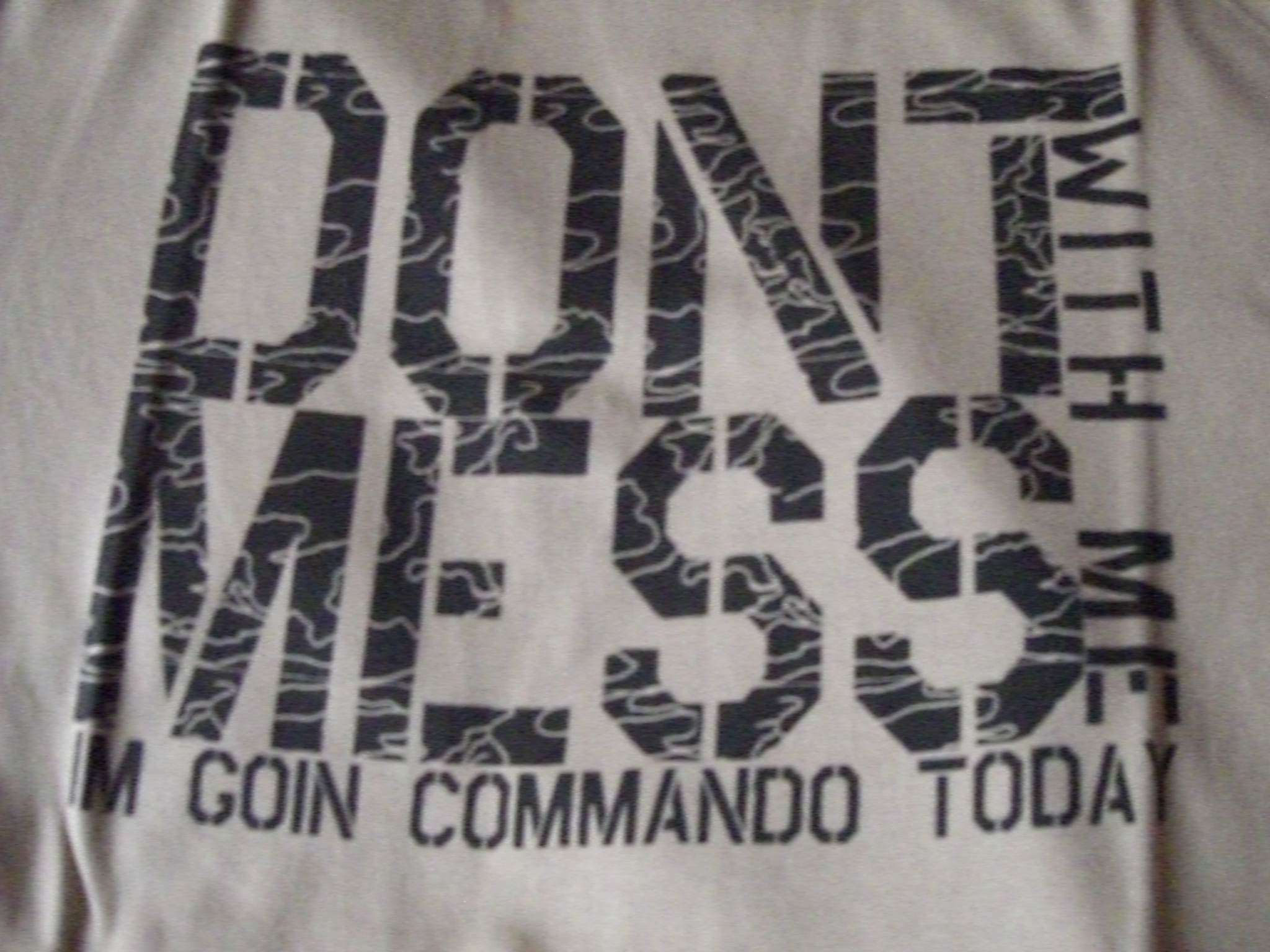
    until next time, certain tees I can’t live without

  • Turquoise – The Indian

    It does sound a little like a movie dubbed into Bollywood, but hey, it’s a restaurant and the name matters only so much. The review first appeared in Bangalore Mirror, and I’ve had enough of ‘blue’ wordplay. 😀

    This is located above Mom&Me on the road leading from Intermediate Ring Road to JNC (map) and is one of the twin Turquoise restaurants. The European is on the floor below, and you can find my micro review on 4sq. 🙂 Valet parking is available.

    The turquoise theme is prominent in the decor and the chandeliers creating the shape of a musical note makes for an elegant picture. For seating, you could lounge on the comfortable sofas or choose the more functional, yet tastefully done regular furniture. The gigantic dragonfly near the bar is an attention grabber. Bollywood remixes playing in the background and a TV screen offer ‘entertainment’.

    The menu begins with a few standard shorba options, and then offers a decent range of kababs. Thereafter, in addition to some standard and some not-so-standard main course Indian fare, there is also a page devoted to Parsi favourites. For once, there seems to be a balance between vegetarian and non-vegetarian options. The rotis section manages to offer a few unique options, but the desserts section is limited and sticks to the regular favourites. The Indian is a resto-lounge, and seems to have a well stocked bar and a collection of mocktails. The Turquoise Smoothie we tried turned out just fine.

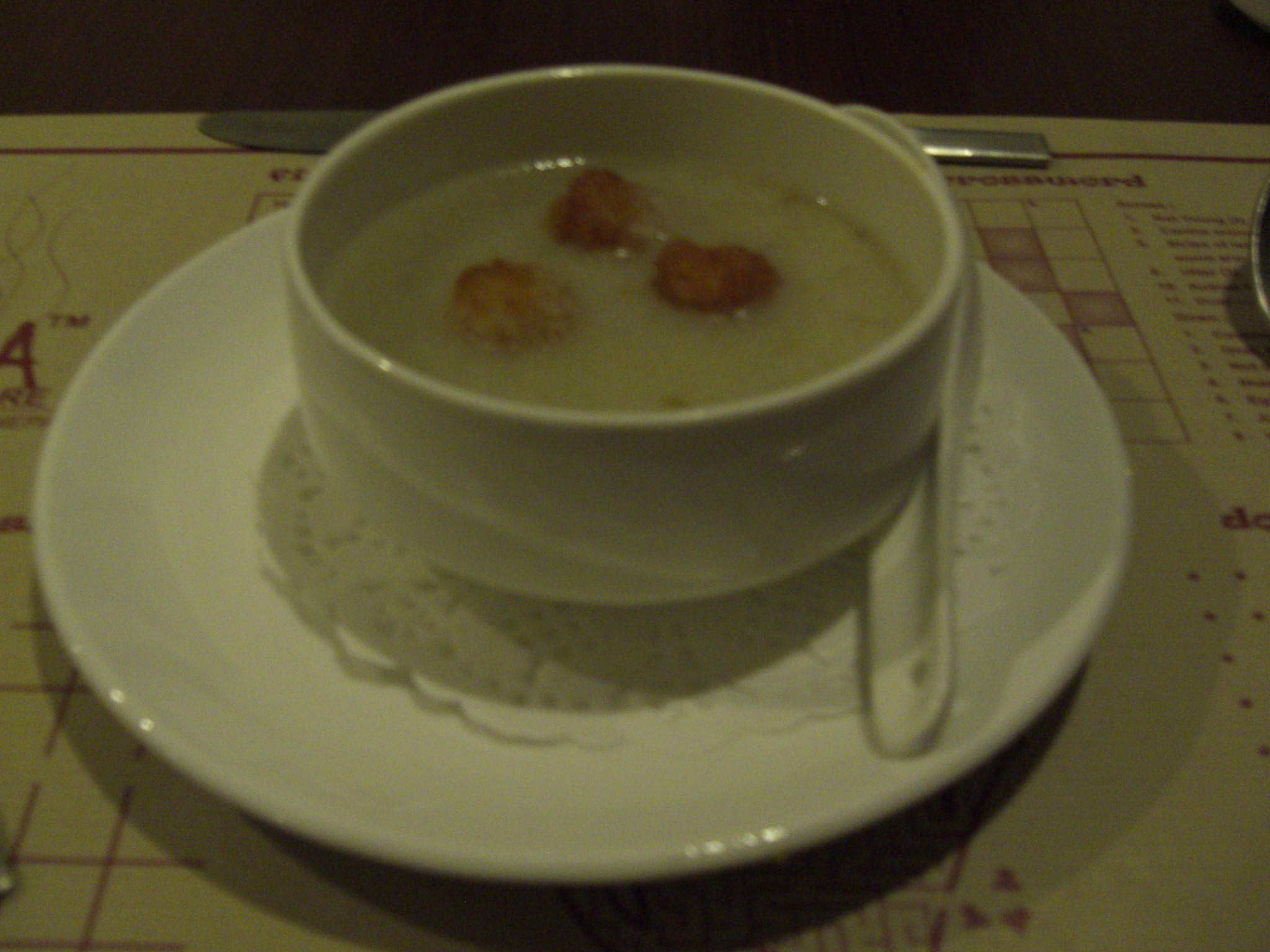
    The Galawati Kabab, a patty of tava fried lamb mince marinated in spices and served on a mini paratha, didn’t quite get to the ‘melt in your mouth’ level but managed to live up to its billing of a signature dish. But the Baida Roti with kheema and eggs stuffed in a pancake and tava fried proved to be the unanimous favourite.You really must try this. The Aatish e Aloo – stuffed potatoes – managed to start a spicy Bollywood conversation, but the dish itself was quite bland. The Mahi Afghani Tikka, Calcutta Betki chunks with coriander, yoghurt and cream, too went into the same category.

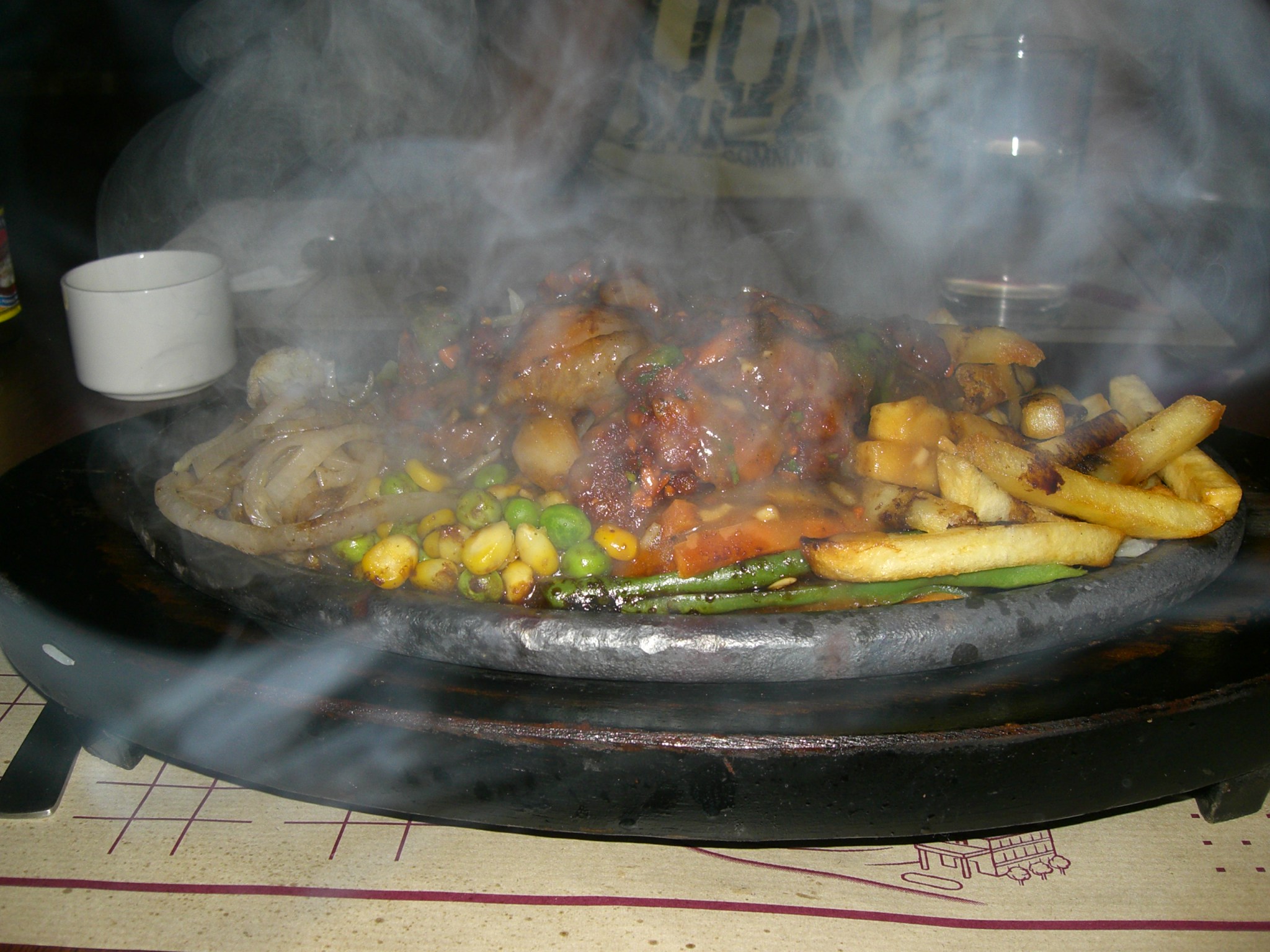
    In the main course, the Zardari Kofta in a nut-based gravy was the pick, followed by the Murgh Makhani. The Hyderabadi Lagan ka Murgh with the cashew nut gravy had sounded right, but fell short of expectations. The efforts of the Dum Pukht Aloo’s gravy, to salvage the dish’s reputation proved futile.The Naan Baluchistan with a minced meat stuffing, and the Khameeri Roti were both excellent, the Gosht ki Dum Biriyani was reasonably good, and the flavourful Jeera Rice was appreciated too. The Qubani ka Meetha didn’t do much to sweeten the dessert deal though. The biggest disappointment was when we were told that most Parsi dishes required advance notice. Even in the other sections, we missed out the ones we really wanted to try – the Naan Changeezi, the Turkish Baklava, to name a few.

    The service was courteous to begin with, but began to display an overboard version of ‘maa ka pyar’ while the food was being served. They insisted on disproportionately filling up our plates. The billing took us almost half an hour. On the cost front, a non-veg starter, a main course with a veg and non-veg dish along with a few rotis, and a dessert would set you back by `1,200. Considering the options available in the vicinity, this is on the higher side.

    Turquoise’s Indian version has its share of tasty fare, but given its location –  where a stone thrown would most likely land on a restaurant – they need to better their act. The non availability of dishes and a torturous wait for the bill left us blue, like that Akshay Kumar movie.

    Turquoise, 2nd & 3rd Floor, (Above Mom & Me), Shop #9, 5th Block Koramangala, Bangalore 560095, Ph: 65776588

  • A People Person?

    Scott Adams’ post titled “People who don’t need people” (via Surekha) reminded me of Asimov’s Spacers, the first humans to emigrate to space, and their life on Aurora, the first of the worlds they settled. Scott Adams predicts that “we will transfer our emotional connections from humans to technology, with or without actual robots. It might take a generation or two, but it’s coming. And it probably isn’t as bad as it sounds.

    In the huge canvas that Asimov had created, the Spacers chose low population sizes and longer lifespans (upto 400 years) as a means to a higher quality of living, and were served by a large number of robots. As per wiki, “Aurora at its height had a population of 200 million humans and 10 billion robots.

    These days, as I experience the vagaries of the cliques and weak ties – not just Malcolm Gladwell’s much flogged social media version, but even real life ones, I can’t help but agree with Scott Adams that it won’t be as bad as it sounds. I probably wouldn’t mind it at all.

    When I feel like a freak
    When I’m on the other end of someone’s mean streak
    People make fun I’ve got to lose myself
    Take my thin skin and move it somewhere else

    I’m setting myself up for the future
    Looking for the chance that something good might lie ahead
    I’m just looking for the possibilities
    In my mind I’ve got this skin I can shed

    Scott Adams began his post noting that humans are overrated. Sometimes, I wonder whether humanity is, and whether losing our current perceptions of it would actually make a difference. (earlier post on the subject)

    Lyrics: Invisible, Bruce Hornsby

    until next, bot.any