Author: manuscrypts

  • Adept Us

    The blog (and its readers) have been victims of many a ‘baggage’ post, but this one is slightly different. The ‘insight’ must seem a no-brainer on hindsight, but because it isn’t a direction I’d thought in, it did seem a bit of a revelation.

    From my own experiences and from observing others, I realised that there was one thing that makes baggage shed itself at whatever pace is required at the moment – survival. And it works across all kinds, say physical eg.cleanliness, or emotional eg.hatred for a person and it looks like the subconscious has a way of dealing with it such that we don’t even realise it is happening. Maybe it doesn’t work the same way for everyone, but I know it does for me, at least to a certain extent.

    The other realisation was the paradox in adaption working both ways. There are many baggage items that started out as a sort of protection when dealing with others eg. the aggression that hides a timid character slowly eclipsing the latter completely. This then becomes a part of character till we don’t even realise that we weren’t always that way. Until the day something forces it to be dropped – not just for a few hours, but a longer stretch of time.

    We have been wired for survival but since it is not really possible to simulate situations that threaten it, I come back to the original square – of watching oneself, being really ‘aware’ of every instant, and guarding against baggage accumulation. Now that’s a how-to I am yet to crack.

    until next time, survival of the fib test

  • Barbeque Factory

    Remember El Tablao, the Spanish restaurant on 80 ft Road? Well, in case you have second thoughts about a new cuisine when you get to the building, climb to the next floor, and you reach Barbeque Factory, which serves Indian cuisine. Here’s the map, if you aren’t familiar with Koramangala. There’s basement parking, so you aren’t troubled much on that account.

    The ‘factory’ makes an appearance only in the name, and there is no specific theme to the restaurant. The kid area, not always found in Bangalore restaurants, is worth a mention. The interiors manage to exude warmth though, and  you could enjoy a view of the busy 80 feet Road below. There’s Buddha painting too, in case you need to feel even more elevated. 🙂

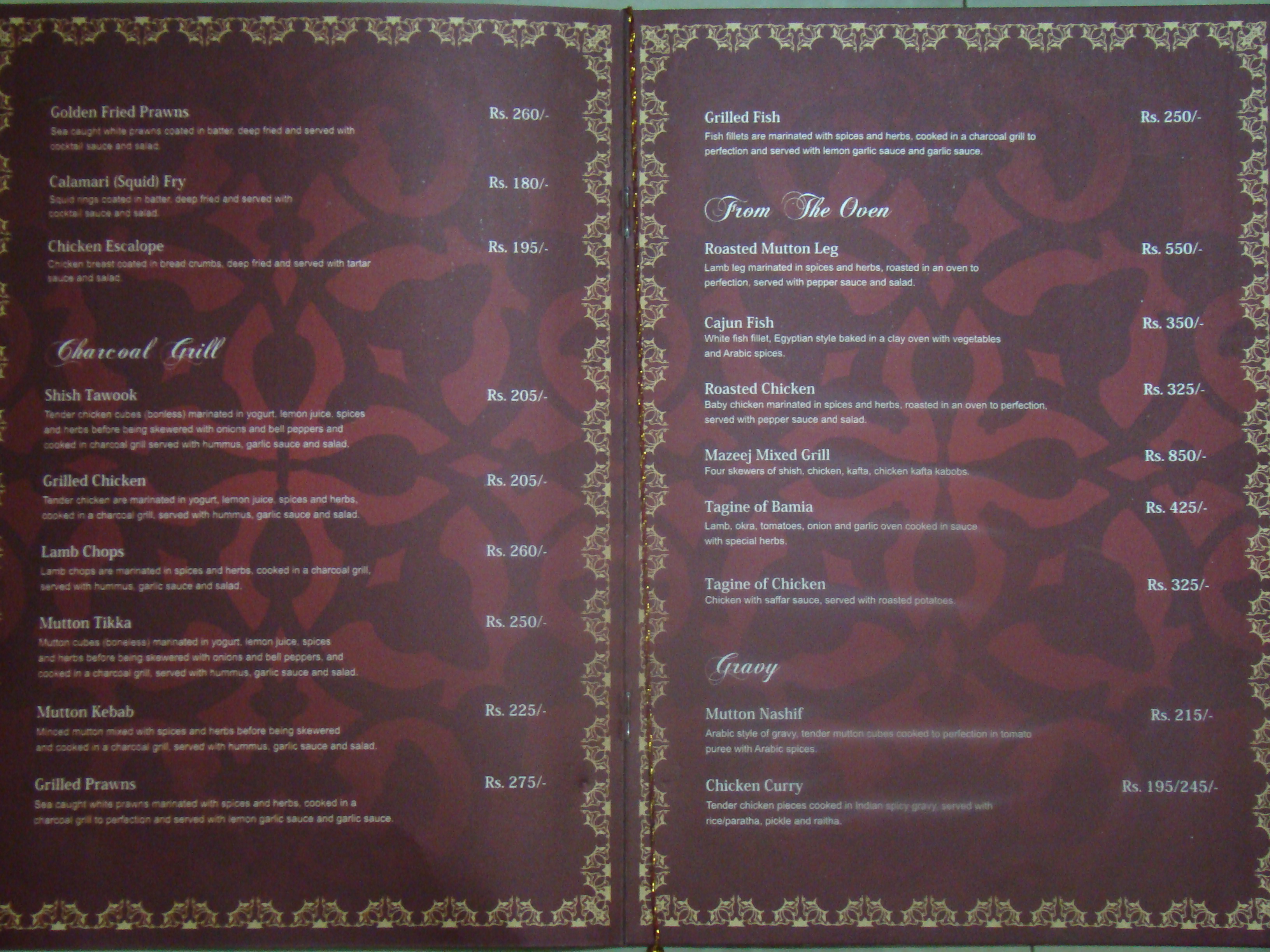
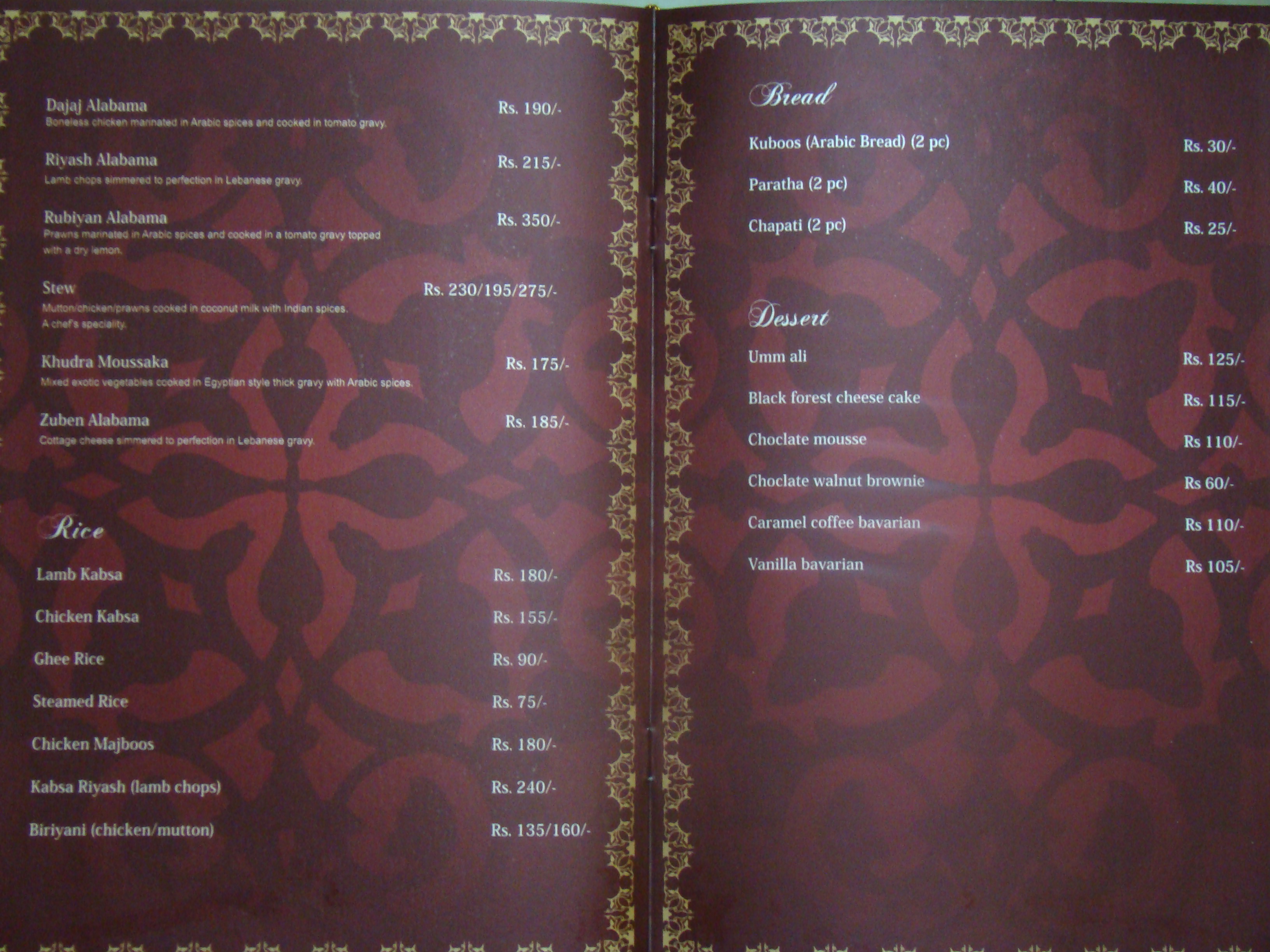
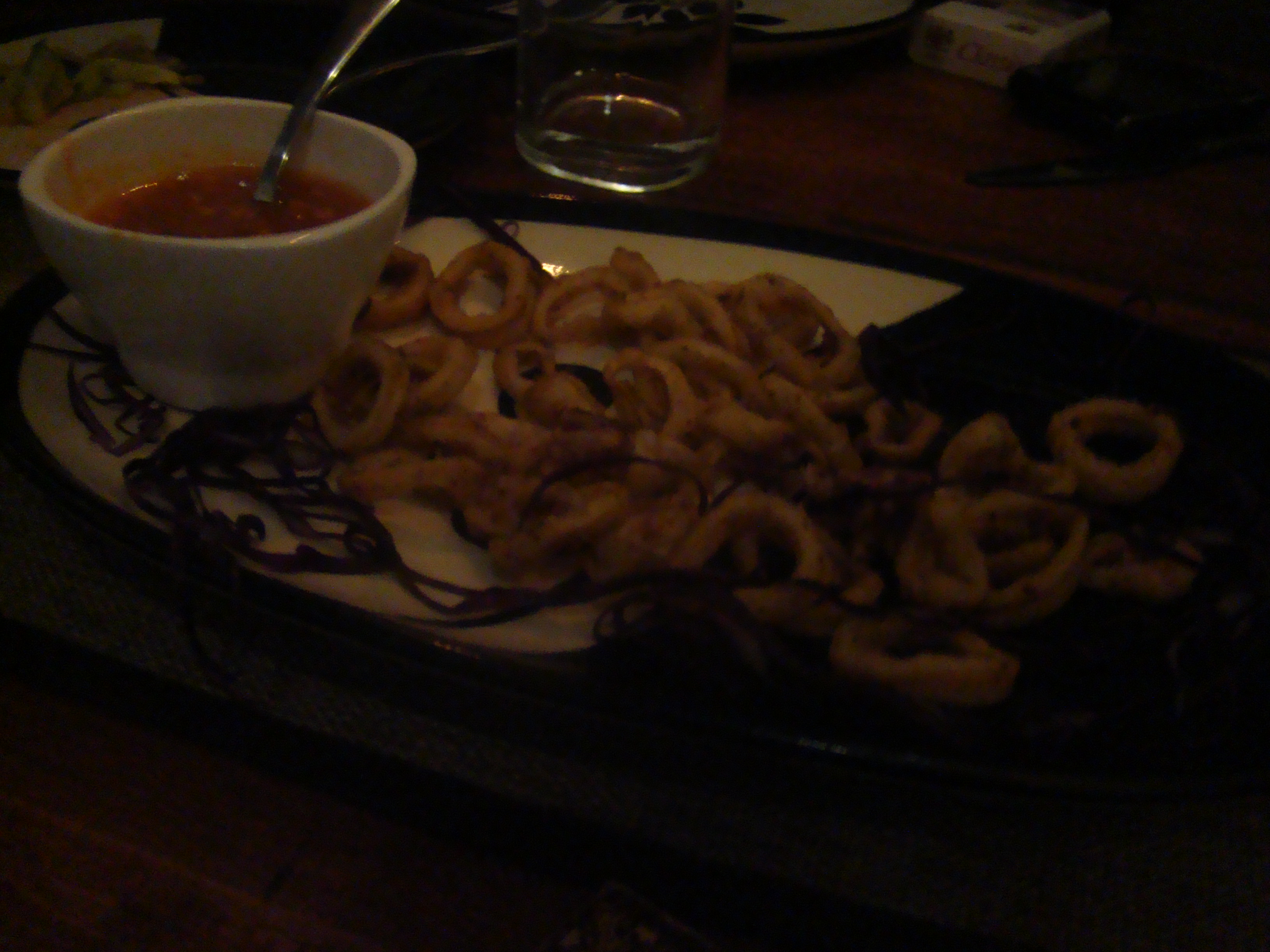
    The menu begins with a veg shorba and fresh fruits, and quickly moves into a collection of kababs – five each in veg and non veg. We began well with the Cream of Tomato soup, mildly spicy and flavourful. The boneless Fish Tikka, though not Zaffrani as indicated in the menu, was cooked to perfection, and the group’s favourite starter. The Mutton Seekh, again not part of the day’s menu, but seemingly a replacement for the Boti Kabab, was a close second. The Shikampuri kababs lacked the slightly crispy exterior, though the mutton version was slightly better than its veg counterpart. The Murg Tikkas were also not the best we’ve had. The obvious indicator of the kababs’ quality was that, despite the unlimited offering, only the fish tikka and the mutton seekh made it to the second round of kabab consumption. Chaas is served throughout the meal and before we enter the main course, there is a Honey Paratha interlude. The Honey Paratha was appreciated for a well managed sweet-salt combination.

    The main course consists of rotis, a selection of veg curries and a non veg curry and a choice of veg/chicken biriyani. Neither the Aloo Mutter nor the Dal Tadka showed any inclination to enliven the meal. The Biriyani was totally ignored as it was quite dry and lacking in masala too. The finale was a collection of three desserts and Badam Milk. Thankfully, though commonly found fare, the Gulab Jamun, Semiya Kheer and even the Badam Milk ensured that the desserts section was well represented. The meal ended well with slices of mango presented, for a change, in a cocktail glass and an excellent maghai paan.

    Friendly staff, but they were quite clueless about what they were serving. They also needed a couple of reminders for getting us a kabab refill. The owner was around though, and he could be seen going to every table and courteously soliciting feedback.

    The prix fixe (set menu) has the vegetarian version priced at Rs. 399 and the non vegetarian at Rs. 499, both inclusive of tax, and introductory. Alcohol is available only in the form of wine. The selection of kababs varies on a daily basis. While this might seem value-for-money and Barbeque Factory does have a few things going for it, the location has no dearth of gastronomic choices. The restaurant should probably focus a bit more on the food if they want to ensure that people baar baar barbeque.

    Barbeque Factory, Lotus 612/1, 80 feet Road, 4th Block, Koramangala, Bangalore 560034, 41505325

  • Expert Ease

    This one jumped ahead in the drafts queue, thanks to a tweet session with Ranjani.

    The internet, and specially its social manifestations have meant that experts of all shapes and sizes scream out of my stream on a regular basis. So, when I found a superb post that mashed two domains where I see most of the atrocities being committed in the name of expertise, I was oh! so happy enough to share it and add my two non-cents. One of the two domains is easy to guess – the social web, where the number of experts are about 3 less than the number of users, the three non experts being bots or brands. The second one is food.

    Both of these are domains I operate in, and in both of them I have a problem with ‘expertise’. With respect to social media, it’s pretty simple. There are dozens of social media tools and platforms that the ‘expert’ would have no clue about. Even if he did, there’s a new one coming out every week. The application of expertise is usually to do with brands. Again, there are thousands of categories and audience types, whose usage of tools and platforms differ as do their relationships with brands. I can go on and on, but I’d like to hop on to the other one.

    On food. I don’t cook, and my knowledge is limited to one season of Masterchef Australia, in which I was completely lost in the visual stimuli and paid scant attention to the craft. However, I can understand how one person could become an expert in cooking a dish/many dishes in a certain way, or know how that dish tastes according to a certain recipe, but to assume that every palate in the world will appreciate the dish cooked that way, ONLY that way, and further decree that it SHOULD be enjoyed only that way, is to my mind, ridiculous. And yet, I have seen enough snobbery around that, and tirades on how one should opine on food. (example) A good time to note that despite Mr.Bourdain’s well intentioned advice, I still have my steak well done. (someone commented on twitter that they stopped reading the food reviews here because of that) I aspire to be worthy in some other way. Sigh.

    I do grant that ‘experts’ more often than not offer perspectives more broad, deep, and varied than the average person. There are also instances where certain technicalities are involved, and a trained person’s view might be considered more informed. But the issue for me is about taking a global stance on expertise – on everything that falls in the domain, opining on it, and then insisting that the opinion is the only standard applicable, with no consideration to an untrained person’s views and reasons. As Seth Godin rightly said, “Expertise is a posture as much as it is a volume of knowledge.” Unfortunately, on the flip side, most people do not have the time to google, so the ‘expert’ status IS easily gamed, especially on social platforms, where a fan legion will attack at the first sign of dissent. Maybe if we can all agree that there are no experts, and only perspectives, some informed, some nuanced, and some just plain subjective opinions…

    Will end this with the best work on the subject that I have seen – this xkcd toon, which pretty much sums it up

    (alt text: Our brains have just one scale, and we resize our experiences to fit)

    until next time, I don’t mind expert comments ok? 😉

  • Neti, Neti Not This, Not This

    Anjum Hasan

    Before anything else, the summary on the back of the book does not really do justice to what the book is about. That’s just a perspective. Though indeed, it is about Sophie, a girl from Shillong who came to Bangalore to work with a book publishing company and ended up in a US-based company that outsources the subtitling of DVDs and her increasing sense of being out-of-place in the growing metropolis, I thought it did dwell a lot on what the idea of home is to a person, and how time and situations change the idea and affect this relationship.

    The other facet of the book is how the author uses Sophie’s Shillong origin to portray just how different the North East is from the rest of the country. So this becomes a layer that goes beyond the stereotyped small to big town transition angst.

    The paradox, however is that Sophie is someone many people can identify with – someone who contemplates what this entire game of living is all about. And it is through these eyes that the author zips through the age old debates of culture/modernisation, young/old, east/west etc, the cliches of the modern Indian metro – malls, new age spiritual gurus, midnight parties in high rise apartments, work relationships, pubs, the influx of quick money, changing lifestyles and so on – the drama in the daily grind. The disenchantment with her new and old ‘homes’ is something I could completely relate to.

    Anjum Hasan is a prose artist. While I’ve not been to Shillong, the way she has captured Bangalore makes me feel that when I land up in Shillong, I’ll get a sense of deja vu. When you add to this some superb wit, and a penchant for subtlety, you get a book that’s quite easily worth a read.

    I read in a few reviews that Sophie’s character is from Hasan’s earlier work “Lunatic In My head”. Couple that with the fact that she has opted for quite an unconventional ending, and I begin to hope that there is another book in the making, in which Sophie gets out of her disillusionment. That’ll be a journey worth waiting for.

  • Parenthesis

    Sometime back, I saw this relatively unknown Malayalam movie called ‘Calendar’, starring Zareena Wahab, playing mother to Navya Nair. Zareena’s character is widowed at 21 and she refuses to remarry since she wants to give all her attention to her child. The movie worked for me, despite it being built on the cliched “kid grows up, and gives more importance to her own life than her parent’s feelings”, thanks to a tight script and some neat casting.

    On the day I’m writing this, 3 works – one news item, one article, and one short story – appeared in my reading stream. The news was about a 107 year old woman left by her children, one of whom stays nearby, to fend for herself in a cowshed, the article centred around the topic of divorce and its impact on children, and the fiction work had to do more with marriage and infidelity, but with a neat twist in the end. Speaking of the end, I will link to them there, so you don’t escape this early. 😉

    I really didn’t need these prompts to write on the subject, since parenthood has been a source of constant debate recently, thanks to our parents aging and showing the first signs of serious aches and pains, even as we grow older and realise that the body also believes in keeping a low temperature of revenge for sins committed on it during the last three decades. 🙂

    Parenthood is one of those things that seriously lacks an undo feature, just like death, and is hence treated as a decision that merits serious thought. In general, the parents want the child to have a happy life and make choices on its behalf. Choices the child may not like/appreciate, but the parents believe to be the right one. They also make sacrifices for the child, in terms of time, money, and so on.

    But at least for debate’s sake, do you think these acts are always completely selfless? Isn’t brewing underneath it all a set of expectations? Sometimes parents see children as a way of fulfilling their own aspirations, sometimes they see them as support mechanisms in old age. Even if it’s none of these, or others you can think of, they at least get some pleasure out of seeing their child do well in life.

    But what blows me has always been that the parents get to make this considered choice of having a child and the child who is brought into the world and is the recipient of this and later choices, has zero say in the matter. It’s a serious product design flaw, and the only non-utopian remedy is for everyone concerned not to take each other for granted.

    As promised, the news, the article and the story.

    until next time, apparent traps