Author: manuscrypts

  • The Shock Doctrine

    Naomi Klein

    One would think that when a disaster happened, everyone would do their best to help the victims. But it turns out that there are many who seek to profit. And such is the greed that sometimes disasters are created so that profits can be made. Naomi Klein calls it disaster capitalism, and this book is its ‘biography’ to date.

    She begins the narrative in New Orleans after Katrina struck, referring to an an op-ed penned by the high priest of the fundamentalist version of capitalism – Milton Friedman. His school of thought earned him disciples that consisted of everyone from IMF chiefs and Fed chiefs to Russian oligarchs and the Chinese Communist Party. The shock doctrine is simple – when a crisis occurs, there is an opportunity to effect change, because people are disoriented. Act decisively and administer economic shocks i.e. radical free-market “reforms” that will advance capitalism.

    The shocks and their perpetrators abound in history- Augusto Pinochet in Chile in the 1970s, Margaret Thatcher and the Falklands War in 1982, Tiananmen Square in 1989, Boris Yeltsin in 1993, NATO attack on Belgrade in 1999 against Yugoslavia, the ‘War on Terror’ and even a homecoming in America after 9/11! And these days, the shocks go beyond the economic.

    Klein begins at an individual level, when in the 1950s and 60s, Ewen Cameron, with CIA backing, set out to find a way to erase the human mind and then remake it, using physical and mental shocks. (Now available in Guantanamo Bay and Iraq!) This led to a training manual to be used against enemies, called Kubark Counterintelligence Interrogation. Around the same time, in the University of Chicago’s Economics Department, Friedman dreamt of its scaled version – de-patterning entire societies and taking them back to pure capitalism – free of regulations, trade barriers and public interests.

    Milton’s belief was that history got off on the wrong foot after the world wars when politicians listened to Keynes and started building the welfare state. The path to true freedom, according to him, was free markets. The original version had three conditions – governments should remove regulations that stand in the way of profits, they should sell off state assets to corporations who could make them profitable, and they should cut back on state subsidies and social programs. This was the Chicago School of thought, the Chicago Boys then set about implementing across the globe, helped by institution-building assistance from the likes of Ford Foundation! (Klein does a great little deep dive on this)

    They got their first chance to implement his ideology of unfettered capitalism in the 70s in Latin America. Klein quotes Eduardo Galeano “The theories of Milton Friedman gave him the Nobel Prize; they gave Chile General Pinochet.” Pinochet toppled the democratically elected, socialist Allende and in a dictatorial regime, began implementing not just Friedman’s ideas, but Cameron’s as well, making torture an instrument of the state. In the 80s, Margaret Thatcher used the Falklands War as a political tool against unions, who stood between her and Friedmania, in the process proving that implementation did not require dictatorships. In 1985, Jeffrey Sachs one-upped this in Bolivia by helping create an economic transformation plan that was implemented right after elections. NYT described Sachs as an “evangelist of democratic capitalism”. Behind the scenes, regimes used Cameron’s methods to full effect to control uprisings.

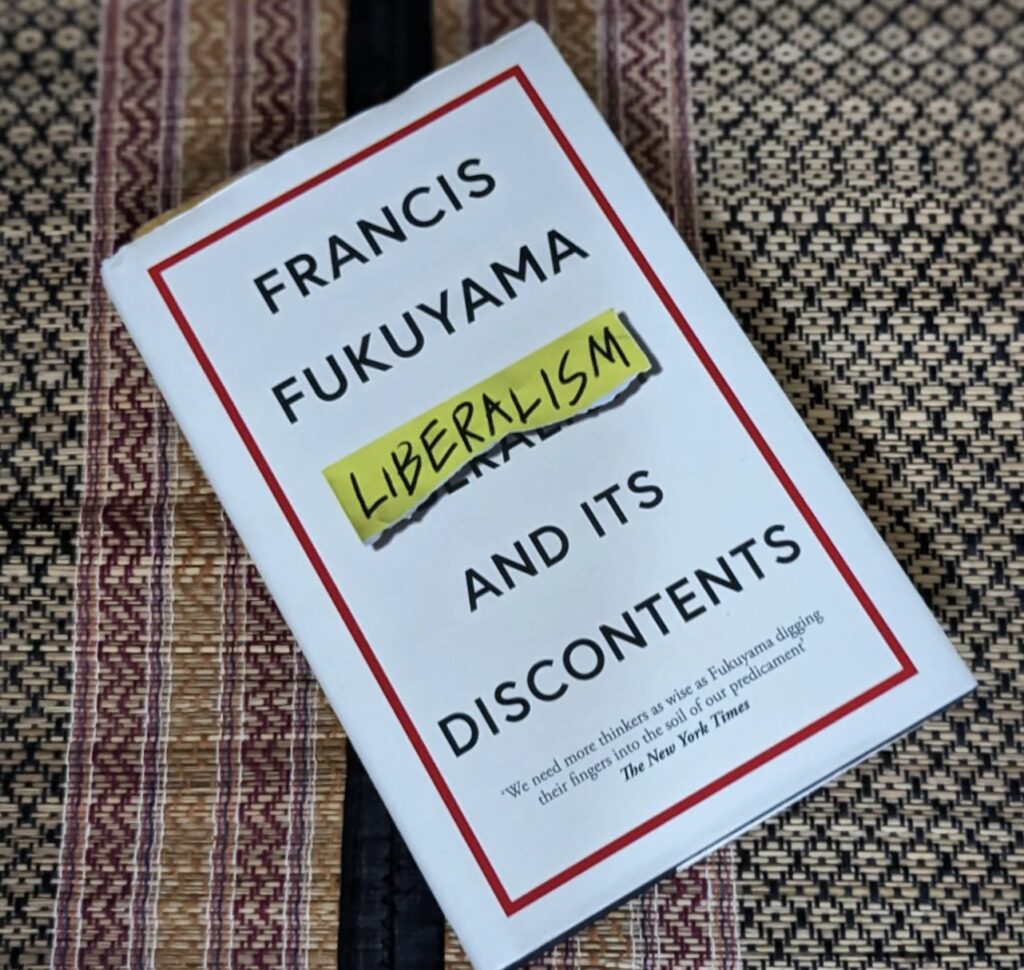
    Soon the IMF and the World Bank became allies to this ’cause’. Countries that were in an emergency needed to stabilise currencies. Financial bailouts came attached with strings of privatisation and free-trade policies. The Carvallo plan in Argentina is a classic example. Years later, Davison Budhoo turned whistleblower on this approach, disclosing that books were cooked to doom the economy of a poor but strong-willed country. This approach also provides context to Fukuyama’s “end of history” speech in 1989 in which he stated that free markets and free people were inseparable. (Personally, this was an eye-opener for me, as I had never read his books through this lens!)

    Meanwhile, in China, this was being proven wrong as Deng was pushing free markets but not really ‘free people’. In addition, party officials were using the former to become business tycoons. Friedman, during his visit, asked the government to increase the shock therapy! This created a crisis of layoffs and unemployment, the background for the Tiananmen Square protests and the following massacre. On the same day, the socialist Solidarity Party won the elections in Poland, following which shock therapy was implemented, leading to a full blown depression that lasted years.

    In 1994, the ANC in South Africa had a unique opportunity to reject free-market orthodoxy and create a nationalised economy. They even created a Freedom Charter, but their focus on removing apartheid and gaining political control caused them to underestimate the importance of economic control, which the white government, with support from IMF, World Bank, and GATT cannily seized. Meanwhile, in Russia, Yeltsin’s implementation of the playbook led to such protests that the regime became effectively dictatorial, leading to the rise of oligarchs and ultimately Putin.

    Also in the early 90s, the Asian Tigers – Malaysia, South Korea, Thailand were all growing rapidly even with their protectionist policies. The big corporations wanted in, and in the mid 90s, the IMF and the newly formed WTO, pressured the governments into lifting barriers in financial sectors, leading to a surge of (legal) speculative investment. And a crisis. And the vultures started buying local giants at garage sale prices. Samsung, Daewoo, LG and so on were split up and parts were sold. 24 million people lost their jobs in 2 years, and its imprint is now evident in religious extremism to child sex trade.

    And then it all came home to roost after 2001. Ironically, Rumsfeld’s speech on outsourcing all except war fighting to private parties happened on 10 September, 2001! In many ways, the privatisation of multiple government functions were the reason for the security failures behind 9/11. Abroad, ‘logistical support’ was extended until it reached a McMilitary experience, first displayed in the Balkans. Gated suburbs, movie experiences, fast food outlets, all part of fighting a war! Inside the US, Homeland Security is the classic example – politicians create the dead with rhetoric and policies, and private industry fulfils it. People like Cheney and Rumsfeld have made fortunes despite being supposed to serve the people.

    In the guise of getting Saddam pay back the debts to Kuwait, the US created a corporatist state of Iraq, after putting its civilians and citizens through the shock process. This time, not just economic, but physical and mental torture. An anti-Marshall Plan. With temp agencies running the business of war, and making money. Lockheed makes both the weapons and fighter jets as well as owns healthcare companies that treat people injured from the use of these weapons! It writes more code than Microsoft since it handles IT divisions of the government and its data management.

    Wars are not the only shocks. As shown in Sri Lanka, even tsunamis offer an opportunity for disaster capitalism. Fishermen turned out of their land so big hotels could get beachside properties for cheap and politicians and bureaucrats could make money.

    The dystopian future is already playing out in Israel – a corporatist government and a market that rewards a climate of war, because there are companies that make weapons, security systems, surveillance systems and so on.

    The good news is that societies are pushing back. Countries in Latin America, for example, are rejecting IMF and World Bank loans. People are electing politicians who are working on the common good.
    Naomi Klein does a stellar job of unveiling the thinking and execution of disaster capitalism. Thoroughly researched, well documented, and accessible, this book does provide a shock to the reader as well, because it shows how depraved humanity can be. But as she says, so long as we have the collective memory, our disorientation can be made minimal, and we can push back on vulture capitalism. And that’s why it’s important to read this book.
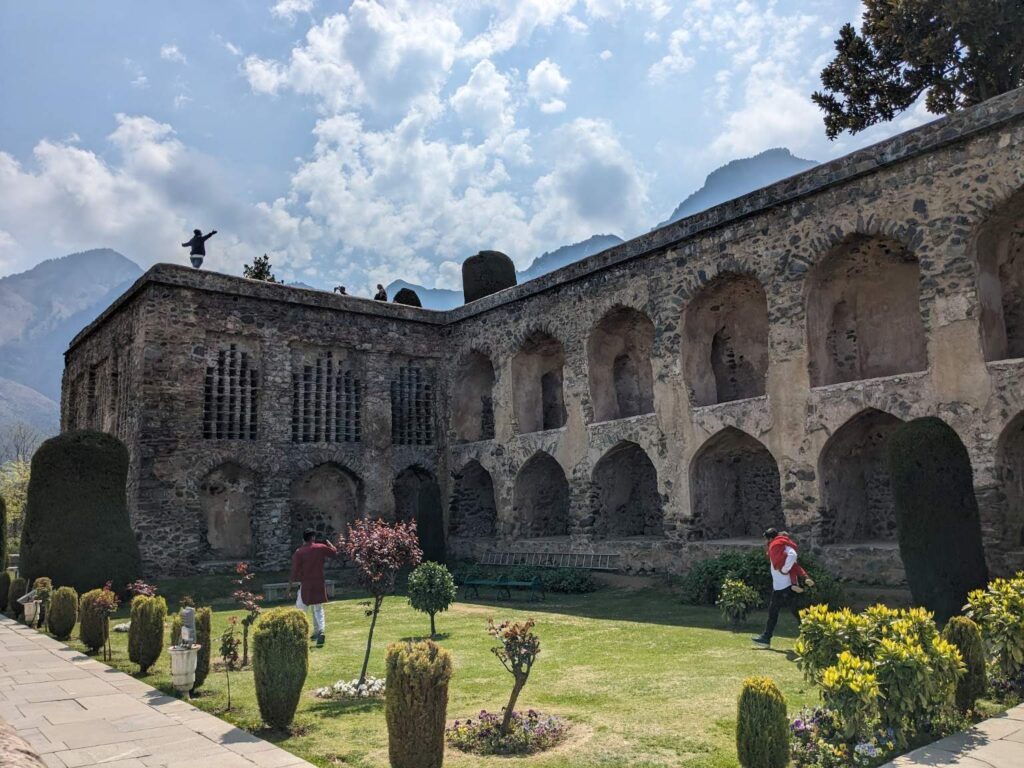
    The Shock Doctrine by Naomi Klein
  • On the first anniversary of ‘ordinary kindness’

    It’s Saturday. The intercom rings at 5AM. D and I both curse, and a 20 second conversation follows on how this had to be a delivery, and why the security is buzzing us when we have agreed on “9 to 9, no calls”! D manages to reclaim some sleep, I can’t.

    At 7 ish AM, I am pissed, and have to use extra willpower to enforce my morning exercise routine. I want to give that security guy a piece of my mind, and hurry to catch him before his shift gets over. Turns out I am a minute late, and the other security guy doesn’t have his number stored. WTF dude! I am even more pissed, and tell him that I need the number when I return from my morning jog.

    (more…)
  • Gut : The Inside Story of Our Body’s Most Under-Rated Organ

    Giulia Enders

    When you think of it, it’s quite amazing how emotions we might attribute to the mind find metaphors related to another part of the body – ‘gut feel’, ‘butterflies in the stomach’, ‘sh*t your pants’, ‘pit in your stomach’ and so on. The metaphors are based on actual physical sensations, and so on hindsight, it is quite obvious that the gut and the brain have quite a connection.

    If we consider our development as an embryo, it goes along three ‘tubes’ – cardio-vascular, nervous, and the gut systems. But unlike the heroes of the first two – the heart and the brain, who have attention and literature, we rarely even think about the gut unless we have an ailment. But it is amazingly complex, with links to even something like mental health, and that’s what makes “the inside story of our body’s most underrated organ” a really interesting read.

    Giulia Enders does an excellent job of breaking down the complexities, much like some of her favourite bacteria that find a mention in the book! The book is not just accessible but entertaining too, with fun illustrations popping up on a regular basis. However, despite not sounding like a boring thesis, the book is full of not just information, but insight. This goes all the from the scenes of the behind like how does pooing work, and the kinds of poo, to behind-the-scenes walkthroughs of important and not-so-known processes like the gut structure and how organs transport food, to practical advice on everything from allergies, things like reflux and constipation, and diets, to cleanliness, and the MCU equivalent of the microbes in our gut.

    As someone who has been at the mercy of clueless gastro-intestinal practitioners, I’d say that her stated aim of making information available to a broad audience is in itself worthy of an applause. An absolutely fascinating read, even if you’re only vaguely interested in this inner piece of ours!

    Things I learned
    – The gut accounts for two-thirds of our immune system
    – There are inner and outer sphincters, representing our unconscious inner world and our consciousness respectively. Their understanding of the respective spaces, and their ‘conversations’ and relationship determine when you fart, or when you have to just go!
    – Squatting is indeed the best way to defecate, as it leads to a nice, straight intestinal tract. This is scientifically proven in the book
    – Saliva is basically filtered blood! It also contains a painkiller stronger than morphine, called opiorphin. Because the mouth is super sensitive thanks to more nerve endings than any other part of the body
    – The stomach is shaped like ‘Quasimodo’ so that water and food can be treated separately
    – Lactose intolerance is not an allergy, it’s a deficiency – the body not having the enzyme to break the two sugar molecules. In 75% of the population, the gene for digesting lactose begins to switch off as we grow older because we are no longer reliant on mother’s milk
    – Rumbling tummy is the ‘migrating motor complex’ at work. And it’s more from the small intestine. Housekeeping when that and the stomach are empty. If something enters, the process stops. In this context, regular snacking isn’t a good idea, and needs separation of at least 5 hours
    – Solve constipation with dietary fibres, fluids, pro and prebiotics
    – The extraordinary story of the sea squirt, which navigates the oceans, finds a good place to settle down, and then proceeds to eat its own brain!
    – Irritable bowel syndrome could be caused by micro inflammations, bad gut flora or undetected food intolerances (but as you might have experienced, doctors pooh pooh patients as hypochondriacs or malingerers!)
    – The brain can receive information from the gut at the insular cortex. Bud Craig’s theory is that human self awareness originates in the insular cortex. It consists of three hypothesis – this part gets info from all over the body and organises it to form an image – a representation of our feelings. The second part of the hypothesis is that the purpose of the brain is to create movement – for the best life possible. The third part of the hypothesis is that to make the best possible movement, the images are important and the brain and the gut are both qualifiers for the central role in giving this information
    – Gut bacteria vary by geography too – climate, food etc all play a part
    – “Genes are possibilities. Genes are information. Genes can be dominant, forcing features on you or they can just offer their abilities for us to use or not. But most of all, genes are plans.” Lovely!
    – Our collective gut bacteria have 150 more times genes than a human. Who are we really made of!
    – Gut bacteria are of 3 types- bactericides, prevotella, ruminococcus.
    – Haem is needed for many things, like production of blood. Its lack is a genetic defect that has been seen in Romania – results in symptoms that include garlic intolerance, sensitivity to sunlight, and red urine. Vlad!
    – Yoghurt is nothing but milk pre-digested by bacteria. Buy ones that use bacteria that produce dextrorotatory lactic acids rather than levorotatory.
    – Lactobacillus Reuteri can significantly lower cholesterol and lipid levels, and increase HDL
    – A toxoplasmata infection causes our immune system to activate an enzyme IDO which breaks down the substance the invaders like to eat and forces them to enter a dormant state. But this eatable is also an ingredient needed to produce serotonin. This potentially causes suicidal behaviour.
    -Eat prebiotic dishes

    Gut : The Inside Story of Our Bodys Most Under-Rated Organ
  • Yuki, Indiranagar

    Our last night out in 2023. We bet on the traffic being low on the night before New Year’s eve, and were thankfully right. I had seen Yuki from the metro, and thought the ambiance was great. And indeed it was. Yuki is on the second floor of a building that gives you a world of options – Leon on the ground floor, and I think, a North Indian restaurant, coming up soon on the first. As the name suggests, Yuki has Pan Asian cuisine.

    (more…)
  • #Bibliofiles : 2023 favourites

    In many ways, the books I read are my mind’s zeitgeist, and naturally the favourites reflect this. This year, the list is along broad lines of History & Culture, Mind & Philosophy, Systems of the World, and Fiction. And with that little prologue, as per tradition – from 20192020, and 2021, and 2022 – we have this year’s list of ten (plus a few 🙈). From the 65 books I read in 2023…

    Favourite Reads 2023
    (more…)