Author: manuscrypts

  • Johnny Gone Down

    Karan Bajaj

    The good news is that Karan Bajaj moves away from Chetan Bhagat territory (which can’t be said of his earlier work ‘Keep Off the Grass’, though I found it better than Five Point Someone) and he’s not really among the ‘Rakhi Sawants of Indian literature‘ (if it is what I think it is), the bad news is that contrary to what he says, I thought he was more connected with/in KOTG, and therefore the work had more depth, as though he was sure of his footing.

    Having said that, he has made the canvas wider with this work, not just geographically, with a protagonist – Nikhil/Nick, who moves from MIT to Cambodia to Thailand to Rio to Minnesota to Delhi but also with the trades he picks up – from Buddhist monk to drug lord to an internet-boom millionaire, and therefore the experiences and people related to each theme.

    While this works in providing a racy script, it also means that I felt a superficiality in the way each theme was handled. The ‘Second Life’ styled virtual world, for example, while it typified the kind of services that were launched in the boom era, was way too easy. And that’s just it. Everything, from the beginning, whether a positive or negative, just fit in and flowed, too smoothly, just like Karan Bajaj himself describes Nikhil’s state when his life begins to settle back. But I think its still a good read and the pricing really helps. 😉

    [Spoiler, relatively] I’d rather have had an unpredictable end in line with Nikhil’s life until then, but instead it turns philosophical. In fact, I thought KOTG’s ‘comfortable in own skin’ was better than the ‘highs-and-lows life better than even keeled, stable existence’. A better thrust on transience would’ve worked better for me.

    But like I said, unless you’ve been a Colombian drug lord, you’ll find the various karmayogi avatars in Nikhil’s life interesting enough for you to not regret picking it up. 🙂

  • Hearing Laws

    His wife was shouting, again, but despite being at the receiving end, he knew he couldn’t fault her. They tried healing it themselves, with no success. A few days later, as they sat with the professional, answering her questions, her voice was still ringing in his ears, or so it seemed. The doctor diagnosed Tinnitus.

    until next time, a heard mentality

  • Thulsi N Thyme

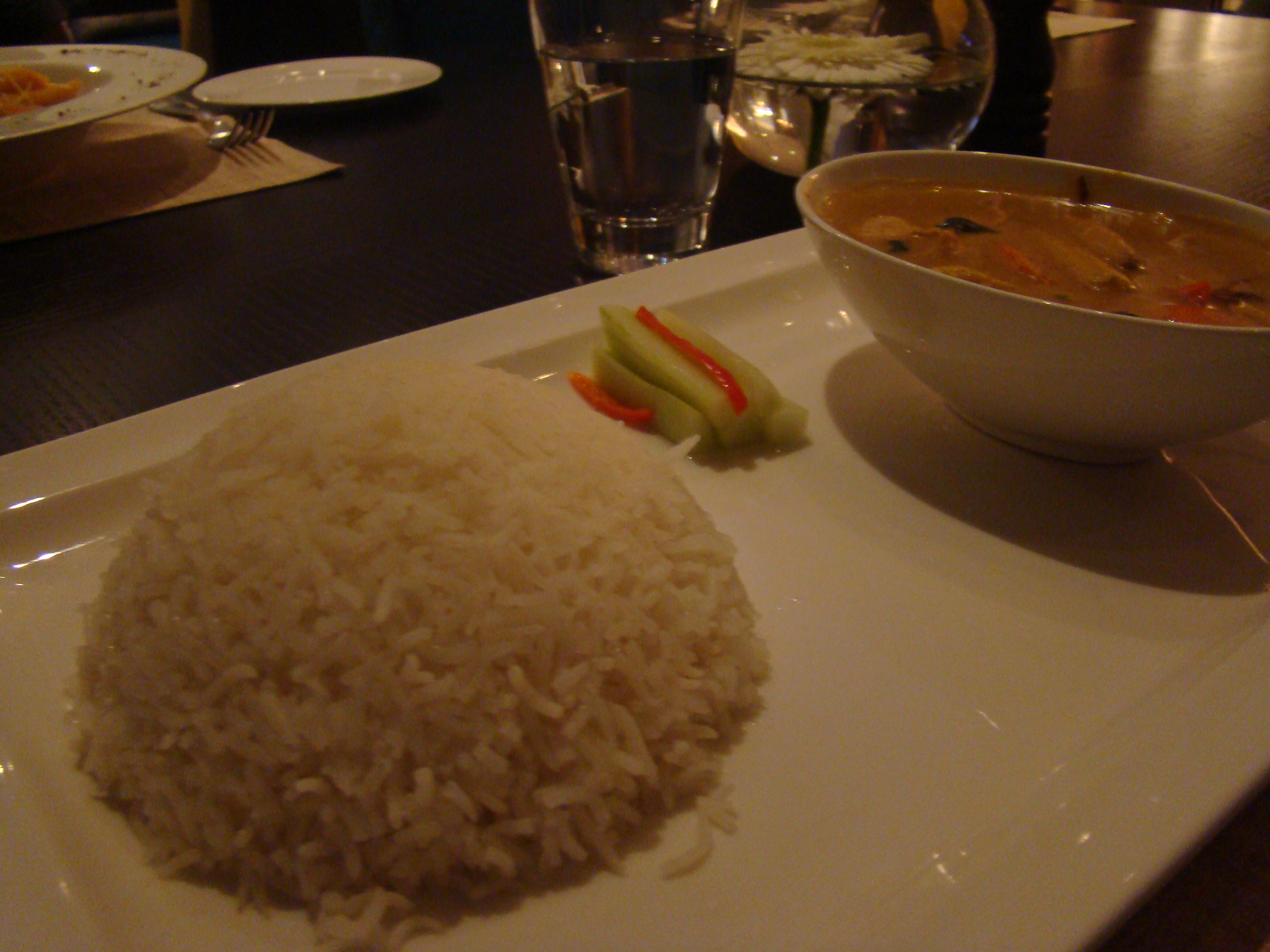
    Kyunki sauce bhi kabhi herb thi. Two can play at that game eh? But seriously, a restaurant with a name like that does manage to grab your attention. I’d been seeing the name a bit at my regular online haunts, but this was one time when one column led to another. Well, almost. I was covering Poshvine (if you’re a foodie in Bangalore, you should check it out) for my startup column, and seeing Thulsi N Thyme listed there, went ahead and reserved a table via Poshvine.

    TnT (from now on) is located on 100 feet Road, Indiranagar, after the 12th Main signal when going from Koramangala, (map) above Touche and Cream Centre. For now, only the 4th floor is open though they plan to expand to the next soon. The resturant has, what they call an Indopean theme, in terms of the menu. The alfresco section, with the tree canopy around, did manage to provide a wonderful ambiance, despite the mild rain and strong winds that played havoc with the menu card. In a wonderful display of un-snobbery, one of the service staff even quipped that they should probably look at heavier menu cards. Nice 🙂 The plan is to provide some kind of screens soon. On to the menu (there is a beverage menu too, and they seem to have a decent collection of wines, cocktails, mocktails….)


    (click for larger image)

    In addition to the Indopean menu, there was also a pure North Indian 2 pager. We started with an Asparagus and Red Capsicum soup. A deliciously thick soup, and presented well. The red capsicum portion hit the spot but the asparagus portion disappointed slightly, and the hard garlic bread didn’t help either. We then tried the Burrah chop Lazeez, which was reasonably good. The meat was tender, and the char grilling only a couple of notches below perfect. There seemed to be a cardamon twist to the mayo(?) that came with it. Quite good, as was the tapenade.

    For the main course, we asked for the Stuffed Chicken Makhani and the Baked India Salmon. The fish was wonderfully cooked and the only small let down was again the bread. The stuffing in the chicken was goat cheese, which together with the subtly flavoured risotto, ensured that we were stuffed too. 🙂 Unfortunately that meant we couldn’t try the desserts. 🙁

    The thing that works for Thulsi N Thyme is the balance they maintain between the Indian and European constituents in the dishes, and yet manage to bring out both. It’s quite a fresh take on the dishes we’re used to. Well worth a visit, and if you want to make it a bit more special, go back to the top, and get there the same way I did. 🙂

    Thulsi N Thyme, 4th & 5th Floor, #762, 100 Feet Road, Indiranagar Ph: 25271555/666

  • A social club of one

    Sometime back, I read a post on @daddysan’s blog on choices and how we “defend freedom of choice but we criticize those who exercise it because those choices may not be concurrent with ours.”  To be noted that the thrust of the argument is not on ‘labeling’ products/services per se, but labeling the people who consume it, more so in cases when it’s a personal choice and doesn’t endanger or even affect others in a significant way.

    I found this post interesting because I have always been intrigued by choices and their significance, not just from the perspective of whether they are choices at all, but also from that of the judgmental robes we like to wear. The last time I had written about the latter was in the context of expertise. But a comment on this post gave me quite a new direction for thought. More on that in a bit.

    In the context of the post itself, though I understand that labeling (and battles around them) has probably been around from the time the species became 2 in number, I think the publishing power that the internet created has taken it to a whole new level. So while “people who smoke/drink versus those who don’t”, “people who apply coconut oil on their hair versus those who don’t” and so on have had battles fought with much fervour, the internet’s ability to aggregate opinion has escalated many issues to war levels, like the examples daddysan has used.

    And so I wonder if it has something to do with the ‘Like’ necessity that has increased its hold over our lives recently. Social endorsement, even from total strangers. When I am a consumer of X, and you chose to buy Y instead of X, it is as though you have not ‘Liked/Retweeted’ my awesome intelligence in choosing X. Peer reaction was probably a major factor in my choice, whether I acknowledge it or not, and in saying that I have gone wrong, you have invoked my ego and brought up the subject of whether I chose X purely for its tangible or even intangible benefits or whether I chose it to conform to some section’s decree. Now, you probably didn’t mean to do any of this, and also are under some sort of peer review process yourself, but that’s irrelevant and it’s now war. Just like many of the Likes/shares/retweets are from people I don’t even really know, the war just brings in all sorts of strangers and camps.

    For the record, I have exactly one Apple product, which was gifted to me, and if it has any iron parts, it should be rusted by now. I read Chetan Bhagat and when I get a chance, take potshots at him. Just can’t resist. 😀 I think Ponytail sucks, and again, don’t lose a chance to crack a line at his expense, but I have held back much since the time he made a movie with the awesome Funny Deol. Joke sako to Joke low is the policy.

    But, enough. The comment that made me think was made by Jo Chopra McGowan, and it was about how individual choices add up, affect others, and could probably end up in impacting popular culture/lifestyles etc. I’d never thought of it that way. But yes, most of us/our actions influence at least one other person, and so the chain goes. More often than not, our reasons for doing so remain un-shared, and somehow one personal choice could create a conformity wave. Obviously the easy way to stop it is to make conscious choices and that brings us to the vicinity of square one. 🙂

    until next time, unheard mentality!

  • Abandon : A Romance

    Pico Iyer

    I’m quite a fan of Pico Iyer’s travelogues, so this was a book that had to be checked out. The protagonist is John Macmillan, an Oxford-educated Englishman, in California to study the work of the Sufi poet, Rumi, and complete his thesis under the guidance of his professor Sefadhi. On a trip to Damascus, he happens to meet a reclusive professor, who requests him to carry a package to California, to be handed over to a Kristina Jensen. While doing that, he happens to meet Camilla, Kristina’s sister, who, despite her flighty and fragile nature, makes inroads into his life. And then starts a journey that’s part a search for an Iranian manuscript, part an inward search for John, much like the sufis – “We are even mysterious to ourselves, they believe: a part of us going through the rituals of our daily life, while another part, a deeper part, cries out for whatever it is that can take us back. The stranger whose voice we recognize as our own.“, “..for the true Sufi, the looking is the key. Even if you don’t know what you’re looking for.

    The word ‘Abandon’ too can be seen from different perspectives – from the Sufis’ mystical version of abandoning themselves to a higher power, John’s need to let go of his notions and caution, and Camilla’s seemingly unconscious way of living her life in abandon, even as she fears that John might her leave her because of it. To me, the novel by itself was a kind of ‘abandon’, just like John’s thesis in the book – as though the author worked on a structure for some part before, towards the end, he let the work chart its own course.

    I do think the book might have a lot of subtext that deals with Islam, its interpretations, and its relationships with the rest of the world, but I’m not really qualified to explore those aspects. Even otherwise, its a very good read, in which there seem to be layers hidden beneath each statement, waiting to be uncovered, just like the excellent poetry that is shared within.