Continued from Part 1, Part 2, Part 3
Breakfast at Tanaya consisted of a sandwich. They alternated between a muffin + croissant + roll/ sandwich/ chicken sub as part of the package. Not too heavy, it managed to always set the stage for a more elaborate lunch. The breakfast area overlooked the street and we watched the road get ready for a regular day even as we ate our last breakfast in Bali.
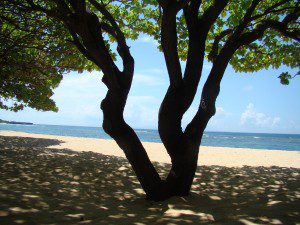
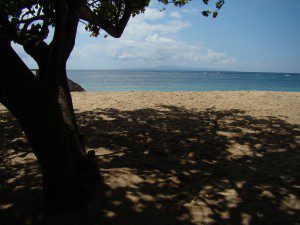 We had asked the guide to skip the Sukawati Art Market, so we started out a bit late, straight to Sanur beach, which has played a part in Bali history. We found it quite desolate, save a few tourists and boat operators who tried to take us to Lembongan, with its marine walks (saw something about a unique helmet that allowed to walk under water) and other attractions. We skipped that too, and went ahead with our regular lazing on the beach routine. When we got back and asked the driver/guide about the beach being quiet, we were told that it was mostly popular with the locals on weekends and with older tourists.
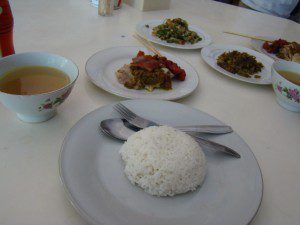
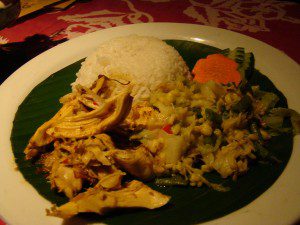
Lunch was Babi Guling – suckling pig, whose ads you would see all over Bali. I had this vision of an entire pig brought in front of me and had shared it with D many times. When they said it would be delayed by a few mins, it just seemed to consolidate that vision. D smirked as the dish was brought. It was a normal looking dish – the same rice, sambal, with the pork, fat, and masala replacing the chicken/duck earlier. The best part of the dish was the soup like thing which we weren’t sure whether to drink or mix with the rice. We drank. 🙂 A grease bomb of a dish, but it was tasty too. The other big blunder was Tehbotol, which I had assumed to be local cola! Should’ve guessed tea, and a rosewater flavour added! Ugh. As always, D got lucky with her Fruit Tea! We had now developed a little bit of an aversion for the rice + combo.
 We got back to Kuta to explore the Kuta, Seminyak beaches, but diverted ourselves to finish some last minute shopping! A sling bag, a travel bag, and laughing at the non-telecom simPati possibilities later, we stopped at ‘The Coffee Bean & Tea Leaf‘ for some thirst quenching. The very friendly staff also gave us a complimentary berry juice which was a competitor at a Barista championship. The beaches, meanwhile, reminded me of Calangute and Baga for the stretches that just went on and on, and for the fact that these were the tourist favourites, despite incessant hawking of everything from tattoos to pedicure on the beach! The perspective on Starbucks was worth a shot. 😉
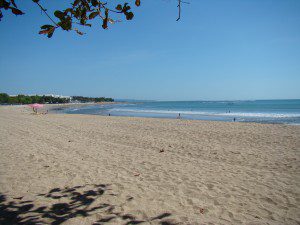
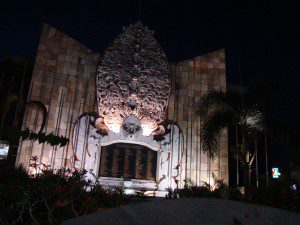 Next up was another spa visit, but this one – the Kupu Kupu Mas spa, was extremely good! On the way back, we decided to check the menu of Ketupat, a restaurant that was on our shortlist. Quite an amazing menu – Javan and Sumatran cuisine too, and a wonderful ambiance, but a combination of the rice aversion and distance from our hotel made us decide against it. We got back to the hotel, and walked slowly along Legian, shopping a bit, and gazing for the last time at the Ground Zero monument, a memorial of the 2002 Bali bombing.
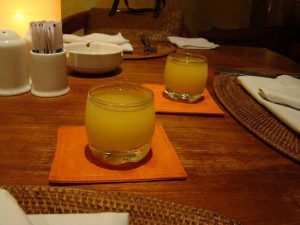
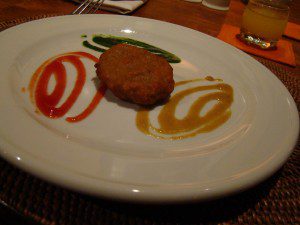
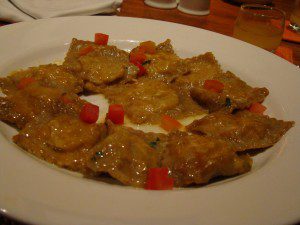
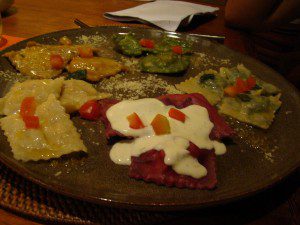
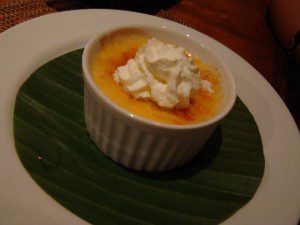
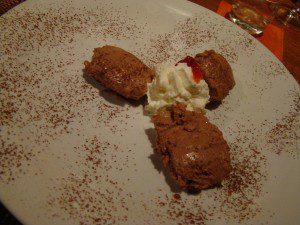
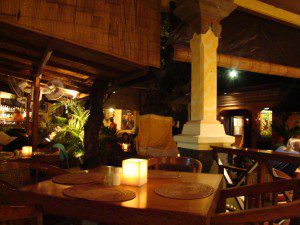 We had thought of returning to Batan Waru for dinner, but as D got into yet another shop to do her last minute purchases, I discovered a restaurant that was on our list. Amazingly, we had been walking in front of it all these days, but thanks to it being inside a tiny lane (next to Made’s Warung) we had completely missed Uns! They had some excellent Ravioli with a Bali twist. We also had some house wine, after they served us a complimentary drink and a cutlet! The Ravioli Uns (with a hint of coconut) and the Ravioli Carousel (six kinds of fillings from across the world) were both awesome. We finished the meal with a subtle and smooth Creme Catalane and a delicious Chocolate Mousse. Serly, the lovely girl who took and brought us our order, reminded us of an adorable cartoon character. 🙂 Uns had a buzz to it that indicated a crowd comfortable with the place. The music, the decor and the ambiance made it seem like a place that had somehow gotten time to stand still. This one is a must visit if you’re in Kuta. (it also has Indonesian food) The perfect last dinner @ Rp.276342 🙂
The next day dawned early – another 3.30, and Tanaya also gave us a breakfast box – we just had to tell them the night before. Our driver-guide arrived on time and also brought us a farewell gift! The lethargy of early morning travel was rattled by an adventure that D created. A sad and silly ending was averted by our guide who was extremely helpful and went out of the way to make our experience memorable in the right way! In the rush, I also managed to get a chocolate pedicure, thanks to a half filled cup someone dropped on the floor! The sunrise was the perfect backdrop for our departure from the ‘Island of the Gods’.
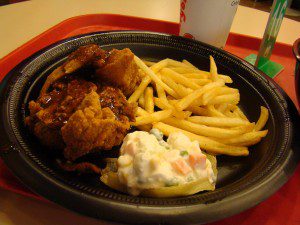
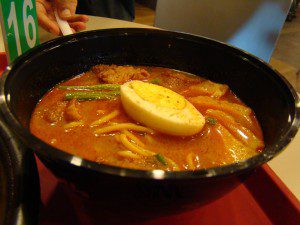
A few hours later, we were back at LCCT. This time we got seats and slept in the ‘traditional way’ – legs on the luggage trolley, during a 7 hour wait. Despite some Boost juices, we were massively hungry by lunch and decided to hog at Marry Brown. Fish’n’Chips and Chick-a-Licious with pepper sauce and a Mi Kari Ayam Goreng, that turned out to be slurpy good!
From super cute Japanese babies, we quickly moved to spoiled brats in the boarding area, and had a fair idea of what to expect on the flight. But the kids went even beyond that and several times, I had to give them a piece of my mind as they rattled seats, opened window shutters, and did as much as possible to make everyone around uncomfortable. Air Asia’s tagline is “Now, everyone can fly”. I add “unfortunately” to that, and wish there was a way to transport some kids/people as check-in baggage!
The airline magazine gave us clues on a potential next holiday. 🙂 Though the flight had taken off close to 5 PM, the sun blazed on and refused to set, as I read Paul Theroux’s consul tales from a geography that used to be part of the empire on which the sun never set. After touching down at Bangalore, as I climbed into the Meru, I mumbled a thanks to Indonesia for maintaining a platonic relationship with us and not screwing us over despite the earthquakes at its other end. We were home!
For those interested, our tour guide was Astrawan. If you are not into reading about the places beforehand, you should ask him for a driver who will be with you and is able to explain landmarks. We customised our tour as described, and without dinner, it came to Rp 4100000 for 2 people. Tanaya cost us close to Rp 3400000 for 6 nights. Despite the Day 1 a/c disaster, I’d recommend it. A rough estimate for the trip, including everything would be Rs.1.5 lakhs.
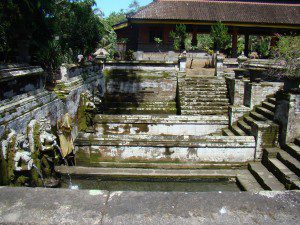
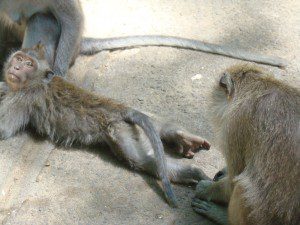
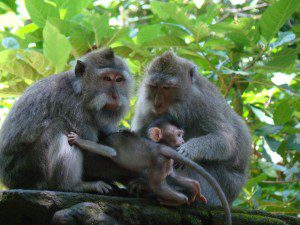
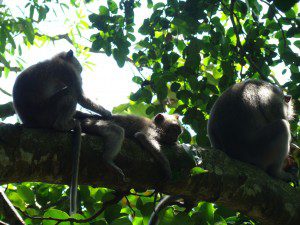
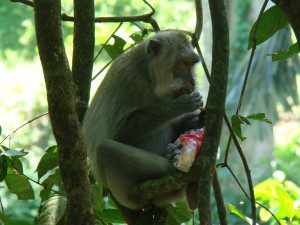
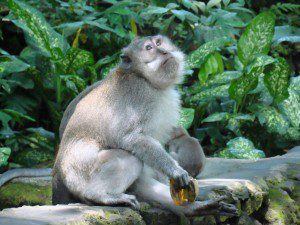 The next destination was Ubud, which is quite a popular base for many tourists who are more inclined towards art. But we had a simian pursuit in mind and were dropped at the Monkey Forest, with oral and written warnings on taking care of hats, cameras etc and what to do if a monkey decided you were a tree. This was a photo treat as we walked around clicking monkeys in various poses – contemplation, saying no to paparazzi, relaxation, family moments, spa treatments, junk and natural food consumption etc.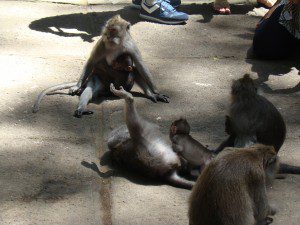

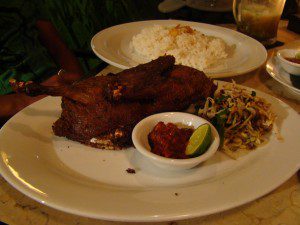
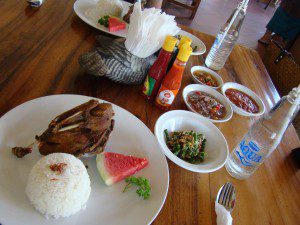 Lunch had been arranged at the famous Bebek Bengil Diner (Dirty Duck restaurant) Awesome crispy duck in which we could easily crunch through bones if we so liked and with excellent sambal and other side dishes that just added flavour after flavour. My only faux pas happened when I slurped the water melon right at the end without realising that the spicy sambal had seeped in during the meal! I almost choked to death. D tried to get me killed another way by pointing me to the ladies rest room, but i saw the symbol just in time!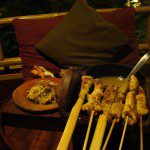
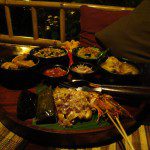
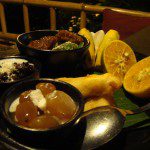 By this time, we had conveyed to our tour operator that we would take care of all dinners save one. We had discovered a Bali cuisine restaurant on Karthika Plaza and were dropped off there. Kunyit Bali had very friendly and helpful staff, excellent ambiance but the experience was killed by food that was an oilfield in disguise. We had ordered a 3 course set meal called Bali Megibung with chicken, fish, pork and veg appetisers, a clear soup, a main course with chicken, pork, fish, prawns and sausage. There were 4 kinds of desserts including sweets, but either we were too stuffed to enjoy it, or it was the oil, it just didn’t work. We were left Rp 341946 poorer.
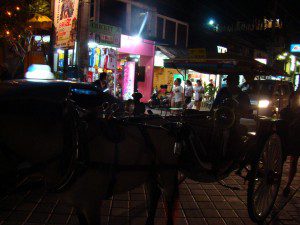 We had discovered a tonga ride the previous day and decided to test it out. A small distance cost us a steep Rp 100000. This was the figure our driver had asked us to expect too, after negotiation, so we got the horse to take us back to Tanaya. We also discovered a new route, though the last part was a series of humps that almost knocked us off the cart! Most of this was thanks to Jalan Legian being a one way. The place is a mini Bangalore in that respect!
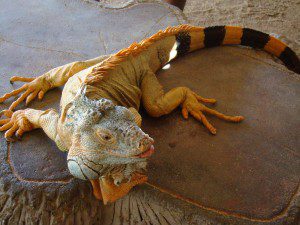
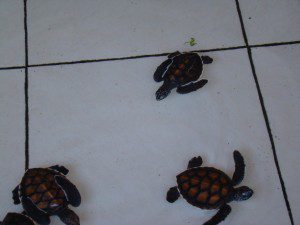 The next day, after breakfast at Tanaya, (part of the tariff) we set off for Turtle Island to see yep, turtles. We were wearing a ready-to-get-wet set of clothes and had a spare set ready. But despite the boat trip, we didn’t get wet at all. On the island, it wasn’t just turtles at various stages of the life cycle we found but iguanas, bats, a python, various kinds of birds, all of whom kindly posed with us in pics! For the umpteenth time, we heard (from the guide for the island tour this time) that he was also a Hindu. In fact, the boat operator even had the Gayatri Mantra as his ringtone!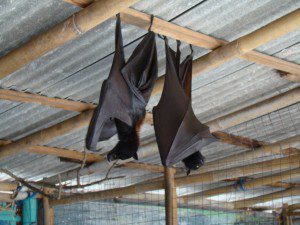
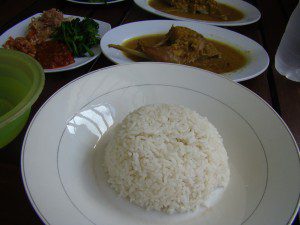 Lunch was at what seemed a branch of Ayam Betutu Khas Gilimanuk and consisted of the increasingly boring duck and side dishes combo. Immediately after that, thanks to some good advice from our guide, we visited one of the Krisna Oleh Oleh outlets which, apparently, was a regular haunt of locals, but was also the best place for souvenirs which wouldn’t force you to mortgage your house. We ended up doing a fair amount of shopping there. Later we realised that it was open 24 hours!
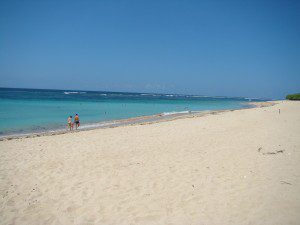
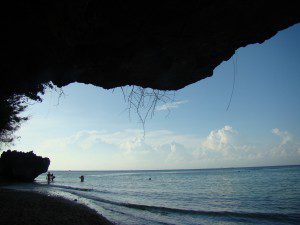 Dreamland beach, now known as new Kuta beach, was supposed to be next, but we ended up at Padang Padang, famous for its appearance in Eat, Pray, Love. 🙂 I did none of these, and snoozed off again to get rid of the headache, while D walked around and took some wonderful snaps! The entrance to this place is worth a mention, a tunnel like thing made of limestone that comes down from the road. It’s not a big beach and was pretty crowded, but that couldn’t take away its inherent beauty.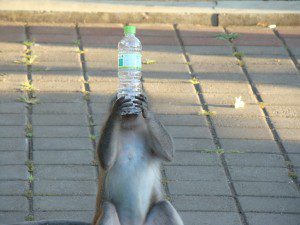
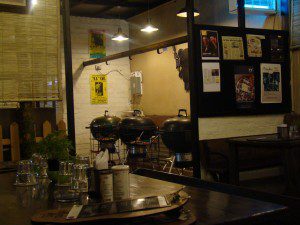
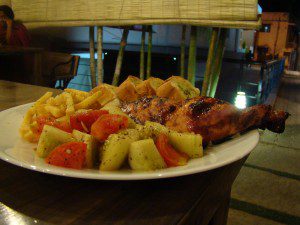
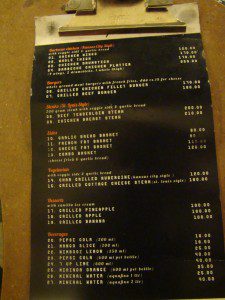 The menu (click to enlarge) is to the point, so don’t expect to see casual mentions of noodles or butter chicken anywhere. We decided to start with a Grilled Beef Burger and a Whole Thigh, and add to it in case we felt hungry. The Burger was excellent, crisp on the outside, superbly ground meat inside and helped by a tasty sweet and spicy sauce. The French Fries deserve a mention purely for the flavour that they brought to the table. Cheesy, mildly salty and overall a great complement to the burger. The Whole Thigh is served with a veg salad and garlic bread. Though it was quite decent, I’d have liked the chicken grilled a bit more. Since we were still hungry, we also got ourselves a Grilled Chicken Fillet Burger which was as impressive as its beef cousin. Continuing the theme of the restaurant, the desserts are also grilled (fruits). But we had a movie to catch and therefore skipped.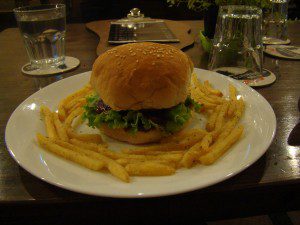
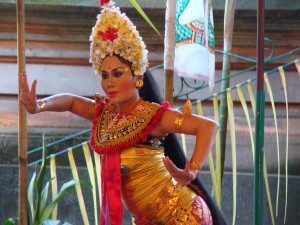
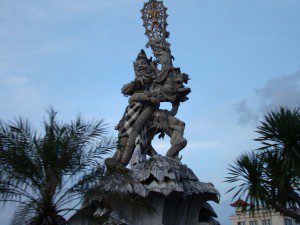
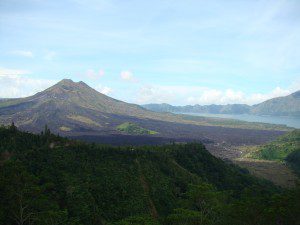
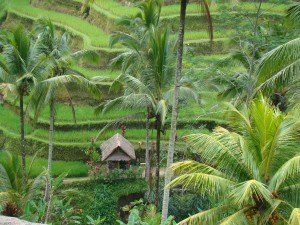 A batik gallery was next, and after the silver workshop that followed, we begged off the wood carving center which was on the itinerary and moved to Lot Tunduh village for some paintings. Very interesting stuff, but seemed too costly for our meagre wallets! On hindsight, we could’ve bought at least a small one – Tanah Lot or a local Rama/Sita version. In case you plan to, do some heavy bargaining. The rice fields at Tegallalang Village were up next. Picturesque stuff, and we trekked a bit, refusing help from kid guides, before it suddenly started to drizzle. We were then off to Kintamani, Mount Batur (an active volcano) and its neighbouring lake.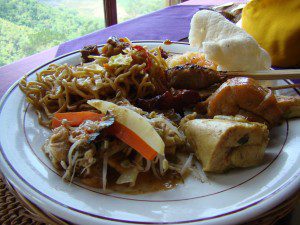
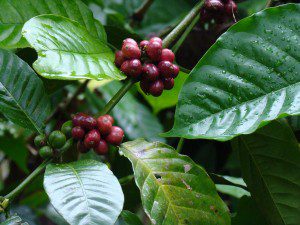 A coffee plantation was up next and we managed to see (well, the later parts at least) one of the world’s most expensive coffee being made –
 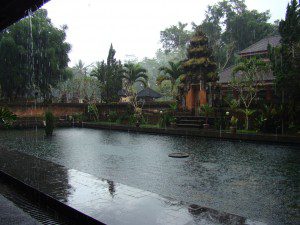 The last official item for the day was the Tirtha Empul temple, which had a
  Though we had a dinner option in our package, we had asked for a package without, but there was still some confusion. So we decided that we would take a call the next day and would buy our own dinner. And thus back in Kuta (where Legian is located), we dropped in at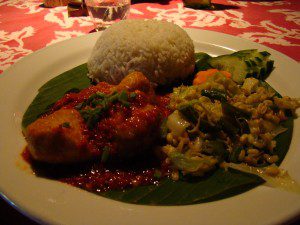
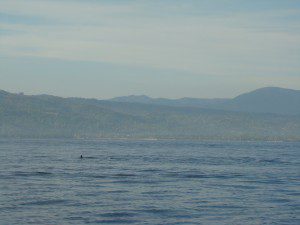
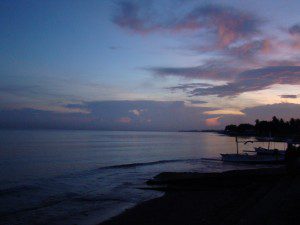 We reached the beach around 6. Thanks to the sub zero car temperature and the journey, we had to use what was euphemistically called a toilet there. Scarred! And someone had the temerity to charge money for it going by the sign, though they seem to have backtracked on that! It was just before sunrise when we set off on one of the many boats out for the same purpose. Typically one person per plank with about 6 planks and some kind of wooden structures on both sides would describe the boats. The Japanese were out in full force!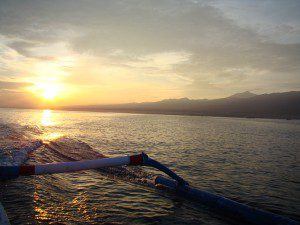
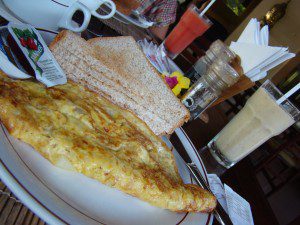 We returned in about 2 hours, appetite whetted, and quickly went for breakfast at the neat and clean Melamun Hotel nearby. It was run by an Australian lady who had been here for over 4 years now. She soon started chatting with us, and asked us where we were from. She had apparently been to Bombay once, when it was still called that and had found the in-the-face poverty too tough to handle. She said that in Bali, the poverty was a little less obvious, something that I’d ponder over and agree with in the next few days. Two sumptuous Continental breakfasts cost us Rp 80000 and kept us well nourished till lunch.
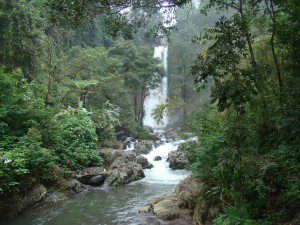 Stop 2 was the Banjar village – hot springs being the attraction. This time we had to pay to pee as well as store the extra set of clothes. The water was lukewarm actually and we thrashed about for a while in the 1-2m deep pool, with local college kids (some of them ogling from outside the pool) and a few foreigners – one couple with a baby, before moving on. The next stop was the Gitgit waterfall, which included a 500m walk. Quite a nice sight, and it began drizzling as we walked back.
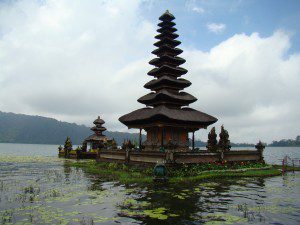 The Ulun Danu Temple and Lake Beratan in Bedugul was next, an extremely click-inducing venue. The Japanese were relishing this and it was fun watching the various experiments in poses. They had their uses though, since we got them to take good snaps of us together. 😀 This is also a kid-friendly place and we saw several animal shaped boats, which D refused to let me try! There was a good restaurant on the premises with an awesome view of the lake, but our destiny was elsewhere.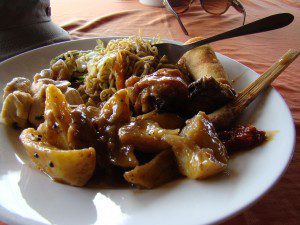
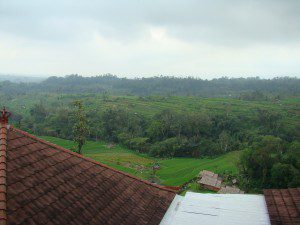
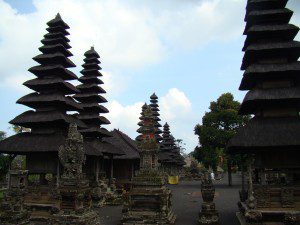 The penultimate stop for the day was the royal Taman Ayun temple, which seemed to have just finished hosting some event as we got there. We got the feeling that this was what it had been relegated to, a pity since it seemed a calm, serene complex, despite the bustle of the event paraphernalia, and with gardens and forest areas behind it. Entry into the actual temple was also restricted to temple staff, so we had to satisfy ourselves with snaps from the outside.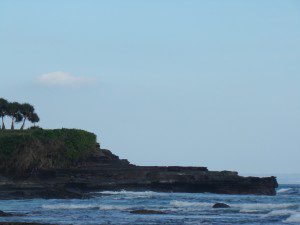
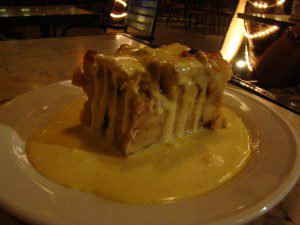
 In our research, the name Karthika Plaza had kept cropping up, and confirming that it was walking distance from our hotel, though a long walk at that, we asked to be left at the Discovery Mall there. The mall was like any other mall with known brands, eateries and versions of our own clothing retailers. On this street is the famous Bubba Gump restaurant which plays Forrest Gump on its screens in endless loops! But for dinner, we chose another name that had been praised much – kafe Batan Waru.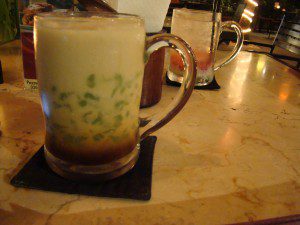
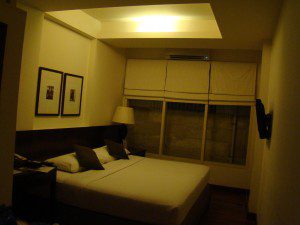 The streets, the architecture all reminded us of Cambodia, though this was a much more touristy version. As we turned off a busy main road with restaurants and shops into a smallish lane, we worried whether our choice of hotel was flawed, in terms of location. In a few minutes though, we were on to a snazzier road with seemingly unlimited eateries and shopping options. This was Jalan Legian and right there was our hotel –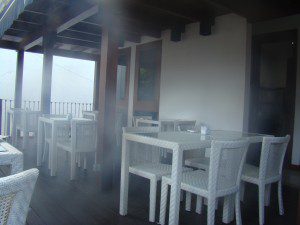
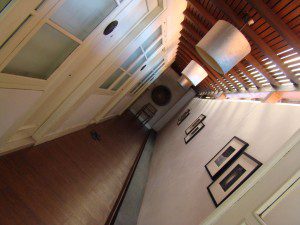
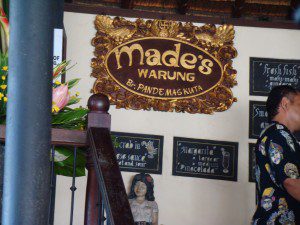 We asked at the reception for lunch suggestions and from the options, selected one that was on top of our list too –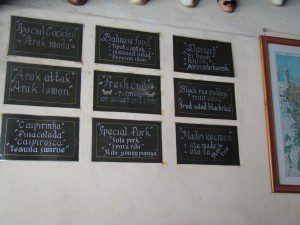
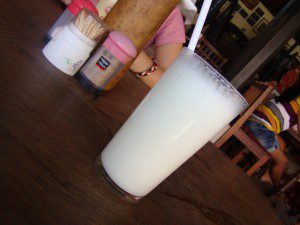
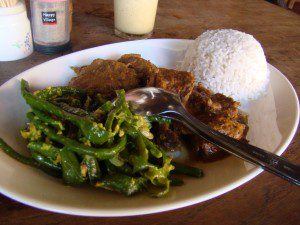
 Back to Tanaya for some sleep before dinner. I woke up from dreams of