The review first shone in Bangalore Mirror.
A stationery store named Staples on the ground floor, to a restaurant named Heera on the 4th, where time is purported to have stayed stationary – the capsule lift journey that takes you to the restaurant could seem like some layered Mughal intrigue. But time capsule it isn’t, and you realise that when you’re faced with a white door that makes you wonder whether you’ve gotten off on the wrong floor. But before all that, this is on Bannerghatta Road opposite Shoppers Stop, (map) and there’s valet parking.
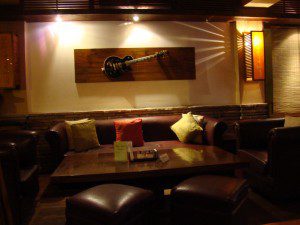
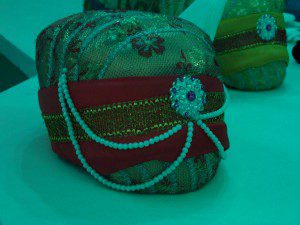 If you remember Heera Panna on Church Street, you can skip straight to the next paragraph. For those who don’t, the Mughal theme is brought out reasonably well – there are alcoves separated from the main hall with bead curtains and multihued chandeliers from high ceilings which bring the theme to life. (video) You even get to wear turbans and cloaks, and if you’re so inclined, you can play with wooden swords too. If you happen to be sitting in the main hall, Rekha is likely to dance for you on the gigantic screen to In aankhon ki masti (Umrao Jaan) In case you aren’t floored by this, there is a good chance that one of those loose floorboards will do it for you!
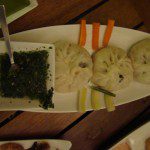
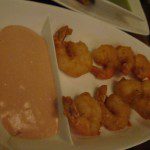
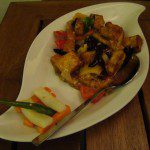
One thing that’s to be said for the menu is that you’ll be spoiled for choice. We started with the Macchi Tikka whose red chili paste and subtle ajwain flavours made an excellent combination. The Paneer Kurkure was up next, and the crispy covering served as a perfect foil for the cottage cheese. Figuring out a clear favourite from among these two was difficult. I was expecting much from the Lal Mirch ka Murgh, but it really didn’t deliver on the spice factor and seemed to be a dish that wasn’t sure of its identity and aspired to be a Manchurian. The Mutton Chops Masala Nasheeli Champein had no idea that it had been classified under ‘boneless’ and though its masala was quite good and had a fair share of spices, the lamb pieces themselves – whatever we could judge from the miniscule meat presence – were not really the best we’ve had. We also tried a couple of mocktails – the Red Devil did a good job with the watermelon, apple, and orange combination but the mint leaves were a bit like moss on Kerala backwaters, quite spoiling the drink. The White Orchid – lychee based, didn’t turn out a lot better.
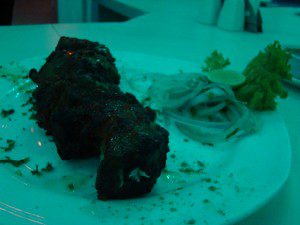
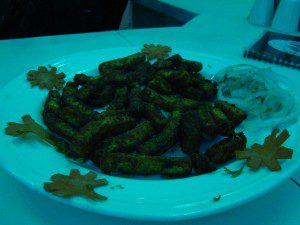
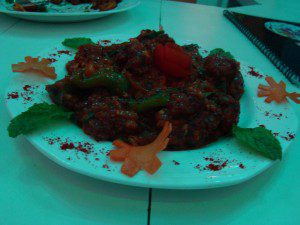
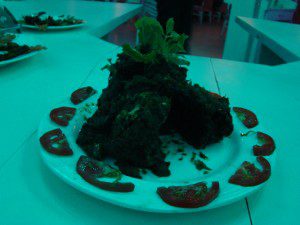
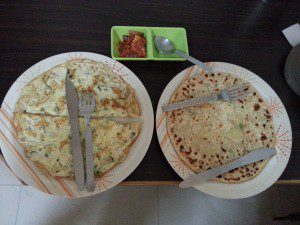
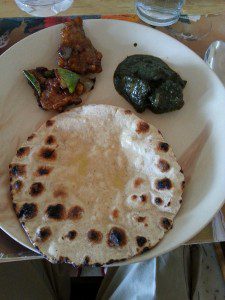
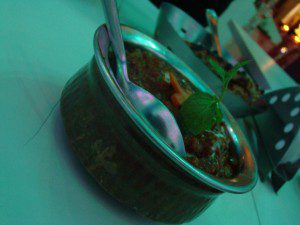 The plethora of choice continues in the main course too. And though the Mutton Kofta curry we wanted to try out wasn’t available, it turned out to be a blessing. The Gosht Nehari that was suggested to us instead turned out to be the best of the main course dishes with a silken rich gravy and well cooked meat. The Dum Aloo can be summed up with the fact that everyone approved of it until I smirked and told them that it was a Dum Aloo. Then everyone agreed that this wasn’t the way it was supposed to taste. Cheap thrills. The Murg Masala was mildly spicy and not a bad dish, but for a ‘special dish’, it wasn’t exceptional. There are some interesting options in the roti/naan section. The Baluchistan Kulcha with a kheema stuffing is definitely recommended as is the Harimirch ka Paratha, but you would want to stay away from the Channa Pudina ki Roti. The Gosht Dum Biryani was excellent – flavourful, non sticky rice and well cooked meat complemented by a reasonably good raita.
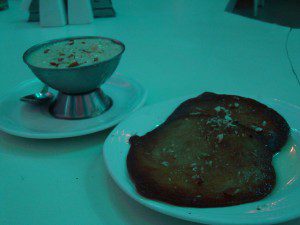 The Rabdi Malpua was easily the best among the three desserts we tried, since both components did their jobs well and worked as a combination too. The Kulfi wasn’t bad but not really stellar either, especially on a relative note. The disappointment was the Flambéed Gulab Jamun, which had such an overdose of rum that we felt that it should have been in the liquor menu.
For about Rs.1500, you could share a mocktail, a non veg starter, a couple of rotis, a biryani and a non veg gravy, and end with a dessert. (Inclusive of taxes) All things considered, the food really wasn’t bad at all, though it is priced on the higher side. The service was a tad too enthusiastic and we had to finally tell them that we would help ourselves. But what really takes away from the place, despite its relatively unique theme, is its condition of disrepair. It’s a bit sad to see it fraying, and not just at the edges, like a Mughal monument that no one seems to care about.
Heera, #17, 4th Floor (Opp Shoppers Stop, above Staples), Bannerghatta Road, Ph: 9972305871, 9972934777