…continued from Day 1
Day 2 started early – D has this habit of not letting us slip into a vacation that easily, so she makes plans so as to phase it over days. 😀 This meant that we had to get out at 7 AM. After a filling breakfast, we got ready just in time for the Travelerspal guys who were organising our trip to the Underground River. We were dressed to get wet, but were told that wasn’t the plan. So we quickly changed clothes and got into a van which could accommodate 8. I was thrilled.. for about 5 minutes, by when the other passengers had been picked up from other hotels nearby! But it was still comfortable – not with my back, but in general. Our guides were the Men in Pink 🙂 One of them reminded me of a Telugu/Hindi villain – the guy who played the swami in Sarkar, but a much fairer version! 🙂
There were stops at regular intervals because our boat was booked for 1.30 PM, and that helped. The first stop was for a fantastic view of the bay, and D also bought more nuts, water and a souvenir. A trip to a fairly neat loo cost 20 pesos. The next stop was at Ugong Rock. Cave hiking and ziplining (450 pesos/person) were the activities, and though I was tempted, I didn’t want to spend the rest of the days nursing a worse back. D went though, and thoroughly enjoyed. I’ve noticed that in people – they tend to be happy when away from me! Strange! I sat down in the waiting room and heard the local guide repeat the spiel (including the punch lines and the laugh!) about 3 times, then started reading news clippings. Apparently, this was Ugong Rock’s second attempt at becoming a tourist destination. The first time around, drivers never stopped between Puerto Princesa and Sabang, so it flopped. This time they had more funding from an agency, and tour guides were helpful. The men worked in the fields and fished, while the women worked on tourism. This meant that there was a balance – local life isn’t tampered with much, and they have a stake in making sure the ecology is preserved. This was a trend that I noticed here (across Philippines) – people were serious about nature and preserving it. In fact, they have a planting event too each year. More power to them!
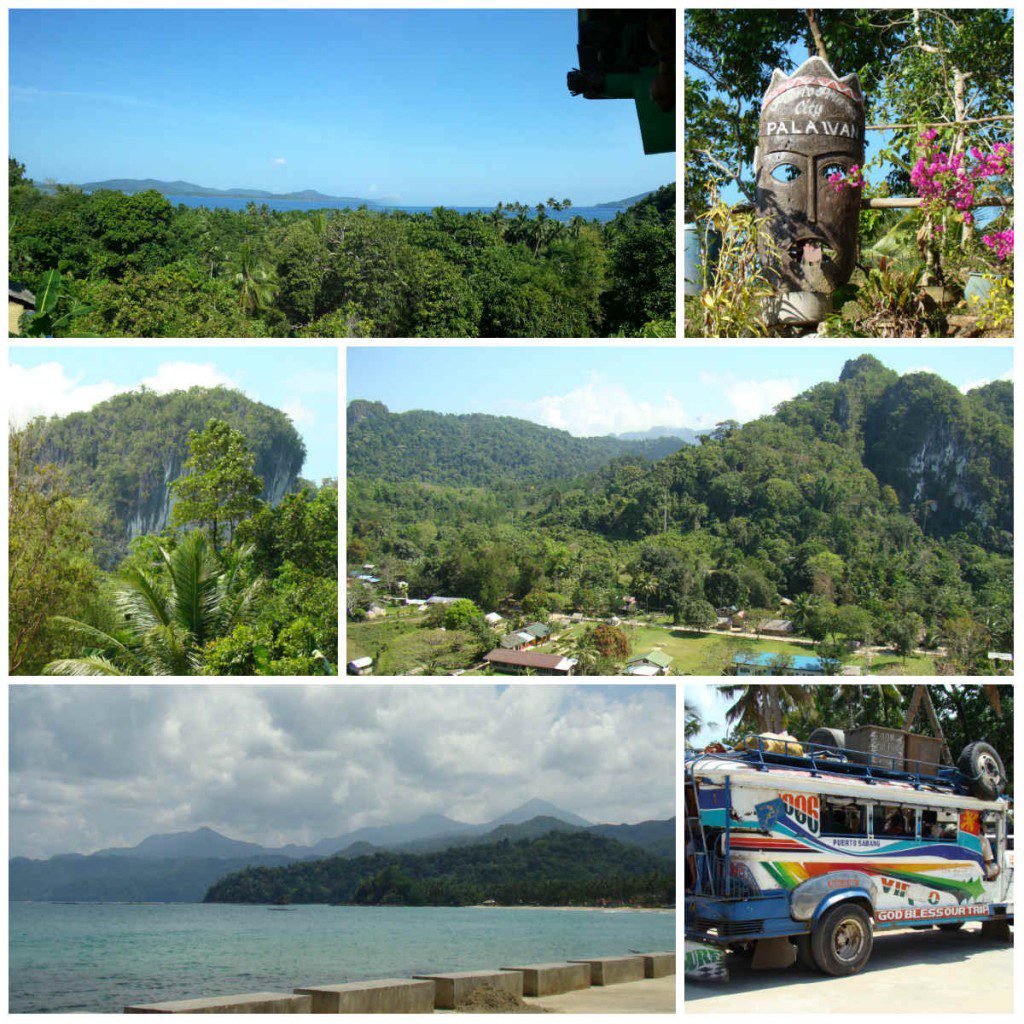
In about an hour, D got back and showed me photos. Seems the other couples were extra nice to her. 🙂 We proceeded to Sabang, and the driver (after warnings) played ‘roller-coaster’ on smooth roads. The other guide called a tiny bridge the ‘Miracle bridge’ very seriously, and then said that it was called so because it was a miracle it was still standing! We had an hour to kill and for lunch, after we got there. (part of the day trip deal that cost us 1500 pesos per person) Lunch was buffet with beef and pork and chicken and rice! We wanted to try woodworms but there was a huge crowd. After lunch we wandered about on the pier. Loos cost, but we were ok with this – at least they were maintained clean, unlike those Bali ones! D saw a jeepney again and looked at me accusingly. Thankfully, I was saved by the boat.
Clear blue skies, aquamarine water and we were off to the Underground River after paying an Environmental fee of 50 pesos/person. The first boat left us on the island from which it could be accessed. A short walk got us to the second boat point. But there was a huge batch of school (or college?) kids, dressed in green, and that meant that we had to wait quite a bit for our turn. We wandered around taking pics. One of the girls in green offered to take snaps for us, but we politely declined. She was quite the photography buff as we saw her later too, with others’ cameras, clicking away happily. 🙂 A monkey and its baby arrived to offer distraction. After a long while, we got our turn. Vested and helmeted we got into the boat as the staff kept clicking away photos! “Everybody wave”! We had a really funny guide, and I really would’ve liked to understand his Filipino comments as well. The passengers at the front of the boat also play ‘lightboys’. The guide tells them to point a flashlight given to them as per his instructions. Once inside the subterranean river-caves – one of the seven new natural wonders of the world, we saw the ‘bat cave’, with Batman – Boatman jokes from the guide. Rock formations that looked like Jesus/John Lennon depending on your religion, he said! It is quite spectacular – specifically the ‘church’, where rocks have formed ‘biblical scenes’ over millions of years! Humbling stuff!
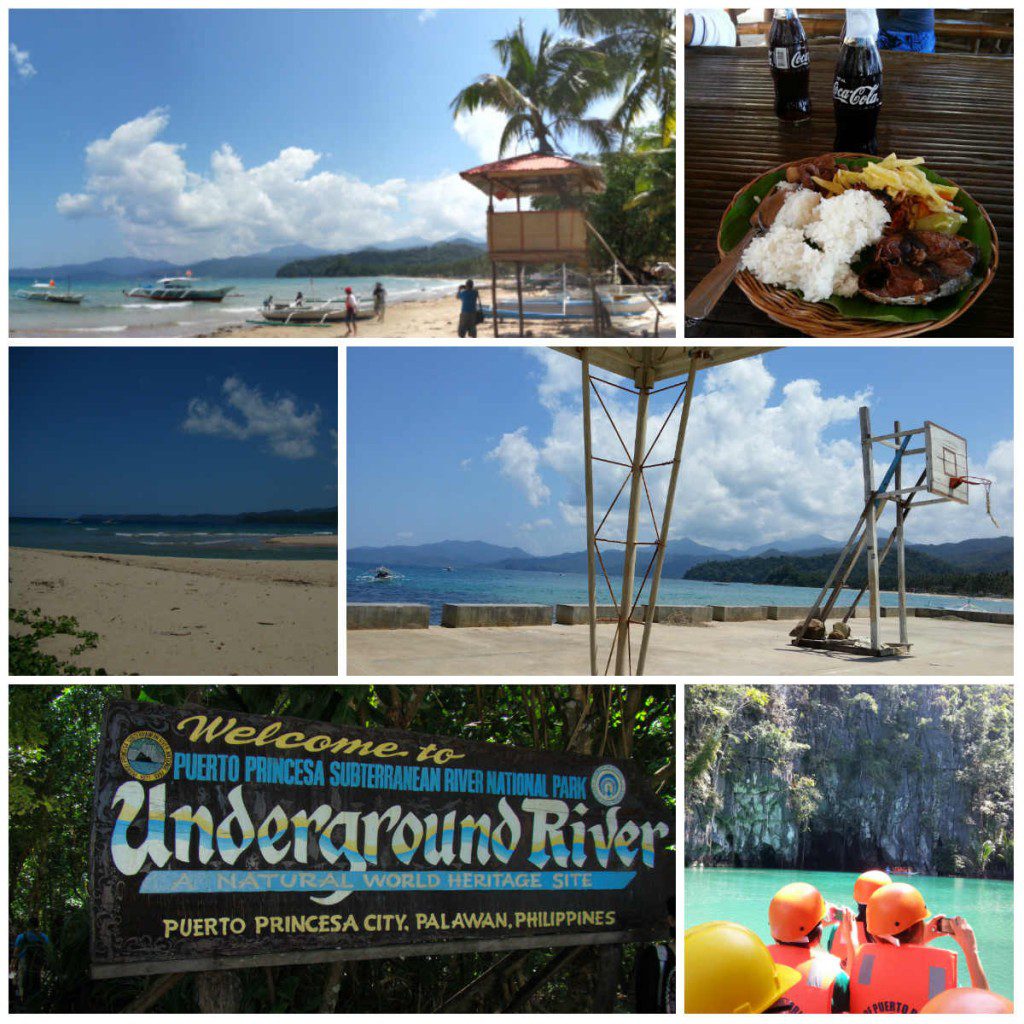
We got back to Pier 1, after D purchased photo prints. (of us, which they’d shot earlier) At Pier 1 we even saw a boat sinking! (check the last few seconds of this video) We were a bit antsy as we had a dinner reservation at Kalui (so packed that you couldn’t get in without reservations apparently) at 6.3o PM and didn’t want to miss it. But we took only just over an hour to get back. The driver played DJ while our ‘Hindi villain’ slept off!
We got back to Puerto Princesa and Mercedes to learn that Kalui was closed – Sunday! By this time Mercedes had given me WiFi access and the next option was Badjao. Relatively, it was a little off, but I think that’s a perception because of the dark stretches in between. But 50 pesos for the ride meant I wasn’t so right. The web told us to have the tricycle wait, since getting a ride back wasn’t easy. But we saw enough tricycles parked there, so ignored the warning.
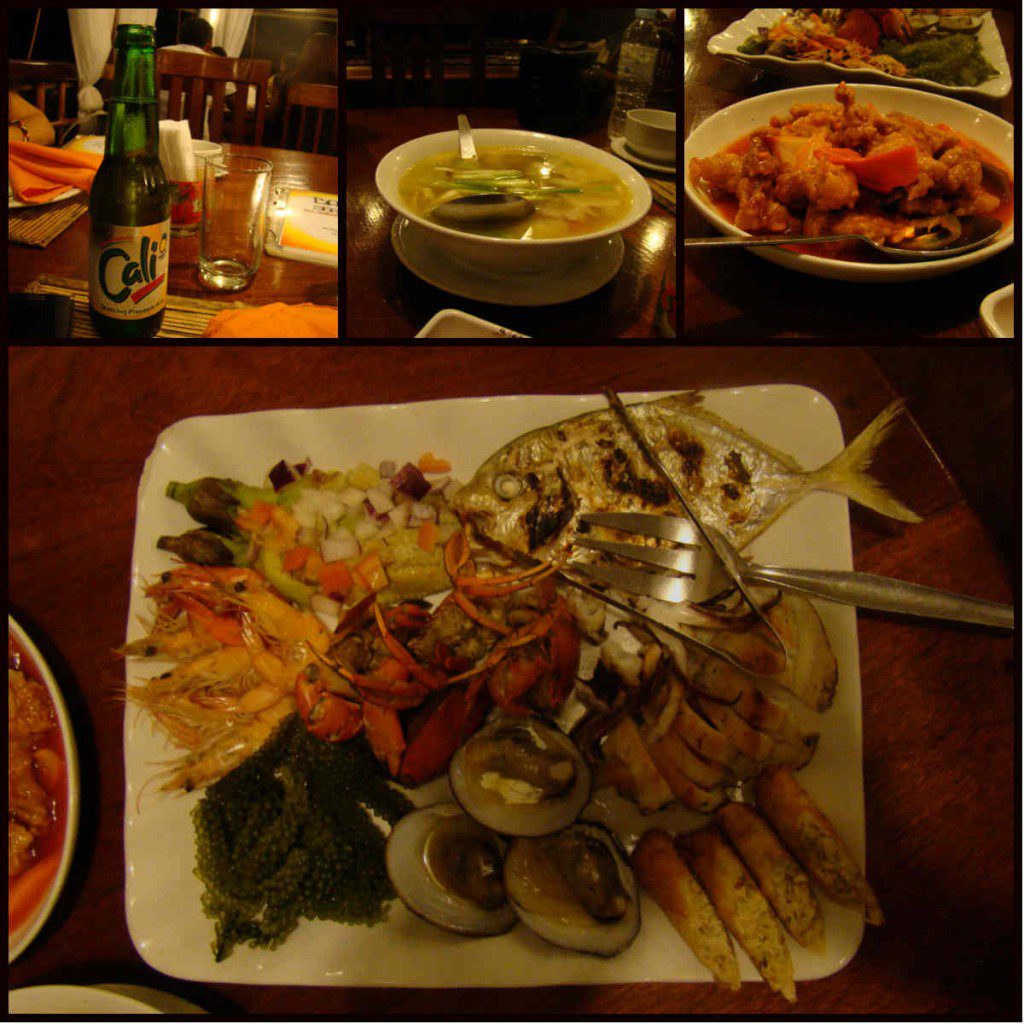
Badjao is an excellent dinner spot, thanks to its location on the shore, and there’s a definite buzz about the place as well. From the menu, we tried the Cali, a pineapple fizz drink, Calamansi juice, (sour citrus fruit) the Chicken Binakol soup, the much lauded seafood platter and pork! Except for the shrimp and crab, I managed to help finish the platter! The soup was different from anything we’ve had before – with tender coconut pieces and a sweet tinge! Loved it. The pork actually took a backseat. All for 1500 pesos.
We saw a couple from our morning tour there as well. The ride back was a fleece job- 100 pesos, and the guy actually had the gall to ask us if we wanted a city tour the next day! Thus ended Day 2!
 We had checked the