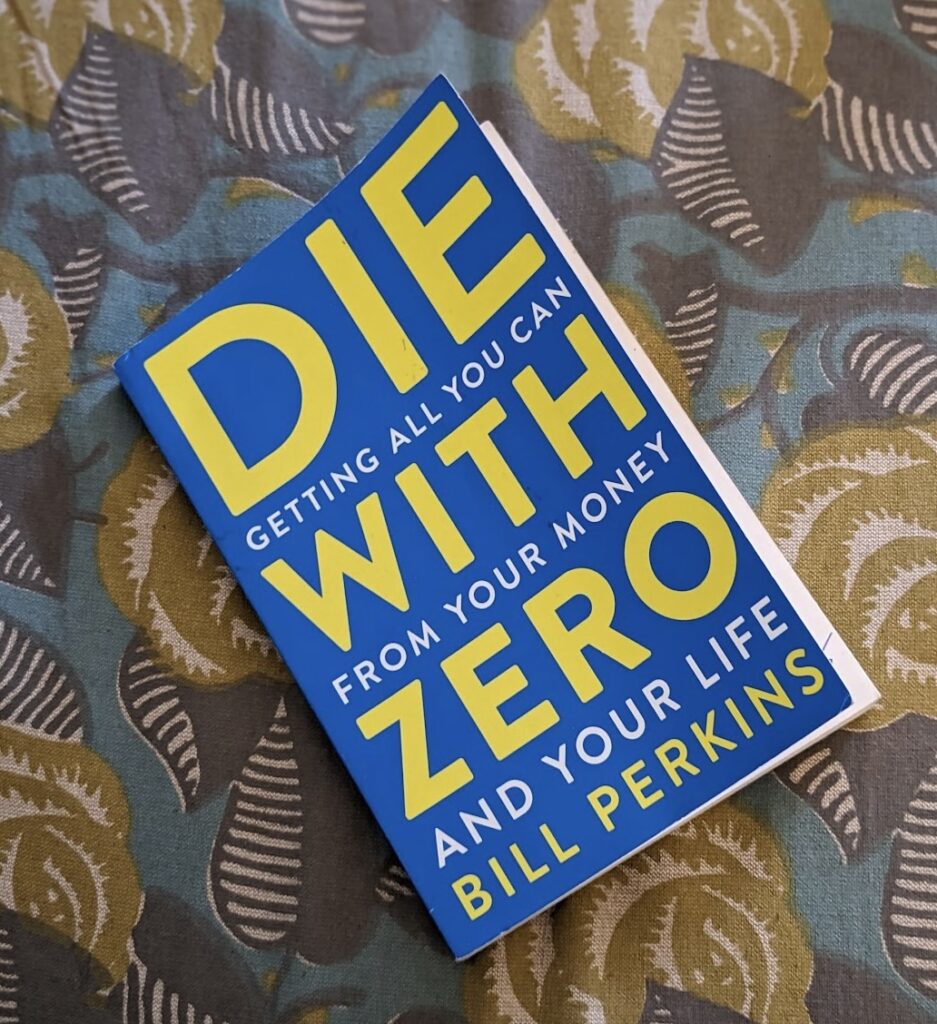
In The Shock Doctrine – Naomi Klein’s book on how capitalism hijacked crisis to further its own unbridled growth agenda – she calls out Francis Fukuyama’s “History has ended. Capitalism and freedom go hand in hand” and essentially considered liberalism the endpoint of mankind’s ideological revolution. That book gave me a lot of (alternate) context on the general narrative of capitalism, and also shifted my view on Fukuyama because of his role in (probably) encouraging the Chicago School of thought that impacted the development of multiple countries across the globe.
That meant I picked up “Liberalism and Its Discontents” with some skepticism, but though Fukuyama defends liberalism, I felt that he has tried to dissociate himself from the extreme forms the ideology has taken, and attempted to see the criticism and shortcomings objectively. In that sense, probably redeemed himself in my eyes a bit. (not that he cares)
He begins by acknowledging the challenges facing liberal democracies, and then steps back to trace the historical and philosophical evolution of liberalism and how it came to be the go-to ideology after the Cold War, and begins his defence by reminding us of the significance of individual rights, rule of law, and market economies in creating and maintaining political and economic freedom. He also looks at liberalism’s internal frictions and contradictions. For instance, tension between individual rights and collective identities, and the excessive focus on individualism undermining social cohesion and communal solidarity. Individualism, which has resulted in the twin extremes of identity politics and populist nationalism.
Liberalism is attacked on many fronts since its basic tenets are all open to separate criticism, thereby questioning its essence. Collectively, these forces challenge the principles of liberal democracy by undermining institutional structures, eroding trust, and fostering polarisation in the general public. What has also compounded this is the the rise of social media, surveillance technologies, and artificial intelligence, and while these could be beneficial to liberal values theoretically, the current usage is mainly manipulation of information, erosion of privacy, and the potential for authoritarian control.
But what I felt was that his thinking is still largely Western, and thus does not really go deep into the nuanced challenges faced by other parts of the world, or the intersections of related issues – globalisation, economic inequality, and complicated cultural dynamics, which foment populist movements. And because of that, his dismantling of the alternatives seem less convincing, and look closer to the paraphrasing he attributed to Winston Churchill – liberalism is the worst form of government, except for all the others.
The stay was at Heevan Retreat, which was walking distance from the gondola. There are places closer to town, but since the gondola was our only plan here, we chose this. The rooms were comfortable though I felt a bit sad for the staff who had to lug the suitcase across a maze of staircases! Their restaurant food and service is quite good.
See/Do
In the evening we set off for a little walk, primarily to scout the location for the next day’s adventure – the Gulmarg Gondola. That’s the building where it all begins.
As with Sonamarg, there will be a bunch of people selling rides to the multiple things-to-see, so you won’t have any difficulty in case that interests you. But if you walk away from all of that, there are some peaceful corners.
The Gondola ride is quite an event. The tickets need to be booked online (though I think agents might do that for you as well) and you’ve to keep track of when it will open for your specific dates. Start watching at least two months before your dates. Since you’re going there you might as well see both Phase 1 and Phase 2. Separate tickets, so buy both. Don’t worry about the timings much, if you have a ticket for each, that doesn’t really matter. We had 1.30-3.30 for Phase 1 and Phase 2 from 9AM – 1PM.
The internet warned us to be there at least by 8.30 if we wanted to use the 9AM slot so that’s when we got there. As with most things India, we stood in the queue for 1.5 hrs (opening time was delayed by an hour). While you’re in the queue, different sellers will tell you that your jacket/gloves/socks aren’t enough. We had three layers – thermal, tee, and jacket. And in terms of bottom wear, I found a jeans to be sufficient. We carried gloves but didn’t feel the need to use them. Gum boots, which you will need to rent from outside the gate before standing in the queue, are only necessary if you plan to wade into the snow. Our all-terrain Columbia shoes were just fine for our needs.
When the doors opened, touts tried to get their clients in and there was the usual noise. Once you pass the door, the queue snakes until you reach the checking counter. Pro tip: if you want to use the loo, do that soon as you get in, be warned that when you try to get back into the line, there will be protests. Ignore.
The ride to Phase 1 is about 10-15 minutes assuming the power doesn’t go off. More on that in a bit. The view is picturesque. The glasses are scratched af, so maybe just enjoy the view.
At Phase 1, you can either stay or continue to Phase 2 – another queue. There is a loo here too, and a restaurant as well. As you can see, this is crowded, and you have different experiences to choose from if you’re so inclined. We went straight for the Phase 2 queue, which moves slower because the number of gondolas are lesser. As we stood in the line, the gondolas stopped for about 5 mins before they switched on the power backup.
The ride to Phase 2 is steeper, slightly longer, and far prettier. It is at a higher altitude, which means lesser oxygen. If you have some related ailment, including cardiovascular, plan around 30 mins here. It is less crowded, but touts still abound. The view is easily better than Phase 1.
Yes, there’s pizza. ‘Highest’, I am not sure.
Our ride back was adventurous. We were stuck mid-air between Phase 2 and Phase 1 for about 30 minutes. Our company was two pairs of Punjabi uncles and aunties, who kept up a constant commentary on Indian tourism (vs Canada). One of them also proceeded to call up someone in the tourism ministry. Ironically, thanks to the sun beating down directly and the ventilation being poor, it got hot inside the gondola. Thanks to the ordeal, we skipped Phase 1 and took the ride back to terra firma. Our gondola from Phase 1 stopped midway too, but only for 5 minutes. In later conversations, it turned out this was a regular occurrence.
After a quick lunch, we got out and on the way down to Gulmarg, stopped at the Habba Khatoon viewpoint.
Pahalgam
We stayed at The Chinar for a couple of nights. This is reasonably away from everything, which is what we wanted. But there are other options nearer to town, as well as resorts within walking distance from each other. The restaurant buffet was not bad at all, so we didn’t really miss anything.
The panorama pic doesn’t do the view justice. But it was fantastic and we spend hours just looking at it from the balcony.
The hotel grounds were pretty too, and D did her morning walk ritual to capture some beautiful shots.
See/Do
Baisaran Valley is on the list of must-do. Thing is, you can only do this by pony. And depending on the spots you want to see, the rates can go from Rs. 1800-4500 per person. The ride one way is close to an hour. The ponies love to walk near the edge to troll you! And if the snow has melted, be ready for mud baths courtesy the pony in front of you!
And this is what you get to see. One of the many mini-Switzerlands in this part of the world.
The other regular itinerary here is called ABC – Aru, Betaab, and Chandanwari. We chose to see only the second, thanks to D’s Sunny Deol fandom. 😉 This is just 30 minutes from town, and a great place to simply walk around and enjoy the vista.
Around Pahalgam is also the best place to get your lil DDLJ moment. 🙂
Our trip back was also adventurous. Though we were well in time for the flight, thanks to everyone scaring us to expect at least 3 hours for security checks (we got lucky and it got over fast), that itself was delayed by several hours. We had to catch the connecting flight from Delhi and that meant light cardio happened as we ran to the gate, not helped at all by a young, lackadaisical person from Air India.
Our Kashmir trip was 7D/6N and cost us a little less than 2L, mostly thanks to the stay. The itinerary was Srinagar – Sonamarg – Gulmarg – Pahalgam (2N) – Srinagar. The drive between these places is between 3.5-4.5 hours. Also, at all these places, you’ll need to hire local drivers for the local sightseeing, as they have unions.
A good idea to really hunt for a sensible driver. Ours wasn’t and couldn’t even suggest clean restaurants with loos. If your driver is useless, a good idea would be to do everything at hotels/resorts and avoid breaks for this. Also, when you pick restaurants, don’t always go by Google ratings, check as many photos as possible. A classic example is The OTR in Pahalgam! Has a 4.6, but I am now trying to banish that memory!
A few days after we finished our Kashmir vacation, the friend I mentioned in the previous post started his travel business. If you’re planning a trip, do check it out. The idiot showed me those lovely properties after I completed the trip. With friends like these… 😂
We missed our flight! In more than two decades of travel, this was a first, and needed to be documented. The good news is that it didn’t derail us much, and we landed in Kashmir a couple of hours later than planned.
Srinagar
The one-hour drive from the airport was made pleasant by an unexpected but lovely sunset at Dal Lake. We go chasing sunsets when we travel, so this was a lovely surprise.
Stay
We stayed at The Dewan, and quite amazingly were the youngest guests! I think the hotel had been attacked by a bus full of elderly tourists, many of whom appeared to be from Bangalore. Decent rooms, and we were there only for a night. This is away from the centre, but close to Shalimar and Nishat. Our plan was to visit at least one of these soon as we landed, but we couldn’t thanks to the delay.
On our last night in Kashmir, we stayed at Sukoon houseboat. On Dal Lake, this is likely the best one. You could also check the options at Nigeen Lake, which apparently is even more quieter.
But we loved Sukoon. Excellent, comfortable rooms though I found them a little anti-national because there were no jetsprays in the toilet.
Callback to an old era. Just like the books in the reception lounge area.
There are some excellent vantage points. This is at the entrance.
…and this is on the roof.
This is the fantastic view in the morning.
…and this one is towards the end of the day.
See/Do
A shikara ride was part of our package, and we did this around sunset. ‘Sukoon’ is the perfect way to describe it. It really gives you a great feel of a way of a way of life.
We saw some other pretty houseboats…
…a full fledged market
and mobile stores for everything from flowers
to fruits
..and desserts!
The Tulip Festival was what we had timed this trip for. Thankfully, the tulips behaved well and were in full bloom… Expect the place to be packed, though the queue per se wasn’t bad at all. It didn’t help that our visit coincided with the day after Eid.
After you’ve had your fill of tulips, walk around and enjoy the vista too.
In a toss up between Nishat and Shalimar, we chose the former. Very pretty, but it’s sad how we trash the place. The staff were busy picking up plastic in the morning. 😐
It provides a lovely view of Dal Lake.
At Pari Mahal, people tend to do the ‘I believe I can fly’ pose (top left)…
I have to admit, it’d be a great view if we could fly!
The burning question for me as we climbed up to the Shankaracharya temple was how he managed to do it without thermals. Even if he visited in summer…
Anyway, the view from the temple is just breathtaking.
Eat
What’s a visit to Kashmir without the wazwan? We were lucky enough to have a delicious version of it at a friend’s home, and then Ahdoos went and created a benchmark on how a gastronomic experience should be. As is par for the course, we did spend some time waiting in a queue, but the ambience, the involvement of the service staff (history, context, how-to, all in commentary, and adding stuff gratis just so we enjoyed the experience) and the delectable food – presentation and taste, all make it an absolute must-visit. Cannot recommend it enough.
Le Delice was a great suggestion from my friend, and we visited one of their outlets in City Mall, which, I have to mention, does not have escalators going down!
Since we had a multi-hop return flight, we packed ourselves a marble cake and a walnut brownie. Both excellent. Sigh.
Our best meal though was the one we had with a school friend of mine. Though he is Kashmiri, he has lived more in Kerala and Bangalore! 🙂 We had a lovely time with his family who fed us way more than our capacity. It continues to amaze me how we can quickly form a lifetime bond with people we have never met before, and whose affection makes our best memories from the trip.
Sonamarg
Our first stop was Sonamarg, and the route was all postcards.
The mountains got snowier and closer as we drove along.
We even saw the remains of an avalanche!
Sonmarg, or at least the part that is in the must-see list was insanely crowded. Thajiwas Glacier is the thing to see here, and you have multiple ways of reaching it – snow bike and sleds. A combination of the crowd, the incessant pitches by touts, and the Bajrangi Bhaijaan association ensured that we skipped it.
Stay
Instead we drove on to a place aptly titled for the context – Village Retreat – where we planned to stay. Very comfortable, though you might want to ask for a room with a view if you’re so inclined. But if you don’t get those, don’t worry, you can sit on those chairs outside their restaurant…
…and you’ll have this view. We sat there as the temperature dropped to a little below zero, but there was no snowfall. Peaceful and serene.
A mutton Biryani and a fiery Kashmiri Chicken lunch at the restaurant kept us full for the rest of the day.
We pecked at a Chicken Kanti (listed as a local favourite everywhere) for dinner.
This was part of a week-long trip to Kashmir. The remaining days were in Gulmarg and Pahalgam, and that’s what the next post will be about.
For a while, I have been fascinated by the similarity in words across languages – from the simple biradar-brother to the slightly more elaborate Agni-ignite. I even started a Twitter thread to keep track of these ‘discoveries’. Linguistics per se, the theory of it though, is less of a fascination. I started reading it with the notion that it would be this, but was pleasantly surprised. I love history and that’s what Peggy Mohan has actually done using language(s) and their evolution as her tool in Wanderers Kings Merchants.
She gives us a quick introduction with Creoles in the Caribbean, and points out the appearance of the vocabulary layer, which is influenced by the more powerful group (usually male), and the more intrinsic sound and grammar, which is the maternal side of the story – mother tongue. With this background she brings the narrative to India and creates a storyline using different languages.
She begins with the presence of sounds of Dravidian origin in the recitation of the Rig Veda, and with supporting historical & DNA evidence of a male-driven migration about 3500 year ago when the Harappan civilisation was in decline, traces the Vedic male – local wife combination which led to the Dravidian sounds in the Rig Veda. To be noted that this didn’t happen in the beginning when they were orally preserved and transferred, but around 700 years later when they were formally compiled, edited and written down, reflecting a Sanskrit which by then had vernacular sounds. This was also when the Kuru super-tribe spread east and south, from Kabul to Andhra, taking Sanskrit along. This Sanskrit then mixed with the language of the elite in these regions and created the first versions of Prakrit. As the language trickled down from the elite to the masses, or rather, locals moved up in lifestyles and hence words used, the influence of the latter’s native tongue became stronger and around 1000 CE marked the beginning of the Indo Aryan languages, first as dialects in small areas, and then gradually expanding their domain.
Meanwhile, in my little state of Kerala, around 800 CE, brahmins relocated from the north – Namboodiris, at the behest of local kings. As with the story up north, male-driven migration + local women and an elite happened. The brahmins’ original Apabhramsa language (a ‘corrupted form of Sanskrit that didn’t follow Paninian rules) faded because they had to pick up Malayalam in the long-term, and centuries later, a new language Manipravalam emerged – Sanskrit nouns in (erstwhile) Malayalam sentences. Interesting that a sociopolitical tumult also happened here around the same time – the rise of the Second Chera Empire and the beginning of a strong Malayali identity distinct from Tamil/Cholas. In parallel, a resurgence of Hinduism at the expense of Buddhism and the re-emergence of Brahminical Hinduism.
Similarly, the Central Asian influx into the north (Delhi Sultanate, Mughals) brought with it Uzbek, which quickly vanished as the Central Asians started using the dialect in the region (Hindi) as their vernacular. It was only in the late 1700s that they moved from using Persian as the official language and started writing in Hindi – then renamed Urdu, with an infusion of Persian nouns.
She then takes us to the contemporary example of Nagamese – the grammar of Assamese and a small portion of Naga. It grows even as the both Assamese and the Naga languages continue to exist. The flashback on Assamese is Ahom, courtesy migrants from Burma. This itself is a later episode of the SE Asia + Munda people of the Magadha region. This combination, and the presence of the Vratyas, a pre-Vedic Arya group, is what makes the Magadha languages different from Dravidian.
The most recent play- British and English. The British not only created a Hindi-Urdu divide which hadn’t existed before, but also, thanks to having Indian employees, got the latter to pick up English, though mostly in ‘Prakrit English’ form in the beginning. Ironically, English really spread only after Independence, because the elites wanted to retain their hold on power using language as an access point, and were helped by the fact that no single language had the heft to cover the entire country. And that’s where we are now. ‘What had started as a code to identify the elite snowballed into something set to replace our older languages and cultures as it trickled down, forging a new homogeneity.’
I have to admit I glazed over some of the parts where she decided to go a little deep (by my standards) on technicality of language, but I found the book to be mostly accessible, and definitely fascinating. If you’re even vaguely interested in history, this is a must-read.
Interesting points Cows as a metaphor for women in the Rig Veda. The uncanny resemblance between Panini, and the Phoenicians (Poeni in Latin) Ditto Turkic Ordu (army) and horde Urdu got its name in the Deccan in 1780, and in its later usage was practically the same as Hindi, both belonging to Hindus and Muslims, until the British decided to cause a split by trying to create a shudh Sanskritised version of Hindi, and in addition the use of Devanagari script. The idea being that they wanted to undermine Urdu, written in Persian script, because it was associated with the Mughal empire.
I hope to see Kammanahalli (Kalyan Nagar) given an honorary status as a Korean suburb in my lifetime, for its contribution to popularising the cuisine in Bangalore. But then again, that would make the place a candidate for multiple citizenships! We were in the mood for Korean and this one came up when we did some Seoul searching. #oksorry
Dam’s Kitchen is off the main road, on two floors, is non pretentious, and manages to use the typical partitioning in Korean restaurants to create small cosy spaces, complete with your very own gas cylinder for the barbecues!
We ordered the Yukgaejang (right) and Dwaeji Meori Gukbab (middle) first. The first is described as the spiciest soup available, and is made with beef strips and vegetables stir fried and boiled in brothy soup. It wasn’t too spicy, and the rice anyway tempered it. We loved it, but on a relative note the Gukbab was the winner. It has pork, soy sauce, miso, rice wine, sesame oil, bone broth and all this made for a fantastic hearty soup. Really chicken soup for the soul (see, I resisted the urge). While the stomach was full, we wanted something to nibble on and ordered Chilli Chicken (without the rice and condiments) Deep fried, chilli sauce and chopped chillis. Great taste, and texture, just the way it should be. We ate half and packed the remaining for dinner. 😌
We felt lighter by just a little below Rs.2500, which included some kombucha. They only had Soju, not Makgeolli. The service is quite friendly and prompt, and the overall ambience is quite peaceful. Lovely place for a lazy Sunday lunch.
Dam’s Kitchen, 301, 5th D Main Road, HRBR Layout 2nd Block Kalyan Nagar Ph: 9148553661