Author: manuscrypts

  • Evening Is the Whole Day

    Preeta Samarasan

    Preeta Samarasan’s debut novel begins with the kind of prose that actually seems like poetry in disguise – with a description of a part of Malaysian geography. The narrative begins in 1980, on Kingfisher Lane in Ipoh, in the Big House, owned by the Rajasekharans – Raju (Appa) a leading lawyer and a pillar of the community, erstwhile socialist; Vasanthi, his wife, from circumstances far below his; their children Uma, Suresh and Aasha in that order; Paati, the matriarch whose disapproval of her daughter-in-law endures time, and the servant girl Chellam brought in to take care of her. A wealthy, dysfunctional family, with each member fighting their own demons.

    We see a lot of the story through Aasha’s eyes in the beginning. Aasha, who talks to ghosts and will do anything to get back the affections of Uma. Uma, whose sole desire is to escape to the US. And in between, Suresh, who tries to make sense of the world with humour. The narrative then sets out to unravel layer by layer, not just digging deeper into what happened earlier, but also wider, giving the reader, through characters and events, a view of Malayan society, with its own undercurrents, ethnicity issues and rules that attempt harmony between the Chinese, Indians and the natives. A brief glimpse of a country coming to terms with its freedom, and the responsibilities therein.

    As the layers unfold, the perceptions of characters and their behaviour that the reader has built up slowly begin to undergo changes, as the past – from a few days earlier to half a lifetime away – shows its influence on the present and future. We also see how the relationships between people change with time, sometimes over years and sometimes in a few minutes. There are some very interesting secondary characters too, like Uncle Ballroom who evokes a sense of poignancy, Vasanthi’s mother whose sudden turn to asceticism makes you wonder about the nature of the human psyche, or Kooky Rooky, whose variations of her own past points us to stories that we build for ourselves. And then there’s Chellam, whose past, and lack of future brings a lump to the throat.

    Somewhere in the book and its use of words and the wit employed (brotheROARsister, Stopping At Nothing…) I could see Arundhati Roy. Somewhere in the way the human condition is expressed I could see Kiran Desai. But neither takes away from a distinctive style – vivid prose, edgy humour, and an ability to draw the reader right in. This one goes into my favourites.

  • Time Vault

    bottle3

    This was my ‘water bottle’ at Myntra, and the victim of many of my colleagues’ jokes, mostly thanks to its size. It is really tiny, and you could finish all the water in it in one gulp. It has been disfigured many a time, courtesy its battles with hot water. But it bears its scars with dignity, even though it wobbles a bit. It also seems to have a fair amount of stature, since at least three of my colleagues asked me if they could take the bottle after I left. I refused, but now that I’m ready to join the new workplace, I don’t know if I should use it anymore. But I don’t want to throw it away either, since it holds a lot of memories and in future, will probably be the only unchanged remnant of some good times. I wish I could store it somewhere, but I’m also trying to get rid of my hoarding habit!

    That’s what led me to think of this concept – since we’re in the era of 3D scanning and 3D printing, theoretically it should be possible to construct a 3D scan of the bottle with its basic dimensions, exact contours, texture of material etc and store it. I should then be able to print out an exact replica using a 3D printer. These technologies are not yet mainstream, but I’m wondering if this could be a way of storing memories. We can store images, text, sounds easily now but not smell, taste and touch. This could at least take care of the touch aspect.

    At some point in the future, I’m hoping if it’ll be possible to store such treasures as a file and print them out whenever I feel like it. An entire folder full of memories – of different times in my lives, that I can easily bring to life. It would be like a time vault. Vault as a noun -storehouse – and vault as a verb – leaping, in this case across time thanks to ‘physical’ memories. Maybe, in the future, we could live in the past for a day, and come back.

    until next time, the future of memories

  • Grill Maximus

    D sulked when she heard that I’d gone to Grill Maximus for lunch with friends, so this was really a firefighting exercise. The first visit went quite fine, so I wasn’t really complaining. The restaurant is in HSR on 17th Cross – the road opposite McD. (map) It’s a fairly wide road, so parking is not a major problem. Judging by the crowd, the place seems to be a favourite, but we reached before 8, so we didn’t have trouble getting the table we wanted.

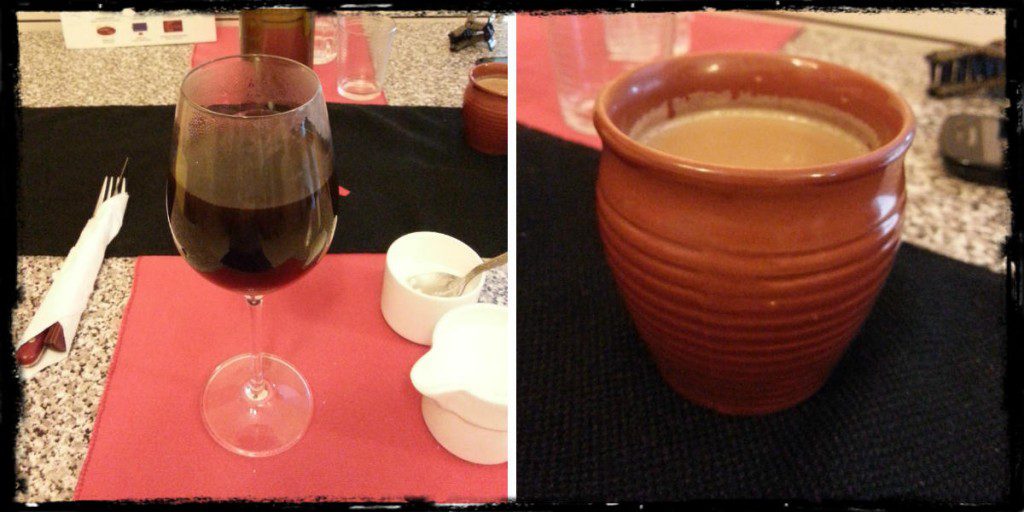
    The menu is a mix of Arab and Continental, with a smattering of other cuisines – most importantly a supposedly special Biriyani. During my earlier visit, we had tried the guava based Peru Pyala and found it to be quite good, but since Bangalore was at its windy best, we opted for a Spicy Seafood soup – D, that is, since seafood is allergic to me and tries to escape really fast. I had to make do with a Kibbeh. The soup was tasty (sigh) but the fried lamb meat balls and the dip proved to be an exercise in blandness.

    collage1

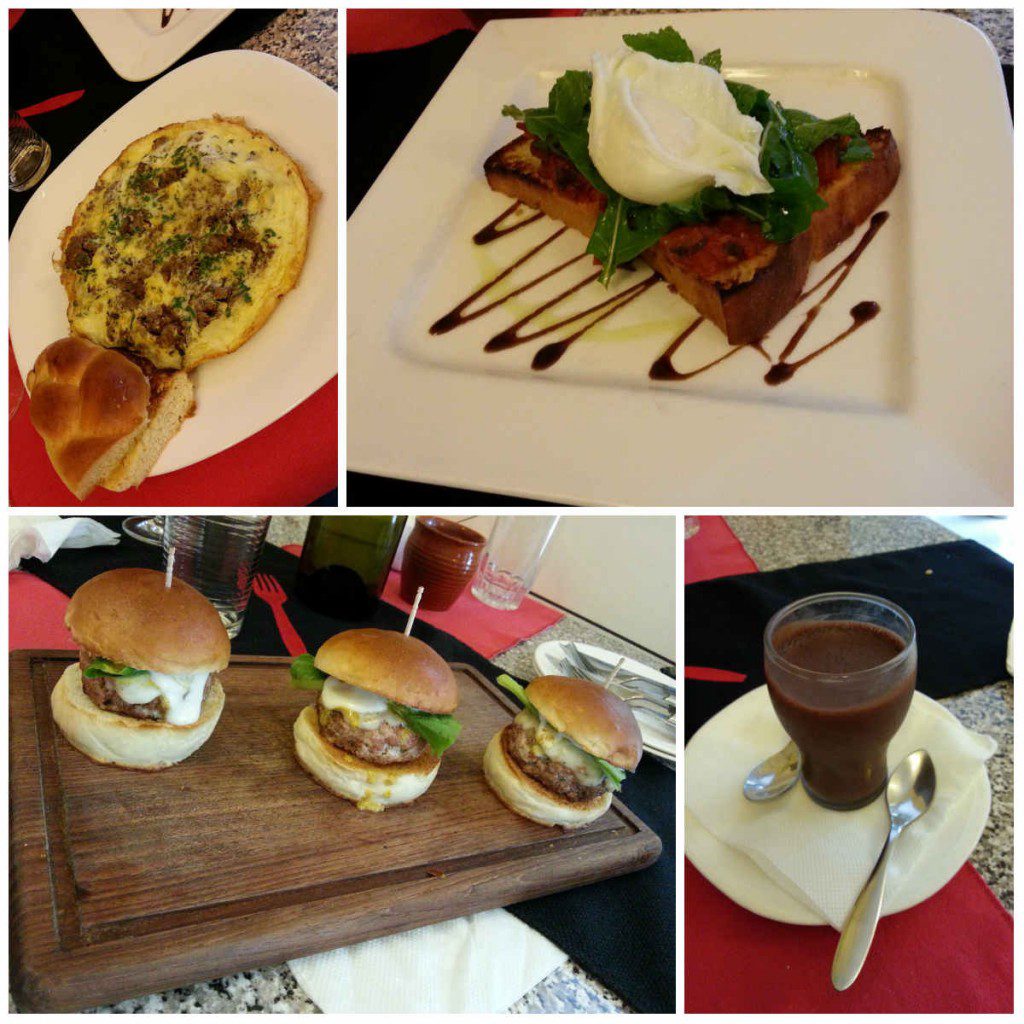
    For the main course, I recommended the Kafta Meshwi, despite the meh experience with lamb. During the previous visit, I had also tasted the Lahem Meshwi, Chicken Charmula and the Charcoal Grilled English Vegetables. Except for the last, the sauces were similar, so I opted for a Creamy Rose pasta (chicken and penne)  The Kafta Meshwi’s pepper mushroom sauce turned out to be spicy and tasty, only slightly marred by the somewhat more-than-normal rough texture of the minced lamb skewers. The pasta was a disappointment, thanks to a capsicum overdose. This was unfortunate because the sauce was quite good. We’d thought that we’d test out the biryani if we had space, but we were reasonably stuffed and therefore opted for desserts. I did check out the Biryani (pic on Instagram) on another visit, and it was reasonably okay, except it had no pickle, raita, gravy etc on the side! The cake of the day wasn’t available for the day, so we chose the Znoud el Sit. It wasn’t chocolate based so needed to be stellar to elicit any kind of praise. Unfortunately,  it didn’t even fit the description on the menu. (wasn’t creamy on the inside!)

    collage2

    The service was reasonably prompt, except towards the end, by when the place was full. The wallet was lighter by about Rs.1300. Some of the dishes we had weren’t so great, but it’s quite decent for at least one visit.

    Grill Maximus, Shop No:450, 17th Cross, 4th Sector, HSR Layout Ph: 08197939437

  • The Small House

    Timeri N. Murari 

    The Small House, in terms of name as well as the overarching premise of the book is based on a socially accepted norm in Tamil Nadu – the ‘chinnaveedu’, where the husband houses his mistress. Though the back cover blurb would indicate that the novel is about two friends, both of whose spouses they suspect to be straying, the focus is very much on Roopmati Malhotra than her friend Tazneem.

    Roopmati, the sole surviving heir of the Krishnarangam royals, is shown as a history-obsessed character who is only mildly curious about her husband’s infidelity. She is convinced that she only represents a trophy for her husband, a suave businessman, who finds solace in the arms of Maya, a television anchor. On the other hand, Tazneem, an art filmmaker finds it difficult to handle the fact that her husband is cheating on her, and that he is a bisexual.

    Many narratives make up the novel. Roopmati’s conversations with her (almost) namesake and confidante Rupmati, a historical character who charmed Sultan Baz Bahadur and finally swallowed poison when she was captured. Her relationship with her dead brother Tommy, who supposedly drowned much earlier. Though friends, the two characters’ situations do offer contrast. While Tazneem’s marriage was her own choice (though she is still close to her father to whom she turns to for comfort), Roopmati’s seems almost like Khris bought her from her father, who died later. The author also unfolds layers from the perspectives of different characters as the story moves forward. This gives the reader a peek into why they are the way they are, but sometimes these narratives are like a cul de sac, with abrupt endings that force the author and the reader to pick up the thread from a principal character.

    In the end, it almost seems like the author was in a hurry to close the loose ends, and as a reader, I was forced to wonder whether many characters suffered from a compromised ‘end’ that has the author hinting that one must make peace with the past and choices made, and move on. I also wondered why the Rupmati character existed, unless it was a ploy to make the reader imagine a different ending. But the book has a fair share of things that make it a good read – the author’s keen eye for detail, especially of society and its players, manifests itself in the manner in which he has built and portrayed his characters – there are subtle traits that one can easily identify in all the characters, especially the supporting ones. Brief glimpses of Chennai also show the author’s interest in history. The pace is good and there are many nuanced conversations – between Khris and Roopmati’s father, Roopmati and Rupmati that offer food for thought. In essence, not stellar, but worth a read.

  • ..the question remains

    It has been more than a couple of years since I wrote on the subject of planning – the acceptance of destiny vs free will in The Uncertainty Principles and the balance between change and stasis in its follow up. In my mind, the debate continues to rage, with flash points on a regular basis, thanks to various life scenarios and the things I read. I also realised that the recent narrative posts (1,2) are also a different way of framing this debate. Like I wrote in the posts, some narratives are already chosen for us, and some we choose, but these are all our attempts to fulfill our sense of belonging. In other words, our endeavour to find the reason for our existence – our purpose. Does one find it by working towards something or by dealing with life on a real time basis?

    A few days back, I read an article in HBR titled “It takes purpose to be a billionaire“, in which the author classifies ‘purpose’ into three buckets. Not that everyone’s idea of ‘purpose’ is to become a billionaire, but this is very clearly a planned path to achieve something that contributes to the sense of purpose. While the article does not mention it, the category I have always wondered about consists of people who have followed their passion – sports people, artists etc who have worked on a skill and honed it to near perfection. A very interesting perspective I read on that premise is the Scott Adams’ “Practice and Genes“, which takes a look at the theories on the subject and finally states that the critical element is luck. The most important skill involved in success is knowing how and when to switch to a game with better odds for you.

    Which brings me back to purpose and how we find it, and my introspection. “Who looks outside, dreams; who looks inside, awakes” ~ Carl Jung. (via) I thought about the ‘living in the moment’ perspective that finds a place in Buddhism texts and several other works of wisdom. At first, I thought it supported the destiny and real time approach, specially because it is difficult not to have baggage associated with the plans one makes. (literally and otherwise!) But then I realised that it was less to do with the planning aspect and more to do with how we deal with scenarios. Even if one works on a plan, how one deals with a setback to it is where the advice has value. In essence, that won’t help solve the debate.

    collage

    There are profound statements that support both ways of looking at it. I continue to rack my brains to find the path that will fit me, or make it. I think there is an element of subjectivity involved. That does not make the job easier, in fact, it probably makes it tougher. After all, “He who knows others is wise. He who knows himself is enlightened.” Lao Tzu

    until next time, the clock ticks away in real time