Author: manuscrypts

  • Notion states

    My last post on the subject of home was in the context of the multicultural world we are creating, how in our pursuit of convenience and familiarity we might end up creating a homogeneous world, and whether the idea of home would change with time, as we begin to choose places that connect to our soul over the soil we were born in. (soul vs soil courtesy Pico Iyer)

    One of my main punching bags in the institutional realignment line of thinking is the concept of the nation state, more specifically its relevance in a massively connected world. A simplistic view is that economics, trade and many other things might be better off without them, given how much of an enabler technology is turning out to be, and geo politics will anyway be a lesser phenomenon if there aren’t any nation states. Arguable, yes.

    However, I had very little idea on the replacement concept. Geography (land) would exist and would have to be organised in some way. What way? In a wonderful display of appropriateness, Wired gave a possible answer – in the form of a post titled “Software Is Reorganizing the World“. I loved the concept of ‘geodesic distance’, and the mapping of not nation states but states of mind. (soul) The idea of (what is now) cloud communities taking physical shape is fantastic! While it might sound far fetched, it really isn’t – the post gives historical precedence and emerging patterns to back up the idea. As does Tony Hsieh’s The Downtown Project in the present day to transform the decaying and blighted part of the old Vegas Strip into the most community-focused large city in the world.

    Around the same time, I came across this Facebook (official) note titled “Coordinated Migration“, (thanks MJ) which shows how Facebook is using ‘hometown’ and ‘current city’ descriptions to track migratory patterns across the world. Probably, in a few years, this would be a mapping everyone would take a keen interest in, to find kindred souls, and to be what they are destined to be.

    pico2

    (via)

    until next time, a state of bliss

  • The Tuck Shop

    Since the rain gods had been monopolising Saturday evenings, we had shifted to Sunday brunches. That provided the perfect excuse, in case we needed any, to try The Tuck Shop. It’s located in the lane opposite China Pearl (map) Parking for two wheelers is easy, and you’re probably better off parking your 4 wheeler on the main road.

    There’s nothing fancy about the place, including the seating, which is functional but comfortable. But the decor is what really brings out the character of the place. Every table has tiny boards with quirky, funny messages; there are board games available; the walls have hand drawn graphics pop culture representations, and overall, there’s something that brings about a lot of home made <3. That story continues in the menu through the names of the dishes.

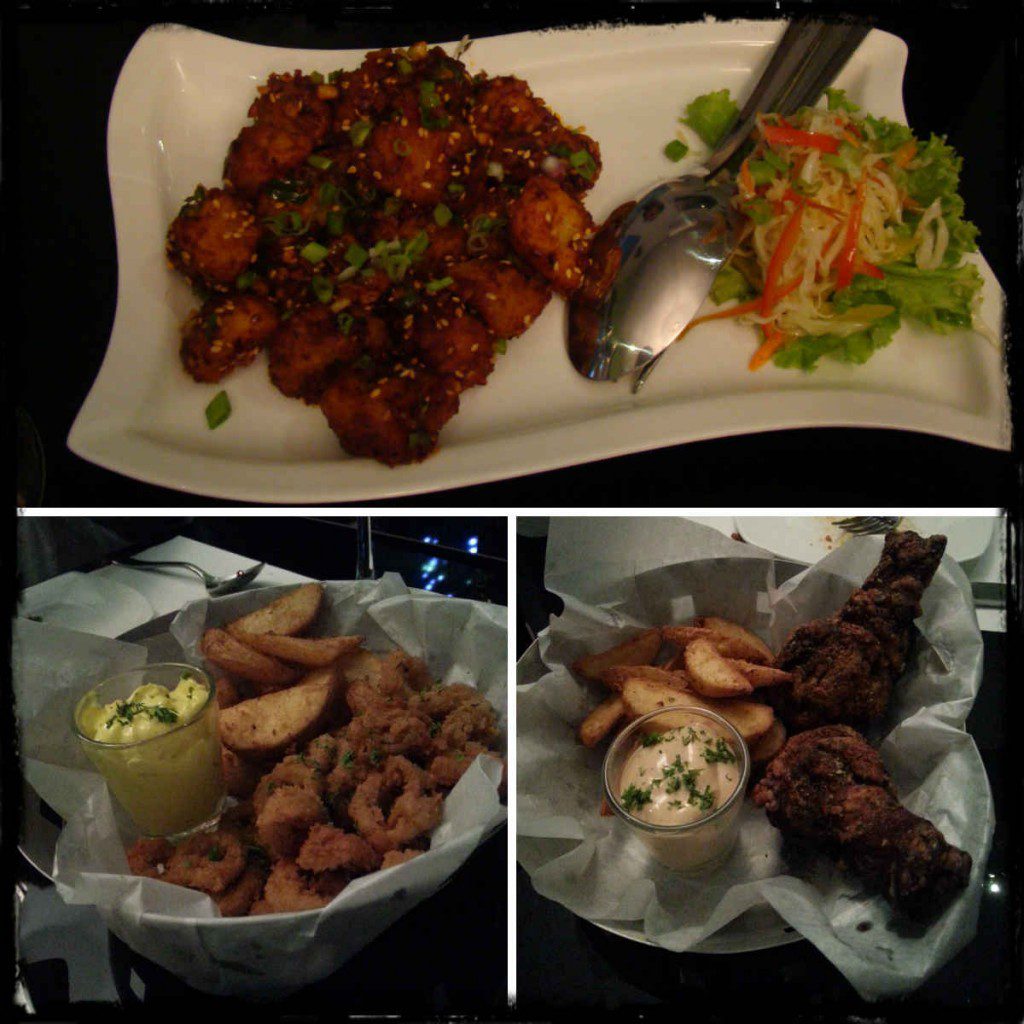
    Abundance of choice meant that we had to plan our meal a bit. We started with The Puny God (bacon, chilli, cheese omelette) and this was quite tasty with a bunch of flavours popping up. It came with toast and baked beans, though we didn’t much care for the latter. We then tried The Foghorn (hot dog) The chicken sausages in this were pretty good and thankfully the mustard didn’t really spoil the party. All of this was washed down with filter coffee and masala tea, with the former being good enough to warrant a double repeat!

    collage1

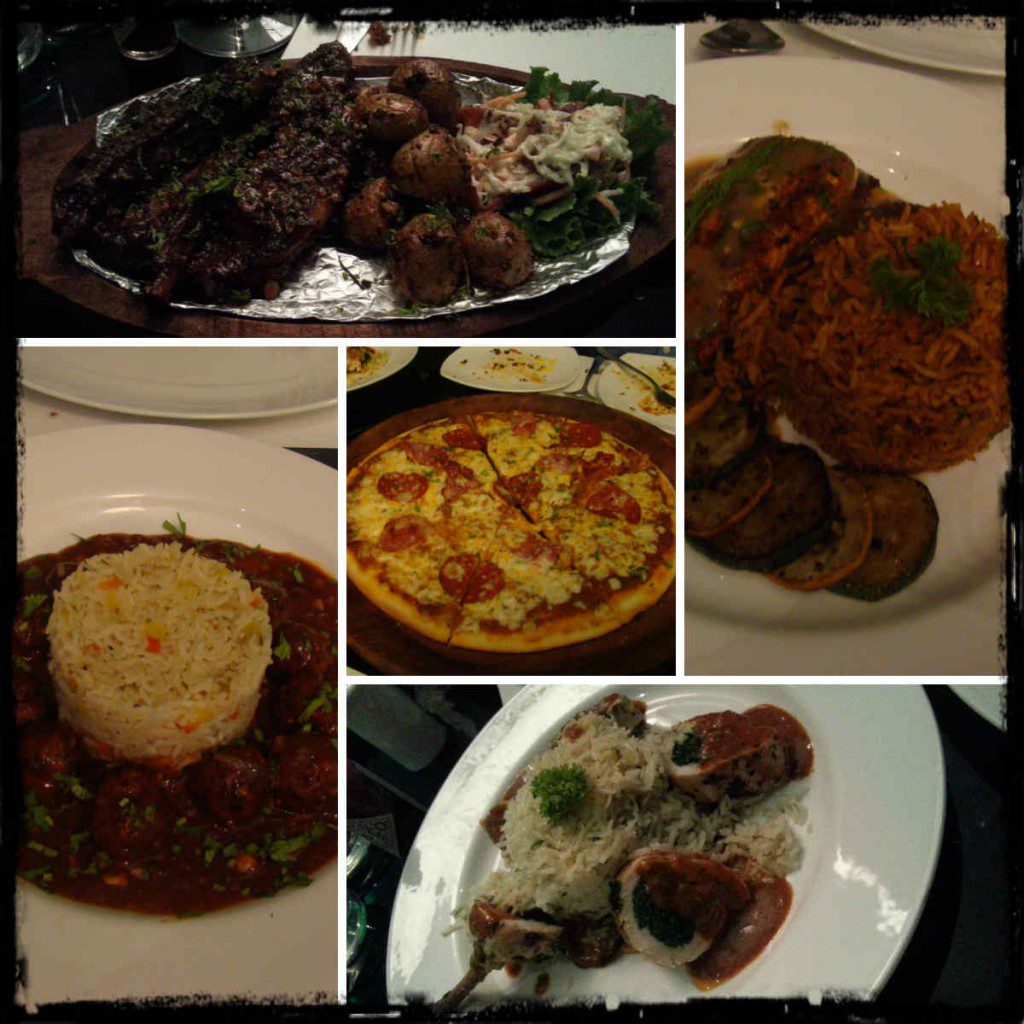
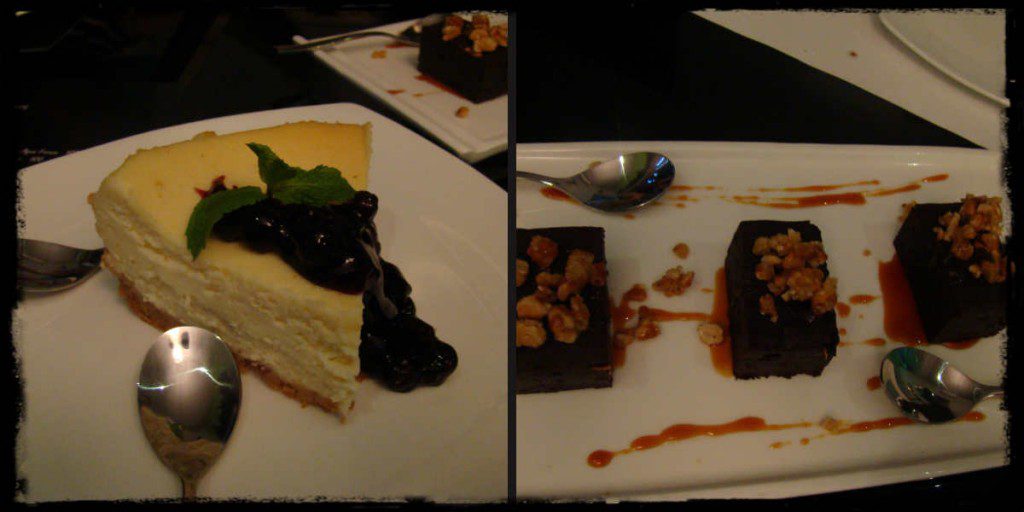
    The next round began with the Oh Basanti burger which had minced beef with an Indian spice masala and a BBQ sauce. Splendid choice, and the taste was awesome enough for us to forgive the dripping grease! 🙂 We also tried the Dhanno On the Run (which we later figured went well with the first dish in terms of names!) – crispy sliced beef with a coconut tinge. This was one dish which could have been better – the meat wasn’t cooked well enough, though the masala was quite good! Unfortunately we were too stuffed for dessert, despite that inspiring tailor made message on our table!

    collage2

    All of that came to Rs.640. The service staff was pleasant and friendly though they seemed very possessive of the menu and kept taking it back! But that won’t stop us from visiting again to try out the other dishes!

    The Tuck Shop, 98/A, 17th B Main, 5th Block, Koramangala Ph 088 61 335567

  • The Collected Stories: Paul Theroux

    Paul Theroux

    For a while now, I’ve been stuck inside my cocoon of Indian writing and travelogues, except for occasional forays. My biggest peeve was that I couldn’t identify with international fiction. And Paul Theroux, with this book, just laughed. 🙂
    The book has 5 parts, the last 2 with an obvious connection, but the remaining stories spans geographies, contexts and webs that humans create with their emotions and relationships. The first three have troubled marriages, stagnant relationships, death, deception, love and separation, set everywhere from Russia to Africa to Asia. Some of them poignant, and some of them seemingly mundane. There’s even a story that seems to be set in the future – Warm Dogs, quite chilling, actually. My favourite from all these sections is ‘Algebra’, a wonderfully simplistic study in human relationships. The characters are people who I could easily identify with, not just because of the ways in which they have been etched, but also the excellent prose that made me ‘feel’ the settings they were in. Places and events are so well described that it’s easy to imagine the foreign locales that one has never seen. There are subtle twists, ones which require you to pay attention – ones that ‘reward’ you for it. 🙂
    The next two sections are based on the postings of a fictional Foreign Service office, first in Ayer Hitam, a boondocks in Malaysia and then in London. The characters overlap in stories, even as new ones are brought to the fore and stories written about them. The Ayer Hitam section felt like a mashup of English August and Malgudi Days, if you can somehow imagine that. 🙂 Over stories, the characters become familiar to you, and it’s almost as though you were there in the offices, the bungalows and houses and at the parties – a fly on the wall.
    London, though more ‘civilised’, and full of potential, paled a bit in comparison (for me) to the earlier section. However, the office politics and the constant realignment of relationships (including the narrator’s own) kept me engaged right till the very end. In a way, the first and last stories are about coming full circle.
    I like an author’s story collections, because it gives me a feel of the author – the breadth and depth, and I’m immensely happy to have discovered one, whom I feel will be a favourite. Someone who reminded me that in the end, a good story is essentially all about the human condition. The book goes straight into my favourites. 🙂
  • A long way away from home

    The Global Soul’ is not my favourite Pico Iyer book (though he is a favourite anyway) mostly because I couldn’t connect to three out of its six chapters. I picked up the book because, in addition to it being a Pico book, it was about a subject that has fascinated me for a while now – the concept of ‘home’. This, in a multicultural world whose corporate citizens are rapidly making sure that ‘Everywhere is made up of everywhere else..’ I remember writing about this almost three years ago, in the context of another travel book and my visit to what I still consider home – Cochin. It was evoked by the presence of the same brands that I might see in a mall in Bangalore, the disappearance of familiar landmarks, and the residents referring to new landmarks that I really didn’t know of. It is perhaps unfair to expect that even as I changed, the idea of home would remain a constant. Maybe I will get used to that in a while too.

    I had wondered whether, in our pursuit of convenience and familiarity, we might end up creating a homogeneous world. Now I wonder if we might be one of the last generations to live in a truly heterogeneous world, as, in addition to the corporate imperialism, culture also becomes the most exported and imported product, courtesy technological advances – real and virtual. Home is, as the t-shirt goes, where the wifi connects automatically, and I’d be able to recreate it anywhere, with all the props made available to me.

    Every year, around this time, there is usually a home visit, and I would be chronicling it, this year there isn’t. Our regular visit targets are missing in action, and going there doesn’t make sense. I wonder if this is how it begins, and a couple of decades later, when I’m traveling, a bout of homesickness would hit me, and I would realise that it wasn’t Cochin I was thinking of. I’ll probably feel sad then, and guilty. But for now, I am closing my eyes, and recreating Cochin in my mind, with no props. I am able to, I can sense the wistfulness as I walk through the streets (without Google) and they haven’t changed. It’s heartening to know that while I have left Cochin, it hasn’t left me.

    picoiyersrilankaimg_0140

    until next time, homegrown can be grown?

  • Old Path White Clouds: Walking in the Footsteps of the Buddha

    Thích Nhất Hạnh

    The story of the Buddha, through a couple of narratives – one that of the cowherd turned monk Svasti, and the other, probably that of Buddha himself, which moves back and forth to also tell us about Siddhartha’s early life, before and during his enlightenment. The book also lays a lot of stress on the teaching of the Tathagata, while also documenting the political and socio-cultural milieu that existed across the 80 years that the Buddha lived.

    The book, drawn from over 24 sources across multiple languages, also has a lot to offer beyond the teachings themselves. The Buddha’s own experiments on attaining enlightenment, based on the prevalent practices, followed by his own thinking that took him beyond them, his relationships with the kings of his time, and the influence of his teachings over them and how they ruled their kingdom, the way that the sangha was politicised even during his own lifetime, how religion slowly crept into the path, though the Buddha stressed that the community was only for supporting those who were trying to attain enlightenment, and how the religion tried to influence the politics of the time. It seems as though things haven’t changed at all in this part of the world.

    The simplicity of language while explaining the teachings, is worth a mention here, though quite obviously, it is easier read than done. Despite the changes the world has seen in the centuries that have passed, I could instinctively feel that just as the Buddha had said – enlightenment was within every person, and the teachings can at best serve as a raft – “the finger pointing at the moon is not the moon itself.” The next time I see the monks, across the multiple sects, I will wonder how many follow the eight fold path and the 200+ precepts that their spiritual teacher had pointed out. The book paints a picture of a human, who through his own efforts and practice, showed others how to attain enlightenment. Not a doctrine, but a life lived.The last chapter, when Svastti recollects how it all began and understands that the true way to respect the Buddha is to implement his teachings in daily life, is probably the best summary of the book, and the most moving, as well.