Author: manuscrypts

  • The Fiction Collection 2 (Penguin)

    This book was a little ‘Inception’ of time travel. It’s been 6.5 years since it was published and commemorates 20 years of Penguin in India. It consists of excerpts from the many works the publishing house has brought out, many of them from several years back. There were a few from books I had already read, a few by authors whose other works I was familiar with, and then there were authors and works I had never even heard of – and that’s why reading this was a wonderful experience – like rediscovering a few old friends and making new ones. 🙂

    In a few of them, I did miss the larger context, but those were a rare few. There are a few translated works too, and I was surprised by the justice they seemed to do to the original work – ‘after the hanging’ by OV Vijayan being a perfect example. The other interesting part was reading a different rendition of something I had read earlier – Indu Sundaresan’s ‘the twentieth wife’ on Mehrunnisa and Salim (the early part of which I could associate thanks to Alex Rutherford’s “Empire of the Moghul”) or Khushwant Singh’s ‘delhi’ (‘nihal singh’ is set during the first war of independence and some of the events I remember from William Dalrymple’s “The Last Mughal”)

    My other favourites included works that gave a glimpse of places as they once were – Bombay in Eunice de Souza’s “dangerlok”, (a wonderful piece of work) Delhi in Navtej Sarna’s “We weren’t lovers like that” and more tragic ones like Punjab in Neel Kamal Puri’s ‘death toll’ and Kerala in Jaishree Misra’s ‘from ancient promises’.

    The best part is that with more than 50 different works, you are practically guaranteed to find many glimpses that you’d like and might make you want to explore the canvas further. It also took me to a different era of story telling – before IITs, IIMs, call centres, urban angst with corporate backgrounds and cliched marital ‘crises’, packaged mythology and such. For all of these reasons, a must read.

  • A mind beyond auto pilot

    The world we create for ourselves, as I wrote a fortnight back, is a filtered version of all the stimuli we encounter. As we grow older, our stream of consciousness gets more populated because of our experiences and we automatically try to find patterns. That’s the brain’s basic learning process which helps us to navigate stimuli. The world though, does become complex, the navigation more difficult, and that’s probably how we slip into auto pilot.

    We think we’re conscious of the things we do, and we are, at a superficial level, but are we really mindful? The simple experiment to do, and I think I’ve written this earlier, is to re-imagine the last hour of your life. How many actions you can remember is probably an indicator of mindfulness. There’s no question that the auto pilot is useful, but I doubt we’re in actual control of the takeover, and that’s where the problem is. Our decisions and our actions become mechanical, and even when they’re not, they’re dictated by filters designed by the auto pilot.

    mindfulness2

    (via)

    But I think there is hope. One of the best 2014 trend reports I’ve seen – by Zambezi – has ‘Mindful Society’ as its first trend. While that is more a take on digital devices and our time spent on them, the JWT trend forecast has ‘Mindful Living’ as their final trend, and talks about a growing interest to experience everything in a more present, conscious way. I also think that we might have unwittingly figured out a way to start out on this. One of the hottest trends this year is the quantified self – self knowledge through numbers – it encourages people to monitor all aspects of their physical, emotional, cognitive, social, domestic and working lives. (via)

    At this point, it is more focused on the physiological aspects, and there will most likely be a deluge of devices, services and allied products that would be an end in itself. However, it is also possible that we will truly understand our body, as numbers show the impact of our behaviour and consumption, and as a result, we’ll become more mindful in our actions. And maybe, just maybe, once we’re done with that, we’ll begin trying to do the same for our mind, and the decisions it makes. It’s difficult to imagine how that will work out, I agree, but hey, even five years back, did you think something you wear on your wrist could give you analytics on your sleep patterns?

    until next time, a qualified self 🙂

  • bon South

    Five years have passed since we visited the first version of bon South, in Koramangala. bon South had soon shifted to Malleswaram, and the original location now houses Prost, I think. The new version of bon South is where Ping (#youremember) used to be – the one way from Intermediate Ring Road towards Jyothi Nivas. (map) They have valet parking.

    We went there for lunch on a Sunday, and think we were lucky to get a table without reservation. The place was packed! They seemed to have learnt from the earlier experience – there was no cold welcome towel and there is a clear shift from extravagance to value for money. They only have a buffet (menu) – different rates for weekdays/weekends and veg/non veg. Special rates for kids. Smart. They seem to have more space than Ping used to, and while the flooring and walls seem to have been left unchanged (from the previous owner – some multi cuisine placeholder) they have added some decor elements that lend a touch of authenticity to the theme. The old fashioned light shades deserve a mention here.

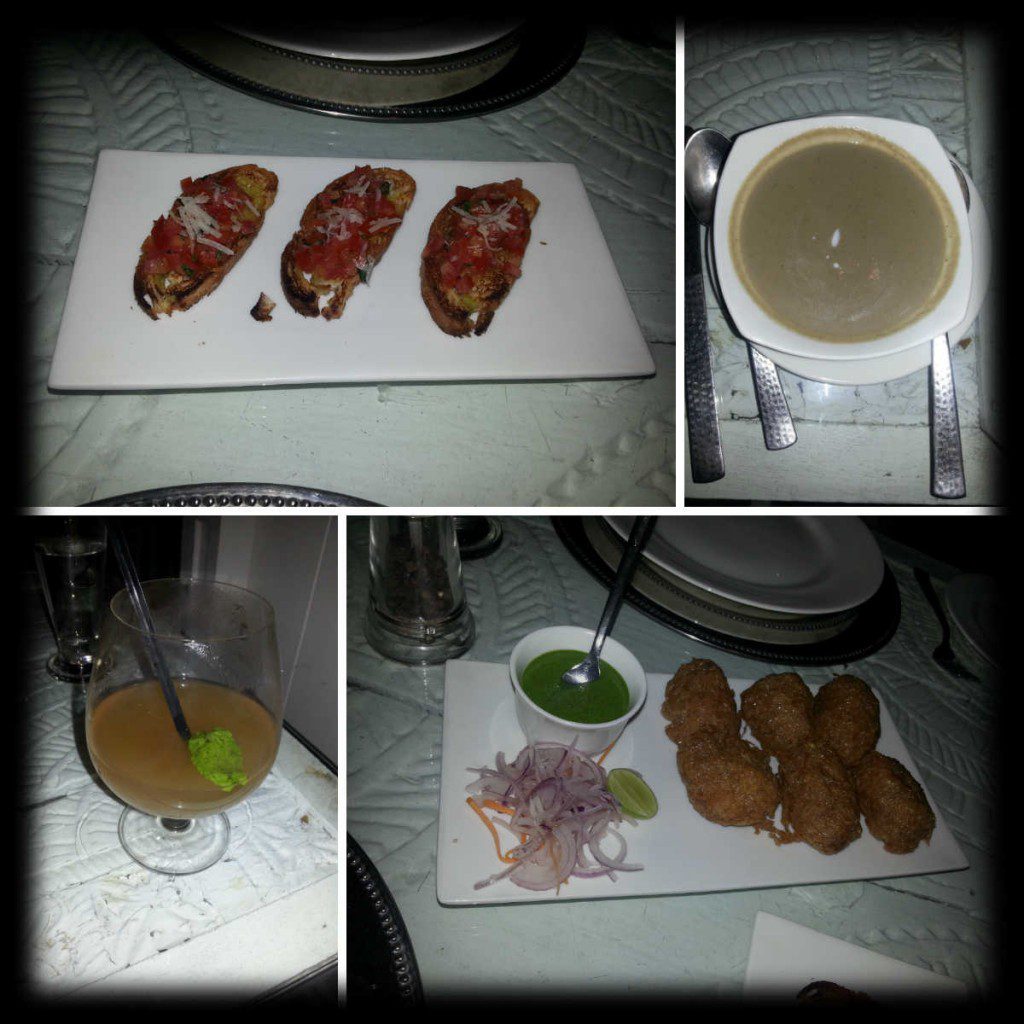
    The live counter items are served on the table along with the choice of welcome drink. (beer/bottled drinks/kokum juice/buttermilk/mocktail of the day) D chose the mocktail which turned out to be a fruit punch, and I had a buttermilk. The fruit punch was strawberry heavy and just okay. The buttermilk was cold but a bit diluted and wasn’t the spicy kind I prefer. The menu differed a bit from what we’d seen on Zomato. The pick of the starters for me would be the podi idly – small, soft, spicy! This would be closely followed by the spicy grilled chicken and the thair (curd) vada. The mutton patties, the steamed fish (raw mango  flavoured and served in a banana leaf) and the uthapizza (I’m calling it that because it was an uthappam served in a pizza-like slice) were also very good. The corn, and the glazed pineapple were decent. The not-so-good items were the paneer, prawns (both were bland) and the veg patties.

    collage1

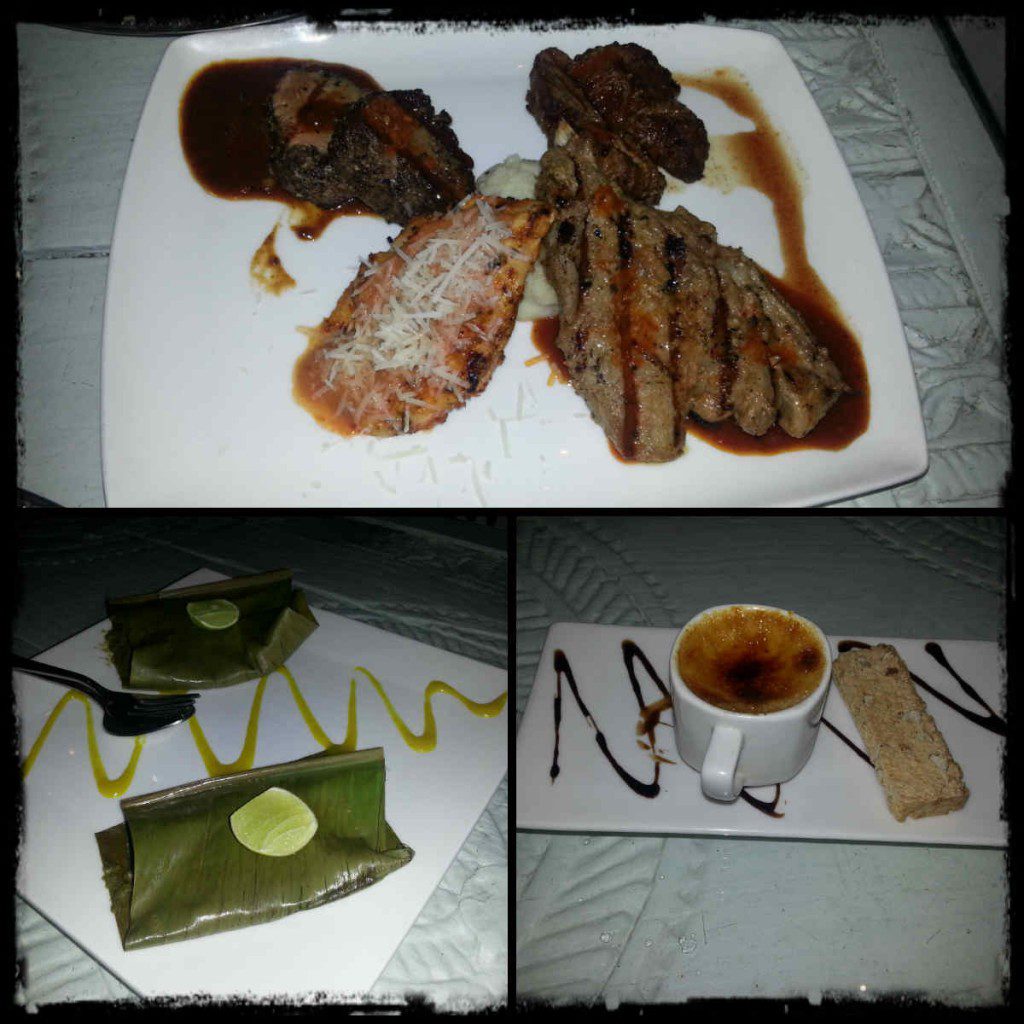
    The main course is the traditional buffet style – you have to go to the food. 🙂 The photogenic pickle and podi spread grabs your attention before anything else. In the main course, we skipped the soup options (mutton stock, rasam) and began with the fish, mutton and chicken (all gravies) The appam/porotta/dosa/podi dosa will be brought to the table after you tell them what you’d prefer. A good idea would be to order this just before you pick up the dishes. The fish turned out to be quite bland and D didn’t like the crab masala she’d picked up. The chicken and mutton were both curry leaves based, but differed in taste. I thought the mutton was really good and D favoured the chicken. The appams were very good, as were the podi dosas. (I’d gladly pay for that podi if they’re selling it!) The Kerala Porotta and the dosa were decent enough. In the next round, we tried the chicken biryani, which wasn’t that great. There are enough veg options, it’s just that we skipped them – except for the stew, which was really good.

    collage2

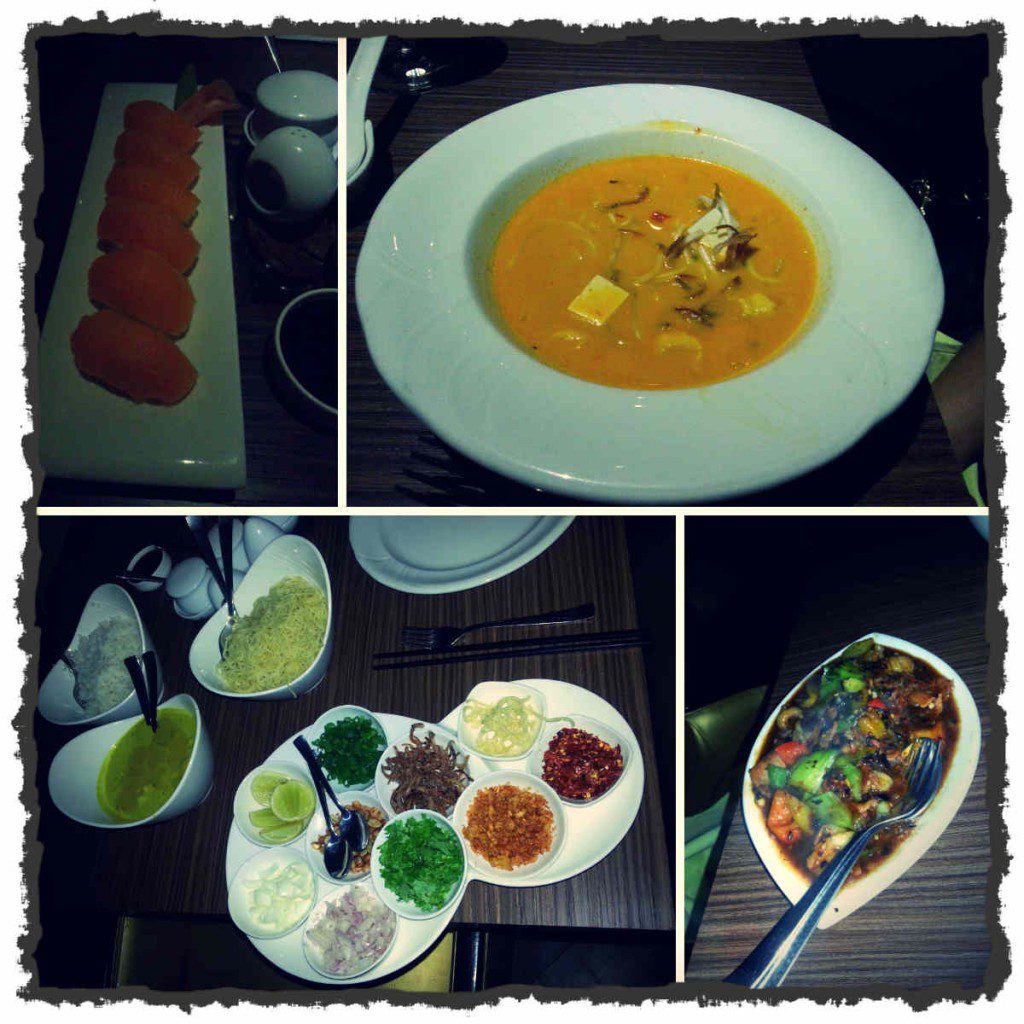
    We barely had space for desserts but bravely soldiered on. The elaneer payasam is magic and a must try. I had 2 mini glasses. D loved the jalebis as well. The phirni, pastry, pradhaman, jamun and rasagullas were standard fare. We were too stuffed for the gola! 🙁 The meal ended with a filter coffee.

    collage3

    It cost us Rs.1200 including service charge and taxes. I think that’s excellent value for money, especially given the location. The service deserves a special mention – enthusiastic, pleasant and prompt! I’d definitely drop in again.

    bon South, 130, 1st Cross, 5th Block, (behind Sukh Sagar) Koramangala Ph: 2552 6362 / 6363

  • No Full Stops in India

    Mark Tully

    No Full Stops in India was published in 1991, and so the best part about it is that it involves a fair amount of time travel. It’s a collection of 10 essays with an introduction and epilogue that could pass off as mini essays too! While all of the essays are commentaries, what adds that little flavour is the author’s own involvement in it, which he somehow manages to balance with a near objective view. The first essay, for instance, involves the marriage of his cook’s daughter, and his experience at the village. But it also is about how communities in villages have been solving their own problems even better than the land’s relatively new legal system. It thus serves as an example of how we, the ‘educated elite’ make a clamour for egalitarianism without understanding the positives of the caste system.

    Cultural imperialism is the theme of the next essay and is brought out through the carvings at Mahabalipuram, and the interaction and friction between British artists (sculptors) and their Indian counterparts, whom they rate slightly lesser- as craftsmen. The essay also touches upon Dalit Christians and how they are discriminated against even within the Church.

    The Kumbh Mela is what the third essay is about and is a vivid telling of the massive festival. The author spends time with VP Singh’s brother, and meets the various people who ply their trade in this enormous festival – the pandas and later, the akharas who look to recruit people or get donations. In this, there is a note of sarcasm that creeps in occasionally, but Tully still manages to capture the faith driven fervour superbly. He has also correctly predicted the potential rise of communal parties towards the end of the essay.

    One of the most interesting essays in No Full Stops in India is the fourth one, especially for my generation which grew up watching Ramanand Sagar’s Ramayan! The author reminded me of the impact of this mega serial long before we had reality TV and TRPs – taxi drivers who knocked on the author’s door asking for permission to watch it in his house, cabinet swearing in postponed so everyone could watch it, and so on. He spends 2 days with the Sagars while they’re shooting the Uttararamayan section (owing to public demand) and there Ramanand Sagar tells him how he has handled feminists and also the story of his own life. There is an amusing part about the filming of a scene – Lakshman having biscuits between takes, reusing marigolds for extra takes, and so on.

    Operation Black Thunder is a more serious essay which involves covering the whole event live. This was an era before live TV and omnipresent crews and the author tries to delve deeper into how a section of the Sikhs and the Central and State governments reached this point, with interviews of civil servants and military, police personnel.

    Colonialism in Calcutta is probably my favourite essay as Tully takes us through the city where Marxism, industries and religion co-exist side by side amidst bare remnants of an earlier era. In between are interesting anecdotes like the Oberoi Hotel’s origins. This happens to be the author’s birthplace and the affection does really come through.

    The next one was a surprise since it dealt with a modern day case of Sati and it has never been proved whether it was suicide or murder. The author gets the varying perspectives of the villagers, politicians, civil servants, activists, the extended family, and it does bring out how laws at the end of day, should be made understanding the minds of the people they are made for.

    Typhoon in Ahmedabad also surprised me but apparently that’s the name they use for riots! This is an era before Narendra Modi left his indelible mark and does show that riots existed long before him. The poor – both Hindu and Muslim, seem the most affected in the politically motivated result of a nexus between politicians and the underworld. SEWA’s activities also get some space as does Ahmedabad as a city.

    A journey into Madhya Pradesh in what was the national vehicle of the time – the Ambassador, makes up the next essay. The destination is the village of an artist who has made it (relatively) big in Bhopal with the help of a government program. Jabalpur, the inconspicuous geographical centre of India, represents eminently the feel of a tier 3 city in the mid-late 80s. This essay also covers ground on tribals, their belief systems and I also found what could be the precursor to Arundhati Roy’s essays about the Narmada.

    The last essay is about Digvijay Narain Singh, the politician from Bihar who also happens to be the author’s close friend. He belongs to an era when politicians had a conscience, and while you could say that the author is biased, much of the perspective is reportage – opinions from others. The politician’s relationships with Nehru, Indira Gandhi are well chronicled and throws light on the kind of politician who took the responsibility of being a public servant seriously.

    The epilogue is a note on Rajiv Gandhi, and through this, the state of India as a nation. It ends with the news of Rajiv’s death and the author’s perspective on what this means for a nation.

    In essence, No Full Stops in India is a wonderful read that gave me insights about a time when I was too young to dwell on things happening around me and events that ultimately affected the present I live in.

  • The world we create

    A while ago, I had written about the narratives of our lives, a look at various narratives across time – from religions and nations to popular culture and brands to the internet – that have (arguably) tried to fulfill our sense of belonging. All the narratives I had considered were external in nature, though they might be dictated by our choices and preferences.

    An excellent comment on the post by The Lit Room made me consider ‘the narrative of individual imagination’. As I answered, it is probably the most important one, as it takes all sorts of external stimuli, and converts it into a unique stream of consciousness. Just when I began thinking of writing a follow up post by including that aspect, I was reintroduced, thanks to Devdutt Pattanaik’s Sita, to the concept of ‘aham brahmasmi‘ – “every human creates his own imagined version of the world, and of himself. Every human is therefore Brahma, creator of his own aham“. I think it is impossible to crack everything that goes into the making of one’s own consciousness, which is probably what led to

    Clipboard01

    (image via)

    But there are at least a couple of perspectives that the book provides in terms of how one can create an ideal ‘world’ for oneself. It says, “stay true to the idea of dharma. Be the best you can be, in the worst of circumstances, even when no one is watching.” I thought a bit about what actually drives our actions, and realised that at the bottom of it is fear. (debatable) Not just one fear, but many, many fears driven by our contexts – some we acknowledge, some we don’t. George Lucas probably figured it out earlier, (see) though we might travel paths different from what Yoda has suggested. The book also states that – Fear is a constant, and faith is a choice. Fear comes from karma, from faith arises dharma. Faith in what, was the next thing I pondered over. In oneself, and a moral code that one adheres to? Or a higher power/cosmic law that governs all that happens? Or is it just a mechanical process with the fittest surviving? There are more options as well, probably, but I like to go with the first, because in the world that I create, my actions can ensure I do not have to fear.

    Meanwhile, also from the book – Shiva chooses the path of asceticism and self control to control the aham, and the world it creates. Vishnu chose to live amidst materialism and yet find a way to break free – a middle path. (now I can see why Buddha is assumed to be a form of Vishnu) I think there are several degrees to choose from, and there lies the challenge. I also realise that it if each of us are creating our own worlds, we cannot really answer the questions of the world at large – a universal answer – because it is an aggregate of each of our worlds, which are different from each other and have unique rules. We can only find the answers to our own world, and through our individual paths, find our own version of the answer to the purpose of life.

    until next time, muddled path