Author: manuscrypts

  • Overwinter

    Ratika Kapur

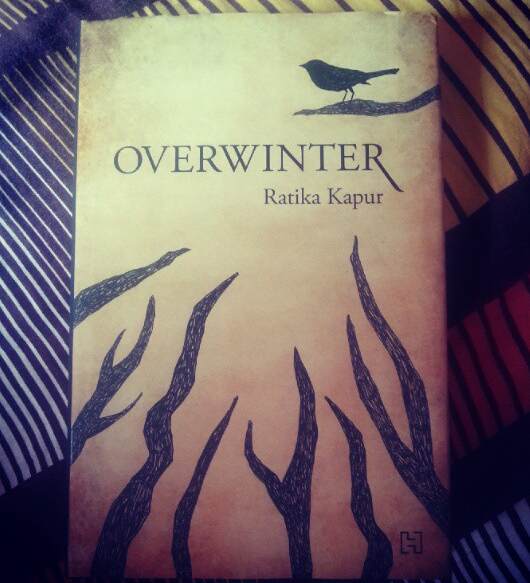
    ‘Mature’ is probably the first word I’d associate with the book. True, it does fall under the general existential angst category, but I felt that it does go beyond the stereotype – in the characters, the way they are handled, and the way situations flow. The story spans only a few months, though the narrative does go back in time to provide contexts and many events unfolding in the story do have a connection with the past.

    I felt that the only truly complex person in the book was Ketaki, the protagonist. I could pretty much relate to everyone else very easily, but her way of dealing with situations and people was the little unpredictability that made the book ‘different’. ‘Overwinter’ means spending winter or waiting for it to pass, and that is pretty much what Ketaki seems to be doing. The novel starts with a rather dysfunctional scene involving her and her uncle, but that’s not really a good indication of the story.

    Ratika Kapur shows tremendous skill in narrating day to day events (a trip from Delhi to Gurgaon, for instance) such that they completely step out of the mundane. This is also true of her excellent descriptions of human emotions. There is a sense of reality in the book – for instance, the conversations around the Nano or T20 cricket or Nadal vs Tsonga – that happens between characters. It’s as though I stepped into a living room and happened to hear these conversations.

    The other word I’d associate with the book is ‘intelligent’. The prose is assured, the narrative measured, and though you may not get a sense of closure that books often give you, this is a wonderful read.

    Clipboard05

  • High Ultra Lounge

    First published in Bangalore Mirror

    Sometimes when you’re high, you begin to brag, and sometimes it really can be justified – like when you’re a lounge on the 31st floor of the World Trade Centre, (map) making you one of the highest located dining points in the country, and when you command a breath-taking view of the city that’s arguably unparalleled. It is very rarely that you can get a sense of the city as a whole (outside of Google Maps) and the 180 degree view that High offers is almost humbling. But that’s enough of a high, let me give you the lowdown on the place itself.

    It’s open from 5.30 -11.30 PM, and reserving in advance is a good idea. There are different kinds of High, each serving a specific purpose – High View is the lounge space, High Dine is more of a fine dining experience, High Mix is the place for a cocktail do, and High Edge is a private dining area. There’s a sense of shifting moods through these sections, brought about by the colours used and the lighting. Yet, despite the individual personas, all of these flow seamlessly into each other. The seating is trendy and comfortable across the spaces, and on a Saturday night, with music in the background, and the bright lights of Bangalore spread out in front of you, it is easy to feel on top of the world!

    It didn’t really make sense to leave ourselves high and dry in such a wonderful ambience, so we quickly scanned the drinks menu – a mix of signature cocktails, classic fare, some interesting mocktails and everything else you’d need in a bar! From the signature drinks, we tried the Moon Lighting, the Spell Bound Bellini and The Last Order. I’d asked for the first, and the vodka based pink-orange coloured drink got me a few smirks from the guys, but that was settled by the Bellini, which was completely lady-like in its pink frothy (and tasty) avatar. The Last Order was a more subtle drink in all respects. The one mocktail we tried – Fame of Passion – was peachy and quite refreshing.

    collage1

    The food menu, with a lot of focus on appetisers and short eats, is a mix of Asian cuisines – Japanese, Korean and Thai. We began with the salmon sashimi, complemented well by the wasabi and ginger, but preferred the Red Snapper Nigiri over this. Also in good form was the vegetarian dish we tried – the mildly spicy Shichimi-spiced Maki with tenkasu. The Pork Belly was quite good too – well cooked meat with a lime based tangy topping that gave it a flavourful pop. The Prawns Tempura also found a lot of takers – fluffy and crisp batter with succulent meat. The starters ended on a high with the fantastic Chilly Beef Asparagus, spicy enough even for the seasoned palates.

    collage2

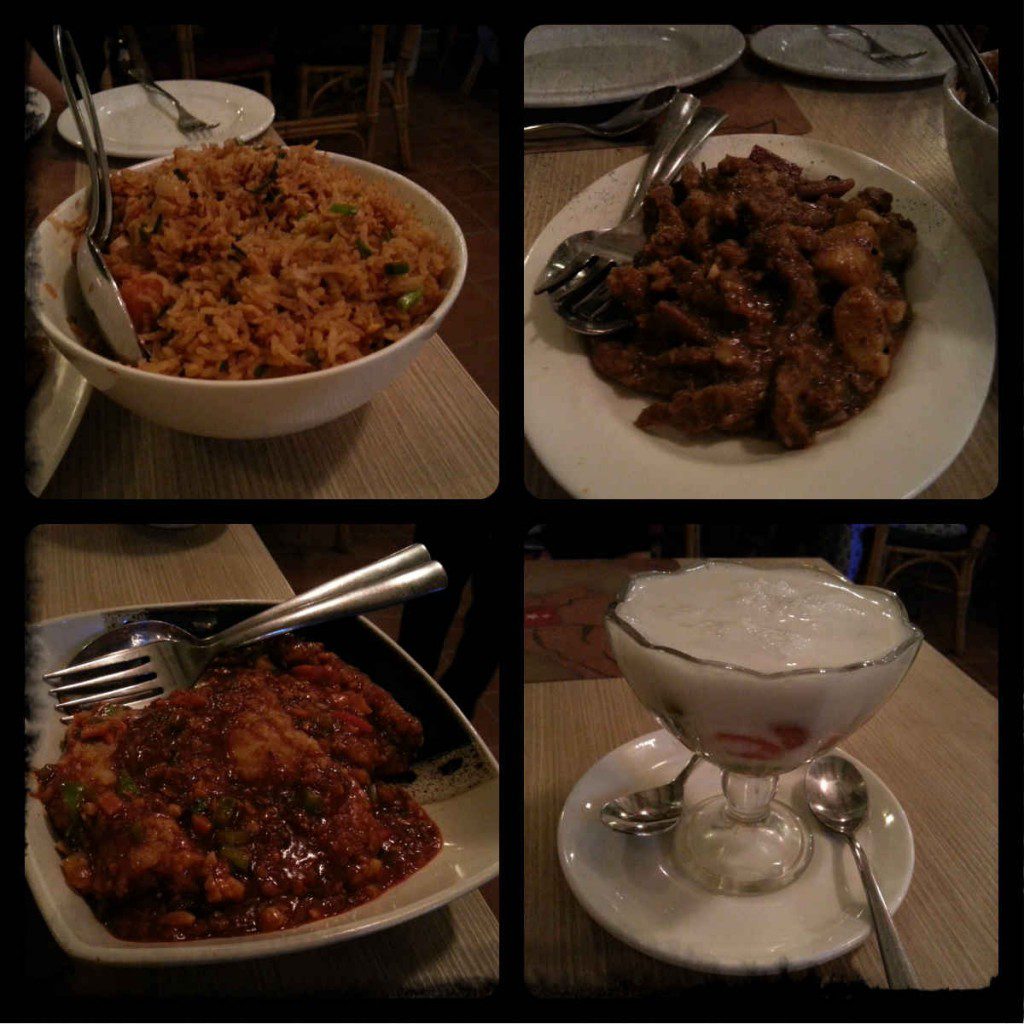
    On a relative scale, there aren’t a lot of choices in the main menu, and a couple of dishes weren’t available, but the remaining did suffice to make a decent meal out of it. The Beef stew was nowhere near what we’d consider a stew, but well cooked meat and mildly spicy flavours meant we didn’t really complain. The San Bei Chicken was a tad too salty for our liking. We had the Soba rice noodles with chilli to go with these and it was liked mainly thanks to its zesty spiciness. The seafood noodles was surprisingly insipid.

    It’s a lounge, so understandably there aren’t many dessert options. To be precise, there are three, and the Banoffee Pie was an easy winner given that the competition was a fruit platter and homemade ice creams. The dessert wasn’t bad, though I can’t claim it was the best I’d eaten.

    collage3

    At a height of over 420 feet and spread across 10000 square feet, High sets the bar high, literally and otherwise. Special thanks to Guru, who in addition to being wonderful at his job as the resident mixologist, also charmed us with his child management skills! An energetic yet relaxing ambiance, good appetisers, superb service, and a view that might remain unmatched for quite a while, High has everything going for it.  A meal for two would cost around Rs.3500 (Inclusive of taxes and service charge) The pricing might make it seem a little for the highborn, but hey, the experience is difficult to top!

    High Ultra Lounge, Roof Top, World Trade Center, 31st Floor, Brigade Gateway Campus, 26/1, Dr. Rajkumar Road, Malleshwaram West, Ph: 08045674567

  • The Tao of Travel: Enlightenments from Lives on the Road

    Paul Theroux 

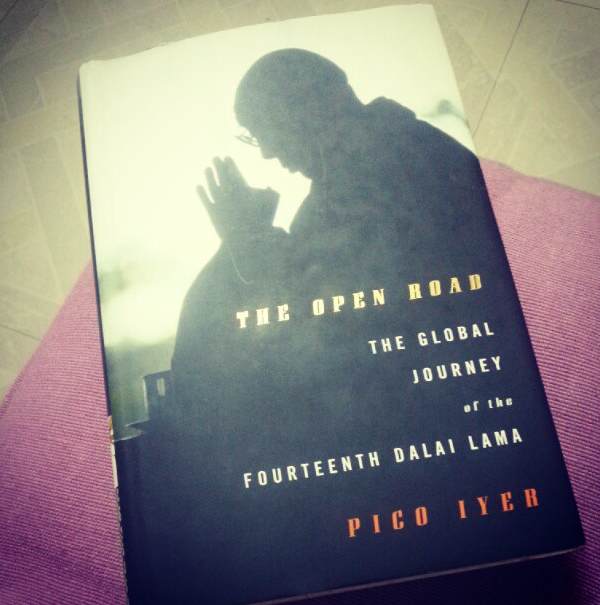
    Whenever I take a vacation, I arrive as a tourist and like to think that I leave at least partly converted into a traveler. I am forever envious of travelers, many of whose journeys serve as a purpose in itself. This book is an excellent little guide to what the author mentions in the preface – paraphrasing the Buddha – “You cannot travel the path before you become the path itself”, and how travel is also a way of living, and thinking.

    In addition to excerpts from various works by different travel writers and adventurers, classified by unique and amazing themes from Railways, time spent in travel to Murphy’s laws, to imaginary journeys, how places are different from what they sound like and so on, the book is peppered with Travel Wisdom from various authors.

    There are gems hidden in the pages – little quotes that somehow tell you that the spirit within each wanderer is essentially the same. The description of places and times by masters are splendid enough to transport you to locales across to world from Alaska to Africa and Russia to South America….And it’s not just the places, but the people who live there, the way they think, and one can sense the cord that invisibly connects humanity.

    In 275 pages, the author manages to indeed provide a Tao of Travel across time and space. Must read.

    Clipboard02

  • Mother Cluckers

    12th Main Indiranagar now rivals Koramangala in terms of cuisine diversity! Mother Cluckers belongs to the Plan B family and pretty much rules the roost in terms of popularity in the area. (map) I was told that finding a table among the dozen options available would be near impossible. But we were early cluckers and got a spot, near the ‘hippie entrance’. In about half an hour, the place was packed. Not surprising, since it’s not a really large space. In case you don’t get lucky, take your drink and spend some time in the smoking zone beside the entrance. They have made the most of the space – rustic brick walls adorned with plaques and posters that sum up the commitment to clucking good food. The glasses, tissues and even the menu show the lineage quite clearly – Plan B. The dim lighting (though they have done a fantastic job of ensuring tables are well lit) and a general informal ambiance and decor make it a perfect spot to unwind in the evening. That’s despite the mildly uncomfortable wooden park bench seating. The music went everywhere from ‘Walk of Life’ to ‘Summertime Sadness’, and the decibel levels don’t really encourage a lot of clucking.

    One gigantic menu, one side of which is occupied by solids, and the other by liquids. The focus is clearly on bites that can go with drinks, which does make eminent sense given the place’ intent. We decided to test out the standard stuff before the specials. The Long Island, despite not skimping in alcohol, fell rather flat. The Caipirovska didn’t have as many illustrious ingredients, but was a much better drink – smooth and refreshing. The obvious choice for me, from the house specials, was Chutney Mary – a mix of vodka, guava juice, and spices. I suspect the ‘spices’ were chaat masala, but the drink is fantastic, if you’re the kind who doesn’t mind the drink being ‘hot’. Also, it does set the tone for the food. From “The Clucker’s Arsenal”, we asked for the Fiery Clucker, boneless chicken, grilled and marinated. Tasty enough, but surprisingly, despite the name, it turned out to be relatively less spicy than the other starters we tried. The Chilli Fried Pork, on the other hand, did live up to its name, and is only for those who can handle the heat! The Beef Chili Cheese Fries occupied the middle ground, with the cheese tempering the spiciness of the beef. The bacon with sausage, was exactly like all things that have bacon – great! The crunchy prawns were true to the name, and though the batter was bland, the mildly pungent dip made up for it. It was also a good respite from the spice assault! This is not really the best place for herbivores, but the Stuffed Mushrooms are totally worth a try, thanks to the delicious cheese and spinach stuffing.

    collage

    The mains options consist of burgers and a reasonable selection of other dishes. We started with the Pandi Burger, probably the most unique one in the list. Instead of the patty, there’s spicy Coorg pork, with a zesty tang to it. They have a crab burger as well, in case you prefer a sea adventure. The Smoked Spare Ribs is another dish that stands out from among the spice crowd! The marinade is sweet and only mildly spicy, with well cooked meat. Yet again, there was a pleasant veg surprise, this time in the form of Baked Eggplant, with a healthy dose of cheese and a tasty sauce.

    The menu doesn’t display desserts, so we had given up hope, until one of us noticed the board outside with four options! We chose the Banoffee pie and a Chocolate cheesecake. It’s counterintuitive to go to a pub for desserts, but you’d be forgiven in this case. Spectacular stuff and a sweet mother clucking end to a meal!

    collage2

    A meal for two would cost around Rs.1500 (Inclusive of taxes and service charge) – a couple of cocktails, a non veg starter, a main course dish and a dessert. There are only two things that can bring tears to your eyes – your preference for veg dishes (if any), and the spice levels in pretty much all the dishes. If you’re fine with that, and a hoarse voice that comes from shouting over the music, you’ll completely enjoy the place. The place is built for carnivores who enjoy their drinks. The rest of the world would unfortunately have to go cluck itself.

    Mother Cluckers Bar, 957, 12th Main, HAL 2nd Stage, Indiranagar Ph: 9886092625

  • The legacy need

    The last two books I read had only a faint connection. One was historical fiction and the other was a memoir. The first – “A Spoke in the wheel” by Amita Kanekar – is a take on Buddha and his teachings by a monk three hundred years after the Buddha’s death when his teachings have begun their journey into religion, the emperor Asoka being the key catalyst. The second – “City of Djinns” By William Dalrymple is his discovery of Delhi – past and present – in a year that he spent in the city in the early 90s. The connection, as you might have guessed, is historical narrative.

    It is natural to think that there is a huge difference in a work of fiction and a more research and experience led memoir, but the point of the post is that with time, it is difficult to establish that. In the book on the Buddha, the monk chronicling his life and teachings is irritated by the supernatural abilities being attributed to him. But we do know that many people believe in it now and even consider him as one among the avatars of Vishnu. On a related note, William Dalrymple delivered a body blow to my notions of the Mahabharata era when his conversation with an archaeologist constituted a distinct possibility that the war was fought with sticks and stones and probably a bit of metal! (the proof being excavations around what is considered one of the earliest versions of Delhi – Indraprastha) I am a huge fan of Hindu mythology and it has fascinated me from as long as I can remember. I truly believed that they had happened in some form, but the archaeologist is clear that most descriptions in the epic would fall under ‘poetic license’!

    It made me wonder if there would be any difference between the two books say, a hundred years from now. It is possible they might exchange roles. It is also possible that they both are treated as fiction, or as factual pieces of work. I think all scenarios are possible because at the time of chronicling something, we believe that its factuality would be transmitted across time. And yet, we could debate the Mahabharata’s historical authenticity and Buddha’s superpowers both ways! So think about it, the same thing could happen to the information we store now as well. Thanks to digitisation, more data is being created in this world than ever before and (arguably) every point made has a counterpoint. There are no objective annotations because even the original construction is a product of biases, interpretations, perspectives and so on.

    That brings me to legacy, something a lot of us care about. From children to business empires to art to helping others, there are many avenues. However, I think that unless there is documentation, the chances of a legacy lasting beyond a few generations is questionable. For example, Dalrymple finds the last line of direct Mughal descendants and their knowledge of their ancestors is limited to a few generations before them. The futurist in me does fantasise about a global neural network and consciousness that connects all of humanity and has sufficient storage to instantly collect, catalog and annotate all ‘memories’  in as objective a state as possible for later generations to study them.

    But meanwhile, even as I dissect my baggage of the past, I am now forced to consider my need for leaving a legacy – something behind that will represent me when I’m gone.  After all of the above, how relevant is that need? Isn’t it just a demand made by the ego, a story we create for ourselves? Something to continue the narrative of our lives? We do talk a lot about letting go of the baggage of the past, but isn’t legacy also a baggage? A baggage of our future? If we let go of that, how different would our thoughts and deeds be? Understanding that is probably the key to living in the moment. I could easily twist my favourite cricketer-gentleman’s words for this context- He’s not concerned about his legacy, he’s concerned about what actually makes him come alive in the first place, which is that love of life, the desire to live completely.

    recite-15416-48543400-hiy6v5

    until next time, present participant