
Author: manuscrypts

  • Bierre Republic

    First published in Bangalore Mirror

    Church Street has been getting quite a high these days – Social, Tapwater, and Bierre Republic. Pavilion Mall, where Bierre Republic is located, seems like a sandwich with nothing in between – the ground and top floors are active but the two floors in between looked unoccupied.  There’s no valet parking but they have space in the basement. The huge signage outside serves as a beacon of hope as you trudge past two floors of desolation and alien-looking faux vegetation to finally land up, ironically, near a man in a sailor suit! You could choose to be boring and take the lift too. Another small flight of stairs gets you to the dining area with many parts to it – alfresco with a few enclosed portions, a smoking section, a smaller lounge area, and even an ‘upper deck’. The furniture is almost all wood, except for the plush sofas in the smoking section and some other elements, and that includes the décor consisting of ‘barrels’! It was edging towards tackiness, but the beer posters manage to pull it back a bit. The alfresco section is the perfect place to be in typical Bangalore weather and offers a superb view of the Public Utility building. A live band was in the house, and except for a massacre of The Cranberries’ “Zombie”, which almost provoked us to violence for the sake of silence, they were quite good! Meanwhile, as the evening progressed, the service began reflecting the ‘ship’ theme – they were totally at sea, and were finding it difficult to manage the orders, despite the valiant efforts of their active crew, whom we felt sorry for. (more…)

  • Dongri To Dubai: Six Decades of The Mumbai Mafia

    S. Hussain Zaidi 

    As a chronicle of the Mumbai mafia, this book does complete justice to the job. While the ‘hero’ remains the big D, the author traces the history of Bombay’s underworld from the 1950’s until Operation Neptune Spear – Bin Laden’s death – and its repercussions on Dawood.

    The book begins with an interview with Dawood Ibrahim in 1997, the last published one, and one that is credited to the author himself, spends a chapter that serves as a synopsis of the don’s life thus far and then quickly zooms back to the 50s and 60s focusing on the birth of Mumbai’s underworld. The triumvirate of Haji Mastan, Karim Lala, and Varadarajan Mudaliar feature prominently in the next few chapters, which are dedicated to the intricacies of gold and electronics smuggling, bootlegging, minor extortion, the prostitution trade, dispute settling and other activities that filled the coffers of Mastan and his allies. Mastan’s search for ‘legitimacy’ and associations with Bollywood and politics are also highlighted, as is the beginning of the underworld’s nexus with the cops and politicians. (more…)

  • The people we are….with

    After I shared the “We, the storytellers” post on Twitter, Surekha sparked off this interesting discussion on how we could persuade others to be less judgmental and more compassionate. I really didn’t have a fix-it-all answer and felt that it was more important that we simply practice this ourselves. That, however, did not stop me from thinking about it.

    The next day, my reading list had this post, which touched upon things that get people to change their behaviour. I remembered this William James quote used in the post from something I had seen a while back at Brain Pickings.

    Clipboard01

    (more…)

  • The Fort Kochi Connection

    We’d been eyeing The Fort Kochi connection for a while now, especially since the ads started appearing in the Malayalam daily, and the only reason we’d been delaying the inevitable trip was that we thought it would be a revamped version of its earlier avatar – Oyster Bay. But on the day we were planning to watch Bangalore Days in PVR, its location gave it an advantage and we succumbed finally.

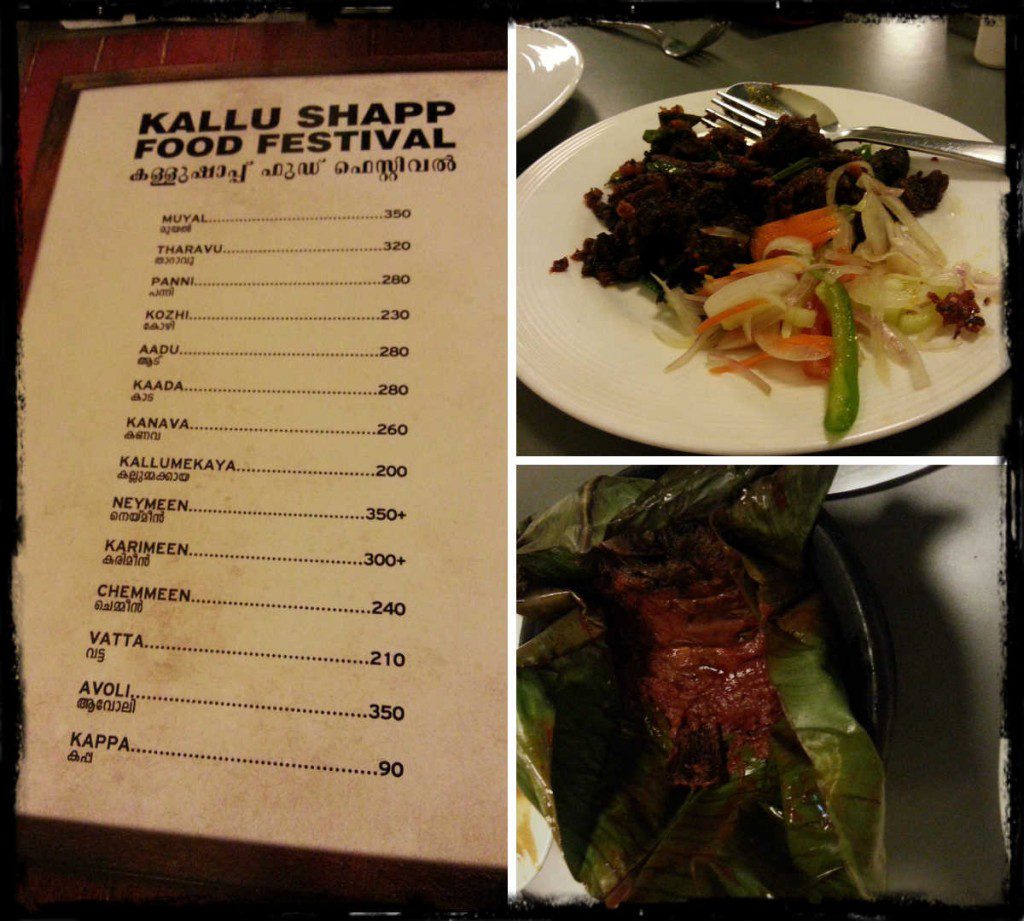
    The layout has been modified only slightly, if at all, but the menu seemed different. A few good Cochin photographs have been added too. The ‘connection’, thanks to Kochi being a major trading port, allows it to have a smattering of all kinds of cuisines – Chinese, Portugese, Dutch, and of course, British. But like all well brought up Malayalis, we first checked out what was available in beef. We also completely ignored everything but the Kerala cuisines – Malabar, Kochi and Syrian Christian. After much debate, the Achayan Pothularth (who makes these spellings man?!) was ordered. It sounds Sith, and is dark, but did an amazing job nevertheless – spicy, well cooked meat. They had a special Kallu Shop menu going, but unfortunately what we wanted from it was not available. We also tried the Karimeen Pollichathu, and while its masala was decent – spicy and a good texture, we have had better, and on healthier fish.

    collage1

    (more…)

  • India In Slow Motion

     Mark Tully, Gillian Wright

    A book written a decade back, and yet, it is still relevant because as the cliche goes ‘the more things change, the more they remain the same’. India has changed in many ways, and yet remains the same in many other ways, and that’s exactly the theme of this book too. Mark Tully and Gillian Wright have tried to study the various forces that keep India ticking at its unique speed – forces that accelerate and forces that pull it back. Through 10 unique scenarios they have attempted to not just unravel the fundamentals, but even taken a shot at the nuances that define the ‘Indian experience’.

    The book begins on a day that has left an indelible mark on modern India’s psyche and society – 6th December 1992 – the Babri Masjid demolition. The first chapter is about the rise of Hindutva, the role of the BJP, VHP, RSS etc and perspectives of the common people who reside in Ayodhya and the nuances in their approach to religion and gods. The second chapter shifts the premise to carpet making, child labour, and the machinations of organisations, including NGOs to achieve the moral high ground even at the cost of truth. (more…)