
Neha Dixit
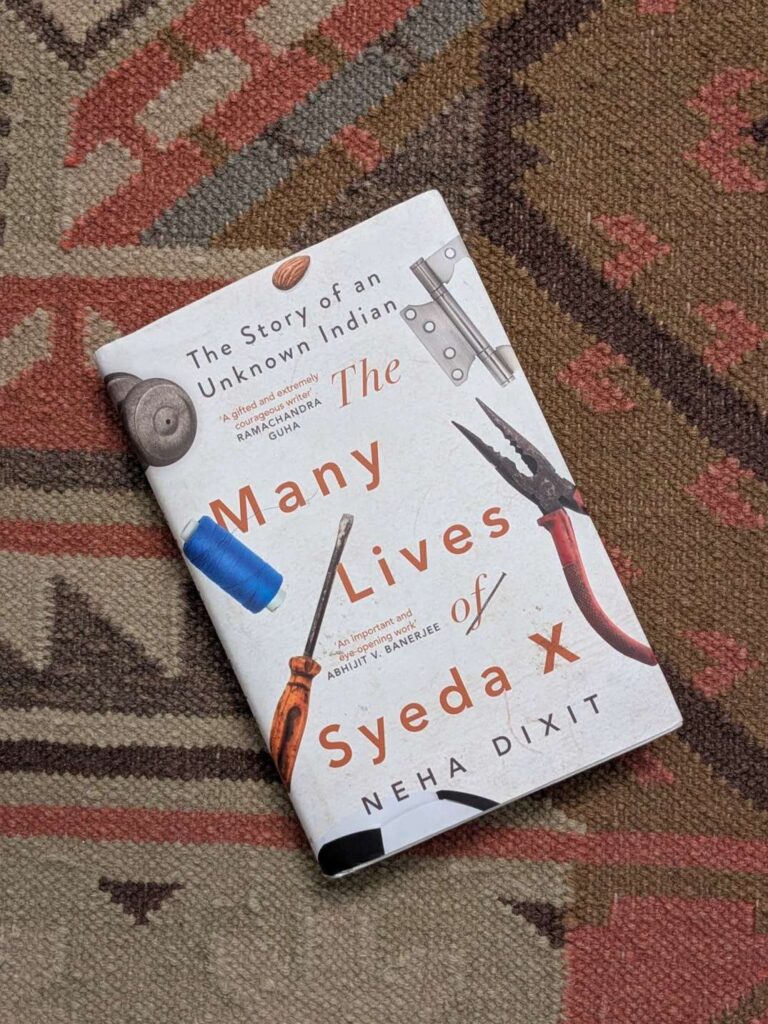
‘The Many Lives of Syeda X’ is the kind of book that forces one to look at one’s privilege at an individual level, and holds a mirror to all of us at a societal level. Neha Dixit has researched this book for nine years, and the breadth and depth of her 900+ interactions, and her thinking, is evident in the structure and narrative of the book.
It is, as the cliche goes, the voice of the voiceless – the people whose desperate toils to survive we deliberately look away from or pretend not to see, because it is a reality we will find difficult to face if we consider ourselves human. I call it sub-human because, from our gated vantage point, in a nation whose GDP chest-thumping and gleaming malls and fancy consumer goods belies the struggle of the large majority of its population, people like Syeda exist in conditions that are perilous in terms of income, health, and safety. A poor, Muslim, woman.
Syeda’s life represents the struggles of the millions of ‘invisible workers’ in the country. The book follows her from Benaras, where the 1992 Babri Masjid-related riots upend ‘the warp and the weft’ that made up the handloom industry, and in the process, her life and work. Along with her husband and three children, she is forced to move to Delhi, a decision practically made for her by the person at the railway station ticket counter.
In the next three decades, we see her forced to move through fifty low-paying and exploitative jobs – stitching jeans, making bindis and stationery, shelling almonds. Holding multiple jobs at the same time with very little job security or safety. She is part of India’s informal economy, working in subhuman conditions with no formal contracts or labor rights. Extremely vulnerable, and way beyond hand to mouth. The section about the strikes to get Rs.10 extra is poignant.
It’s not just the economics, it is also the compounding marginalisation of two other parts of her identity, if at all she has one – being Muslim, and being a woman. From her own family (including her husband) to society at large, and the governance, there is a systemic approach that doesn’t stop at apathy, it moves into malice and violence. The number of times she has to up and move from her house/job is a testament to that.
The many Lives of Syeda X, though unwavering in its focus on the marginalised, is also a political and social commentary, bringing out the communal tensions that repeatedly affect Syeda’s life and work, and highlighting the systematic execution of the Hindu rashtra plan by the BJP and its cousins.
Through all this, Syeda is relentlessly resilient, eking out a sense of agency and constantly adapting to everything thrown at her. But “from a chatterbox who loved films, music, colours, she became an irritable, bitter, quiet woman, who kept to herself.” Her only support, beyond her daughter Reshma (which she never really acknowledges) is the community of those like her, bonded by the different oppressions and systemic injustices they face.
It is impossible not to feel for her, Akmal (husband), and Reshma. The former becomes a rickshaw puller after being a skilled weaver of high-end saris, and the former, who despite being a spirited ‘Dilliwali’ struggles with the burden of looking after her parents amidst her own aspirations. It is heartbreaking to see that a generation later, though Reshma’s job at the mall is ostensibly better than Syeda’s work, it is still dreadful.
The many Lives of Syeda X isn’t a happy book, and the usage of Bollywood lyrics and Urdu poetry accentuate the poignance. An interesting aspect is how relevant events across the spectrum – from the release of movies to the launch of Aadhaar to the Shaheen Bagh protests – are highlighted to show how they affect those like Syeda. A dogged and unflinching portrayal of lives at the intersection of gender, poverty, and religion, it is a brutal but necessary gut punch for the reader and the society we are part of.
Notes from The Many Lives of Syeda X
1. तमाम रिश्तों को मैं घर पे छोड़ आया था
फिर उस के बा’द मुझे कोई अजनबी न मिला
– बशीर बद्र
2. In October 2018, Kerala became the first state to pass the ‘Right to Sit’ law that mandated shops to provide seating arrangements for all workers.
3. The kind of errors Aadhar has, especially in the documents of those who are supposed to gain from it is crazy! A combination of illiteracy, systemic apathy, and corruption (in the cost to get changes done)
Leave a Reply