Month: May 2025

  • The Coming Wave: AI, Power and the 21st Century’s Greatest Dilemma

    Mustafa Suleyman, Michael Bhaskar

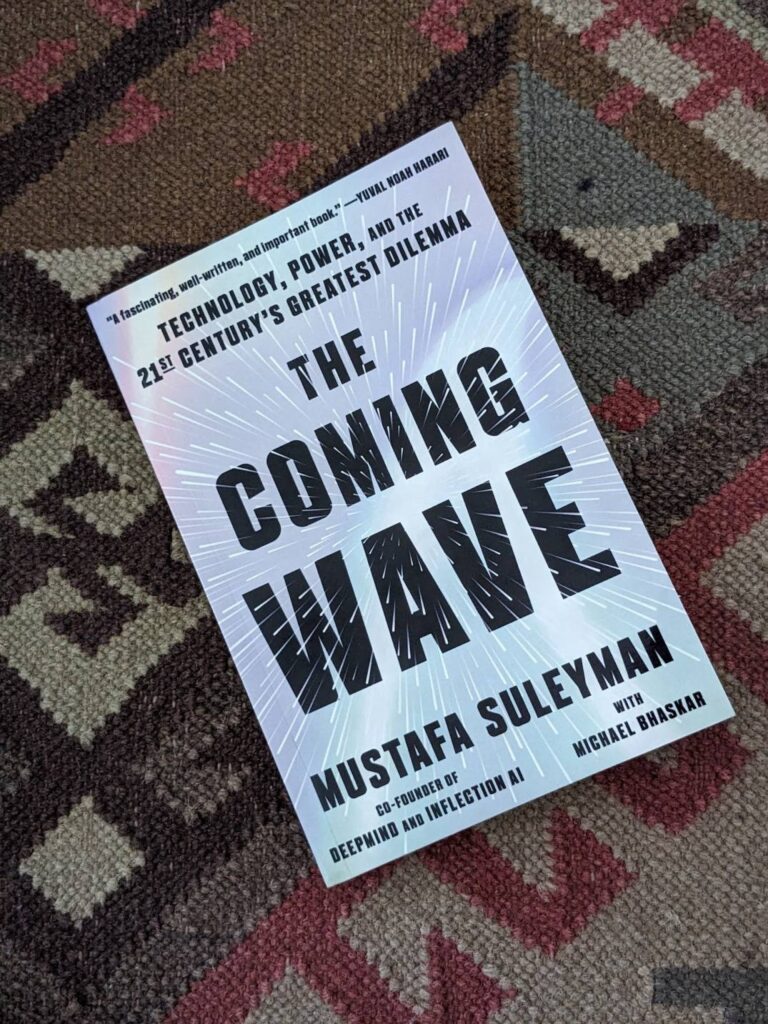
    Co-founder of first DeepMind (the company behind a couple of massive leaps in AI – AlphaGo, AlphaFold, acquired by Google), then Inflection AI and now (before the book published, I think) CEO of Microsoft AI, I think there are few better people than Mustafa Suleyman to write about AI. And I suspect there will be few better moments than now. The Coming Wave was a book I was looking forward to reading, and it didn’t disappoint.

    The book is divided into four sections. The first looks at the history of technology and how it spreads. The second gets into the detailing of the coming wave – two general purpose technologies – AI and synthetic biology, and associated technologies like robotics and quantum computing. This section also goes into the features and incentives that drive them. Part 3 takes a side step into the political implications of this on the nation state, the only institution that can temper the wave. The last section looks at what is the ‘containment problem’ – a wave of technology is near impossible to contain, history has ample proof, but can we still take a shot at it.

    In the first section of The Coming Wave, Suleyman shows how technology has a clear, inevitable trajectory: mass diffusion in great rolling waves. New discoveries are used by people to make cheaper food, better goods, more efficient transport etc. As demand grows, competition increases, the technology becomes better and cheaper, and easier to use. From farming to the internet, history has enough examples. A big challenge is that the inventor has no way of knowing the nth order consequence (the ‘revenge effects’ of technology – fridge makers didn’t start out with the intent to punch a hole in the ozone later), and once a technology is out there, there is very little we can do to contain it. From fossil fuel emissions to opioid abuse to space junk, this is the story. The only partial exception is nuclear weapons.

    There is a fascinating story in the beginning of the second section on DQN, an algorithm the DeepMind team created to play the game Breakout, and it discovered a strategy that most humans didn’t think of. The trailer for AlphaGo. The section also goes deep into synthetic biology and robotics. Apparently, one can buy a benchtop DNA synthesiser for $25k.

    But this section is even more important because it brings out the four intrinsic features of this wave that compound the containment problem. One, it has a hugely asymmetric impact. Which this has happened before (cannon vs a large set of people) it has been scaled massively with the internet and now AI (a single algorithm can hold massive systems to ransom). Two, they are developing fast – hyper-evolution – providing very little time to react, let alone regulate ((look at cars vs the frequency of the versions of GPT). Third, they are omni-use (AI can be applied in multiple domains, and can come up with compounds for cure or as poison). And fourth, its degree of autonomy is beyond any previous technology.

    Add to that the incentives and the containment problem just gets magnified. Geopolitics and the power involved, a global research system that has rituals rewarding open publication – curiosity and the pursuit of new ideas, financial gains, and the the most human one of all – ego.

    The third section of The Coming Wave is on the impact of all this on the nation state. He calls out that technology is not value-neutral, and quotes Langdon Winner, “Technology in its various manifestations is a significant part of the human world. Its structures, processes and alterations enter into and become part of the structures, processes and alterations of human consciousness, society and politics.” From the printing press to weapons, tech has helped build the nation state. My favourite chapter in this is ‘Fragility Amplifiers’ – from robots with guns to lab leaks to 3d printing everything, even people with good intent can cause things to go wrong. “What does the social contract look like if a select group of ‘post humans’ engineer themselves to some unreachable intellectual or physical plane?”Add to it massive job displacement, and other social issues and the nation state faces challenges far beyond the standard issues of the day. The possibilities are a continuum from an extremely powerful nation state to completely decentralised groups of individuals.

    In the last section, he looks at nine ways, working in cohesion to provide some sort of containment. Technical safety, audits, using choke points, maker responsibility to build in controls from the start, aligning business incentives with containment, helping governments build tech to regulate tech, international alliances for regulation and mitigation, a culture of sharing errors and learning from them, public input to make this all accountable. The tenth point he makes is that there is no silver bullet that will take us to any permanent solution. It is a narrow path which humanity must walk on. That probably is the biggest lesson.

    I found The Coming Wave full of great insights and perspectives, and written in a way that makes it accessible to those outside tech. An important book for everyone to read since it’s a pragmatic look at what the future holds for the species. Part of my 2024 favourites list.

    Notes
    1. (Life + Intelligence) x Energy = Civilisation
    2. Liverpool’s MP William Huskisson was killed under the wheels of the locomotive during the opening of the Liverpool – Manchester line, the first passenger railway because the crowd had no idea of the machine’s power!
    4. How the stirrup changed everything. Fused the rider to the horse, and the ability to power through. It became a leading offense strategy, and changed Europe. Horses – church land for rearing- ties to the kingdom – feudalism.
    3. Today, no matter how wealthy you are, you simply cannot buy a more powerful smartphone than is available to billions of people
    4. Primum non nocere – “first, do no harm”. (Hippocratic Oath)
    The Coming Wave
  • Pre-tirement

    First published on LinkedIn

    I chose pre-tirement a year and a half ago, in my mid-40s. Yep, it’s a thing – the space between full-time work and retirement – a reduced workload in return for $ that meet my needs and some wants. Monika Halan’s recent column reminded me of the real question I grappled with: “Will I outlive my money or will my money outlive me?”

    I agree with her take on the learn-earn-burn model and sketchy finfluencers, but I don’t think the classic career peak-in-your-50s idea will last. Here’s why.

    1. Short-termism is now baked into most companies. Layoffs, shrinking business cycles, and the fast pace of disruption mean you’re constantly solving new problems with new tools. That’s largely fluid intelligence, which peaks around 40. Until now, we’ve extended careers beyond 40 largely with crystallised intelligence (experience, wisdom), but AI is catching up with both. Soon, someone younger, faster, and AI-enabled might do the same work cheaper.

    2. That also means even a decade-long career may be a stretch. Once humans turn knowledge into rules, rules become algorithms, automation happens and jobs disappear. Damn AI learns!

    3. This shift is especially brutal for Gen X and Millennials who weren’t prepared for it. Add subpar savings, unhealthy lifestyles, and rising stress, and mental and physical health issues are inevitable. And no, companies won’t support you.

    Since I’m aged enough to offer unsolicited advice: if you’re in your 30s/40s, aim for pre-tirement by 50. Think of it as a Pascal’s wager. Better to have financial freedom so you can grow on your terms, and are not forced to make money-driven choices.

    The path? Good old compounding – of intelligence, wealth, health, and relationships.
    1. Stay curious. Keep learning. Solve new problems to keep your mind sharp.
    2. Spend and invest consciously. Don’t finance today’s wants at the cost of tomorrow’s needs.
    3. Stay healthy, not just fit – body and mind. Saves you meds money and lets you enjoy your freedom.
    4. Find people in whose company you can be yourself. It aids the above three too.

    In the near and mid-term, AI’s quick evolution will question not just work’s efficacy as an income provider, but also its ability to deliver a sense of purpose. On an existential scale, I think the second will cause more damage.

  • Glucose Revolution: The life-changing power of balancing your blood sugar

    Jessie Inchauspé

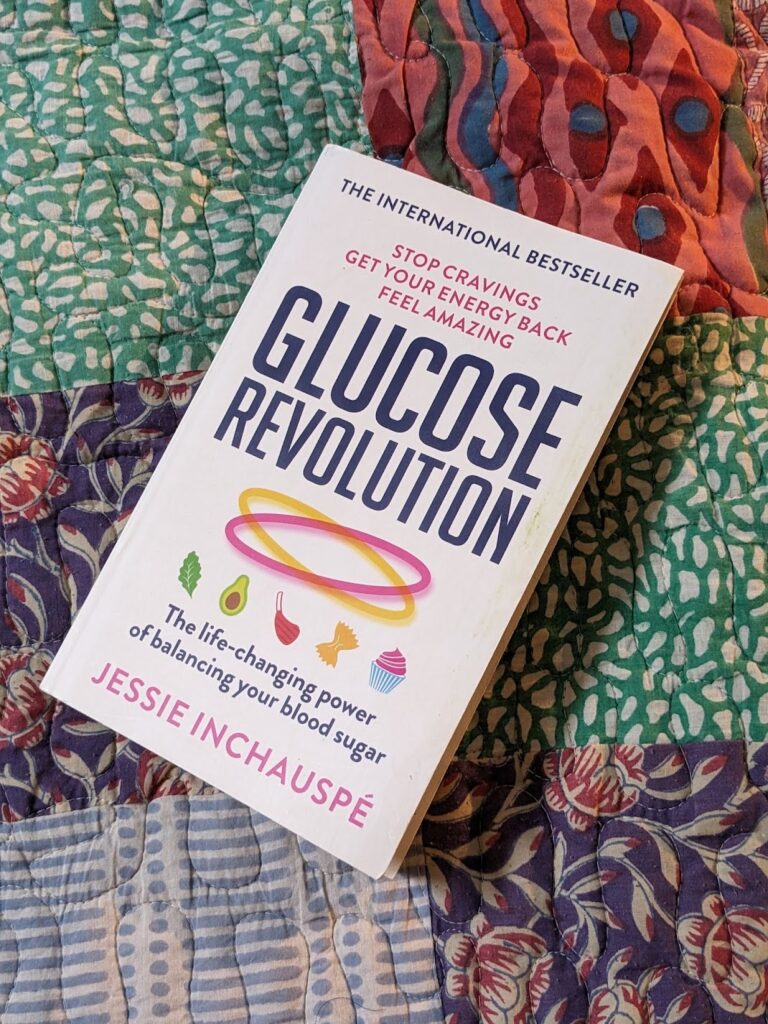
    Glucose Revolution is another one of those books that I wasn’t even aware of, but came in via a referral, and I believe will actually make a difference in my life. Jessie Inchauspé, also known as Glucose Goddess, does a fantastic job of showing a way out of the clutches of glucose imbalances which are an underlying cause of many health issues – from cardiovascular diseases to PCOS to acne and even mood swings.

    The reason why I loved this book are many. One, it’s not just a lot of theory. She combines lived experiences (of herself and others in the community), scientific research, and experiments (to validate) to show how it works. Two, she layers that with the overall science behind why they work that way. Three, she does so in the most accessible manner. And finally, she doesn’t just point out the problems, she also provides solutions and paths to address them.

    The book is divided into three parts. The first explains the origins of glucose and why it is important. While we colloquially call them all carbs, glucose, fructose, sucrose, starch, fibre are all varied forms and have different impact.

    The second describes how dysregulated glucose levels and glucose spikes affects us in the short-term and the long-term. From hunger pangs at one end to worsened cognitive function at the other. During glucose spikes, the mitochondria quickly get more glucose than they need, some glucose gets converted into fat, and more importantly, molecules called free radicals are released into our system. When there are too many of these, it results in oxidative stress, a driver of heart disease, Type 2 diabetes etc. Glucose also glycates other molecules, damaging them forever. Wrinkles, cataracts etc.
    The combination of all these result in inflammation, and chronic inflammation is the source of most chronic illnesses we get.

    When we have excess glucose in our body, the pancreas sends out insulin to store it and keep it out of circulation. Liver, muscles and conversion into fat are the three ways it is done. That last bit is how we gain weight. The stored glucose is used when mitochondria needs it, and when glycogen (the glucose in the liver and muscles) gets diminished, our fat reserves come into play. But this cannot happen when insulin is high. (read notes for more on this) There are explanations for why and how each kind of disease related to this happens.

    Part 3 is a set of ten (simple) hacks to flatten the glucose curves (reducing glycaemic variability). The first and most useful hack is the order of eating your meal. Veggies (fibre) first, proteins and fats next, and starch/carbs last. Fibre reduces the action of alpha amylase, the enzyme that breaks starch into glucose, it slows down gastric emptying, and creates a mesh which makes it difficult for glucose to get into the bloodstream. My second favourite hack was #7 – drinking apple cider vinegar before eating sweets. Acetic acid in vinegar temporarily inactivates alpha amylase.

    Glucose Revolution is a fantastic book because of its actionable insights and the accessibility. Highly recommended. Having said that, I have also recently read some critique which you might want to consider before picking it up.

    P.S. My own experience after nearly a year of trying this is that first, I got an immediate reduction of HbA1c from 6.3 to 5.9 and was able to sustain it for about 8 months. Since then, it has gotten back to 6.3 but there are many variables and I am still trying to eliminate them one by one.

    Notes
    1. Any food made from flour has starch
    2. We like sweetness because back in the Stone Age the taste of sweetness signalled foods were safe (there are no foods that are sweet and poisonous). It gives us a dopamine hit.
    3. Mitochondrial stress causes cells to lose their smooth shape. The lining becomes bumpy and fat particles get stuck more easily. LDL (B) does exactly this. If an when cholesterol gets oxidised (happens when more glucose, fructose, insulin are present), it creates plaque. Triglycerides become LDL (B). A good measurement is triglycerides/HDL. If it’s less than 2, great
    4. Insulin treatment brings down glucose temporarily but is harmful in the long run.
    5. Sugar is sugar, whether it comes from fruit or table sugar. Relatively the first is better.
    6. Similar story with whole grains. Dark bread/ seed breads are relatively better.

    Glucose Revolution
  • Kampot

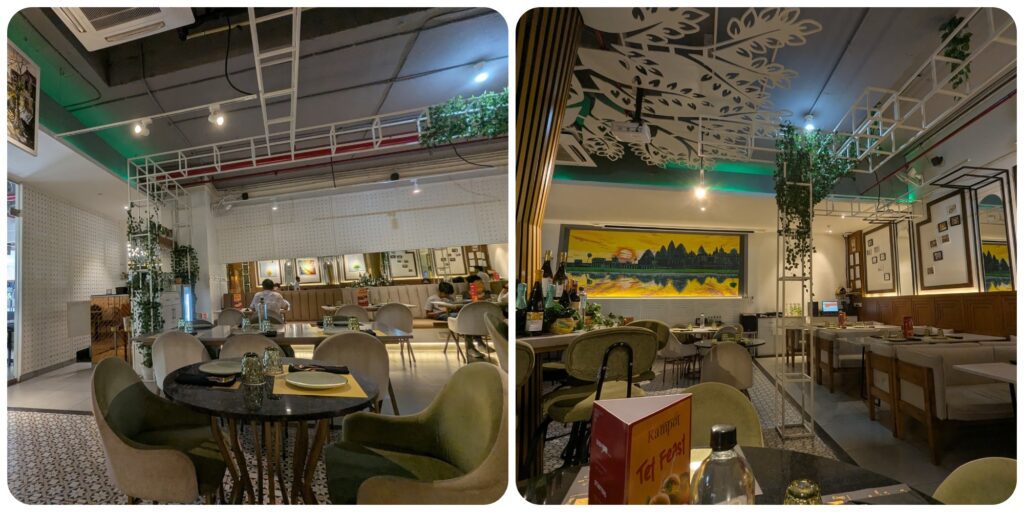
    We came across Kampot when we visited Mannheim. The name itself was alluring, since Cambodia is one of our earliest and most cherished travels, and home to one of D’s all-time favourite dishes – Fish Amok. Given the constraints on the things you can do inside Ecoworld, they have done a fair job with the ambience. The menu turned out to be a lot more Asian, which I am guessing is a smarter choice if the idea is to get a crowd.

    Kampot

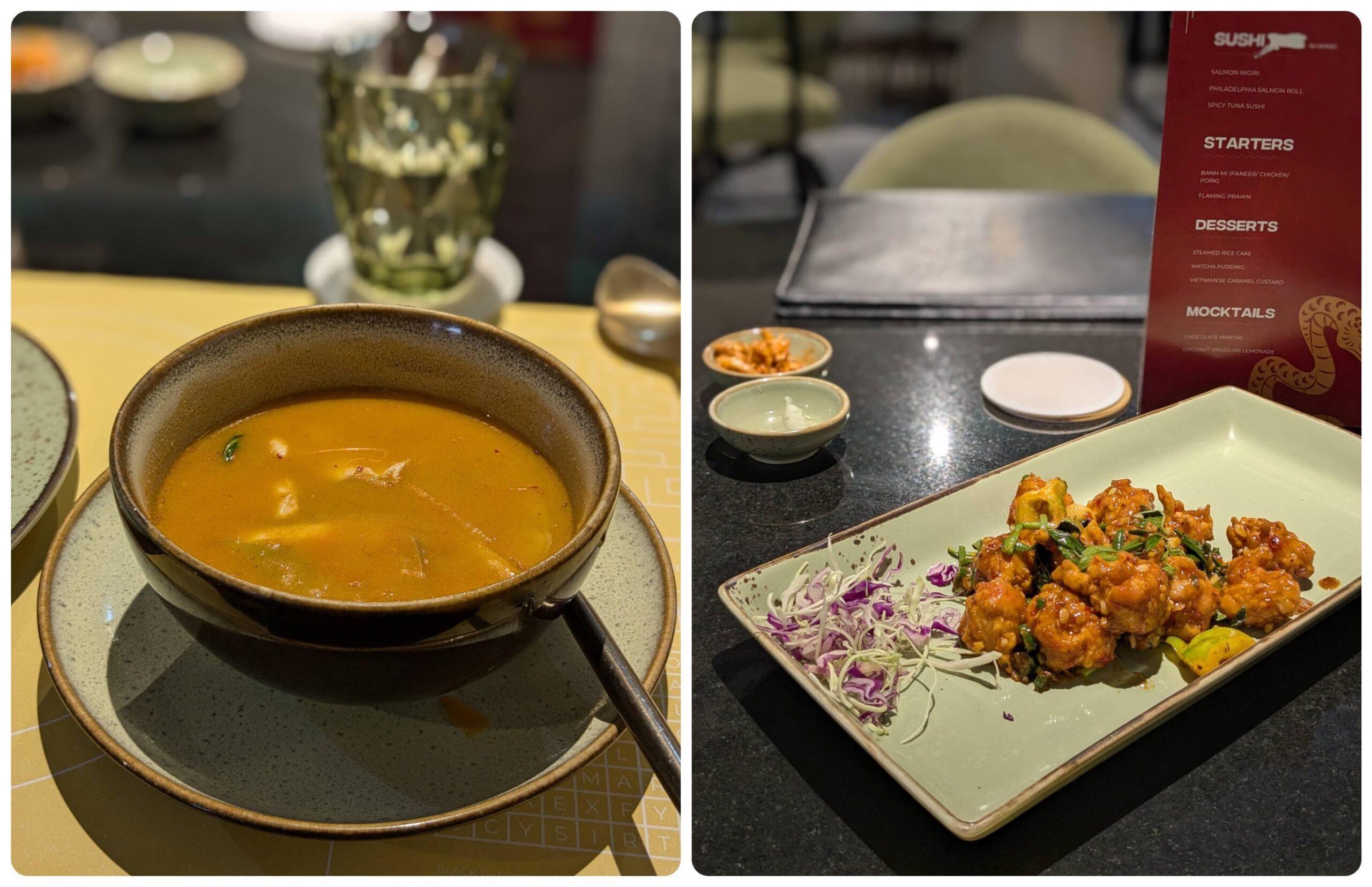
    We started with a Tom Kha Head Soup. The flavours and texture were totally off with this one, which we might have guessed anyway given the colour. Closer to the other Tom – yum that is, than what we expected. Next up was the Holy Basil Sambal Chicken, and again, the memories of sambal in Indonesia are strong enough for me to recognise non-sambal. That fiery bite was completely missing in the dish. The soup actually was spicier!

    Kampot

    For mains, D went with the Miso Ramen with Soba Noodles and Chicken, and I thought going Vietnamese might be a good idea after Thailand and Indonesia had failed. Of the two, D’s Miso was easily better in terms of flavour but definitely not the best we have had. The Pho was a disaster, and I didn’t even bother to finish it.

    Kampot

    On hindsight, this was stupid given everything that had transpired, but we decided to try a Kampot Coffee. Since this is their own concoction, I don’t really have a benchmark to compare against. So all I’ll say is that I regretted it soon as I took the first sip.

    Kampot

    We paid close to Rs.2700 for this mistake. The service was pleasant but tardy. After having sampled multiple eateries in The Bay, Ecoworld, I think the building has found a way to decrease the quality of dining experience. For instance, Irish House and Punjab Grill. I’ll soon be able to update with Mannheim too. For now, I’d avoid.

    Kampot, The Bay @ Ecoworld, ORR Ph: 9606025113